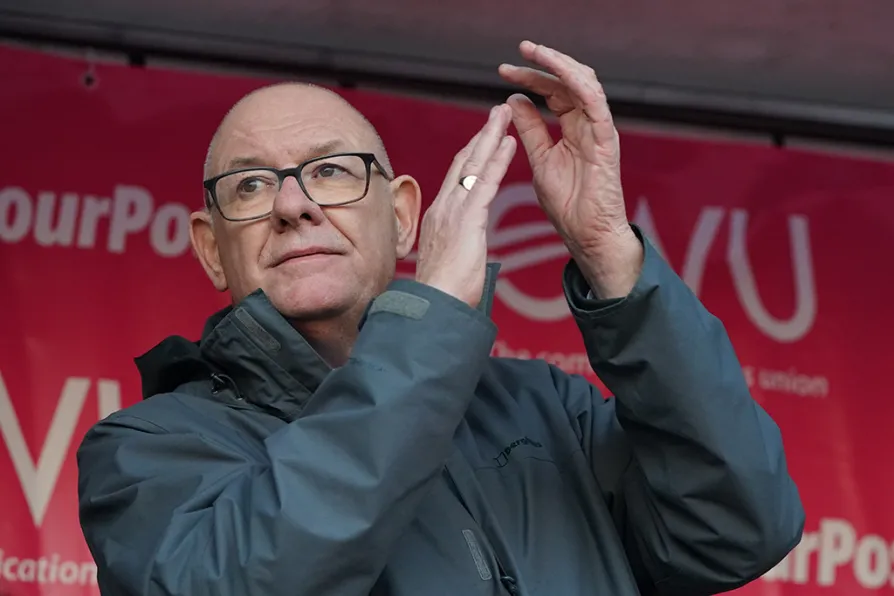
DAVE WARD of the Communication Workers Union says unions must step up to meet the challenges of a transformed world of work


 Latest editorial
Wales’s rebel past takes centre stage in Bristol
Blending history, film and debate, the Bristol Radical History Festival will shine a light on class and resistance next weekend. LYNNE WALSH previews what’s on offer
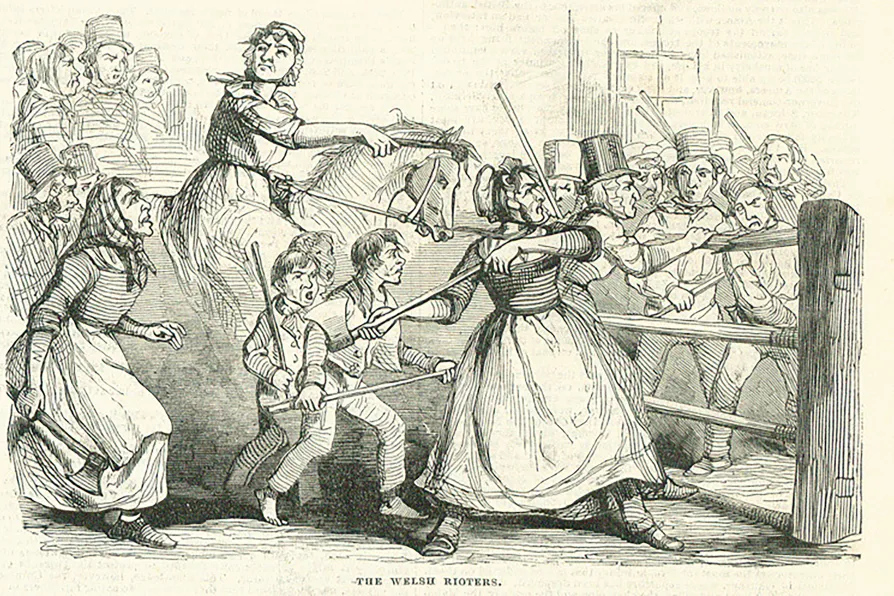 Rebecca Riots in Wales from the Illustrated London News 1855
Live music and musical education are both under attack and threaten to impoverish our culture. The Musicians’ Union seeks allies in the fightback, writes NAOMI POHL
Who should the trade union movement be fighting for: pimps or marginalised women, asks ANNA FISHER
This summer’s fire outbreaks highlighted once again the deadly cost of job, equipment and funding cuts to the fire service. Ten years after the Grenfell tragedy, serious lessons still need to be learned, says STEVE WRIGHT
As Cuba faces the most dangerous moment in its recent history, Britain must do more than condemn the US blockade at the United Nations, writes KEVIN COURTNEY, chair of the Cuba Solidarity Campaign
The events of 9/11 reverberated across the United States and then the world. JOHN WIGHT remembers the eerie atmosphere that exposed racial divisions at the heart of Hollywood





WHO could possibly resist a radical history weekend promising events to be held in a Welsh Risings Room?
The 19th-century working-class uprisings in Wales form one of the big themes for this year’s Bristol Radical History Festival.
Historians Rhian E Jones, Ray Stroud, Nick Venti, Nia Griffiths and Viv Pugh will bring alive accounts of the daughters of Rebecca, Chartist riots and marches, and the 1831 rebellion led by ironworkers in Merthyr.
The two-day festival, on April 25-26, is the eighth run by Bristol Radical History Group (BRHG). It sees history talks and walks, panel discussions, films, performance and exhibitions, and is kickstarted by a session providing a real treat for those of us who adored Marxist historian Gwyn Alf Williams.
The Communist professor, who died in 1995, featured in the groundbreaking TV series The Dragon Has Two Tongues, juxtaposed with the crachach (bourgeois) Wynford Vaughan-Thomas. This inspired idea came from producer and director Colin Thomas, who had resigned from the BBC in 1978 over censorship of his coverage of the Troubles in the North of Ireland.
The HTV and C4 1985 series showed audiences two very different perspectives on the history of Wales. Those of us who’d struggled to learn Welsh history at school were captivated. Those of us from working-class upbringings picked a side: “Alf” was our man, who articulated the material reality of our lives. The hwyl (passion, or vehemence) of his presentations brought the screen alive.
Co-presenter Vaughan-Thomas, by comparison, had been the voice of royal funerals and coronations. For so many viewers of the 13-part series, he represented the Establishment.
Speaking with another fan of the programme recently, I suggested it was a kind of enlightenment for us. Yes, she said, and gave us a deep mistrust of the Welsh middle classes with hyphenated surnames.
Also in the Welsh Risings Room will be historian, journalist and author Rhian E Jones, who spoke to the Morning Star about her talk on the Rebecca riots.
Some of the story is well known, with the tenant farmers dressing in women’s petticoats to destroy the toll-gates threatening their livelihoods. The uprisings, starting in 1843, certainly shook the ruling classes, but they didn’t come out of the blue.
Jones takes a deeper and wider view, focusing on the turbulence of the era. In her session, Rethinking the Rebecca Riots?, she offers insights from more than a decade of devoted study. Her books Petticoat Heroes: Gender, Culture and Popular Protest in the Rebecca Riots, and Rebecca’s Country: A Welsh Story of Riot and Resistance were published in 2016 and 2024 respectively.
Says Jones: “Wales has obviously had a massive radical history, with the most advanced and militant working class in the world. Rebecca was an outstanding example of that, as a rising against the status quo.”
Those “early Victorian peasants” experienced similar troubles to our own, with a cost-of-living crisis, “but this was before representative democracy … people had no constitutional way of making their voices heard.”
Her sense is that the current working class feels much the same, leading to the opportunism of movements such as Reform.
“They’re a symptom of something that we saw with Brexit, in post-industrial areas. There is misdirected anger and resentment, and the right say they can identify solutions. Things that used to be said by the marginalised far right are adopted by mainstream politicians.”
For the rioters in petticoats in the 1840s, the tollgates were the final straw, says Jones, but the resentment at the neglect shown by the ruling classes had been simmering.
Could we see a similar rising nowadays?
“I wonder this on a daily basis! There are so many moments when a revolution could have happened, but didn’t. Maybe people are too ground down and busy. We find life intolerable — but how do we even get to our local MP?”
The weekend’s other themes are similarly gripping, with presentations and debates on Utopias, Propaganda and the 1926 General Strike.
Former head of news and current affairs at Channel 4 Dorothy Byrne tackles the topic of propaganda and self-censorship in the media.
She says: “Journalists are increasingly worried about how they talk about the news. If they say the ‘wrong’ thing they are concerned that they will suffer prejudice in getting future freelance work.
“Inevitably, Trump’s massive legal actions have an intimidatory effect. Journalists are worried that if they are not very careful about what they say about Gaza, they will be accused of anti-semitism. Some journalists who have used the word ‘genocide’ in their reports say they have found they have not been offered work by organisations they have worked for over many years.”
On the BBC, Byrne is scathing: “During the worst times in the war, they broadcast interviews with spokespeople, both formal and informal, for Israel who denied there was any starvation. This was manifestly nonsense and untrue. Ofcom rules on due impartiality don’t require broadcasters to broadcast nonsense.
“On the domestic front, journalists are very nervous about how they cover the trans issue, as being branded ‘anti-trans’ can be very damaging.”
She’ll be joined by former BBC industrial and correspondent Nicholas Jones, who admits that on occasion he found himself swept along by a tsunami of propaganda.
“Journalists must do more to try to work out what the propagandists are trying to achieve and how best we can avoid just repeating and promoting their narratives.”
Jones acknowledges his own failings, for example during the 1984-85 miners’ strike.
He says: “My regret, looking back after 40 years, is that my reporting for BBC radio about the return to work in the final months of the strike was perhaps too close to the propaganda narrative of Mrs Thatcher and her government.
“Perhaps I should have done far more to flag up the fact that the figures for the ‘new faces’ reporting for work were being engineered to the National Coal Board’s advantage, and were part and parcel of the government’s attempt to manipulate the news media.
“In answer to the question ‘Did you become a cheerleader for the government?’ I fear the answer might be ‘yes’.”
Forty years on, Jones’s concern focuses on the damage inflicted by present-day propaganda:
“Perhaps the most consequential political propaganda of recent years has been the fuelling of fears over immigration.
“Political parties, aided and abetted by the UK’s dominant right-wing press, have been ruthlessly exploiting this issue since the long lead-up to the 2016 Brexit referendum. What had previously been anti-European propaganda — aimed at blaming the country’s ills on the European Union — morphed into propaganda about the failure to control immigration.
“I think the key factor in the majority vote for Brexit was the belief that it was only by leaving the EU that the UK could regain control over its borders and reduce immigration. Regaining ‘sovereignty’ became the buzz word — and it was a useful code word for what transpired.”
The Bristol event comes with a warning to bibliophiles — there’ll be lots of stalls, where you can stock up on history pamphlets, books and more, from some 30 publishers and distributors.
Sunday sees a free walk, with the magnificent title Patriots, Volunteers and Scabs, uncovering hidden histories from the 1926 strike.
That evening, there’s a showing of the groundbreaking 1983 documentary, Ireland: The Silent Voices, with a talk from its director Professor Rod Stoneman, from the University of Galway.
For viewers who recall the propaganda from mainstream media during the Troubles, this counter-narrative provided a perfect antidote.
The film is the only event when visitors need to buy a ticket; the rest of this fascinating bonanza is free.
One more unmissable element — the city’s Red Notes Choir will sing at the venue, the M Shed museum, with favourites Solidarity Forever, Which Side Are You On? and The Internationale in their repertoire. To honour the Welsh history theme, they’re adding Merthyr Rising, and Yma O Hyd (sung in Welsh).
I’ve promised not to join in (not all the Welsh can sing), though in honour of Rebecca, I might wear a petticoat…
For more information visit https://tinyurl.com/BristolRHF26.
