The question is not simply how much we spend on defence, but what we understand defence and security to mean, says SIMON BRIGNELL



Labour’s Janus-faced warmongers – from Harold Wilson to Keir Starmer
The PM is drawing cautious distance from Donald Trump over Iran – but history suggests Britain’s support may run deeper than it appears, just as it did during the Vietnam war, says KEITH FLETT
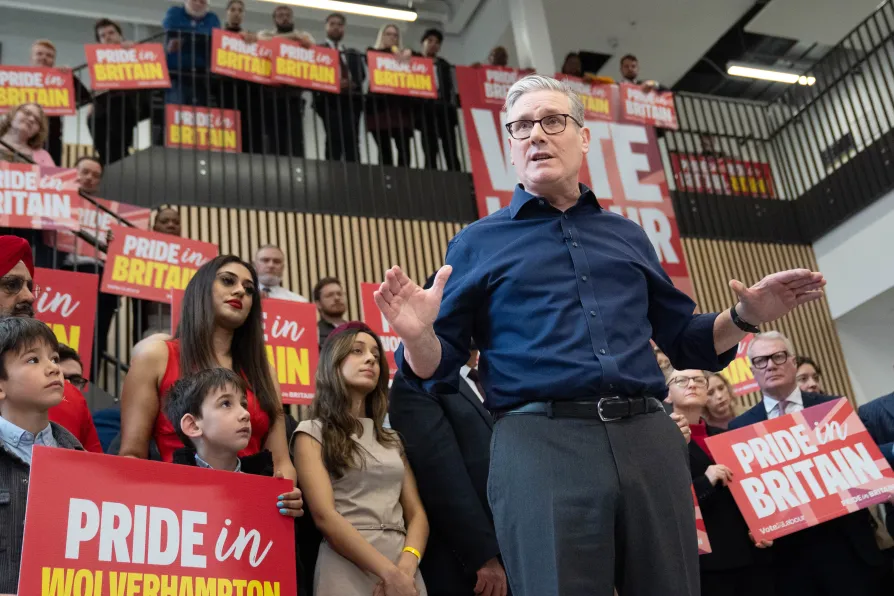
 Prime Minister Keir Starmer speaks to Labour Party members and supporters during the launch of Labour???s local elections campaign at City College in Wolverhampton, March 30, 2026
Given the recent rejection of peace proposals by Israel the world must provide an immediate and resolute response to force accountability on Gaza, argues RAMZY BAROUD
MARK SEDDON tries to cool off in the countryside to avoid the heatwaves but the greed and incompetence of the privatised water industry is now at boiling point
The disputed election of a far-right president, who is also a US citizen, signals further consolidation of Washington’s regional power and represents a threat to the country’s democracy and sovereignty, writes WT WHITNEY JNR
by Her Excellency Ismara Mercedes Vargas Walter, Ambassador of the Republic of Cuba to the United Kingdom
DR STEPHEN WILKINSON assesses the life and legacy of a revolutionary giant





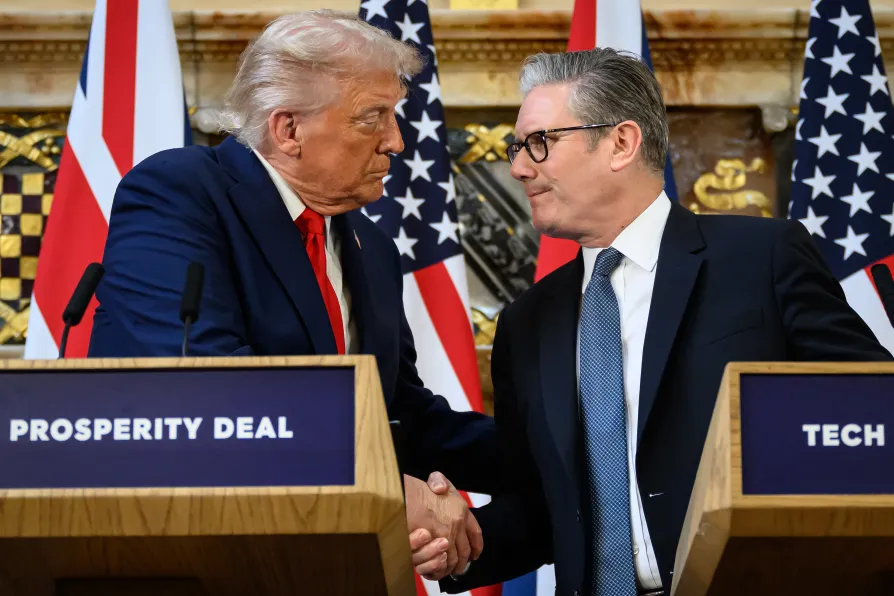
KEIR STARMER has won plaudits even from some of his many detractors for not backing 100 per cent Trump and Netanyahu’s illegal war against Iran.
Of course the position has limits. US B-52 bombers are taking off from bases in East Anglia and no doubt both the RAF and navy are involved in various ways in supporting the war as they have been with Gaza. Even so, Starmer has arguably been partly successful in appearing to distance himself a bit from Trump, a distinct change of policy.
What the altogether more wily politician Harold Wilson did on Vietnam is often mentioned in media coverage but his position was not that different from Starmer’s.
Unlike Australia and New Zealand, Britain did not commit forces to US efforts to prop up the corrupt Diem regime in South Vietnam from 1962-75.
If Britain did not commit front-line troops in Vietnam, British government support for US action was largely unwavering. In March 1965 Harold Wilson told the Commons that the government fully supported “the action of the United States in resisting aggression in Vietnam.”
He was echoing a line developed by the Tory PM before him Alec Douglas Home and backed by the Tory PM after him, Edward Heath, as well.
What did this full support mean?
While no troops were officially committed, the SAS fought in Vietnam under the banner of the Australasian forces. Other troops were seconded to the US and fought under those auspices.
These were not rank-and-file soldiers but specialists and experts in jungle warfare.
Indeed Britain trained US, Vietnamese and Thai troops in its Malaysian facilities in the late 1960s.
It was not just training and expertise that was provided.
The British monitoring station at Little Sai Wan in Hong Kong was used by US forces to help them target bombing raids on North Vietnam.
All that said, Wilson also resisted considerable pressure from Democratic president Lyndon B Johnson to publicly back the US with troops on the ground in Vietnam. He resisted, perhaps because he recognised the potential political consequences and that may well have been related to the strength of opposition to the Vietnam war in Britain.
Tony Benn noted in his diary on June 13 1965 the first of “US-style” teach-ins being held at LSE. He felt they would have influence and recorded that each time Wilson’s name was mentioned there was booing.
Wilson also, at least up to the Tet Offensive in spring 1968 when it became clear that the US was in any case losing the war, associated himself very closely with international negotiations to secure a ceasefire and peace in Vietnam, albeit essentially on US terms.
It might be argued that Starmer has a more difficult task in committing British forces to the war against Iran while maintaining publicly that he is doing no such thing. First, in the age of social media it is easier to track what the Royal Navy and RAF are up to, whatever the mainstream media may or may not report. Second, Starmer has to deal with Trump who simply blurts out often incoherent and contradictory statements on his Truth Social site.
As with Wilson, the extent of Starmer’s ability to appear Janus-faced on Trump and Iran rests on the strength of opposition to the war.
This no doubt is related to continuing official efforts to restrict Palestinian protest, but it might be recalled that the big anti-Vietnam war protests in London in 1968 saw massive mobilisations of police and the creation of the unit that we now know as spycops.
As ever “protest and survive” is essential when it comes to Labour leaders and warmongering.

Similar stories
![Anti-war protesters outside RAF Fairford, July 2#, 2026 [Pic: CND]](https://msd11.gn.apc.org/sites/default/files/styles/desktop/public/2026-07/PHOTO-2026-07-26-11-42-59.jpg.webp?itok=UNG-N8fw)
The new Prime Minister must abandon decades of automatic support for US foreign policy, which makes us all less safe, argues DIANE ABBOTT MP
Keir Starmer's early political life suggests a very different future from the one he ultimately embraced, says KEITH FLETT
The media present Starmer as staying out of Trump’s war — but we’re already deeply involved in a conflict that sees the US and Israel kill civilians on a huge scale, argues IAN SINCLAIR