
The US administration is endangering lives by reversing environmental protection laws, CHAUNCEY K ROBINSON argues

Britain’s special forces: elite, expanding – and almost entirely unaccountable
As the government quietly upgrades the role of Britain’s special forces, their growing global footprint and near-total exemption from democratic oversight should alarm us all, says ROGER McKENZIE

 SECRET STATE: The statue of David Stirling, founder of the SAS, looks over mist around Ben Ledi mountain, Central Scotland
It’s time to stop retreating and go on the offensive to promote working-class interests, argues DOUG NICHOLLS
Marco Rubio wants to defeat socialism in Nicaragua, not restore ‘democracy,’ writes JOHN PERRY
Believe it or not, there was a time when the US government built beautiful homes for working‑class Americans to deal with a housing shortage, writes ERAN BEN-JOSEPH
DIANE ABBOTT provides an analysis of the reasons for EU and British voters’ dramatic swing to the right
Train drivers’ union Aslef general secretary DAVE CALFE speaks to Ben Chacko about his hopes that Burnham’s devolution agenda will include the importance of the railway





ONE of the least discussed parts of Britain’s Strategic Defence Review announced last June was the additional role that the government intends to give to the country’s special forces.
Talk of special forces is usually a no-no for most nations. So this was something new.
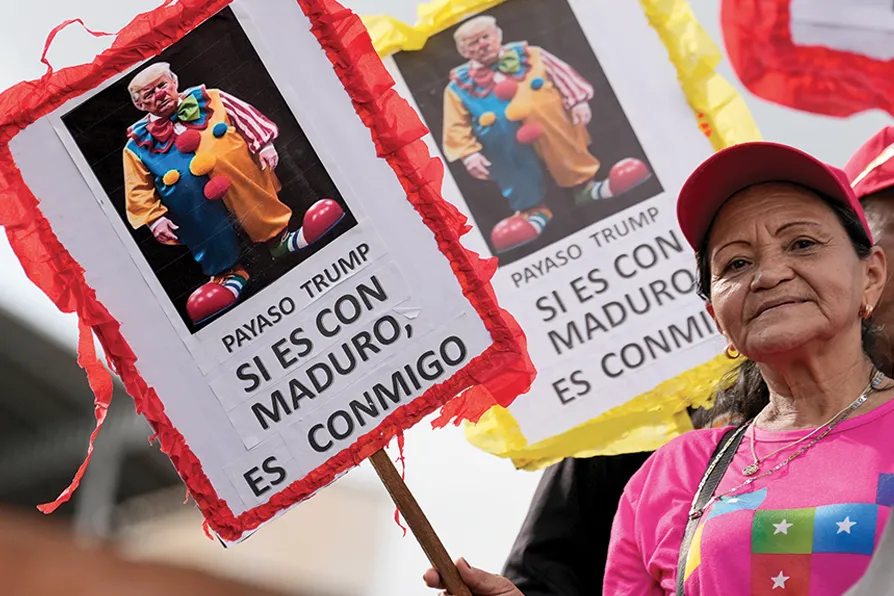
The role of British special forces came to my mind as I studied the illegal and unprovoked US attack on Venezuela on January 3 which included the unprecedented kidnapping of the country’s President Nicolas Maduro and his wife Cilia Flores.
According to reports, the on-the-ground attack, which killed around 100 people, including civilians and 32 Cubans assigned to guard Maduro, was carried out by Delta Force.
The Delta Force is the premier special operations unit based at Fort Bragg in the US state of North Carolina. It functions under the US Army Special Operations Command and, although it formally answers to the Joint Special Operations Command, really has no effective democratic oversight.
As we saw with the attack on Venezuela, it basically acts as a hit squad under the command of the US president.
It is important to understand that this elite and secretive unit is not a creation of the current increasingly authoritarian incumbent of the White House, Donald Trump. It was established in 1977 and has been used by every president since.
I highly recommend the excellent 2025 book: The Fort Bragg Cartel: Drug Trafficking and Murder in the Special Forces, by journalist Seth Harp, for more detailed information into this off-the-books force.
The book is an investigation into a string of unsolved murders at the base. It also looks at the alleged role of the forces in drug trafficking by the so-called elite fighters.
The structure of Delta Force was modelled on arguably the most famous special force in the world, the British Special Air Service Regiment (SAS) which really came to public prominence when it stormed the Iranian embassy in London in May 1980.
The SAS mounted a successful hostage rescue operation, killing six members of the Democratic Revolutionary Movement for the Liberation of Arabistan and rescuing all 21 hostages.
But the SAS is by no means the only British special forces group.
The Special Boat Service (SBS) has existed since World War II as a force set up to engage in amphibious warfare and maritime counter-terrorism.
The Special Reconnaissance Regiment, a recently formed force, gathers intelligence and carries out surveillance operations in the so-called war on terrorism. Unusually among British special forces, it allows the recruitment of women.
The Special Forces Support Group provides combat support for the SAS and the SBS.
The 18 (UKSF) Signals Regiment provides communications support for other special forces.
Other elite British forces include the Parachute Regiment (airborne shock troops), the Pathfinder Platoon (an elite reconnaissance unit that operates behind enemy lines) and the probably better known Royal Marine Commandos.
The elite of the RAF, Army Air Corps and Royal Navy Fleet Air Arm, are specially trained pilots and aircrew that insert and extract special forces teams, often operating deep inside enemy territory.
The Elite Artillery are tasked with going behind enemy lines and calling in targeted artillery fire.
The elite ground troops of the Royal Air Force. RAF Gunners make up part of the Special Forces Support Group.
All of these special forces work hand in hand with the British security and intelligence services.
There may well be other special forces that go beneath the radar. My point here is not to provide an exhaustive list of British special forces. Rather, it is to question how they can be held to account in a way that their equivalent forces in the US clearly are not.
Researchers have uncovered evidence of British special forces being deployed in at least 19 countries between 2011 and 2021, making Britain one of the top four nations with the largest special operation footprints in the world.
As at April 1 2025, there were only 181,890 people in Britain’s armed forces, ranking Britain way down the order in the size of military personnel. This goes some way to explaining why there has been a switch in focus to special forces operations.
The other benefit for the government is that British special forces largely operate without external oversight. This is concerning on a number of levels, not least of which is the increasing evidence that, like their US counterparts, the British special services are violating international law by targeting civilians.
Some of the most disturbing allegations emerged from the conduct of British special forces in Afghanistan.
The UN Assistance Mission in Afghanistan reported that between 2009 and 2012 British, US and other special forces operations led to 295 civilian deaths.
Allegations of the killing of civilians or the use of excessive force have dogged British forces for decades. In 1995 the European Court of Human Rights found that Britain had violated the right to life in the SAS killing of three unarmed IRA members in Gibraltar.
More recently, five SAS members were detained as part of an investigation into the alleged murder of a suspected fighter in Syria.
As far as I can see there have never been any prosecutions for any of the documented war crimes allegedly committed by British special forces.
There is no sign that the Labour government has the remotest interest in holding the special forces under greater public scrutiny. In fact the opposite appears true.
British Defence Secretary John Healey, a former TUC official, recently said, without any hint of a joke, that he would happily have Russian President Vladimir Putin kidnapped in the same way that the US Delta Force removed Maduro from Venezuela.
Hardly something that creates confidence that the Labour government would want to use their own special forces any differently from the way the US president uses his own personal hit squad.
This merely adds to the case for increased accountability of these forces so that they are not allowed to act with impunity.
The Special Forces are the only piece of Britain’s defence, security and intelligence apparatus not subject to any form of parliamentary oversight. I find this as astonishing as I do outrageous.
Although there is theoretically a parliamentary convention requiring the prime minister to consult Parliament before authorising the deployment of British forces, the special forces are exempted, making a nonsense of the whole thing.
Given the new upgraded future role that these forces are envisaged taking this is something that must be addressed.
We should continue to campaign to stop wars and to expose any wrongdoing that takes outside of what are considered to be the rules of war.
But we should also take notice of these elite special forces that largely operate outside any scrutiny.
We must also not fall for the propaganda that portrays these outfits as anything other than unaccountable guns for hire for which we foot the bill for.

Similar stories
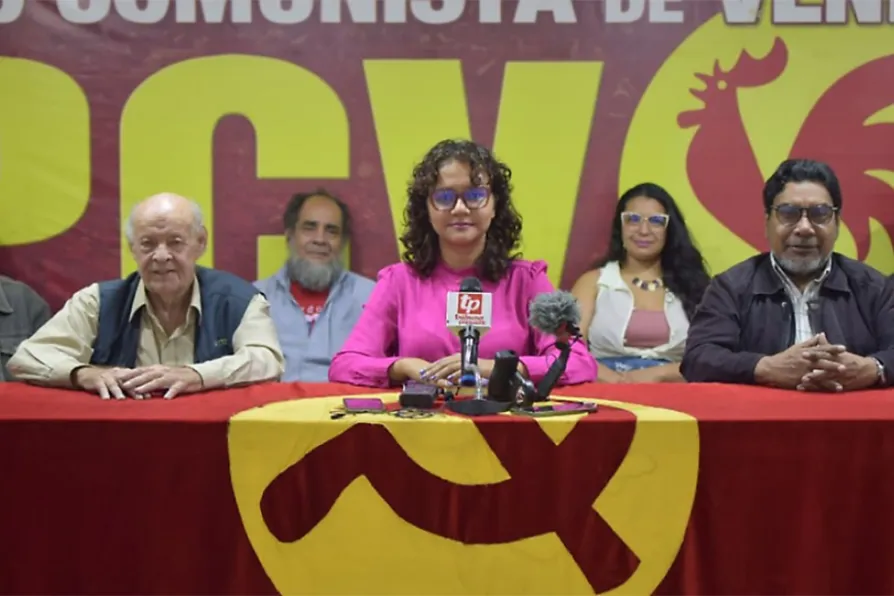
NEIRLAY ANDRADE, a member of the Communist Party of Venezuela’s political committee, outlines her party’s position on the crisis facing the country
Concessions to Washington by the post-Maduro leadership in Caracas are designed to preserve the core of the Bolivarian Revolution not betray it, argue Roger D Harris, Francisco Dominguez and Mara Paez Victor. How the solidarity movement responds is critical
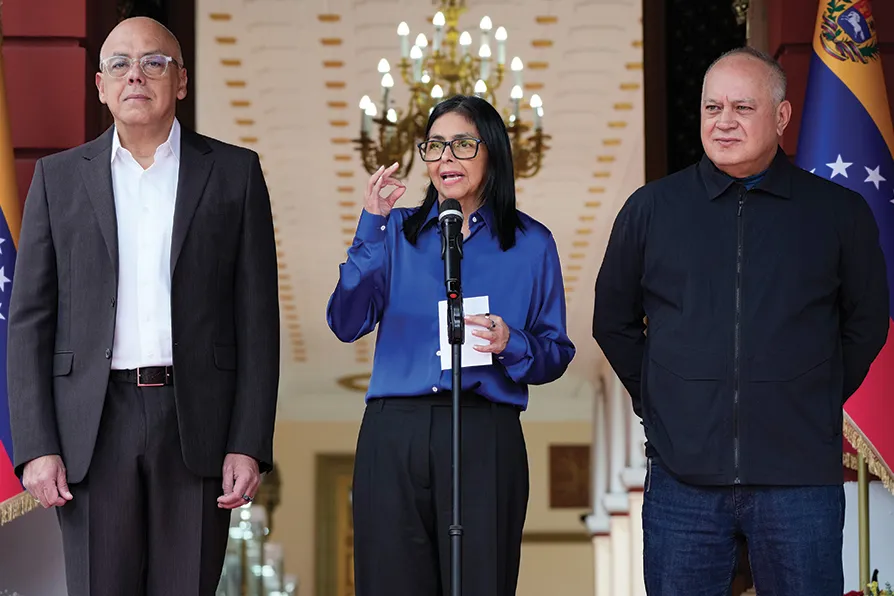
International solidarity can ensure that Trump and his machine cannot prevail without a level of political and economic cost that he will not want to pay, argues CLAUDIA WEBBE
The British government won’t confirm wide reports it has withheld intelligence sharing with the US over fears Trump’s attacks on boats near Venezuela are illegal, writes LINDA PENTZ GUNTER