
The US administration is endangering lives by reversing environmental protection laws, CHAUNCEY K ROBINSON argues

Trump’s invasion of Venezuela is gangster capitalism
International solidarity can ensure that Trump and his machine cannot prevail without a level of political and economic cost that he will not want to pay, argues CLAUDIA WEBBE
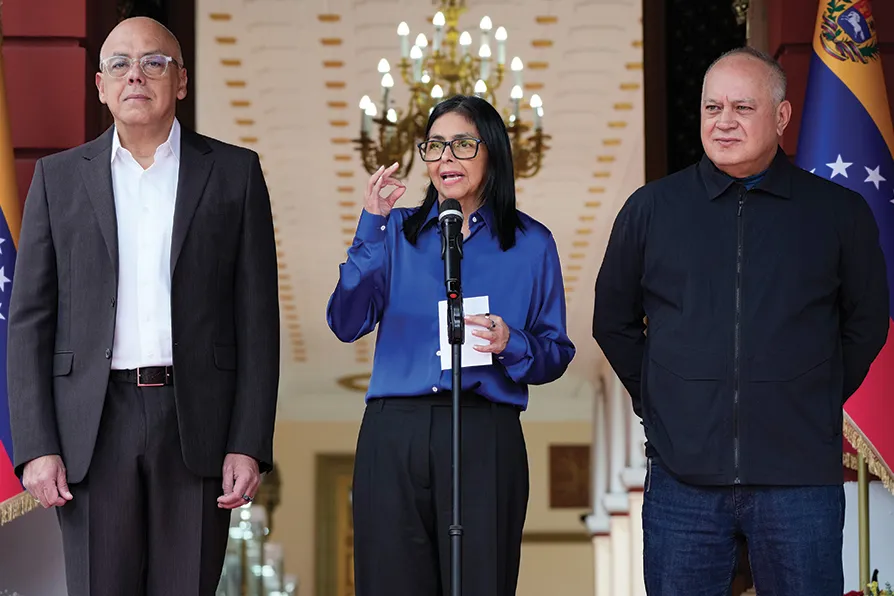
 THE RESOLVE UNALTERED: Venezuela's acting President Delcy Rodriguez, centre, makes a statement flanked by Interior Minister Diosdado Cabello, right, and National Assembly President, Jorge Rodriguez, at Miraflores presidential palace in Caracas, Venezuela
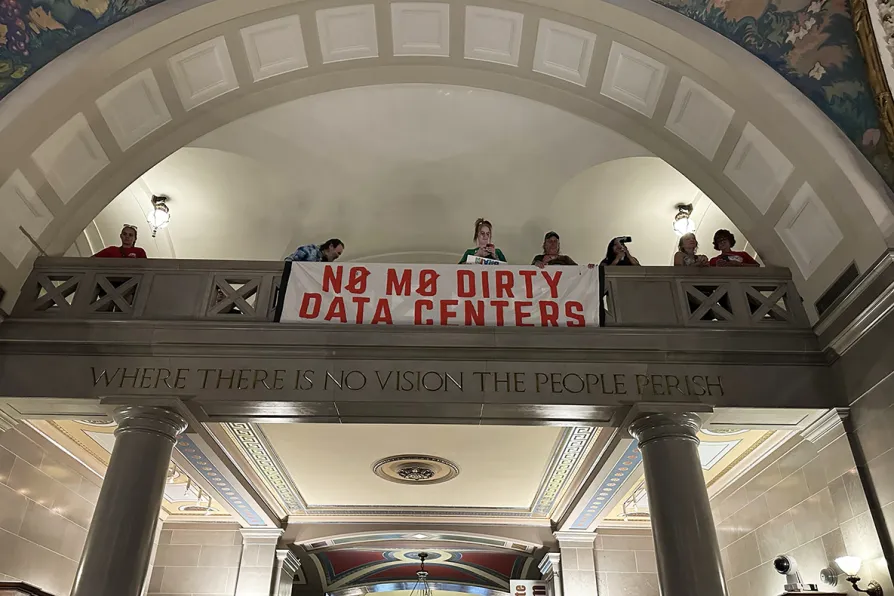
It’s time to stop retreating and go on the offensive to promote working-class interests, argues DOUG NICHOLLS
Marco Rubio wants to defeat socialism in Nicaragua, not restore ‘democracy,’ writes JOHN PERRY
Believe it or not, there was a time when the US government built beautiful homes for working‑class Americans to deal with a housing shortage, writes ERAN BEN-JOSEPH
DIANE ABBOTT provides an analysis of the reasons for EU and British voters’ dramatic swing to the right
Train drivers’ union Aslef general secretary DAVE CALFE speaks to Ben Chacko about his hopes that Burnham’s devolution agenda will include the importance of the railway





ON JANUARY 3 2026, the US launched Operation Absolute Resolve against Venezuela, kidnapping President Nicolas Maduro and his wife Cilia Flores and declaring its intention to control Venezuelan oil infrastructure and direct the country’s transition.
This invasion is part of a 25-year continuing US imperialist intervention (2001-26) in Venezuela, and expression of “hyper-imperialism” with the direct deployment of military force to secure resource extraction and geopolitical dominance over the global South.
The abduction of Maduro and Flores was supposedly on charges of “narco-terrorism.” The US has no jurisdiction in Venezuela and certainly no right abduct an elected head of state — even the Royal Institute of International Affairs, better known as Chatham House, agrees.
Donald Trump’s avarice for Venezuela’s massive oil reserves and estimated $1.4 trillion plus in gold and rare earth minerals does not change that fact — yet he still tried to force Venezuela’s government to “kick out Russia and China” and promise its riches to the US in return for being left alone. Gangster extortion writ large.
On January 11 2026, Trump posted an image on Truth Social depicting himself as the “Acting President of Venezuela”; this represented an explicit statement of intent.
Following the military operation that kidnapped Maduro, Trump and his administration have made clear that the US will directly control Venezuela’s oil infrastructure, manage its “transition,” and ensure that US corporations profit from the reconstruction of its energy sector. Trump declared: “We’re going to keep the oil. We’re going to rebuild their broken-down oil facilities, and this time we’re going to keep the oil.”
The invasion of Venezuela cannot be understood as an aberration or a discrete event. Rather, it represents the intensification of a quarter-century campaign of regime change, economic warfare and military pressure initiated when Hugo Chavez enacted laws to reclaim Venezuelan oil wealth for Venezuelan people rather than US corporations.
From 2001 the US has funded opposition groups through the National Endowment for Democracy (NED) and USAid, supporting the failed 2002 coup attempt that lasted 48 hours before popular mobilisation restored Chavez to power.
In 2006, weapons embargoes, financial sanctions and diplomatic isolation escalated under the Bush administration. In March 2015, president Barack Obama signed an executive order declaring Venezuela an “extraordinary threat to US national security.”
The sanctions regime targeted Venezuela’s financial system, oil sector and the personal assets of government officials, economic warfare designed to impose humanitarian collapse.
Trump’s first term intensified the assault: financial restrictions, oil sector sanctions (April 2019), seizure of Venezuelan Central Bank assets held in foreign jurisdictions (British gold seizure, 2018), and the CIA’s failed Operation Gideon kidnapping attempt (2020) with a $15 million bounty on Maduro’s head. Simultaneously, the US recognised the unelected Juan Guaido as “interim president.”
By late 2025, Trump ordered a total blockade of Venezuelan oil tankers, declaring a “quarantine” equivalent to a siege. Military assets positioned in the Caribbean, RAF surveillance flights, naval interception operations — the machinery of occupation was assembled.
Vice-President Delcy Rodriguez, sworn in as interim president, has publicly stated: “No external agent is managing Venezuela.” However, she governs under implicit threat: co-operate with oil sector transfer or face intensified military pressure. This represents the contemporary form of imperialism in the global South.
Trump’s December 2025 order for a “total blockade of sanctioned oilers going in and out of Venezuela” is siege warfare.
Yet, on January 7 2026, Britain’s Defence Secretary John Healey announced that Britain had provided “enabling support” to US operations to seize the Marinera, a Venezuelan-linked, Russian-flagged oil tanker in the North Atlantic. This constitutes direct British participation in what international law scholars identify as an act of piracy: the seizure of a foreign-flagged vessel in international waters without UN security council authorisation.
By providing RAF eyes in the sky for a US oil blockade, Britain’s role is not peripheral. Britain is positioning itself as enforcer of the new imperial order in the Atlantic, deploying resources to track and intercept vessels attempting to trade with Venezuela. This represents the militarisation of sanctions — the transformation of economic restrictions into active naval warfare.
This blockade violates Article 33 of the UN Charter, which prohibits measures equivalent to economic siege as a means of political coercion. It targets not military installations but civilian energy infrastructure and the economic survival of a nation of 28 million people. The stated objective is to make conditions untenable until Venezuelan leadership capitulates to US demands.
The claims that Maduro headed a “drug gang” rapidly fell apart: the US Department of Justice quickly removed all such claims from its indictment that the supposed “Cartel de los Soles” (cartel of the suns) even exists. In fact, Trump had appropriated it from an old, pre-revolution Venezuelan media term for corrupt military officials who took bribes.
This embarrassing reality did not, of course, prevent Trump attempting to exploit the abduction to deflect attention from his ubiquitous presence in the Epstein files, cost-of-living rises, his appalling polling and growing public outrage over the brutality and lawlessness of his ICE (Immigration and Customs Enforcement) units.
A defiant Maduro was paraded before cameras, then through the streets of New York in an open-doored ambulance. Flores appeared in court badly beaten and bruised, another sign of the Trump government’s contempt for law and human rights, though the US government claimed she had injured herself on a safe-room door while trying to escape — somehow managing both to hit her face and break ribs in the same impact, despite supposedly only hitting her head.
The interrogation and trial of a woman for her husband’s alleged crimes echoes colonial and patriarchal practices in which women are rendered vulnerably as extensions of male authority.
But despite Trump’s initial claims that the US would “run” Venezuela until a suitable puppet president was installed — Maria Corina Machado apparently dumped despite being previously lined up for that role. Furthermore, the Nobel organisation has now blocked her from transferring it to him.
Most importantly the Bolivarian revolution did not fall apart.
Early claims by US-run accounts that Maduro’s vice-president Rodriguez was co-operating with the US, or had even collaborated in Maduro’s abduction, quickly evaporated as the new acting president appeared among crowds of supporters alongside her ministers, showing resolve but also making clear that Maduro remains Venezuela’s president and demanding his and Flores’s safe return.
The evident continuing popularity of the Bolivarian government and Maduro personally underscored Rodríguez’s show of strength. Huge crowds flooded the streets of Venezuela’s towns and cities, chanting Maduro’s name and Rodriguez’s in defiance of US imperialism. The opponents was nowhere to be seen.
The crowds also contained another inconvenient sign for the narratives and plans of the US and its enablers: among the crowds were civilians carrying automatic weapons, many of them women.
Before his abduction, Maduro had armed Venezuela’s civilian co-operatives and mobilised its volunteer militias, boosting armed resistance forces by around eight million people — more than a quarter of Venezuela’s population of 28 million.
Leaving aside reports by independent election observers that Venezuela’s elections are a world-leader and “unriggable,” that mass mobilisation is enough to show that claims of stolen election results are false. “Dictators” who hid mass votes against them don’t arm the people.
Venezuelan popular solidarity was also mirrored among Venezuela’s neighbours. Colombia’s president Gustavo Petro told a mass rally that he and Colombia would never be so “treacherous” as to turn on the Venezuelan people or the Bolivarian revolution and that if Colombia did not stand strongly with them it was only a matter of time before the US turned its sights on Colombia.
Brazilian president Lula, who has hardly stood shoulder to shoulder with Maduro until now, called the abduction “an extremely serious affront to Venezuela’s sovereignty and yet another extremely dangerous precedent for the entire international community,” pledging Brazil’s support for a “vigorous” international response.
The combination of resolve among Venezuela’s leaders, mass defiance among its people and a show of support from regional neighbours appears to have been enough to stop Trump in his tracks, at least for now.
After claiming the US would be running Venezuela, Trump said that Rodriguez would — then said he had called off a planned second phase of US aggression, albeit this followed Venezuela’s agreement to release political prisoners.
But if their designs on Venezuela have stalled, at least temporarily, Trump and his cabinet have not allowed that to prevent them trying to leverage the attack to advance his lust for stolen land and resources.
Cuba, of course, along with Colombia, Mexico and Greenland have all been the target of the Trump regime’s threats, with Trump himself saying that he intends to take Greenland whether local people “like it or not.”
And just as Trump claimed Venezuela was underexploiting its resources as a justification for trying to take it over — when in fact it can’t exploit them because of US sanctions — he is claiming that Cuba is also “performing” poorly, when, in fact, it is the decades of US sanctions are really the cause.
Trump’s move is a return to the Monroe Doctrine of 1823 — the claim that the Americas are solely a US sphere of interest — and its militarised enforcement. In reality, it can be argued that this is the assertion of hegemonic authority by a fast declining imperial power.
And Trump’s greed reaches further than the Americas. He is sabre-rattling against Iran and Yemen while a disinformation campaign, among governments and media alike, seeks to undermine the regional “axis of resistance” to Israel’s own territorial ambitions and its slaughter of the Palestinian people.
Britain and other Western governments are, of course, collaborating fully. After the abduction of Maduro and his wife, Keir Starmer could only mouth platitudes about his respect international law while he and his ministers refused to condemn the attack, or even to say it was illegal under international law. They even said they needed to wait for guidance from Washington before expressing an opinion.
The universal principle of national sovereignty has been breached. Yet the machinery of international institutions — the UN security council, the International Criminal Court, regional human rights bodies — has proven impotent.
The response of weak Western governments and the complete contrast with that of Latin American governments provide a neat illustration of what the response of the world must be to Trump’s attempt to prolong dying US hegemony.
Just as before WWII, appeasement only emboldens dictators avaricious for resources and Lebensraum (“living space”). As we have seen in Trump’s stalled attempt to take over Venezuela, resolve, solidarity and resistance are the key to giving him pause.
Resistance to imperialism cannot be localised to a single nation or region. It is a continental and global struggle against a system that treats the global South as a resource supplying periphery whose populations exist to assist the extraction of wealth.
None of the US’s neighbours or his targets in western Asia can stand up to concerted US military force. But, as ever, “we are many, they are few.”
If people and states, regionally and globally, stand up and together in resistance and treat the US and its vassal states as toxic pariahs, Trump and his machine cannot prevail without a level of political and economic cost that he will not want to pay.
Our response requires the organised pressure of the international working class, and the assertion of a vision of global development based on equity, self-determination and the liberation of human potential from the constraints of capital accumulation.
Claudia Webbe was previously the member of Parliament for Leicester East (2019-24). You can follow her at www.facebook.com/claudiaforLE/ and x.com/claudiawebbe.

Similar stories
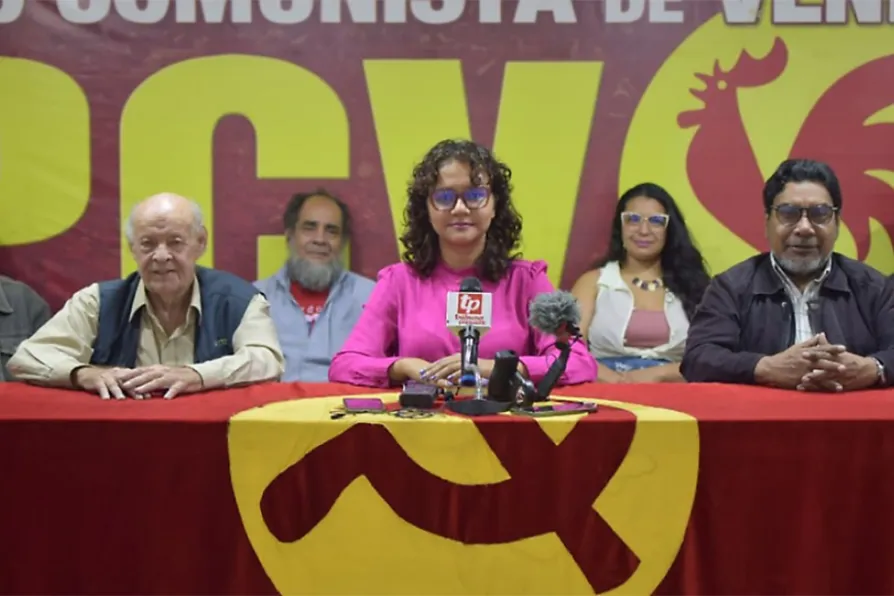
NEIRLAY ANDRADE, a member of the Communist Party of Venezuela’s political committee, outlines her party’s position on the crisis facing the country
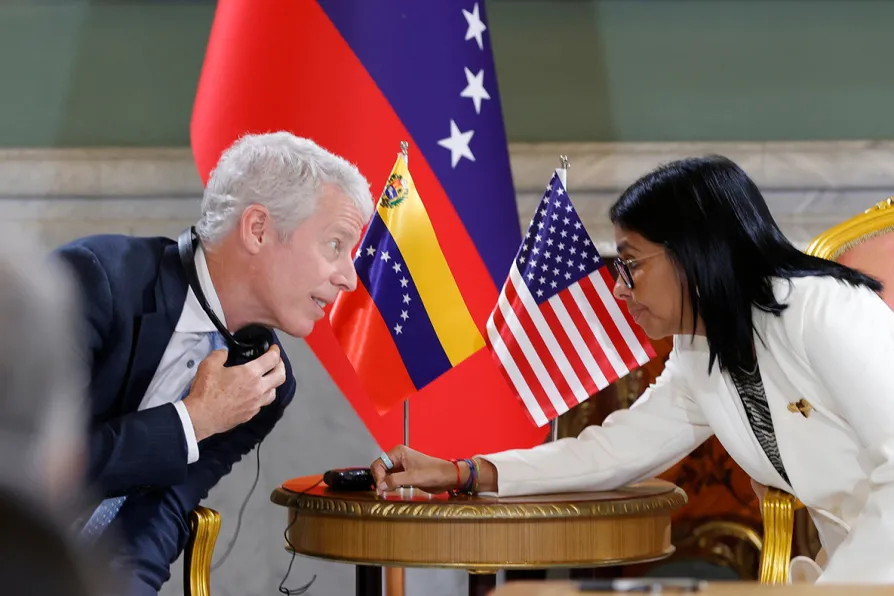
Whatever differences exist among international sympathisers of the Bolivarian revolution about its current trajectory, they should unite against the imperialist power that is the source of an enforced retreat, argues ROGER D HARRIS
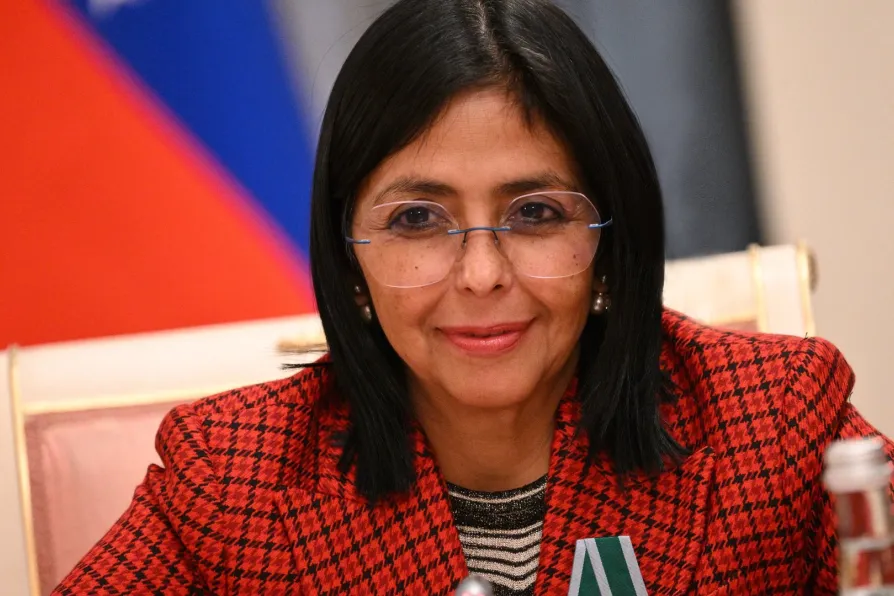
Concessions to Washington by the post-Maduro leadership in Caracas are designed to preserve the core of the Bolivarian Revolution not betray it, argue Roger D Harris, Francisco Dominguez and Mara Paez Victor. How the solidarity movement responds is critical
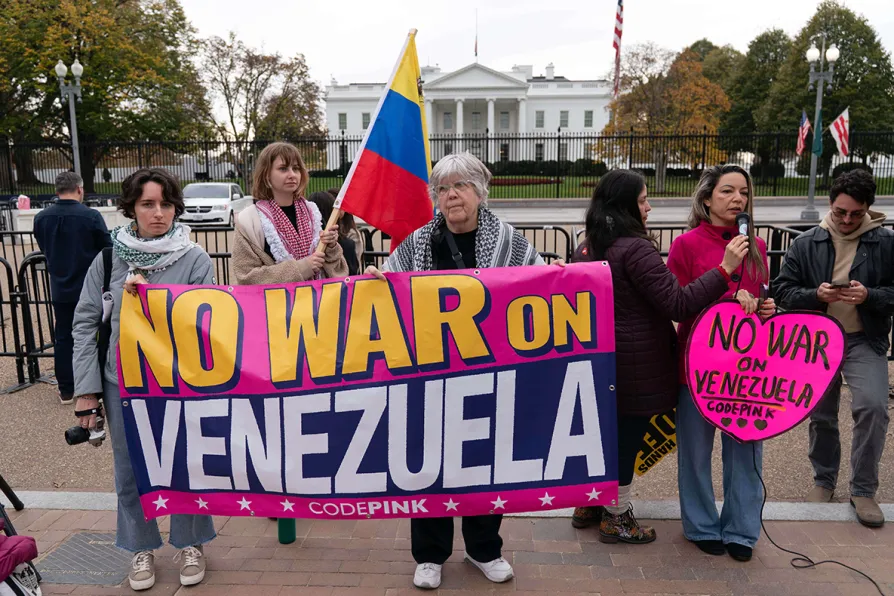
The global left must be unwavering in it is support for Venezuela as Washington increases its aggression, and clear-eyed about the West’s cynical motives for targeting it, says CLAUDIA WEBBE