Cuban trade union federation CTC leader OSNAY MIGUEL COLINA speaks to Ben Chacko about life and work under a crippling US siege


 Latest editorial
Sign the petition calling for peace and sovereignty
The US attack on Venezuela raises grave threats to Cuba and the region, writes NATASHA HICKMAN of Cuba Solidarity Campaign
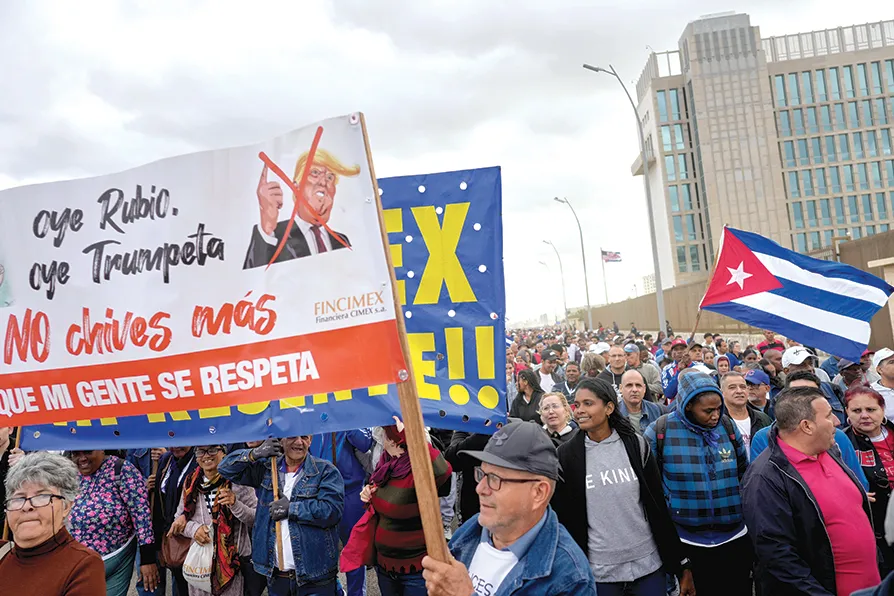 SHOWING NO FEAR: Cubans file past the US Embassy on January 16 holding a banner: ‘Listen Rubio, listen Trumpeta (Loudmouth) stop hussling us, our people will be respected’
A part of the British empire’s network of slavery, today the Caribbean island of Nevis faces a new form of exploitation in the form of crypto-colonialism, CLAUDIA WEBBE writes
A new book by Victoria Holmes illuminates the many hidden histories of the oppression experienced by Gypsy/Roma/Traveller community, writes ROGER McKENZIE
Even the oligarchs of the artificial intelligence industries are warning that their creations have the capacity for the ultimate destruction of the planet and its population. ANDREW MURRAY suggests that there might just be other solutions
The Labour government must deliver on its commitment to bring back privatised services into the public sector. This not only saves money but also creates accountability and generates wider social benefits, argues ANDY MCDONALD MP
Public ownership of Great British Railways has enormous potential to improve our railway network, but that can’t happen unless jobs, employee rights and union recognition is at the heart of the transition, argues MARYAM ESLAMDOUST
Challenges from the unscrupulous misuse of AI to steal actors’ voice and physical likenesses is being met with a firm union response, writes LYNDA ROOKE





THE United States’ military assault on Venezuela has immediate and far-reaching consequences for Cuba, sharply escalating threats to the island’s sovereignty, security and economic survival.
Washington’s actions against Caracas are inseparable from its long-standing objective of isolating and weakening Cuba, particularly by targeting the political alliance and energy co-operation between the two countries.
Cuba responded swiftly and forcefully to the US government attack. The Cuban government condemned what it described as “cowardly US aggression,” calling it “a criminal act that violates international law and the UN Charter” and warning that it constituted “a dangerous escalation of the war campaign waged for years by the United States against this sister nation.”
The attack, Havana warned, risks plunging the entire region into instability while directly threatening Cuba’s own peace and right to self-determination.
Almost immediately, figures within the Trump administration turned their attention to threatening other countries, including Cuba.
Republican Senator Lindsey Graham declared that Cuba’s “days are numbered,” while Marco Rubio warned that the Cuban government “should be concerned.”
The US Secretary of State has long made clear his ambition to see the Cuban government overthrown and has repeatedly argued that weakening Cuba’s relationship with Venezuela would be key to achieving this goal. As he told NPR (National Public Radio) in 2019, such an outcome would be a “by-product” of regime change in Caracas.
On January 4 President Trump was asked whether the US would take action against Cuba. He responded: “I don’t think we need any action. It looks like it’s going down.” Yet just days later, on January 11, Trump himself issued open threats, posting on his Truth Social account that Cuba would no longer receive Venezuelan oil and warning Havana to “make a deal… before it is too late.” He also shared and endorsed a post joking that “Marco Rubio will be president of Cuba,” underlining the administration’s open hostility to Cuban sovereignty.
Cuban President Miguel DÌaz-Canel responded forcefully: “Cuba is a free, independent and sovereign nation. No one dictates what we do. Cuba does not aggress; it is aggressed upon by the United States for 66 years. It does not threaten; it prepares, ready to defend the Homeland to the last drop of blood.”
Addressing a mass rally in solidarity with Venezuela, Diaz-Canel vowed that Cuba would not abandon its alliance with Caracas and reiterated that Cuba is willing to engage with the United States only on the basis of sovereign equality, mutual respect, international law, non-interference and full respect for independence.
Fernando Gonzalez, President of the Cuban Institute of Friendship with the Peoples (ICAP) and a former prisoner of the Miami Five, echoed this defiance, writing: “Those who claim to have Cuban blood — like Marco Rubio and Carlos Gimenez — and who, intoxicated by the empire’s military power, threaten #Cuba, should read our history before advising their leader. Here no-one surrenders! Homeland or death. We will overcome.”
The economic consequences of loosing Venezuelan are serious for Cuba. Cuba and Venezuela have shared deep political, economic and historical ties for more than 28 years. Under agreements forged by Hugo Chavez and Fidel Castro, Venezuela supplied Cuba with subsidised oil in exchange for Cuban medical personnel and other forms of co-operation. This arrangement powered Cuba’s electricity grid, transport networks and basic industry, and proved vital in sustaining the Cuban economy through decades of US blockade.
Even before the US attack, Venezuelan oil shipments had fallen sharply due to earlier sanctions and Venezuela’s economic crisis. Combined with renewed Trump-era sanctions and Cuba’s continued designation as a State Sponsor of Terrorism, this has contributed to the worst energy crisis in Cuba’s history, with prolonged daily blackouts across much of the island.
Although Cuba is less dependent on Venezuelan oil than in the past, it still receives more than a third of its supplies from there. If this is cut off — particularly through US seizures of Venezuelan tankers — the impact on hospitals, schools, transport, food distribution and basic services would be severe, deepening hardship for a population already facing acute shortages.
In response to these dangers, opposition to US aggression is growing rapidly. More than 2,000 people — including over 100 MPs, trade union leaders and prominent public figures — have already signed the Cuba Solidarity Campaign’s Urgent Call for Peace and Sovereignty, sending a powerful message that threats, sanctions and military intervention are unacceptable.
The signatories call on the UK government, the European Union (EU) and the wider international community to publicly reaffirm their commitment to international law and respect for Cuba’s sovereignty, and to oppose any threat or use of US military force against Cuba.
At a moment of extreme danger, building this pressure is vital. History shows that silence and inaction only embolden further aggression.
Mass public opposition — particularly when it brings together parliamentarians, trade unions and civil society — can help restrain escalation, challenge disinformation and defend the principle that nations have the right to determine their own futures free from coercion and violence.
Add your name to the Urgent Call for Peace and Sovereignty at bit.ly/CSCPEACE.

Similar stories
ALEX GORDON, general secretary of the Communist Party of Britain, calls on Britain’s trade unionists to redouble solidarity with the socialist island
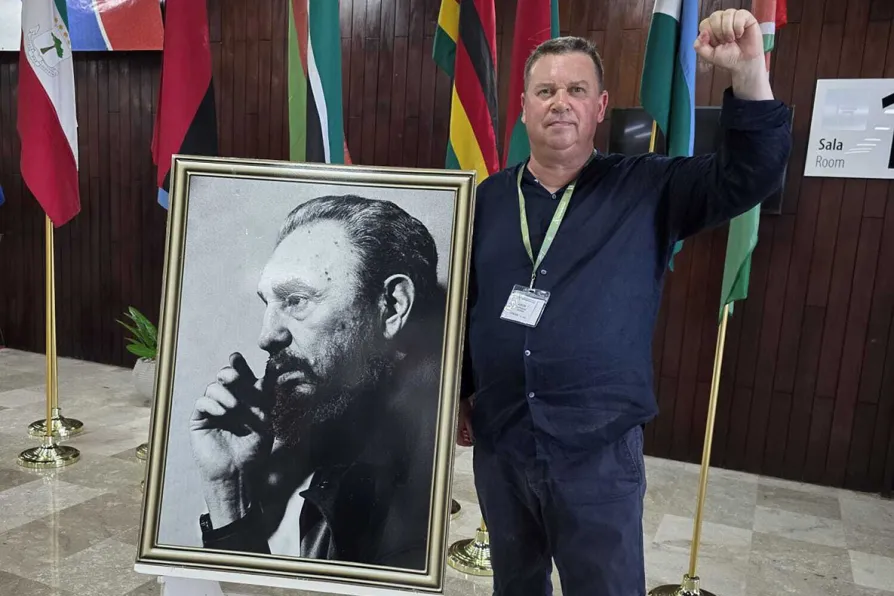
ALEX GORDON and LORRAINE DOUGLAS report from Havana, Cuba, where they represented the Communist Party of Britain at the 24th International Meeting of Communist and Workers’ Parties on August 7-8
As the US intensifies its economic and political pressure it is now vitally important to demand the British government intervene to end US aggression, writes GEOFF BOTTOMS
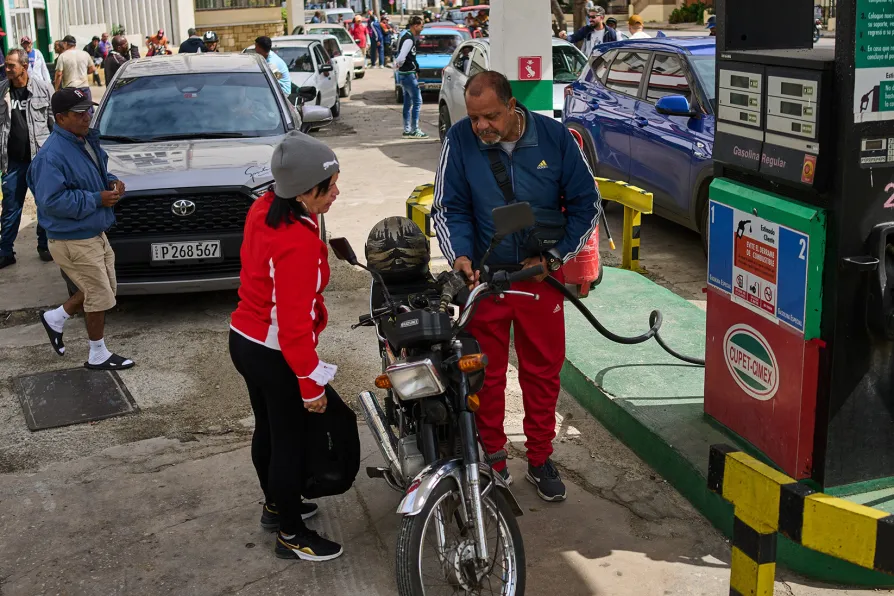
On January 29, US President Donald Trump declared Cuba an ‘unusual and extraordinary threat’ to US national security and tightened the blockade against the island nation MANOLO DE LOS SANTOS reports