ROB WARZYNIAK wades knee deep through a pile of ‘dead canaries’ of Trumpist policies which exacerbated the horrors of US capitalism domestically


 Latest editorial

Manufacturing war, paying the price
History shows from Iraq to Libya, and now Iran, that regime-change fantasies rarely deliver stability — but they always deliver human and economic cost, says MARYAM ESLAMDOUST
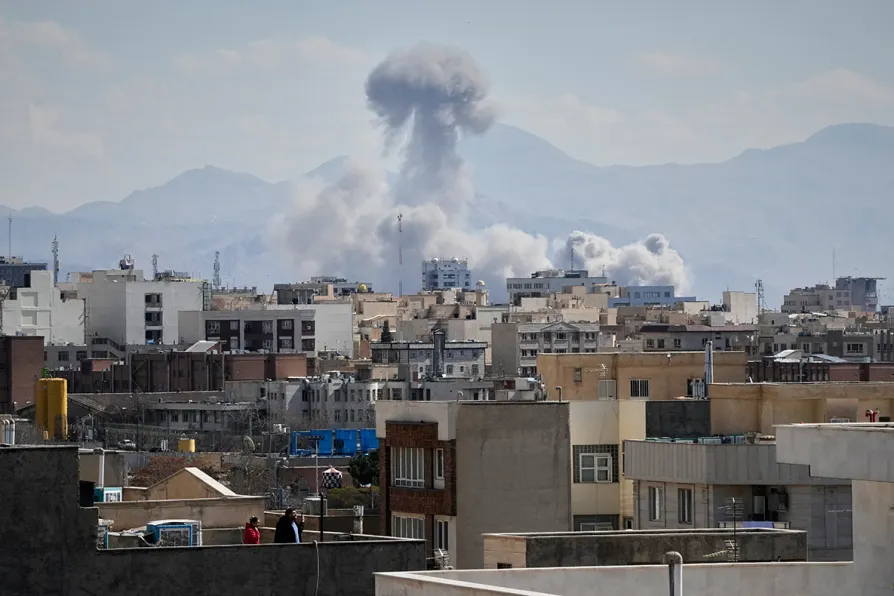
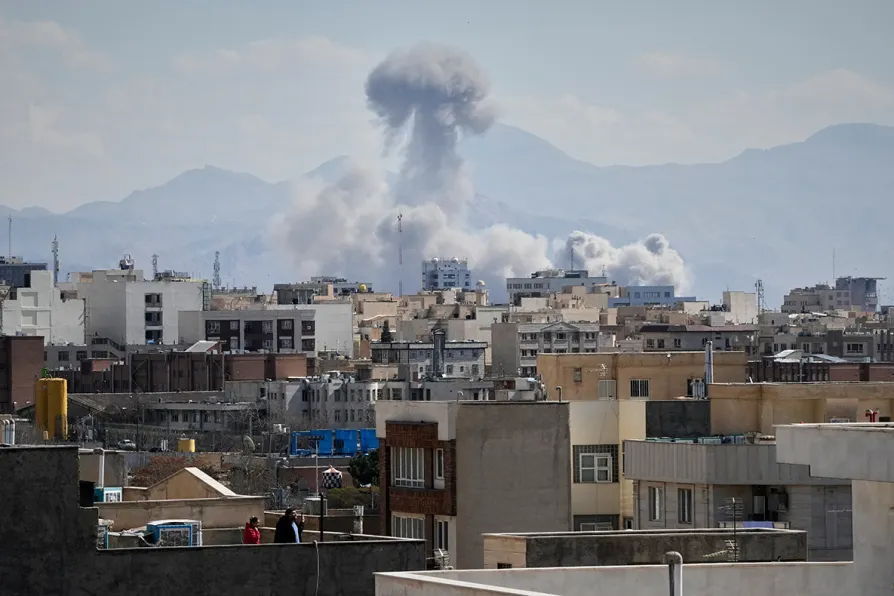 People watch from a rooftop as a plume of smoke rises after a strike in Tehran, Iran, March 1, 2026
Without evidence or Nato consultations Berlin’s answer to the Leipzig incident is a rupture of relations. SEVIM DAGDELEN examines why
FRANCISCO DOMINGUEZ introduces the background to a conference on defending Latin America’s sovereignty
The glacier collapse in Nepal is yet another warning that a warming planet is making Himalayan disasters more frequent and destructive – but the countries facing the greatest risks are often those least responsible, says LI YANG
Nick Blair is set to benefit from a hugely lucrative contract to ‘virtually’ train the British army for its next war. Like father, like son, writes SOLOMON HUGHES
Even when tragedy strikes, Western media cannot resist the opportunity to turn it into a sordid propaganda opportunity, as the Nepal-China border tragedy shows, writes CARLOS MARTINEZ
Trade unions should be at the heart of the anti-racist push for reparations for the historic legacy and continuing impact of slavery, writes ROGER McKENZIE





THE illegal attack by Israel and the United States on Iran on Saturday February 28, while the country was engaged in diplomatic talks with Washington, was absolutely and utterly shocking.
Not merely because of its timing during Ramadan, but because of what it says about the degradation of diplomacy and international law in 2026.
Only a day earlier, the Omani mediator had publicly indicated that talks were progressing well. Channels were open. Dialogue was taking place. There was every opportunity and willingness by Iran to engage. Yet without justification, the United States, acting in alignment with Israel, launched a large military offensive against Iran. This arrogance and disregard for international law provides no incentive for any state to negotiate with the United States.
We have seen this pattern before. Engagement is offered, as was the case with President Nicolas Maduro in Venezuela. Negotiations were under way before President Donald Trump launched a military operation and forcibly seized Maduro from his own capital. This kind of pirate behaviour only reinforces my point about negotiating with gangster politicians.
What is the point of entering talks in good faith if the outcome is coercion regardless?
Legitimacy and international law
There is no legitimacy — legal, moral or diplomatic — in unilaterally deciding to strike another country’s leadership or territory. The United States and Israel have no mandate to attack Iran, to dictate how it manages its national defence, nor to position themselves as arbiters of its sovereignty. Increasingly, many across the world see Israel as the most aggressive regional power in the Middle East.
In 2025 and 2026 alone, Israel has carried out military operations and strikes in Gaza, the West Bank, Lebanon, Qatar, Yemen and Syria, alongside long-running covert operations inside Iran itself. This pattern of cross-border force has contributed to escalating instability across the region.
The human cost
This latest attack on Iran was far from targeted. Reports confirm not only the assassination of Iran’s 86-year-old supreme leader, but also the deaths of civilians, including schoolchildren. Primary school girls were killed. Whatever one’s view of Iranian politics, there can be no justification for targeting children in air strikes.
In Gaza alone, more than 10,000 children have been killed since October 2023, according to figures reported by Palestinian health authorities and cited by the United Nations.
The killing and targeting of children must be condemned without qualification. There is no cause and no conflict that can ever justify it.
Manufacturing consent for war
We were also told on Sunday March 1 that Iran had attacked British bases in Cyprus. That claim quickly unravelled. It was false. These fabrications are not accidental. They are designed to prepare the ground for war, to manufacture urgency, to create public consent where none naturally exists. When politicians are vulnerable, when polling numbers fall, when leadership is questioned, war has too often been used as a route to political sanctuary.
We must not allow that pattern to repeat itself.
The cost at home
As a trade union leader, I view this not only through the lens of opposition to war but through the impact on working people. War never remains contained abroad. It reverberates back home. It drives up energy prices. It destabilises supply chains. It fuels inflation. It generates refugees in the millions. It triggers cost-of-living crises that ordinary families pay for.
Billions appear readily available for foreign wars, yet at home we are told there is no money. Our NHS is crumbling. Disabled people have had their benefits capped. Schools are not fully funded. There is no money for British Transport Police. Great British Railways is not being properly resourced. The contrast is stark and it is political.
Iran’s humanitarian efforts
Iran is not the caricature often presented. It is home to a vast mosaic of ethnicities and religions, including Persians, Azeris, Kurds, Arabs, Christians, Jews and Zoroastrians. For decades it has hosted millions of refugees from Afghanistan, Iraq and Syria, many displaced by conflicts in which western powers played direct or indirect roles. That humanitarian burden is rarely acknowledged.
In modern history, Iran has not launched a full-scale invasion of another country. Framing it as the singular aggressor ignores historical reality.
I remember living in Tehran during the Iran-Iraq war, after Saddam Hussein invaded in 1980 with the backing of Western powers. Families sheltered in basements. Air raid sirens were routine. That war had front lines. What we are seeing now is different. We are witnessing assassinations, covert strikes on schools and the blurring of war and murder.
Regime-change illusions
There are those who believe this will be a short war, perhaps followed by an attempt to impose regime change and elevate the son of the former Shah as a compliant alternative. But Iran is not a fragile state waiting to collapse. It is layered, institutional and prepared. For decades Israel has carried out targeted assassinations of Iranian officials and scientists. Contingency planning has existed on all sides. Removing one leader does not dismantle a state.
More dangerously, this escalation may accelerate nuclear proliferation rather than prevent it. Ayatollah Ali Khamenei had previously issued a religious ruling, known as a fatwa, against the development and use of nuclear weapons. A fatwa is a formal ruling in Islamic jurisprudence offering authoritative guidance on moral and legal matters. His ruling was repeatedly cited by Iranian officials as evidence that nuclear weapons were religiously forbidden. By evading diplomacy and choosing escalation over engagement, Trump and Netanyahu have made the race for nuclear capability and the appetite to acquire such weapons all the more attractive.
We have seen externally imposed regime change before. Iraq, Libya and Syria. None delivered the stable democracies promised. All produced chaos, extremism and displacement.
Accountability and responsibility
Just on Saturday I publicly welcomed the Prime Minister’s statement that Britain had not participated in this illegal war. Later that same day it emerged that British assistance had indeed been provided. That contradiction demands scrutiny, and the trade union movement is largely united in opposing Britain’s involvement directly or indirectly in attacks on Iran.
Unions oppose injustice and we oppose war because working people pay the price. If we do not want spiralling energy costs, collapsing public services and millions more displaced people, we must not allow politicians to reach for war as a political tool.
Diplomacy cannot survive if bombs are allowed to speak louder than talks. If we allow that to become normal, none of us are safe.
Maryam Eslamdoust is general secretary of transport union TSSA.

Similar stories
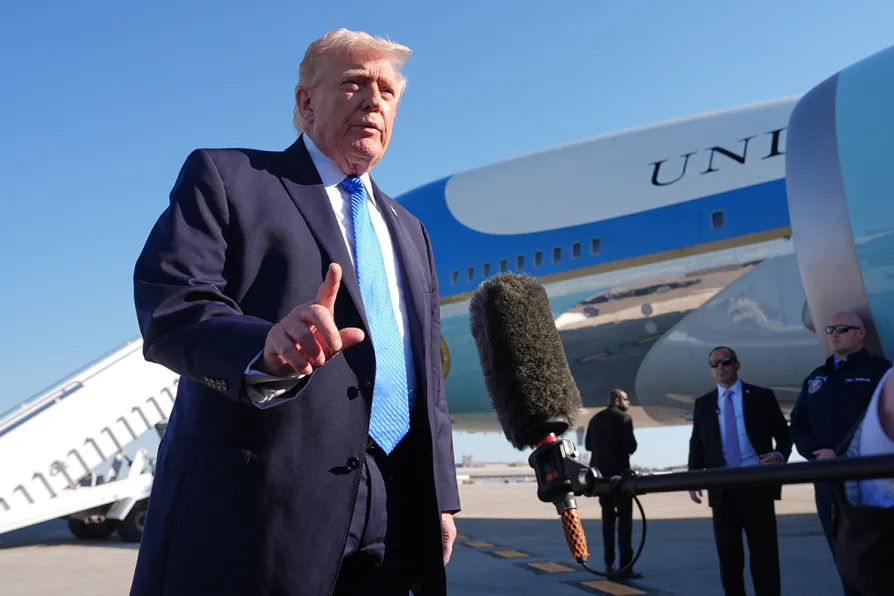
RAMZY BAROUD and ROMANA RUBEO analyse how the US has consistently negotiated in bad faith to secure the element of surprise in military attack
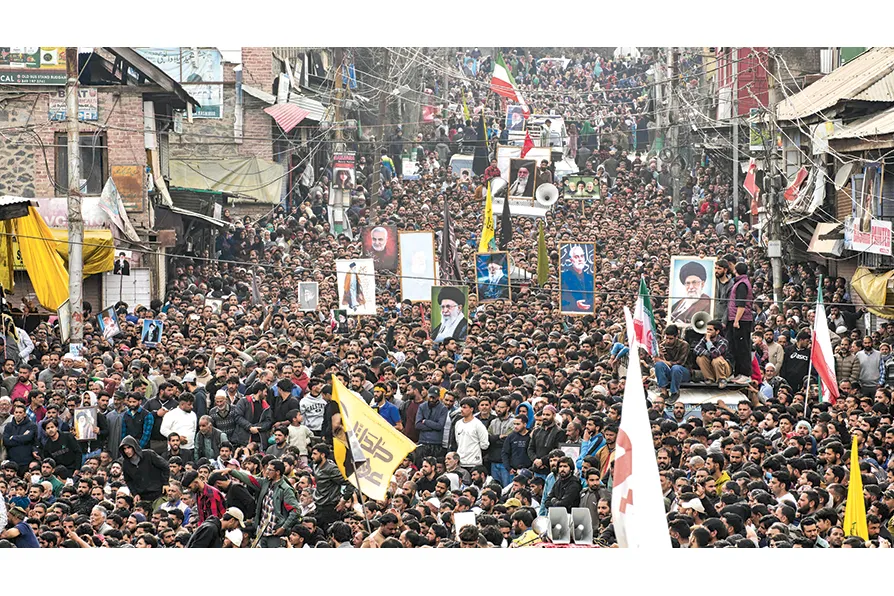
DIANE ABBOTT exposes Keir Starmer's doublespeak on Britain’s involvement in the Iran war but takes heart from the growing organisation of the opposition to it
Tehran retaliates with attacks on Israel, the Gulf Arab states and crude oil flows
Trump threatens war and punitive tariffs to recapture Iranian resources – just as in 1953, when the CIA overthrew Mossadegh and US corporations immediately seized 40% of the oil, says SEVIM DAGDELEN