TUC president and POA leader STEVE GILLAN speaks to Ben Chacko on the eve of Congress 2026


 Latest editorial
Crisis Politics, Rebel Politics
The public recognise the corrosive influence of the rich over our democracy, argues MIKE COWLEY — it’s a shame the Labour Party doesn’t
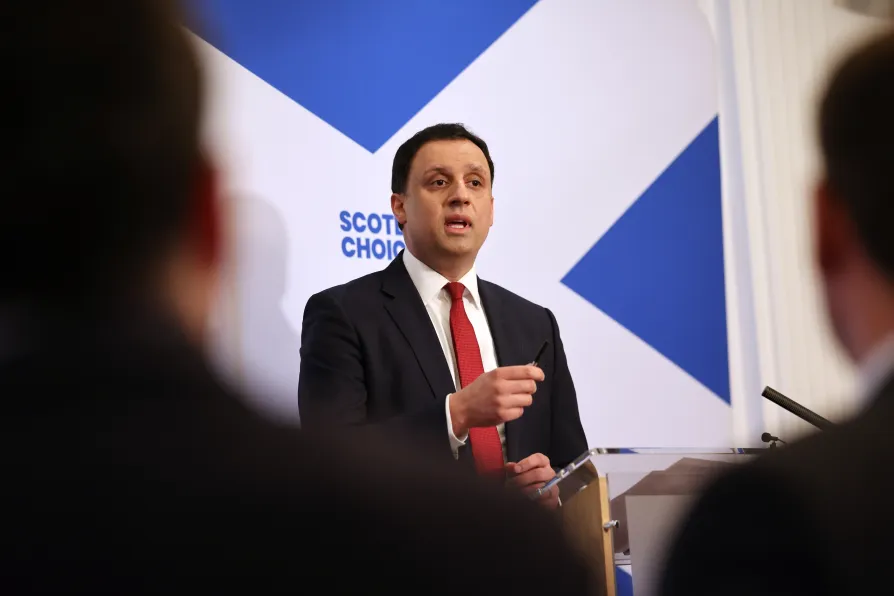 Scottish Labour leader Anas Sarwar speaking to the media during a press conference at Trades Hall, Glasgow, where he called on Keir Starmer to resign as Prime Minister, February 9, 2026

DOUG NICHOLLS welcomes a turning point at this year’s Congress, where many motions call for a co-ordinated plan to revive British industry, a perspective outlined in his new book
HOPE VIRGO of campaign Dump the Scales warns MPs voting today they should be alert to the threat legalised assisted death poses to people with eating disorders
The Together Alliance is hosting two summits, North and South, to build power and plan action against the scourge of racism peddled by the right. DANIEL KEBEDE urges mass participation
The drift toward militarisation in Europe is not inevitable, left-wing and peace movements can preserve sovereignty and prevent war, says DÁIRE HUGHES MP
Whatever differences exist among international sympathisers of the Bolivarian revolution about its current trajectory, they should unite against the imperialist power that is the source of an enforced retreat, argues ROGER D HARRIS
Trade unions need to step up and force a turn in the policies of the labour movement to effectively confront the far-right threat, argues NICK WRIGHT





JUST weeks before the Mandelson scandal broke, Brian Leishman MP spoke out against the Scottish Labour Party’s acceptance of a six-figure donation from the billionaire Easdale brothers.
Typically, such charity on the part of wealthy elites comes draped in the rhetoric of “civic duty.” On this occasion, the Easdale brothers were happy to disclose the political strings attached to their foray into public advocacy.
Anas Sarwar, they opined, should strive to make the party “more distinctively Scottish.”
Perhaps Sarwar’s call for Keir Starmer to resign as prime minister was an attempt to map a distinctive path in the lead up to May’s Scottish general election. If so, it was too little, too late.
The leader’s office wobbled. But it soon became clear that Sarwar had stepped forward only to find himself isolated and ignored. Rather than leverage influence, the limits of the Scottish leader’s authority were thrown into toe-curling relief.
In a blunt assessment of the influence of lobbyists on our elected representatives, Leishman called on the Scottish Labour leader to remember that the party was “born out of the trade union movement, that’s where our core support should be… I don’t want multimillionaire business people backing our party.”
The Labour Representation Committee was founded to challenge class power, not to embed it in our democratic institutions. With corporate lobbyists ever more entrenched in political office, Marx’s cautionary words remain as vital as ever. The “modern state” is, ultimately, “a committee for managing the common affairs of the bourgeoise.”
First and foremost, the Epstein Files tell a dark tale of vulnerable girls trafficked into the hands of powerful, predatory men. It is their story to tell.
But Mandelson’s immersion in this world exposes a moral and political corrosion at the heart of the Labour Party.
With brief exceptions, successive leaderships sought to insulate themselves from the influence of members and affiliated unions. In contrast, networks of wealthy grifters and their bag carriers are increasingly welcomed into Labour’s inner circle. Chancellor Rachel Reeves assures business leaders that their grubby fingerprints are “all over” Labour’s economic policies.
The intrigues of Mandelson and Morgan McSweeney should become public knowledge. But we deserve access to the bigger story, of the political establishment’s willing capitulation to corporate-capture, with the likes of Peter Mandelson an eager conduit for a motley crew of self-serving billionaires.
It seems a long time ago that Neil Findlay MSP tabled his Lobbying Transparency (Scotland) Bill. The Scottish government exercised its executive prerogative to assume responsibility for legislation eventually passed in 2016.
As so often, the government’s final Bill cleaved away from the radical intentions of Findlay’s original proposals. That an SNP government with so little to positively reflect back on since 2021 looks likely once again to emerge as the largest party this May is itself a morbid symptom of our times.
Replicated polling shows a majority of the British public believe that “the rich have too much influence over British politics.” A recent Oxfam poll showed a clear majority of Scots favour wealth taxes.
The Scottish and UK Labour leaderships oppose the redistribution of power and wealth not because they think it’s electorally unpopular. Their resistance reflects a dogmatic faith in neoliberal ideologies at odds with public opinion. In the class war between corporations on the one side and people and planet on the other, the present Labour leadership has chosen its side.
“Everybody to Kenmure Street,” a film by the makers of Nae Pasaran, tells a different story, of an officially derided “politics of protest” driving state officials from the streets of Pollokshields in Glasgow. Here is Keir Hardie’s “divine agitation” in action.
Polling suggests a drift in support for Reform UK ahead of May’s elections. Scotland’s political classes will try to claim credit.
In fact, a consistent, community-based anti-fascism has been to the fore in exposing the far right’s poisons, corroding their influence and shifting the ideological dial.
May’s elections will not fundamentally reorder Scotland’s political landscape. To paraphrase Red Saunders, one of the founders of Rock Against Racism, real change will come from “rebel politics, politics that breaks down people’s fear of one another. Crisis politics, politics that knows who the real enemy is.”
The ballot box cannot drive the racist poison out of politics for good. That requires a more fundamental uprooting, of the billionaires whose grubby hands are not only all over the Earth’s resources, but our democratic institutions too.
Mike Cowley is co-convener of the Scottish Labour Campaign for Socialism.
