Councillor SAM WHEELER says there’s a tangible shift in mood on the left in the city whose mayor has recently become PM — but there’s no room for complacency



Land reform is Scotland’s defining election issue
Politicians must seize the opportunity to act boldly and tackle land inequality, delivering power to local communities, writes Dr JOSH DOBLE
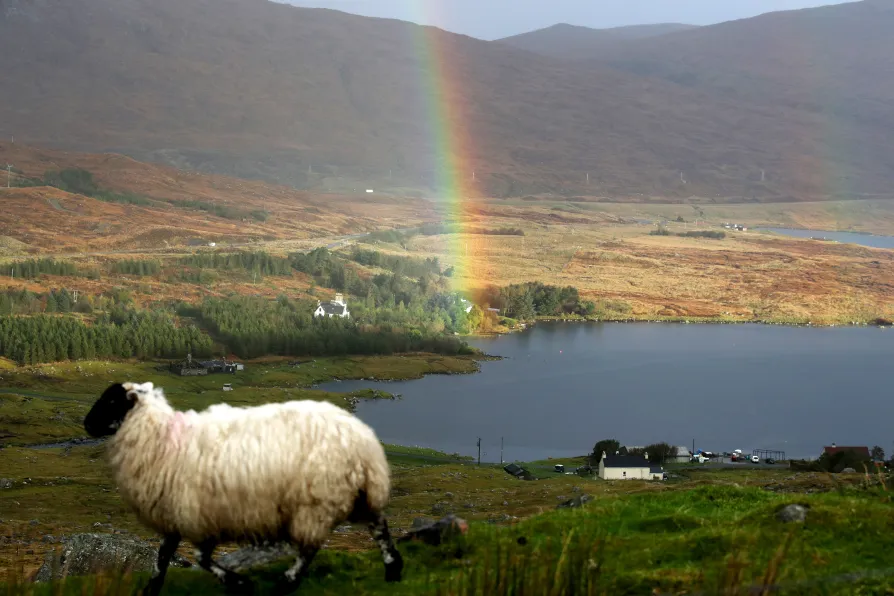
 REFORM OVERDUE: A view of the Scottish isle of Harris
Communist Party leaders Alex Gordon and Lorraine Douglas deliver vital medicines in trip to besieged socialist island
TUC Cymru is playing a leading role in tackling far-right ideas in the workplace, says LAURA DOEL
A New Delhi press conference in which Sheikh Hasina and her son implied the new order in Bangladesh is a security threat to India has sparked fears she is planning a comeback. SIAM SAROWER JAMIL reports on the fallout
Two months of student unrest have forced out India’s education minister and rattled the BJP regime. Could this be the beginning of the end for Modi, asks Communist Party of India (Marxist) general secretary MA BABY
MAT COWARD says the heatwave is a testing time for gardeners — but he has some tips





THE 2026 Scottish parliamentary election comes at a crucial moment. Scotland is facing multiple and overlapping crises: housing shortages and depopulation, climate breakdown, biodiversity loss, a cost-of-living emergency, deepening inequality and rising political disillusionment increasingly threaten the fabric of our society.
Doing more of the same will not deliver change at the speed or scale that we need.
This election provides a rare opportunity to take transformative action in tackling these pressing issues — answers and solutions for which lie within communities themselves.
With revitalised democracy rooted in communities, people can have real ownership of land and resources, across rural and urban Scotland. They can build affordable homes, generate clean energy, restore nature, regenerate high streets and support thriving local economies.
Strengthening community ownership, power and resource is therefore not just the fairer way forward; it is the key to putting Scotland’s future in the hands of its people and communities and shape a more equitable and sustainable future.
Land is a vital and finite resource which is central to our economy, environment, culture and wellbeing. However, since 2012 land ownership in Scotland is becoming even further concentrated, with 408 landowners now owning 50 per cent of private rural land.
These landowners are increasingly corporations, asset managers and billionaires, who, along with the more traditional aristocratic lairds, operate with little transparency or public oversight.
Scotland’s archaic pattern of landownership has resulted in vast amounts of land lying underused or managed in ways that do not address the pressing issues facing our society; economic inequality, restricted opportunities for community and business development, an agricultural sector dominated by corporations, a degraded natural environment, a housing emergency and depopulation crisis.
All these issues stem from how land is owned and managed, and all of which can begin to be meaningfully tackled by democratising landownership.
Simultaneously, soaring land prices are putting ownership further out of reach for communities and ordinary people, driving private profit rather than sustainable development.
Diversifying who owns, and therefore controls, land is essential to creating a fairer and more resilient Scotland. Tackling land prices and opening access to more people and communities to own land will ensure wealth is retained in local areas where it is generated and help to combat the multiple crises of climate, biodiversity, housing and growing inequality.
Although more communities are purchasing assets, the total area of land in community ownership has plateaued since 2017, as it has become increasingly difficult for communities to acquire larger landholdings.
Independent research by the Diffley Partnership has shown that 80 per cent of Scots believe the Scottish government should do more to encourage community ownership, 78 per cent of Scots support requiring large landowners to meet climate and nature targets, 67 per cent back a land tax for large estates and 59 per cent agreed Scotland would benefit from more diverse land ownership.
Bolder reform of the way that land is owned, used and managed is crucial.
A bold and ambitious land reform agenda
Scotland has a long and proud history of land reform, starting with the resistance to the clearances and the crofters war and re-emerging in the 20th century during the first community land buyouts of the 1990s.
The landmark legislation of the devolved Scottish Parliament was the 2003 Land Reform Act, a transformational piece of legislation for communities and access rights.
However much of that momentum and radical spirit has been constrained in recent years, due to tight government budgets, weakening political ambition and growing landowning and corporate power.
We strongly believe that land reform is for all of Scotland. Concentrated landownership, underused land, ecological degradation, growing inequality, housing crises and barriers to community-led development exist all over the country.
Land reform is a wide-ranging process of political, economic and social transformation which integrates urban and rural issues, supports economic and ecological revitalisation and a renewal of local political engagement and community voice.
As such, land reform policies cut across multiple policy areas in the Scottish government, as illustrated by the work of the Land Reform Review Group in 2014, whose vital report ranged across the crown, minerals, wildlife, housing, community land, common good and tax.
Many of their vital findings have yet to be properly addressed.
Communities are taking the lead in redeveloping high streets, building affordable homes, restoring peatlands and building resilient local economies, to name just a few.
When the land of Scotland is in the hands of local people it unlocks the potential for long-term, resilient and sustainable positive change.
Land reform is not a fringe issue, but is foundational to transforming Scotland’s economy, driving cultural and social revival, reinvigorating local democracy and fostering environmental regeneration.
It’s time for the opportunity of land reform to be grasped.
Dr Josh Doble is director of policy and advocacy at Community Land Scotland
Community Land Scotland was established to provide a collective voice for community landowners in Scotland. We have over 140 member organisations across Scotland, ranging from community landowners of major crofting estates in the Western Isles to inner city community hubs in diverse communities.
