Trade unions need to step up and force a turn in the policies of the labour movement to effectively confront the far-right threat, argues NICK WRIGHT


 Latest editorial

The red rebel of Wellington College
Esmond Romilly horrified Britain’s Establishment by turning from privileged schoolboy to anti-fascist fighter, writes MAT COWARD
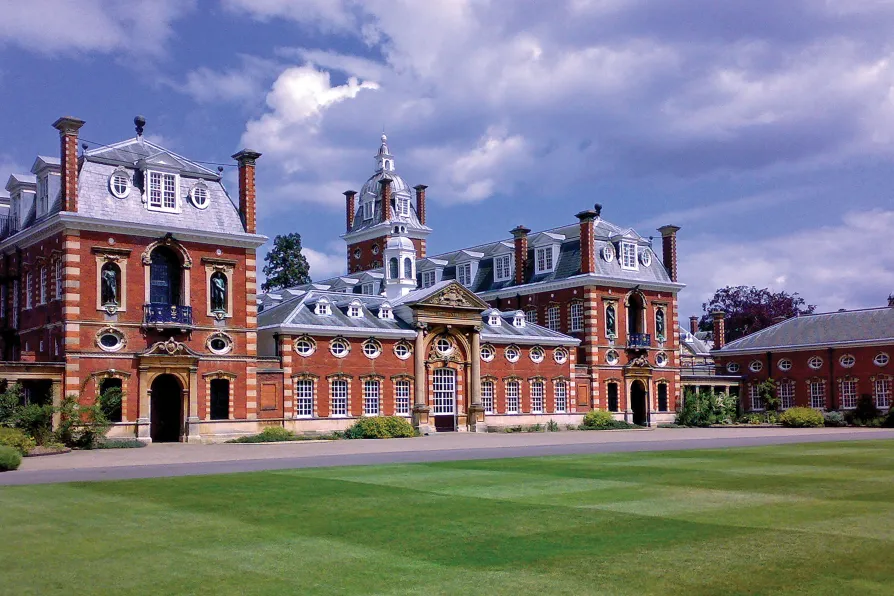 Photo: Flickr user RTPeatCC

As the 90th anniversary of the outbreak of the Spanish civil war is marked, Teesside campaigners will gather to remember the local men and women who stood against fascism, explains TONY FOX
Whatever differences exist among international sympathisers of the Bolivarian revolution about its current trajectory, they should unite against the imperialist power that is the source of an enforced retreat, argues ROGER D HARRIS
Washington’s inability to subjugate Iran is an example of how it is trying to preserve a regional order that no longer exists, argues RAMZY BAROUD
US financial instability is exposing the limits of a dollar-dominated global economy — and giving the Global South a historic chance to build an alternative, says MURAD QURESHI
Deprivation is a fundamental factor in criminal behaviour that must be addressed but, KENNY MacASKILL argues, there needs to a major rethink in sentencing to tackle overcrowding





“RED MENACE in Public Schools! Moscow Attempts to Corrupt Boys.”
You don’t seem to get aristocratic rebels these days. Modern aristos are uniformly tawdry and vile, their every word and deed an advert for the healing power of the guillotine. Between the wars, though, upper-crust revolutionaries were … sorry, I was going to say “they were quite common,” but obviously that’s not the right term. There were loads of them, is what I mean.
They were generally dismissed by commentators then and historians now as eccentrics, silly idealists or even traitors. Or all three, I imagine, in the case of “Winston’s Red Nephew.”
In his very short life, Esmond Romilly engaged in forms of rebellion ranging from refusing to join the Officers’ Training Corps at his elite school, to machine-gunning fascists in Spain. A little later, he took the role of the groom in what was reported around the world as “the wedding a battleship couldn’t stop.”
Esmond was born in 1918 into a top-drawer family (Winston Churchill’s wife, Clementine, was his aunty) and educated at Wellington College in Berkshire, which was at that time a notoriously reactionary and authoritarian place. By the age of 15 he had declared to his aghast family that he was a Bolshevik and a pacifist, and was constantly in trouble with the school for his subversive activities.
The biggest fuss was caused when he and his brother inserted anti-war leaflets in the hymn books laid out for Wellington’s annual armistice day service. According to their own account, the headmaster was tipped off about the scheme by “a very high official at Scotland Yard,” amid fears that this was part of an organised Red plot to bring communism to the public schools. (For the benefit of non-British readers: “public schools” in this context means the precise opposite of what it sounds like. They were in fact private, fee-paying schools, at which the sons of the ruling class were usually educated).
The Romilly brothers’ next adventure was the one which first put them in the headlines. They launched a magazine, Out of Bounds: Public Schools’ Journal Against Fascism, Militarism, and Reaction, which quickly reached a wide circulation in private schools around the country. Ordered by his headmaster to close it down, Esmond instead ran away from school (“Mr Churchill’s Nephew Vanishes”). His father told the press “it was clear his son had been influenced to leave the college by communists.”
He was in fact working in a left-wing bookshop in London. It was mainly during this period that he received his political education, such as it was, through contacts in the Communist Party and the anti-war movement and by taking part in demonstrations and meetings. His Bolshevik phase didn’t last all that long; he was later quoted as saying that communism hadn’t been quite the fun adventure he was expecting, and by the end of his life he was calling himself a democratic socialist.
Having left school in 1934, he worked at various jobs including freelance writing, selling advertising space, and as a door-to-door salesman. The start of the Spanish civil war in 1936 gave Esmond his next big cause. Still a teenager he made his way to Spain and the International Brigades, where he saw action on the Madrid front. When the news about “Churchill’s Nephew Fighting With Reds” emerged, Esmond’s mother said to a reporter “I have not seen Esmond or heard from him for six months. He went away in one of his silly, angry, youthful moods.”
He was one of only two British volunteers to survive one major battle, but he contracted dysentery and was invalided out of the war. It was back in England that he met his wife-to-be.
When Esmond Romilly is remembered today, it is most commonly as Mr Jessica Mitford. She was his second cousin, and was also a left-wing rebel. The couple returned to Spain, this time as journalists rather than combatants, and decided to marry. Their elopement created even more headlines than any of Romilly’s previous escapades. “Romance Chased By Warship” summed up the story quite neatly.
Jessica’s horrified family used their contacts in government to have a British destroyer sent to Spain with orders to bring her home. Years later, she recalled that the captain had tried to lure her aboard with “roast chicken and chocolate cake,” which she heroically resisted. Unsurprisingly, questions were asked in Parliament by MPs wondering if, at a time of international tension, the Royal Navy’s ships might not have more important things to do. You can almost imagine the puzzled look on the aristocrats’ faces: what could possibly be more important?
A long struggle between the family and the young lovers only ended because Jessica was pregnant, so the elders had to agree to their marriage. A civil wedding took place on May 18 1937 in Bayonne, France. They weren’t together very long, as it turned out. In 1940 they were living in the US, when Romilly volunteered for the Canadian Air Force.
His training ended when a medical examination showed him unfit for aircrew. Clearly determined to return to the battle against fascism, he retrained as an air observer and was posted to England. In November 1941, having participated in an air raid against Hamburg, his plane was lost over the North Sea. The bodies were never recovered; Esmond Romilly was 23.
You can sign up for Mat Coward’s Rebel Britannia Substack at www.rebelbrit.substack.com for more strange strikes, peculiar protests, bizarre boycotts, unusual uprisings and different demos.
