ROB WARZYNIAK wades knee deep through a pile of ‘dead canaries’ of Trumpist policies which exacerbated the horrors of US capitalism domestically


 Latest editorial

The media is gaslighting the public on Starmer and Iran
The media present Starmer as staying out of Trump’s war — but we’re already deeply involved in a conflict that sees the US and Israel kill civilians on a huge scale, argues IAN SINCLAIR
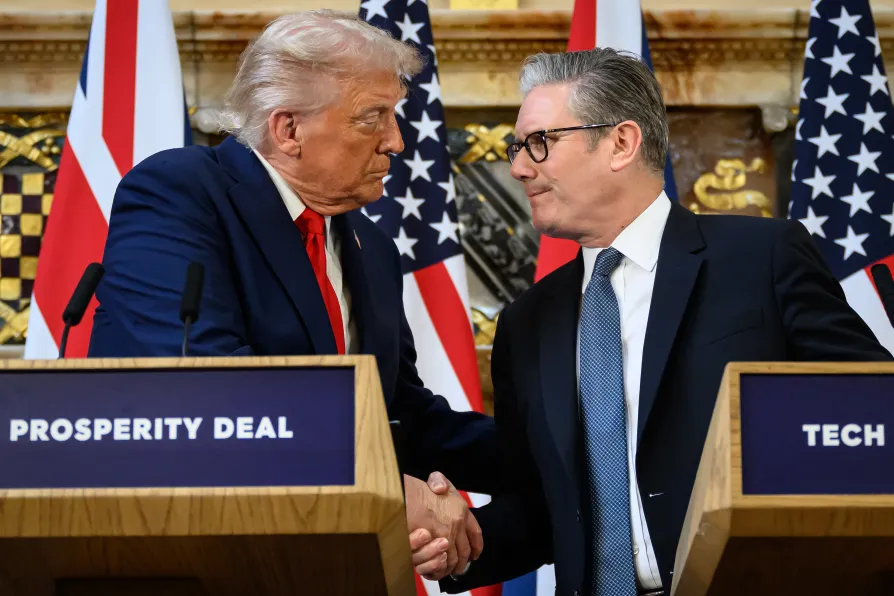 Prime Minister Keir Starmer and US President Donald Trump during a press conference at Chequers, near Aylesbury in Buckinghamshire, on day two of the president's second state visit to the UK, September 18, 2025

Without evidence or Nato consultations Berlin’s answer to the Leipzig incident is a rupture of relations. SEVIM DAGDELEN examines why
FRANCISCO DOMINGUEZ introduces the background to a conference on defending Latin America’s sovereignty
The glacier collapse in Nepal is yet another warning that a warming planet is making Himalayan disasters more frequent and destructive – but the countries facing the greatest risks are often those least responsible, says LI YANG
Nick Blair is set to benefit from a hugely lucrative contract to ‘virtually’ train the British army for its next war. Like father, like son, writes SOLOMON HUGHES
Even when tragedy strikes, Western media cannot resist the opportunity to turn it into a sordid propaganda opportunity, as the Nepal-China border tragedy shows, writes CARLOS MARTINEZ
Trade unions should be at the heart of the anti-racist push for reparations for the historic legacy and continuing impact of slavery, writes ROGER McKENZIE





WE are all being taken for mugs.
Over the last couple of weeks the mainstream liberal media has been gaslighting the British public about Prime Minister Keir Starmer and the war on Iran.
This was best summed up by Daily Mirror Associate Editor Kevin Maguire, who recently asserted on ITV’s Good Morning Britain “The prime minister will want Kemi Badenoch to ask about the war in Iran [during Prime Minister’s Questions], because he is with public opinion and very much opposed.”
Similarly, the Guardian claims Starmer is “opposed to the attacks” on Iran, and therefore “on the same page as the majority of Britons.”
Let’s take the second of these claims first — that Starmer is opposed to the war. According to a report from Tim Shipman in the Spectator, at the February 27 National Security Council meeting the prime minister didn’t want Britain to join the military action but “he did think there was a case for allowing Trump to use the bases at Diego Garcia and RAF Fairford to launch the strikes.”
However, he was initially blocked by senior Cabinet ministers including Ed Miliband, Rachel Reeves and Yvette Cooper.
Two days later, after the British Chief of Defence Staff worked with his US counterparts to finesse the US official request, the Starmer government did give the US permission to use British bases. According to the summary of the legal position published by the government, this is for “specific and limited defensive action against missile facilities in Iran which were involved in launching strikes at regional allies.”
Frustratingly, the media has bought the government’s “defensive” framing — hook, line and sinker.
BBC Breakfast presenter Sally Nugent introduced reporter John Maguire saying he was “outside RAF Fairford in Gloucestershire… which is one of those sites likely to be used by the US for defensive actions.”
Likewise, the Guardian — the home of “fearless, independent journalism,” according to its editor — has repeatedly referred to “defensive operations” without quotation marks.
In reality, Starmer has given permission for the US, which is involved in an ongoing illegal, aggressive attack on Iran, to use British bases to bomb Iran — which is certainly a strange way of opposing the war.
As the media has shown little interest in seriously investigating the legality of the Starmer government’s position, it’s worth highlighting the analyses of several scholars of international law.
For example, Alexander Orakhelashvili, Professor of International Law at the University of Birmingham, describes the British government’s position of targeting missile facilities in Iran “which were involved” in attacks on Britain’s regional allies as “plainly beyond what the right to self-defence allows any state to do in such circumstances.”
He describes it as “more akin to collective reprisal,” and therefore not in line with the United Nations Charter or “customary international law.”
Writing on March 11, Thomas Obel Hansen, a senior research fellow with the School of Law at Ulster University, argues that “by permitting US heavy bombers to use its bases to launch strikes on Iran, the UK would not only make a significant contribution to the military campaign against Iran, but also one that is essentially offensive” making Britain “a party that actively supports a war of aggression on Iran.”
Adil Haque, Distinguished Professor of Law at Rutgers Law School, concurs, noting the British agreement with the US “would appear to be unlawful.” Why? “The United States is committing an unlawful act of aggression, and the United Kingdom cannot aid or assist in its commission. Air strikes against missile facilities in Iran have been, and will continue to be, an important component of the composite act of aggression. It is not possible to facilitate such air strikes without facilitating the act of aggression of which they are a part of.”
Sir Richard Shirreff, the former deputy supreme allied commander Europe of Nato, was somewhat blunter when he was interviewed by Sky News: “Britain shooting down drones, Britain engaged in offensive or defensive operations is invidious, frankly. The fact is if Britain is involved, our hand is in the mangle.”
Predictably, media coverage of the destruction and death caused by the US-Israeli bombing has been minimal, though an attentive news consumer can find glimpses of the bloody truth.
“The United States and Israel are bombing Iran’s critical energy and civilian infrastructure,” the US government-funded Radio Free Europe reports. Oil depots, a commercial airport, Tehran’s Resalat highway and a water treatment plant have all been hit. And of course it’s now understood the US bombed the school in Minab on February 28, which Amnesty International says killed 168 people, including over 100 children.
Last weekend the Financial Times reported that more than 20,000 non-military buildings have been hit, including 17,353 residential units, according to Iran’s Red Crescent. By March 5 the World Health Organisation said they had verified 13 attacks on health infrastructure in Iran.
On March 12, UNHCR, the United Nations refugee agency, reported “between 600,000 and 1 million Iranian households are now temporarily displaced inside Iran as a result of the ongoing conflict, according to preliminary assessments, representing up to 3.2 million people.” As of March 17, Iran’s Health Ministry says at least 1,444 people have been killed, and 18,551 injured, in the US-Israeli attacks.
Now let’s turn to Maguire’s and the Guardian’s other claim — that Starmer is “with public opinion” on the war on Iran.
A March 9 YouGov survey found 59 per cent of respondents opposed the military action that the United States has taken against Iran, with 25 per cent in support (polls done by Survation and Opinium have had similar results). On Starmer’s specific decision to allow the US to use British air bases specifically to launch attacks against missile bases in Iran, a March 2 YouGov poll found 50 per cent of respondents were opposed, with 32 per cent in support.
It seems one can only think Starmer is “with public opinion” if you ignore the not unimportant fact that Starmer is actively helping the US to bomb Iran.
As investigative journalist Matt Kennard recently noted on X about the media’s inversion of reality: the “level of obedience and servitude within elite UK journalist circles — with no gulags — is genuinely incredible.”
What is not in dispute is that the Starmer government has come under intense pressure from the US government and military, Reform, Tories, and the right-wing press to increase British support for the US-Israeli attack on Iran. And while the ghost of the Iraq War continues to haunt Westminster, so far there has been little pushback from those opposed to the war and to Britain facilitating the US bombing.
Therefore, the anti-war movement needs to massively up its game and start piling real pressure on the government as soon as possible.
As the late Jesse Jackson told the million people marching through London against the war in Iraq on February 15 2003, it’s time to generate “some serious street heat.”
Follow Ian on X @IanJSinclair.

Similar stories
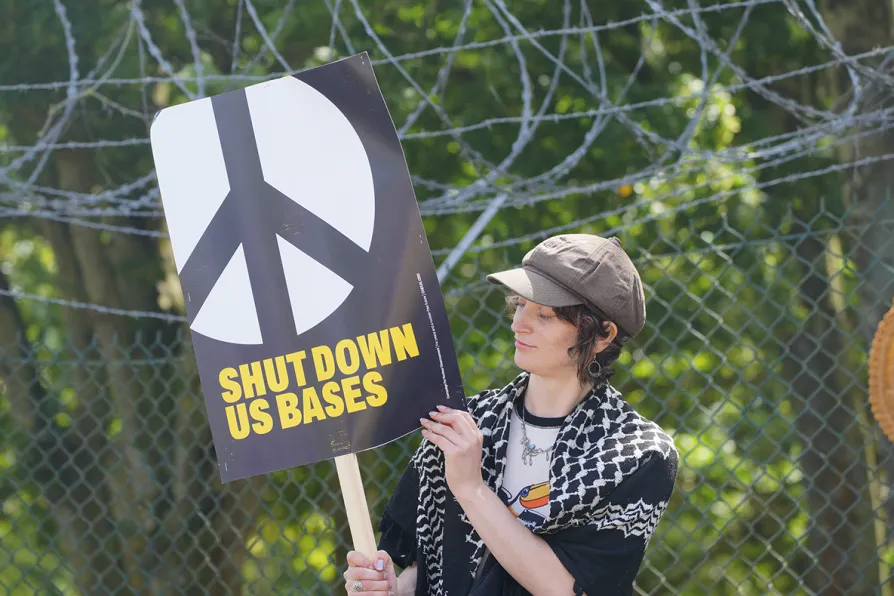
Peace activists and trade unionists to gather at RAF Fairford to protest against US bombers taking off from Britain to strike Iran
![Anti-war protesters outside RAF Fairford, July 2#, 2026 [Pic: CND]](https://msd11.gn.apc.org/sites/default/files/styles/desktop/public/2026-07/PHOTO-2026-07-26-11-42-59.jpg.webp?itok=UNG-N8fw)
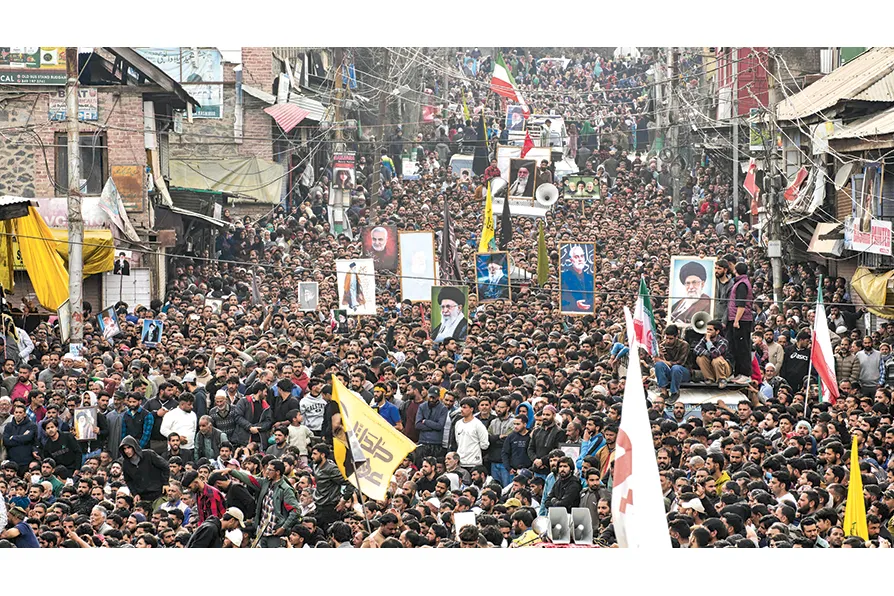
DIANE ABBOTT exposes Keir Starmer's doublespeak on Britain’s involvement in the Iran war but takes heart from the growing organisation of the opposition to it
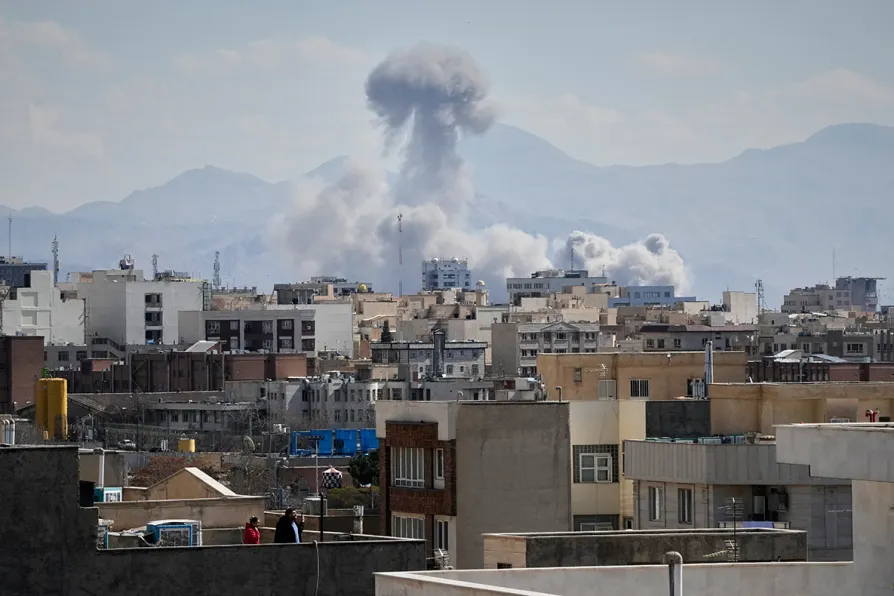
Tehran retaliates with attacks on Israel, the Gulf Arab states and crude oil flows