Councillor SAM WHEELER says there’s a tangible shift in mood on the left in the city whose mayor has recently become PM — but there’s no room for complacency


 Latest editorial

Beyond the bars: ‘I am running because I want to talk about Palestine liberation’
From HMP Bronzefield, Palestine Action activist AMU GIB talks to Andrew Murray about why they are standing in local elections in north London, and the need to amplify voices that are often unheard
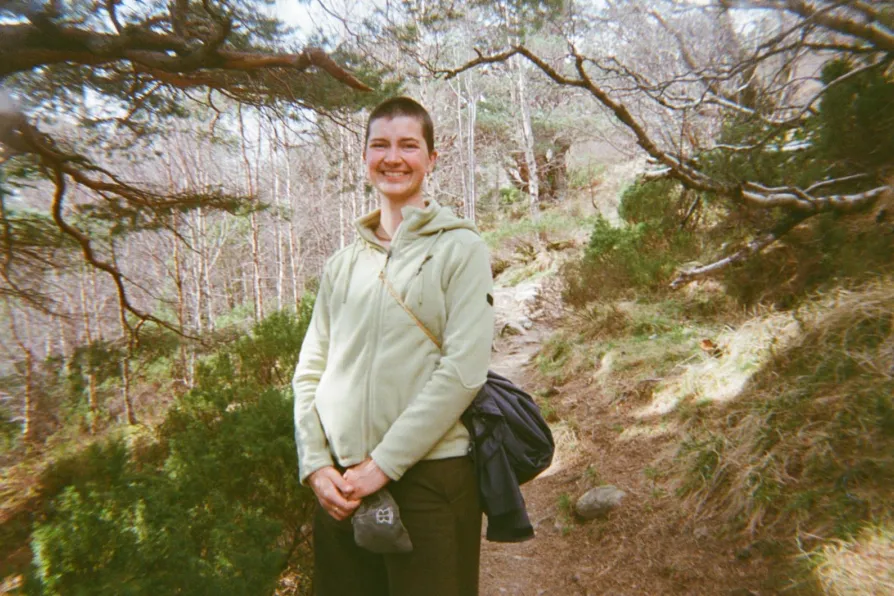 Amu Gib, who is standing for election in Finsbury Park ward
Communist Party leaders Alex Gordon and Lorraine Douglas deliver vital medicines in trip to besieged socialist island
TUC Cymru is playing a leading role in tackling far-right ideas in the workplace, says LAURA DOEL
A New Delhi press conference in which Sheikh Hasina and her son implied the new order in Bangladesh is a security threat to India has sparked fears she is planning a comeback. SIAM SAROWER JAMIL reports on the fallout
Two months of student unrest have forced out India’s education minister and rattled the BJP regime. Could this be the beginning of the end for Modi, asks Communist Party of India (Marxist) general secretary MA BABY
MAT COWARD says the heatwave is a testing time for gardeners — but he has some tips





VOTERS in one corner of London have a special opportunity on May 7 to strike a blow both for Palestine liberation and against government authoritarianism.
Amu Gib, imprisoned for their commitment to the Palestinian cause, is on the ballot paper in the Finsbury Park ward in the north London borough of Islington.
Gib, whose preferred pronouns are they/them, is running their campaign from a cell in HMP Bronzefield where they are being held on remand, facing a disgraceful 18-month wait for trial on charges arising from the spray-painting of fighter aircraft at RAF Brize Norton last year.
Gib, who denies the charges, went on hunger strike for nearly 50 days in protest, and sees themself as simply the face of the movement in their area, where they grew up.
Speaking to the Star by telephone from prison, they explain that “I never wanted to get any closer to the rotten core of the British empire” but that standing for the council can both highlight the Palestine cause and allow them to “work for and be able to be of service to local people.
“It is a way we can fight from where we are at the moment.”
The campaign, supported by a network of motivated activists on the ground, pivots on four slogans of national significance, they explain: “Free Palestine; Migration is Life; Welfare not warfare and Prisons Don’t Work.
“The people of Finsbury Park are impacted by all these things,” they argue. Their campaign literature, more expansively, details homes for all, holding landlords to account, training more SEN educators and redirecting government funds from war to local councils and health.
But one issue looms largest. “I am running because I want to talk about Palestine liberation — that remains. The feedback is very positive — people are using it as a way to engage more people locally.
“People are responsive to someone running from prison as an act of solidarity and people in prison are so supportive it is quite beautiful — I get told ‘fight for us.’ People need voices,” they stress.
“The authorities are flummoxed, they don’t know how to stop” their campaign, they say. One of the prison administration’s techniques is delaying correspondence. A supportive letter from local MP Jeremy Corbyn took six weeks to get through.
Corbyn is fully supportive of Gib and their campaign leaflets include this message from him: “Amu has shown remarkable bravery in support of the people of Palestine and their moral courage has inspired millions of people to speak up for our common humanity. Amu has proven themselves a tireless campaigner for the rights of others, and is driven by a selfless desire to look out for people in need.”
An academic friend of the family recently observed that “Amu is in prison but prison is not in Amu” and that is very clear from the interview. Gib comes over resilient, militant, thoughtful and even cheerful, their remarks often punctuated by merry laughter.
The hunger strike they describe as “one of the tools” in the struggle. One must “understand that your relations with the state being in custody is based on the idea that they can look after you better than you can look after yourself. That you belong to them. As long as people are in prison it will be one of the ways people find to resist.”
They emphasise the importance of “strong relationships with outside resistance” with the aim being disruption of “the supply chain of the war machine.”
Gib is now recovering well from the hunger strike — “I won’t know until I’ve got out of prison what the impact is but as far as I can tell there is nothing major wrong with me” — and is clear about the function of the incarceration of themselves and so many others.
“As long as there are classes there will be people in prison,” they say. “It is a shadow we all live under, it looms over all of us whether we are in prison or lucky enough not to be. Capitalism leads into mass incarceration.
“There were 600 people in the women’s prison estate in the 1960s in Britain, now it is more than 3,000. It is a political decision to send more and more people into prison, for resisting domestic violence, shoplifting or being trafficked across borders. It would be much easier if they did not pay for private prisons, run to make a profit.
“The state wants people to see the ultimate form of control it can wield over everyone. Anyone can be in prison,” they state before adding, with that laugh again, “well obviously not Mandelson. They can act with no consequences.”
Gib’s commitment to Palestinian liberation goes back to their school-days — they turned 30 in prison — and the “tireless leg-work of friends talking about a struggle that people in mainstream education are never going to learn about.
“The struggle for Palestinian liberation is one we should all be committed to. Marches, petitions, fundraising have little impact on the powers that be. I am not saying it is not important but as part of a spectrum” of actions necessary.
As far as the latest war goes, they are clear that the attack on Iran is “a war of aggression, of choice. We are in bed with Israel and the US and they are always at war.” Instead, the world could be tackling the climate crisis and building resilience into water supply, they argue.
Gib may benefit from the nationwide revulsion against the Labour Party in the elections, although “I’m not really that interested in the Labour Party. It’s about capital,” they say, adding after a pause, “the people making the decisions about how the country is run are offshore. Things that we believe belong to us belong to the US, Israel or transnational European companies.
“If the Labour Party was interested” in changing that “doctors wouldn’t be on strike, bin workers would not have been on strike for a year in Birmingham. In a world run by global corporations, the Labour Party is less and less relevant.”
Should their efforts be rewarded with success on May 7 Gib hopes to “do surgeries by videolink, get bail for a day, phone in, receive post and emails. It would be something of a challenge but there are ways that it can happen.
“I am learning about housing law, immigration law, housing inspections, all of the services local people need to create an independent abundance,” they add, stressing they will rely on that team of local volunteers if elected.
Gib’s next application for bail is likely to be on May 1, meaning they may possibly be out of prison for the last few days of the campaign. Characteristically, their first thought is for one of their fellow prisoners.
“If not all of us get out on bail then we need to get Umer Khalid out — he has not recovered well from hunger strike, he needs urgent medical attention, they are using his need for medical support to prevent people speaking out on his behalf,” they say.
As for their own role if bailed “there will be a bit of a shift in what I can do — I will be bailed, tagged and well-behaved” — another merry chuckle at the absurdity. “I will have to be a vocal thorn in the side of the Establishment.”
Amu Gib will certainly be never less than that. Their strength, intelligence and commitment remind that the movement for Palestine solidarity unites the very best of humanity and shames the state that incarcerates them. In prison or in the Town Hall, that voice will resonate.
For more information visit Amu Gib’s website and Instagram account at twobrickscommunity.wordpress.com; and www.instagram.com/amugib4liberation.
