A California union’s decision to host a meeting about US policy towards Cuba has prompted a congressional probe and renewed attacks on international solidarity, writes CAMERON HARRISON



Break the gas shackles: why British wind must stop enriching global speculators
Global conflict and a gas-linked pricing system are driving up costs, despite a welcome shift towards renewables, explains MURAD QURESHI
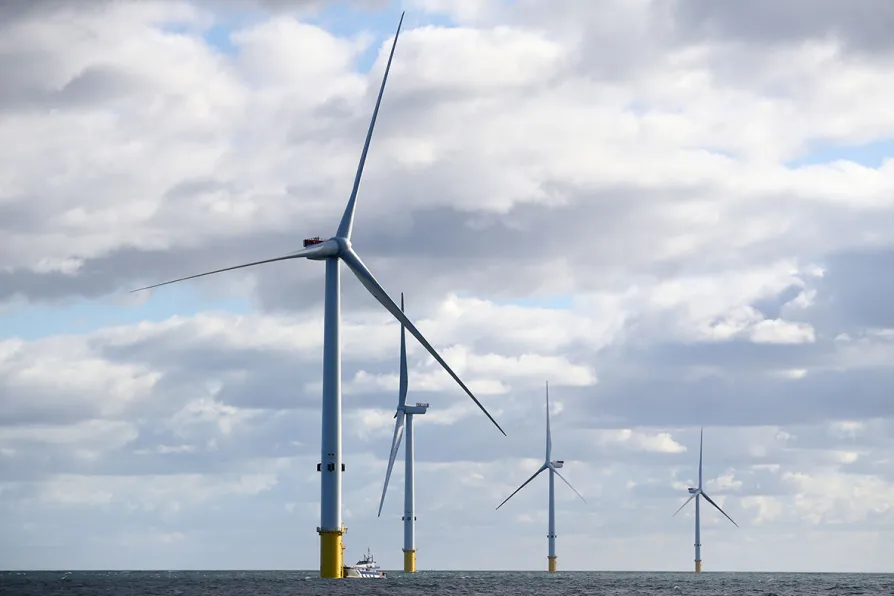
 Four of five wind turbines at the Blyth offshore wind farm, October 2017

The Baltic state is set to reverse its constitutional prohibition on nuclear weapons and foreign bases as part of accelerated Nato war preparations, warns TOM UNTERRAINER
Long-term underfunding and state neglect, while simultaneously probation services have been undermined, have intensified the prison crises, argues SOLOMON HUGHES
Holyrood incompetence has cost jobs and put the future of Clydeside’s Ferguson Marine shipyard into jeopardy. Its future should have been assured, argues KENNY MACASKILL
With the agitated debate now raging in the media about the early release schemes, Prison Officers Association general secretary STEVE GILLAN gives the view of those who work in the sector
The hounding of the late Jason Arday is an all too familiar experience for many black people. ROGER McKENZIE calls for collective action to combat what can feel like personal isolation





THE British landscape is undergoing a radical transformation. From the highlands of Scotland to the coastal waters of the North Sea, record levels of electricity are being harvested from the wind and sun.
We are told by Westminster that renewables are the “cheapest form of energy,” yet for millions of working-class households that promise feels like a cruel myth.
Despite the transition to a cleaner grid, energy bills have risen three times since the last election. As the Strait of Hormuz remains effectively closed following the escalation of conflict in the Middle East, the world has watched 20 per cent of global gas and oil supplies vanish from the market. The result? British wholesale gas prices have skyrocketed by roughly 75 per cent in a matter of weeks.
The question every resident is asking is simple: if we are producing more homegrown, low-cost power than ever before, why are we still paying eye-watering prices dictated by a conflict thousands of miles away?
The answer lies in a broken, archaic market system that effectively hitches our wind turbines to global gas markets. Under Britain’s current “marginal pricing” system, the price of all electricity — including the cheap solar and wind power generated right here — is set by the most expensive generator needed to meet demand at any given moment.
Almost every single day, that “last” source of power needed to top up the grid is fossil gas. This means that even when the wind is blowing at full gale, your electricity price is dictated by the global price of gas.
This system leaves British billpayers perpetually vulnerable to volatile global markets and the whims of foreign dictators and speculators, regardless of our green energy output. It is a fundamental link that prevents the British people from seeing the financial rewards of the green transition.
The government has acknowledged the problem, but its proposed solutions, such as “locational marginal pricing” (LMP), are wide of the mark. While LMP creates different prices for different regions, it fails to stop gas from setting the price within those regions. It merely adds a layer of complexity for investors without addressing the core issue: fossil fuels are still driving the bus.
To deliver the lower costs promised to the public, we don’t need regional tinkering; we need a structural overhaul. We need to “break the link” once and for all.
The solution is a transition to a two-tier market that separates renewable energy from fossil fuel generation. Gas-fired power stations should be moved into “strategic reserve,” where they are paid to be available for back-up during peak demand, rather than being allowed to set the daily market price for the entire grid. Direct cost pass-through: bills should be calculated based on the average cost of generation rather than the peak gas price. This would allow the true, lower cost of renewables to be passed directly to households and businesses.
The economic impact of this shift would be transformative. For the average household, decoupling could save hundreds of pounds per year by shielding families from gas price spikes. Beyond the kitchen table, lower and more stable energy prices would provide a massive boost to our local manufacturing and businesses, supporting a national mission for growth.
True energy sovereignty means making Britain immune to international price shocks caused by geopolitical instability. We have the resources; we just need a market that reflects the reality of 2026, not the fossil fuel era of the past.
Labour’s “Clean Power 2030” mission is a bold vision, but it will be a hollow victory if the working class remains shackled to the volatility of the Strait of Hormuz. It is time to ensure that when the wind blows in Britain, it’s the British people — not global gas speculators — who reap the rewards.
And just as the working class begins to buckle under this 2026 Hormuz shock, Chancellor Rachel Reeves emerges from the IMF spring meetings in Washington with a “solution” that is as cynical as it is predictable. While acknowledging that delinking gas from electricity is “the right thing to do,” her immediate action isn’t to rescue the shivering pensioner; it’s to expand the British Industrial Competitiveness Scheme (BICS). Cutting bills for another 3,000 manufacturing firms — bringing the total to 10,000 — while millions of households are left to stare at a 14 per cent real-terms increase in their bills since the Ukraine war.
Pressure needs to be put to bear on the government by the unions, to make sure all households are not forgotten in any future targeted and limited programme of assistance. Otherwise what the Tories did in response to the energy shock at the start of the Ukraine war with its universal application to all households will look better, though it paid for supernormal profits for energy companies as well.
Murad Qureshi is a former member of the London Assembly.
