Committee for the Defence of the Iranian People’s Rights general secretary GAWAIN LITTLE discusses the impact of the US-Israeli war on the Iranian people and economy


 Latest editorial

Burnham’s big test: resist Reform or bend to It?
The Greater Manchester mayor has shifted left over the years — but his record still shows a tendency to wobble when pressure comes from the right, says SOLOMON HUGHES
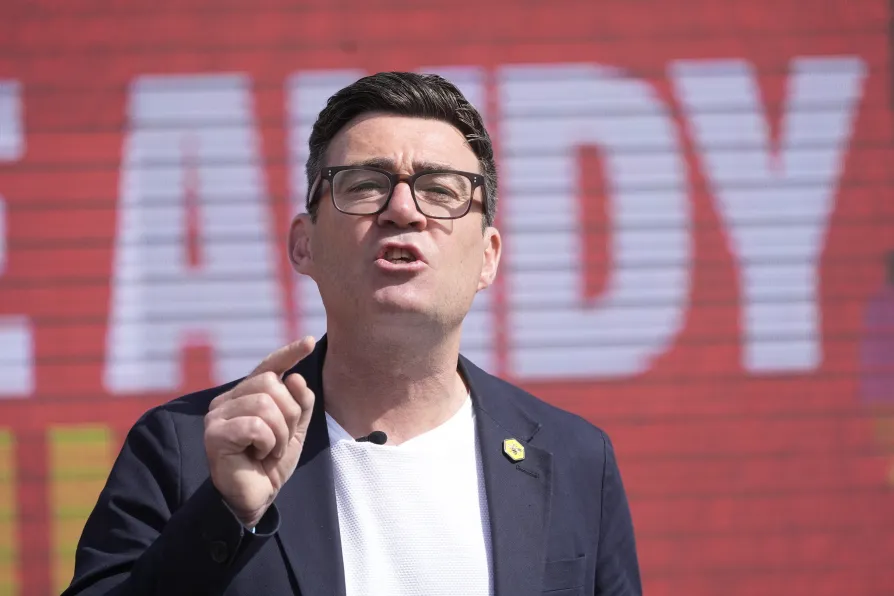 Andy Burnham makes a speech at the launch of his campaign as Labour's candidate for the Makerfield by-election during a press conference at Stubshaw Cross Community and Sports Club in Ashton-in-Makerfield, Greater Manchester, May 22, 2026


Capitalism has extracted itself from crisis before, argues PRABHAT PATNAIK – but through methods no longer available. So it is turning to authoritarianism, militarism and neocolonialism
The five young men killed in the A66 crash were responsible for a devastating tragedy — but the crash should force us to ask difficult questions about wider society, argues RENATA MEDEIROS MIRRA
Britain funds the policing of black culture 16 times better than the culture itself. The Diamond Jubilee is the moment to end that, argues CLAUDIA WEBBE
Despite Andy Burnham’s declaration defending the continued partition of the island, all major international and internal trends are converging to make Irish reunification inevitable
Humans are part of the ‘animal kingdom’ – and of nature in general – but also distinct from it and labour (work) is part of what makes us unique, declared Engels. His insights 150 years ago into how our species came to be and how we differ from the rest of nature, are as important today as they were then, says the MARX MEMORIAL LIBRARY





IT’S REALLY important Reform doesn’t win the Makerfield by-election. It is standing on a hard-right platform including promises to deport any foreign nationals who fail its “economic test.”
This means millions of our workmates who are not UK citizens but do have leave to remain will suddenly be vulnerable: if they don’t get high enough wages, become sick or unemployed, they could be deported. That would be a grave injustice to them.
Given the large number of non-UK citizens in our workforce, it would also create such insecurity, a need for so many workers to “please the boss” that it would deeply undermine all workers’ rights and wages.
It’s something only the National Front would have pushed in the past but is now normal British politics. Reform will add all kind of bigoted smears to support this plan. Its defeat — like its defeat in Gorton & Denton — can help stop the normalisation of racist politics.
Mainstream politicians have tried defeating Reform by absorbing its “legitimate concerns.” But Keir Starmer’s attempts to head away the racist messaging by offering a watered-down version — his “Island of Strangers” speech, Shabana Mahmood’s plan to make “indefinite leave to remain” into something migrants “earn” over 15 years — has just strengthened Reform.
Nigel Farage’s party wants people to blame migrants to stop them making demands on the rich. To defeat Reform we need an alternative message that says migrants are our brothers and sisters. We need to stand with them to take power and money from the richest to redistribute in society.
But can we rely on Reform’s main opponent, Andy Burnham, to stand firm with this message?
I have some good news and some bad news.
Burnham is a good communicator, talking a leftish-sounding game. But will this northern soul keep the faith with the socialist message?
On the positive side, Burnham is one of the few Labour politicians to move left in office. Burnham was a solidly “New Labour” figure: elected as an MP in 2001, he voted for the Iraq war in 2003. Burnham was vice-chair of key Blairite group Progress in 2006.
However, when he became health secretary in 2009, under Gordon Brown, after the financial crisis, Burnham began shifting to the left, away from the Progress line.
He made the modest proposal that the NHS itself should be “preferred provider” when NHS contracts came up. The NHS shouldn’t have to compete with or take second place to private health firms, as was the policy under Alan Milburn.
This enraged Progress, which published articles attacking Burnham, saying his pro-NHS stance was a “nightmare” and attacking his “anti-market rhetoric on health.”
This was a good sign and was a key moment in the “journey” Burnham has made from Labour centrism to the “soft left.”
Another good sign was when Burnham joined Corbyn’s shadow cabinet, then refused to join in the ludicrous 2016 “coup” when most of shadow cabinet members resigned in a failed and stupid attempt to unseat Jeremy Corbyn.
Burnham then took a sideways step out of Westminster to become Manchester mayor in 2017, preserving his “left” reputation by avoiding the ongoing war between left and right in Parliament.
The bad sign is how often he has been “soft” rather than “left” since then. Burnham would probably have won the 2015 Labour leadership election, where he stood on a what was called a “radical left-wing platform.”
When then-acting leader Harriet Harman told Labour MPs not to vote against the Tory two-child benefit cap, Burnham agreed and abstained. Burnham had attacked the Tory Bill as “unsupportable,” then didn’t vote against it.
Corbyn, by contrast, voted against the Tory benefit cuts. It was this contrast, making Burnham look weak and willing to face two ways, was the biggest single reason Corbyn, the left-wing outsider, was able to leapfrog over the previous favourite, Burnham.
While he is better than many current Labour MPs, Burnham still visibly wobbles under pressure. His Makerfield campaign started sounding very “left,” with calls for water nationalisation. But this soon softened that down to a vaguely defined “localised public control option” for water.
Most disgracefully Burnham vocally backed “the broad thrust” of Mahmood’s Reform-lite plans, saying they were “right.” Burnham did make some comments about the need for more “consultation” on indefinite leave to remain, but very sotto voce.
There is no point in challenging Starmer and trying to stand up to Reform by morphing into Starmer 2.0: Starmerism feeds Reform with compromises that make bigots stronger.
We need to find as many ways as we can to firm up Burnham’s spine to keep back Reform. Because Burnham clearly bends under pressure from the right, we need to try apply pressure from the left.
Which means we need to be absolutely open about criticising him for these wobbles. This could, incidentally, give a strong role to the Greens.
Their election victories have created significant leftward counter-pressure in politics: if Labour had lost to Reform after excluding Burnham in Gorton & Denton, it would not be returning to Burnham now — it would be looking for an even more anti-migrant candidate.
If all the council gains in the local elections had been Reform, without the Green victories, Labour would be waving more flags and announcing more crackdowns and camps for migrants, not toying with a move left.
Banana loans won’t fix the housing crisis
DAVID THOMAS, chief exec of housebuilder Barratt Redrow, was on Radio 4 this week arguing we are in the worst period of affordability for first-time house-buyers since the 2008 financial crisis.
He said the reasons people couldn’t afford houses were stagnating wages and high interest rates. But he did not mention the price of houses. Instead, he said the government should subsidise mortgages so more folk could buy his expensive houses.
It was like a banana salesman saying that bananas were unaffordable because people were too poor and couldn’t borrow enough money to buy bananas, so the government should offer banana loans, without mentioning the price of bananas.
It showed that private housebuilders will not solve the housing crisis. Barratt says it made £488 million profit last year, with a healthy 15.7 per cent profit margin. But it only built 16,565 houses.
Its houses’ average selling price was £343k, way above the UK average house price. Thomas himself had a £1.3m salary. The private housebuilders are making loads of money selling a small number of expensive houses, so they have no incentive to build mass affordable housing. Only mass council house building has and can do that.
