

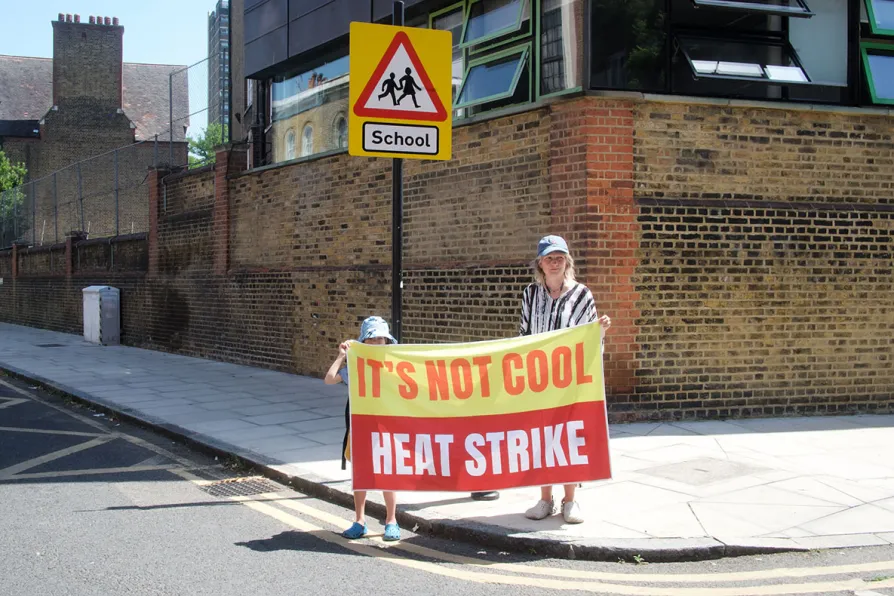







HEAT strikes, like those due to begin this Friday by London bus drivers organised in the Unite union, will become more common as long as governments shut their eyes to the scale of climate adaptation needed.
This punishing summer, now entering its fifth heatwave, is extreme but not unexpected.
All 10 of the hottest years on record in Britain have been since 2002. The reality of a warming climate has been recognised for decades. The TUC has been urging a legal maximum workplace temperature since 2008.
Britain is bound by international treaties to seek to reduce the emissions that cause global warming, though serious action to do so has fallen well short of what’s required and open climate denialism is now fashionable again, thanks to an aggressive new right taking inspiration from the anti-science Donald Trump regime in the United States.
Adapting to a warming climate has not proceeded much faster than efforts to slow the warming.
Increased frequency of extreme weather, the see-saw between longer droughts and fiercer floods that are ruining harvests, has not interrupted British governments in their long push to debilitate the public sector, imposing deep cuts on the fire brigade as on every service that cannot be turned into a cash cow for private providers.
A state atrophied by decades of Thatcherite assumptions — that state planning is suspect in itself, that solutions to problems rest solely with the “market” and that businesses operating for profit will always do a better job than public servants — has lost much of its capacity to act directly.
Major infrastructure projects don’t happen because responsibility lies with people with no interest in delivering them (like the privatised water bosses who have failed to build a single reservoir in the decades they have leeched on the British public) and because a hollowed-out state without effective agencies of its own is inept at planning even for the medium term, as we saw with HS2.
Any attempt to divert from the “wrong path” Andy Burnham says Britain has been on for over four decades has to face that reality.
Regulatory tweaks won’t cut it. The government has to take control.
Transport workers are hit hard by rising temperatures — as Unite points out, many buses use relatively ineffective air-cooling systems rather than proper air conditioning — and private contractors more concerned with maximum profit than the safety or efficiency of the service will drag their feet on modernisation.
Old infrastructure, like much of London’s Tube, can require significant work before mitigation becomes possible — some Tube lines are too narrow for air conditioning units to be easily fitted to trains, for example.
That again is a transport example — and train drivers’ union Aslef is among those campaigning for maximum workplace temperatures — but the same principle applies well beyond it.
Our hospitals are not designed for extreme heat. Neither are our schools. Nor are homes, with over 50 per cent not meeting modern insulation standards — which not only puts residents at risk but raises energy bills, which themselves cannot easily be brought down while the sector remains privatised.
There is no logical excuse for inaction. Much of the world has centuries of experience in hotter temperatures than we are used to in Britain, reflected in building design as well as behavioural differences like siestas. National Education Union leader Daniel Kebede has cited the many ways countries around the world design for cooler buildings, from extensive tree-planting around them to external shutters and shaded courtyards.
It is not as if we need to work out novel solutions to every problem. Rather, we need to invest: our infrastructure needs adapting.
Only government can do it on the scale required. But an urgent reordering of our state’s priorities is needed before it will.

![Union members and climate activists set up a ‘cool station’ outside Highbury and Islington station to hand out heatwave safety advice to workers [Pic: Immo Klink]](https://msd11.gn.apc.org/sites/default/files/styles/desktop/public/2026-08/07_Heatstrike-Islington-3924-Immo-Klink.jpg.webp?itok=-IIt7ME_)
More than 1,500 London bus drivers set for heatwave strikes this Friday
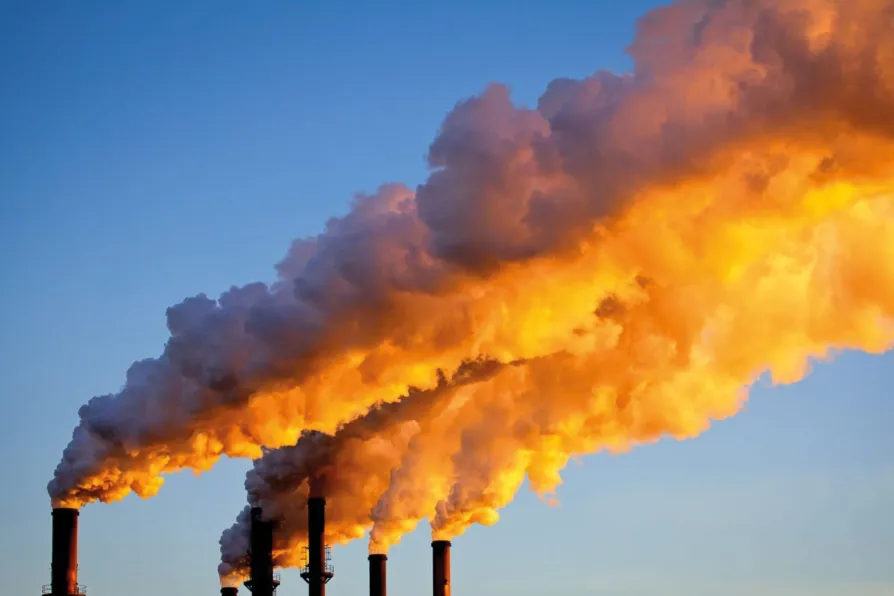
Climate extremes are becoming our new normal, says CHLOE BRIMICOMBE

The recent heatwaves revealed how ill-prepared Britain remains for a hotter future – and how unequal the ability to cope with it has become, write ROX MIDDLETON, LIAM SHAW and MIRIAM GAUNTLETT
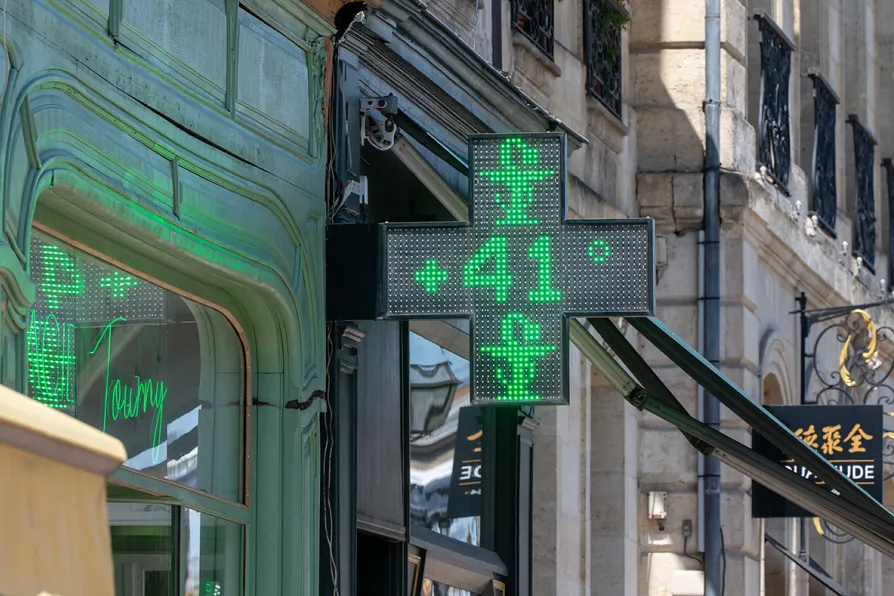
Extreme heat is now one of the defining public health challenges of a warming world, explains Prof IAN WILLIAMS