

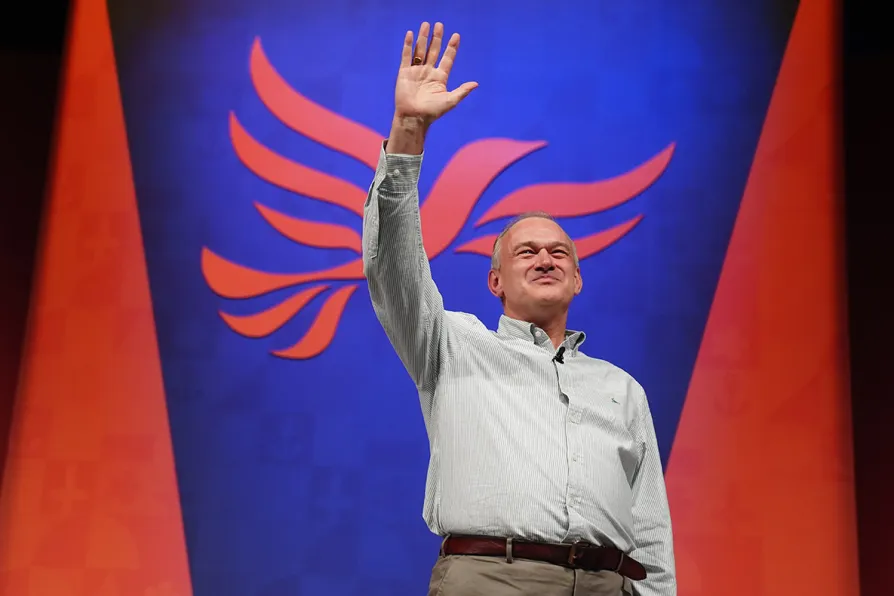
 Liberal Democrat leader Sir Ed Davey during a rally at the Liberal Democrat Party conference at the Brighton Centre, September 19, 2026





ED DAVEY has the perennial problem of Lib Dem leaders — how to make his second division team avoid further relegation.
With polls showing just one in 12 voters considering voting for his party the Lib Dems are in fifth place behind Labour, Reform, the Tories and the Greens who have laid siege to a slice of their voters.
Where Davey is right is in arguing that some elements in our ruling Establishment favour a Tory/Reform UK coalition. (Davey didn’t put it in these terms because to do so might draw attention to the uncomfortable fact that the austerity policies currently driving some of the support towards Nigel Farage were the centrepiece of Cameron’s Tory-Lib Dem coalition government and Lib Dem Treasury ministers were in the driving seat.)
Davey has constructed a scenario where, he argues, electoral politics are so fragmented that tactical voting gives the Lib Dems an advantage in places where voters across the political spectrum — concerned to beat Reform UK — can be persuaded to see Lib Dems as the best local option.
It is true that, especially in by elections, this dynamic works but, when people are voting for a national government, different considerations apply.
Davey is under pressure from his party to sharpen its policy portfolio while the Financial Times — ever the voice of big business and the banks — warns him to go easy on the publicity stunts if he wants to be taken seriously as a government partner.
The clearest indicator of where the Lib Dems draw their new support is the harvest of so-called Blue Wall seats — formerly held by the Conservatives — they won in the 2024 election.
Where his strategy can easily come undone lies precisely in the fact that one element of the ruling-class playbook is a coalition government of the Tories and Reform UK.
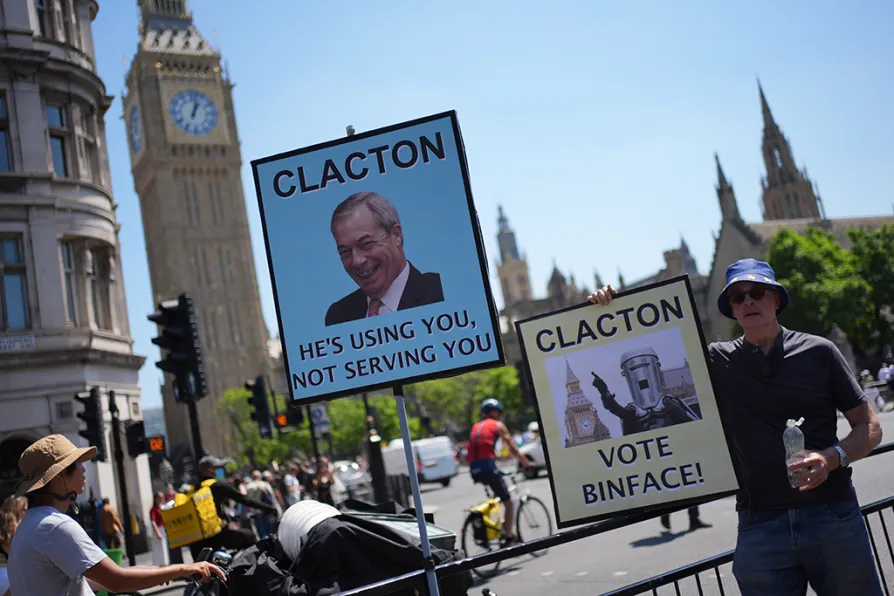
All the evidence suggests that a limit has been placed on Reform UK’s potential, the better to boost the Tories relative positioning. Its treatment by the media is decidedly less supportive, the parliamentary standards committee and the cops are all over Farage’s finances and some of his bonehead support has drained away to Rupert Lowes’s fascist fringe.
Farage himself has lost a lot of the bounce that originally came with rising poll numbers and the cash that came from bent financiers, bitcoin shysters, rich US nut jobs and tax-haven hideaways.
Rebalancing the relationship between the Tories and Reform UK to the benefit of the former would go some way to stabilising a government for the rich and would make the Lib Dems even more irrelevant.
You Gov polls show people see the the Lib Dems as “moderate,” weak and unclear about policy.
This is inevitable in a party perennially looking both ways but where the Lib Dems are unashamedly the party that acts for the City, the banks and big business is in their call for Britain to rejoin the European Union.
To advocate this when the character of the EU is increasingly clear — as the mechanism that drives privatisation and marketisation, maintains a Fortress Europe migration policy and is increasing tied up in a military partnership with Nato that is predicated on a coming war with Russia — is perverse.
And the EU’s so-called parliament may soon have a far-right majority.
Where Labour can aggregate votes is with policies that tax the rich to tackle the cost of living, drive out privatisation from public services, mass-build council houses, make education comprehensive and affordable and get Britain off the escalator to war.
Labour will lose unless our trade unions act to ensure that working-class policies make it to Labour’s manifesto.

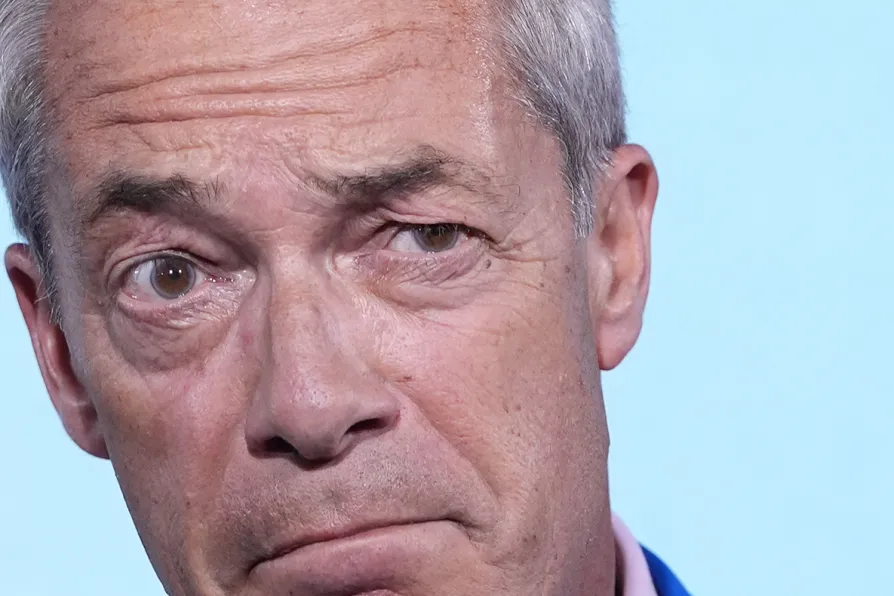
A new generation of right-wing politicians have shifted from promoting deregulation to championing anti-migrant politics warns SOLOMON HUGHES
All the areas that cause working people to feel insecure have to be addressed, through a return to unashamedly pro-worker politics, if the horror of a Farage government is to be avoided, writes IAN LAVERY MP