ROB WARZYNIAK wades knee deep through a pile of ‘dead canaries’ of Trumpist policies which exacerbated the horrors of US capitalism domestically


 Latest editorial

Dharmendra Pradhan’s resignation is a step towards retribution
Indian students have fought for the right to education, schooling us all in the process. Comrades from the Students’ Federation of India (SFI) — UK comment on the resistance and its ripples here
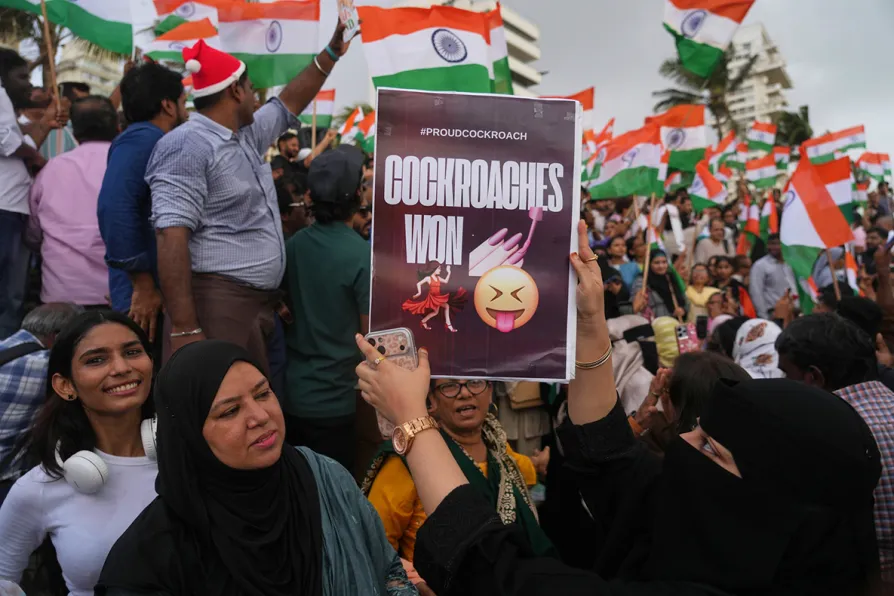 A protester holds a placard after India's Education Minister Dharmendra Pradhan resigned following nationwide protests as part of the Cockroach Janta Party's protest movement in Mumbai, India, July 25, 2026

Without evidence or Nato consultations Berlin’s answer to the Leipzig incident is a rupture of relations. SEVIM DAGDELEN examines why
FRANCISCO DOMINGUEZ introduces the background to a conference on defending Latin America’s sovereignty
The glacier collapse in Nepal is yet another warning that a warming planet is making Himalayan disasters more frequent and destructive – but the countries facing the greatest risks are often those least responsible, says LI YANG
Nick Blair is set to benefit from a hugely lucrative contract to ‘virtually’ train the British army for its next war. Like father, like son, writes SOLOMON HUGHES
Even when tragedy strikes, Western media cannot resist the opportunity to turn it into a sordid propaganda opportunity, as the Nepal-China border tragedy shows, writes CARLOS MARTINEZ
Trade unions should be at the heart of the anti-racist push for reparations for the historic legacy and continuing impact of slavery, writes ROGER McKENZIE





AN EXAM paper leak, millions of hopes torched, and the added fuel of being deemed a cockroach.
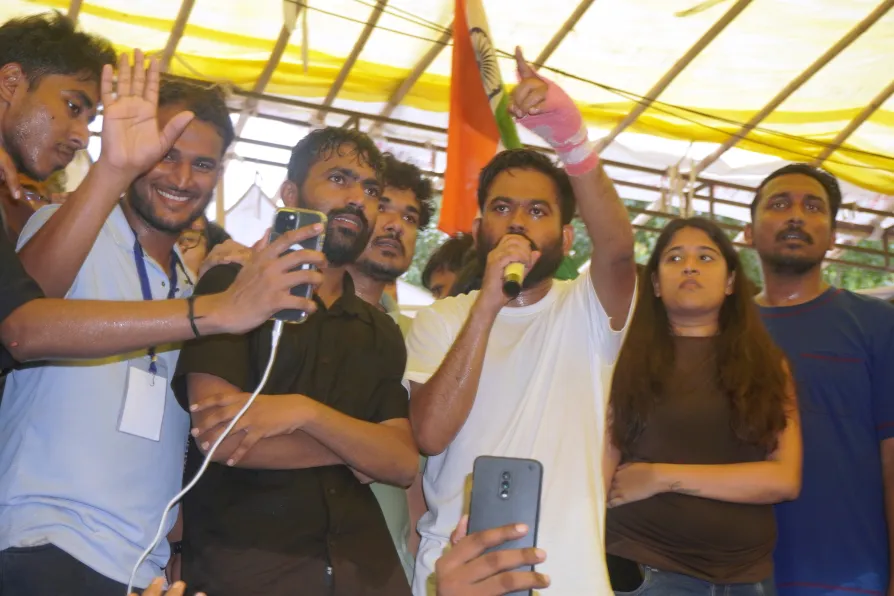
The series of events that led to the wave of resistance at Delhi’s Jantar Mantar has been narrated in countless articles and opinion pieces. Mainstream media outlets have looked on eagerly to dissect yet another Gen Z uprising in South Asia.
The movement has drawn attention for its apparent spontaneity, impressive scale, and fresh visuals. With a clear set of demands and a sustained level of mobilisation, it has unnerved a formidable enemy.
The students’ agitation has yielded the resignation of the Education Minister, Dharmendra Pradhan, and delivered the most robust blow to the BJP-RSS regime in recent memory. This is a generation that knows when to touch grass and when to pluck the weeds.
While this movement has been optically dominated by the youth, we are not an undifferentiated mass. We are not a class of our own. We are simply the theatre that reflects the ongoing battle of ideas taking place in Indian society today.
The frustrations that resulted in the emergence of the Cockroach Janta Party (CJP) are pointedly class frustrations, directed at the failure of the regime to secure the few remaining routes to economic and social upliftment.
The route to dignified work, through subsidised education at an eminent public university, now stands sullied with controversies of corruption and exam irregularities.
The demands of the student movement began with Pradhan’s resignation, compensation for the victims who committed suicide in the aftermath of the paper leak, and the scrapping of the National Testing Agency.
The experienced intervention of progressive student organisations such as the SFI infused the movement with an ideological thrust towards structural change through the call to scrap the neoliberal National Education Policy 2020 (NEP 2020).
It did not take long for the movement to string ties between the absence of accountability over the paper leak and the regime’s failure to preserve democratic practices at large. The CJP’s first stint at Jantar Mantar gained the seasoned flavour of a mass struggle after veteran activists brought ideological clarity, well-honed political strategies and polished slogans to the fore.
The very same slogans rang loud at Trafalgar Square in London, at the Radcliffe Camera in Oxford, at the Aneurin Bevan Statue in Cardiff and in cities across Britain.
For Indian students watching from afar, the agitations back home felt like an overdue exhale. Protest calls were answered in overwhelming numbers, out of solidarity for the students who fought to change the education system we all endured and out of frustration at the regime that sought to silence them.
The student mobilisations here, just as in India, demonstrated clear outrage against the violence of fascism and a conscious affinity to link the struggle for education with workers’ and farmers’ demands.
In his statement at Trafalgar Square, SFI-UK’s founding secretary Nikhil Mathew deplored the communal consensus that the BJP and RSS have tried to conjure for the last decade while plunging the nation into poverty.
Education is being starved of public money through the logic of “rationalisation,” both at home and in Britain, he argued.
Our campaigns against the commodification of education have highlighted that the continued exploitation of migrant students provide the only inflows keeping local universities afloat amidst financial crisis.
Recognising the need to stand united, many community organisations, student unions and political figures including Greta Thunberg and Jeremy Corbyn lent internationalist solidarity to the movement.
As the youth in India continue to march on and resist the sale of public education, we must bring lessons of the movement here and seek to expose the British government’s continued complicity in corroding the education system at home and across the seas.
Students in India have demonstrated how a spontaneous political moment can be fashioned into organised resistance in the face of an authoritarian state.
Are our organisations ready to take charge of an impulsive political spark? As asserted by the incumbent SFI-UK secretary Somiha Chatterjee, the CJP movement’s initial success owes itself to the years of struggle that student organisations have carried out over the last decade. Day-to-day struggles on issues of direct, immediate interests to students have built students’ faith in the SFI.
In dialectical terms, the agitation and the organisation have built and educated each other to emerge victorious in this moment.
The convergence of spontaneous, digital popularity with the knowledge of movement-building might have proved lethal if the Modi government had not decided to let off steam by succumbing to the protesters’ first demand.
Yet, with each demonstration, the student movement has gained tactical experience and an enhanced range of political consciousness. We have become much more formidable opponents to the right, and we have grasped its playbook better. These lessons will be turned to praxis in due course.
Not an inch will be relinquished until we get retribution for the countless students who gave up their lives in the quest for education.

Similar stories
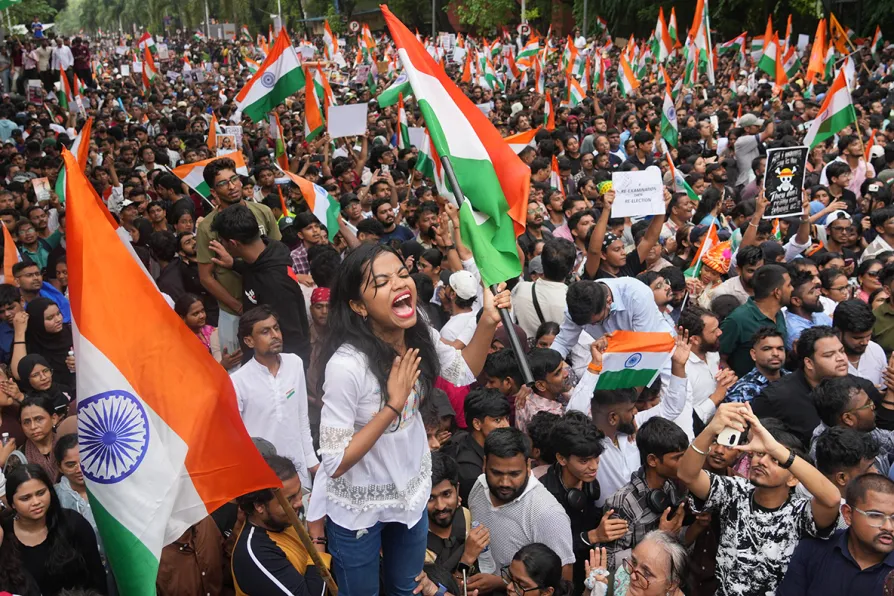
Two months of student unrest have forced out India’s education minister and rattled the BJP regime. Could this be the beginning of the end for Modi, asks Communist Party of India (Marxist) general secretary MA BABY