The 25th anniversary meeting of the Shanghai Co-operation Organisation in the Kyrgyz capital may offer a glimmer of hope that international relations do not need to be defined by endless confrontation, writes KENNY COYLE


 Latest editorial

Time to repay a debt that’s long overdue
Trade unions should be at the heart of the anti-racist push for reparations for the historic legacy and continuing impact of slavery, writes ROGER McKENZIE
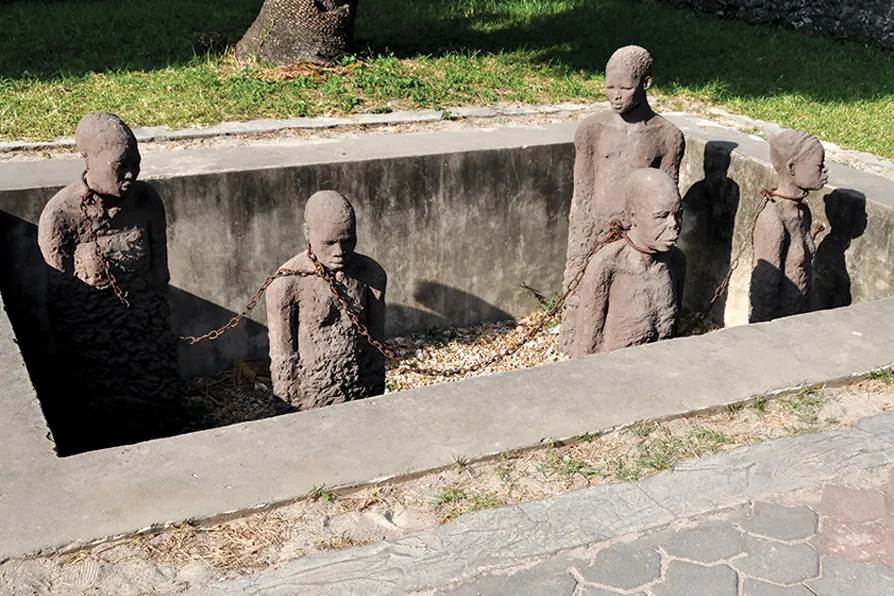 The Slavery Memorial in Stone Town, Zanzibar, Tanzania, at the site of the former East African slave market was designed by Swedish artist Clara Sornas in 1998 [Pic: Kevin Harber/ Creative Commons]
The artist, who has just died, is embedded in the subconscious of the Palestinian people
The five young men killed in the A66 crash were responsible for a devastating tragedy — but the crash should force us to ask difficult questions about wider society, argues RENATA MEDEIROS MIRRA
The unwillingness of the British political elite to acknowledge that we are on the edge of a direct conflict with Russia leaves the peace movement with an urgent and onerous task
Committee for the Defence of the Iranian People’s Rights general secretary GAWAIN LITTLE discusses the impact of the US-Israeli war on the Iranian people and economy
Capitalism has extracted itself from crisis before, argues PRABHAT PATNAIK – but through methods no longer available. So it is turning to authoritarianism, militarism and neocolonialism





THIS time 25 years ago, many activists and world leaders converged on Durban in South Africa for the nine-day United Nations World Conference against Racism, Discrimination, Xenophobia and Related Intolerance.
The meeting attracted 2,300 representatives from 163 countries, including 16 heads of state, 58 foreign ministers and 44 ministers.
I was amongst the number as I led the TUC delegation, which was part of the then International Confederation of Free Trade Unions (now the International Trade Union Confederation), working with representatives from across the globe.
Thousands of us were there to meet and to press “official” delegates to make tangible commitments towards tackling the scourge of racism of any kind.
The world leaders at the conference included the legendary Cuban leader Fidel Castro — who, as we remember him in the 100th year of his birth, was unflinching in the fight against racism and its links to imperialism and neo-colonialism.
The aim of the UN conference was to combat the legacies of slavery, imperialism and colonialism and to engage on historical issues that confronted Africans and their diaspora, and other indigenous peoples.
The nearly 500 years of the transatlantic trade of up to around 20 million Africans to Latin America, the Caribbean and the United States was one of the key driving forces behind the expansion of global capitalism and greatly contributed to the industrialisation of the West.
The outcome of the conference 25 years ago acknowledged and profoundly regretted “the massive human sufferings and the tragic plight of millions of men, women and children as a result of slavery, slave trade, transatlantic slave trade, apartheid, colonialism and genocide.”
The Durban Declaration categorised slavery, colonialism, apartheid and genocide as international crimes against humanity.
The United States and Israel were, to my understanding, the only two nations of all those present that refused to sign up to the consensus of the declaration because of what they described as antisemitism in the conference.
I was there and this is a slur on the thousands of dedicated anti-racists that have and continue to fight against all forms of racism and discrimination.
The major contention at the conference was never about antisemitism. It was much more about the wording of the declaration around the demand for reparations for the crimes of enslavement of Africans during the 500-year-old transatlantic trade in human beings and for the horrors of colonialism.
As now, those nations that were involved in enslaving Africans work long and hard to come up with word formulations that may verge on an apology but stop short of admitting that the payment of reparations might be appropriate.
It would be wrong to think that reparations are some new idea that has been dreamt up by people of African descent with some sort of chip on our shoulders.
Making reparations for enslavement has a long tradition. In the US, the first recorded case of reparations paid for enslavement was to a woman called Belinda Royall in 1783.
Royall, who was born in what is now known as Ghana, was paid a pension as compensation for her enslavement.
From 1804, Haitians were paying their former French colonial rulers for the privilege of being free from enslavement.
Over the following century, Haiti was forced to pay former slaveholders and their descendants the equivalent of around £23 billion.
These included the empress of Brazil; the son-in-law of Russian tsar Nicholas I, Germany’s last imperial chancellor; and Gaston de Galliffet, the French general known as the “Butcher of the Commune” for crushing the insurrection in Paris in 1871.
They also contributed towards the profits of Credit Industriel in France — the bank that helped to finance the construction of the Eiffel Tower.
Britain also thought it was best to make reparation payments to slave-owners rather than to those who had been enslaved.
The Slavery Abolition Act of 1833 made a mockery of the freeing of enslaved Africans by making around 40,000 payments, worth billions in today’s money, to slave-owners.
The largest total amount paid in reparation to a slave-owner was made to Sir John Gladstone, the father of Victorian-era prime minister William Gladstone.
He was paid the equivalent of more than £10 million in today’s money for “losing his property” of 2,508 enslaved Africans, who had already enriched him on his nine plantations in the Caribbean.
The families of slave-owners remained rich, while those of enslaved Africans were often left in the most gut-wrenching poverty imaginable.
Tangible reparations must now be made to people of African descent by those that have benefited from the enslavement, colonisation and continued racism towards people of African descent.
Reparations, an atonement for the crimes of human misery committed by European slave and colonial masters, must be tied to political and restorative justice that demands that a debt be paid to the descendants of these twin crimes in Africa and beyond.
The Global African Workers Institute (GAWI) supports the international processes that are in place to secure reparations and offer our assistance in the important educational process that must underpin it.
Sadly, there appears to have been little progress in tackling the systemic racism that is the experience of people of African descent across the diaspora and the legacy of enslavement.
The generation that has emerged since the Durban conference comes at an important moment in the struggle for racial justice at national and global levels. This has been manifested in the 2015 #RhodesMustFall and the 2020 #BlackLivesMatter movements and, most recently, the racist hounding of Professor Jason Arday, who felt the only way out was to take his own life — a racist lynching by any description.
But Durban was much more than a demand for reparatory justice. It was also a demand for the need to move beyond lip-service to anti-racism and to move toward genuine action to tackle the systemic racism that exists as much in Britain as it does across most of the globe.
International shift
We now have other urgent challenges to consider since Durban.
Racism in employment across the African diaspora has worsened over the past 25 years rather than improved.
We also see a resurgent global movement of the far right and a rapidly worsening climate emergency, which elevates the need for environmental justice to be prioritised in the fight against racism.
Many of the effects of racism are felt personally and locally, and often our responses must reflect that. But there is no sense in tinkering with a capitalist system that is built on the back of racism.
We must dismantle the system and that requires a political approach that moves beyond statements of regret and sorrow to a political approach at all levels.
The trade-union movement must be at the heart of the fight for racial justice.
As the Global South is the fastest-growing and beating heart of the international trade-union movement, we must be guided by its experience rather than relying on false beliefs that all the answers to building a stronger trade-union movement lie in the Global North.
This approach will guide us towards a movement that is committed to building a powerful international movement against all aspects of racial injustice.
Important organisations, such as the Coalition of Black Trade Unionists, GAWI, the Global Afrikan Congress and the December 12 Movement will be key to the success of this process and should be strongly supported.
Roger McKenzie is international editor of the Morning Star. This column appears fortnightly.

Similar stories
With the centenary of the UN Slavery Convention upon us, ROGER McKENZIE argues much needs to be done to rid us of all its contemporary manifestations
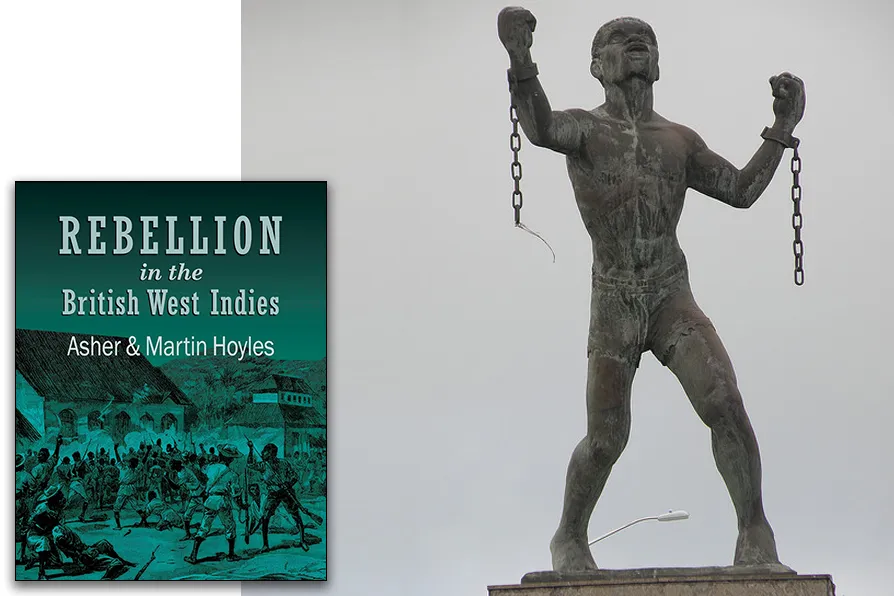
BOB NEWLAND appreciates an important contribution to the debate about how slavery helped to build the wealth of Western companies and states
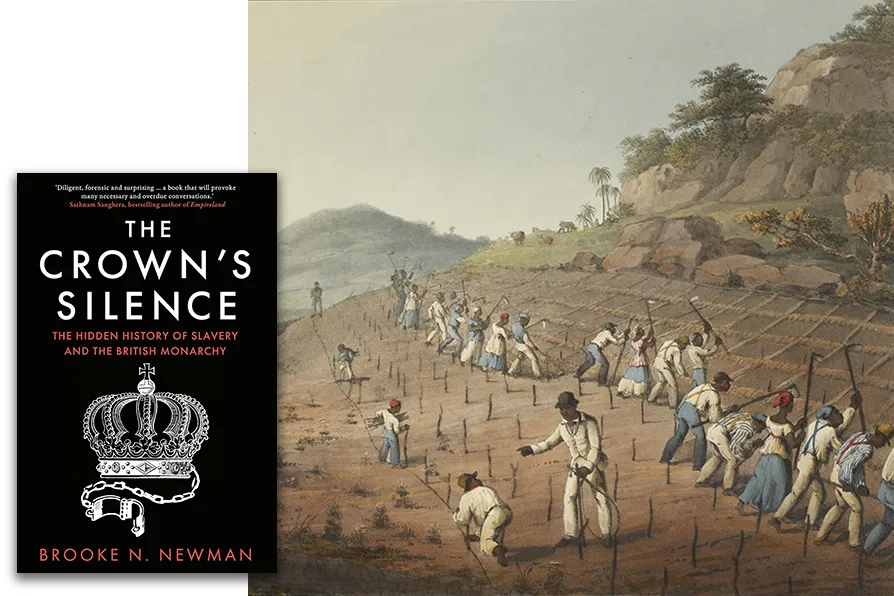
ELLIS RAE recommends a stunning history of the active role played by the British monarchy in establishing and profiting from slavery
ROGER McKENZIE argues that Western powers can see the beginning of the end in the rise of the global South — and racist reactions are kicking in