Committee for the Defence of the Iranian People’s Rights general secretary GAWAIN LITTLE discusses the impact of the US-Israeli war on the Iranian people and economy


 Latest editorial

Sliman Mansour and the rise of revolutionary Palestinian art
The artist, who has just died, is embedded in the subconscious of the Palestinian people and his work emblematic of their struggle for freedom, writes RAMZY BAROUD
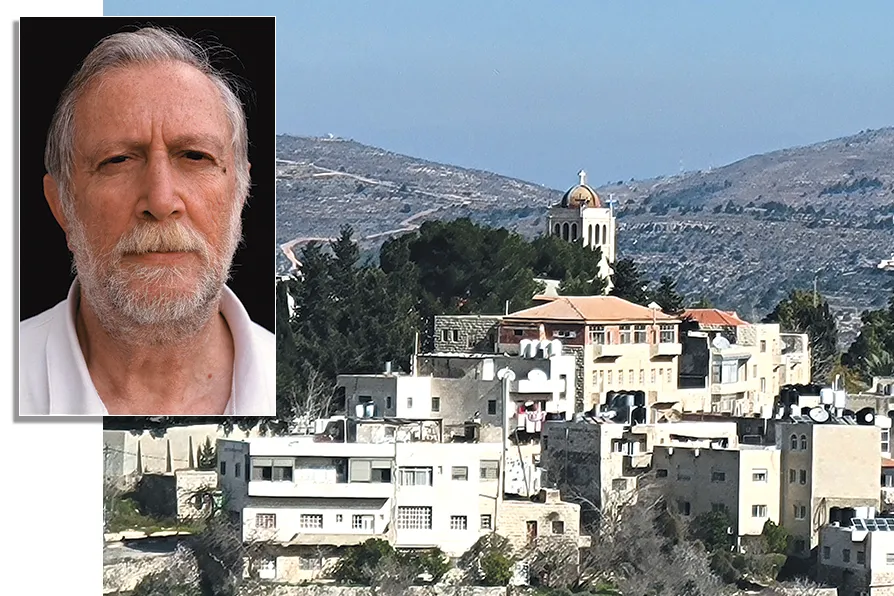 View of Birzeit, where Sliman Mansour came from, it showing the original location of the university as well as the Latin church, January 2025; (inset) Mansour Pics (L to R): Mansourfamily2024/CC, Manintheopt/CC
Capitalism has extracted itself from crisis before, argues PRABHAT PATNAIK – but through methods no longer available. So it is turning to authoritarianism, militarism and neocolonialism
The five young men killed in the A66 crash were responsible for a devastating tragedy — but the crash should force us to ask difficult questions about wider society, argues RENATA MEDEIROS MIRRA
Britain funds the policing of black culture 16 times better than the culture itself. The Diamond Jubilee is the moment to end that, argues CLAUDIA WEBBE
Despite Andy Burnham’s declaration defending the continued partition of the island, all major international and internal trends are converging to make Irish reunification inevitable
Humans are part of the ‘animal kingdom’ – and of nature in general – but also distinct from it and labour (work) is part of what makes us unique, declared Engels. His insights 150 years ago into how our species came to be and how we differ from the rest of nature, are as important today as they were then, says the MARX MEMORIAL LIBRARY





THE death of Palestinian artist Sliman Anis Mansour stirred powerful memories.
He passed away at Al-Makassed Hospital in occupied East Jerusalem on August 24, at the age of 79, bringing to a close a legacy that cannot truly be described, but only experienced.
His life almost exactly spanned the age of the Palestinian Nakba. He was born mere months before the mass expulsion of the Palestinian people from their homeland. Yet his death in an occupied city tells us that the story of Mansour, his art and the Palestinian struggle for freedom is far from over.
Oddly, for years, I knew Mansour through a single painting: Jamal al-Mahamel (The Camel Carrier of Hardships).
The title itself requires a pause. The phrase is rooted in Palestinian and Levantine popular culture. It describes one who shoulders the collective struggles, pain and responsibilities of others.
In Mansour’s post-Nakba world, that person is an elderly Palestinian porter, a barefoot worker carrying the burden of an entire homeland on his back. That homeland is represented by Jerusalem, with the Dome of the Rock, one of Islam’s holiest sites, rising above it.
Mansour, however, was not a Muslim. He belonged to the once-thriving, though sadly shrinking, Palestinian Christian community and came from the town of Birzeit, near Ramallah in the West Bank.
Let that sink in. One of the most iconic Palestinian paintings of the modern era, celebrating the centrality of Jerusalem and one of its most recognisable historic Islamic sites, was painted by a Christian man.
In the age of Israeli extremists like National Security Minister Itamar Ben-Gvir and his “religious wars,” this may appear unusual. For Palestinians, it is anything but. Though deeply spiritual, Palestinians have historically transcended religious divides in their long struggle for freedom.
A mosque is never just a mosque, and a church is never just a church. They are powerful symbols of history, culture, roots, spirituality and continuity. Mansour entrusted the Camel of Hardships with carrying all of that alone, as the world watched an old man bent beneath an unbearable weight, yet fierce and unbroken in his resolve.
Though the painting was created in 1973, it exploded in popularity during the First Intifada, the popular uprising that unified Palestinians everywhere. It took on a renewed meaning: we Palestinians may be standing alone, exhausted by time and the betrayal of others, but we remain as steadfast as ever.
The last time I saw that painting hanging in the living room of my old house in the Nuseirat refugee camp in Gaza was also the last time I saw my father, most of my brothers and many of my childhood friends.
My father died years later. The house was bombed. The painting no longer hangs where it once did, at the heart of our old refugee home.
Ironically, it was only after I left Palestine that I discovered that Sliman Mansour was far more than the creator of a single painting. He belonged to an artistic movement that taught visual sumud, steadfastness, to an entire generation.
My lack of knowledge was not a fault of my own. Artists such as Mansour, Ismail Shammout, Fathi Ghaben, Vera Tamari, Tayseer Barakat and Nabil Anani, among others, were simply forbidden by Israeli military ordinances.
Israel is afraid of Palestinian art, particularly art that preserves memory, asserts steadfastness and speaks of revolution. During the Intifada, the Israeli army would storm Palestinian refugee camps almost daily, particularly before dawn, to ensure that artistic expressions on the walls were painted over.
The soldiers did not paint over the walls themselves, of course. They dragged weary refugees from their sleep and forced them to erase every piece of graffiti, every image and every word. The soldiers may have thought they were carrying out a military duty, somehow protecting Israel’s national security. In reality, they were trying to erase evidence of a people whose roots in the land ran far deeper than the occupation itself.
But the evidence was never erased. It could not simply be painted over, even when the artist himself disappeared, because true art is more than an arrangement of colours on canvas. It is one of the deepest forms of documenting one’s own existence.
Fathi Ghaben, who became a close friend of my family, had, like most Gazans, more than his share of suffering. He was a refugee from a once-serene village called Hirbiya, north of Gaza. His family sought refuge in Gaza during the Nakba.
Ghaben had no memories of the village he lost as a child, yet its colours filled his paintings. For him, Palestine was a beautiful woman, powerful in her determination yet gentle in her gaze. Her eyes, always sharply defined, embodied the beauty of a homeland that never abandoned him. She was the worker, the farmer, the student, the protester, the fighter.
Ghaben was repeatedly imprisoned by Israel for emphasising the colours of the Palestinian flag in his art, accused of “incitement through his paintings.” The occupation army killed his young nephew in 1982, and many of his relatives were killed in the genocide.
Ghaben himself died during the genocide, in February 2024, after being displaced from his home.
For me, and dare I say for many of my generation, it is difficult to process art that does not carry this kind of weight — art that goes beyond mere “expression” and becomes an experience of blood, sweat, tears and the burden of memories that can only be put to rest when justice in Palestine finally prevails.
I think back to the Camel of Hardships, and I am convinced that Mansour’s figure represented more than Palestine and the Palestinian. Perhaps unknowingly, he was also painting the Palestinian artist himself.
They, too, carried an immense responsibility on their shoulders. Without them, several generations might never have truly appreciated the colours of Palestine, smelled the powder of revolution, or understood the true meaning of losing a homeland.
Dr Ramzy Baroud is a journalist and editor of The Palestine Chronicle. He is a non-resident senior research fellow at the Centre for Islam and Global Affairs (CIGA). His website is www.ramzybaroud.net

Similar stories
A small Palestinian village is under attack from illegal settlers and the Israeli state to forcibly extend their illegal settlements. It is a template for the future, writes RAMZY BAROUD
Given the recent rejection of peace proposals by Israel the world must provide an immediate and resolute response to force accountability on Gaza, argues RAMZY BAROUD
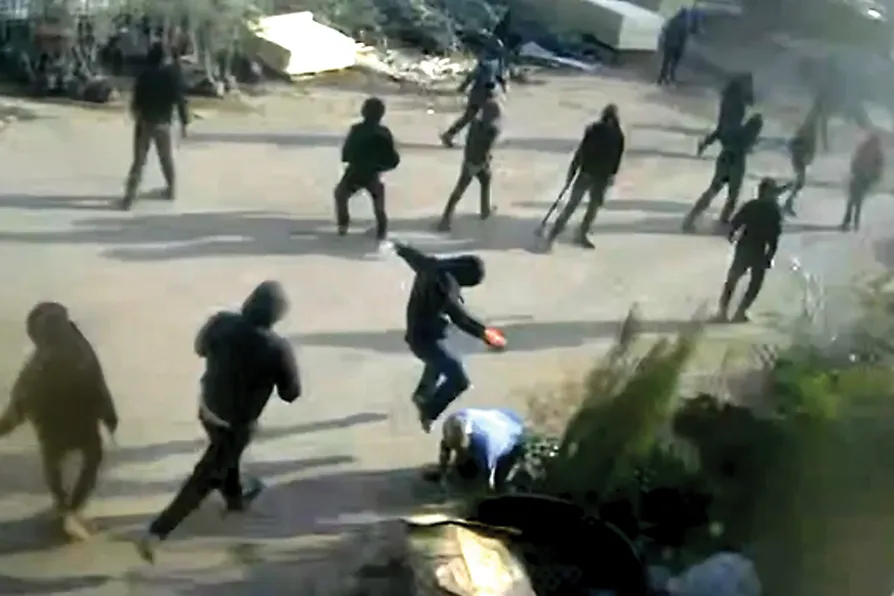
RAMZY BAROUD looks at how entire West Bank communities have been shattered, their social and physical fabric deliberately dismantled by Israel to enable its formal annexation
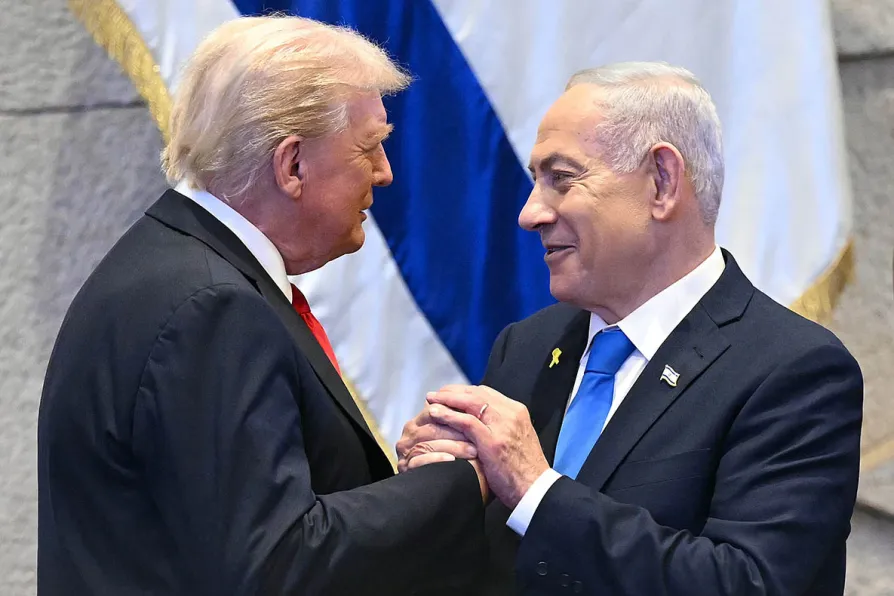
Israel and the US talk as if they’ve won a victory, but the reality is that world opinion has turned decisively against the Israeli regime, says RAMZY BAROUD