ROB WARZYNIAK recalls the emblematic 1906 book, The Jungle, in its analysis of the crisis presently engulfing the US Food and Drug Administration


 Latest editorial

Britain cannot dictate Ireland’s future: self‑determination is not a gift from the empire
Despite Andy Burnham’s declaration defending the continued partition of the island, all major international and internal trends are converging to make Irish reunification inevitable, argues CHRIS HAZZARD MP
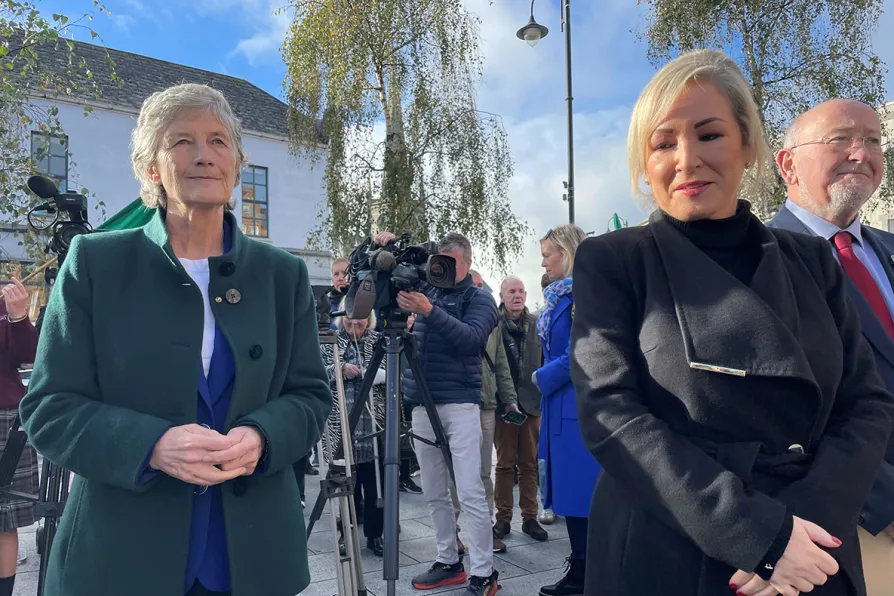
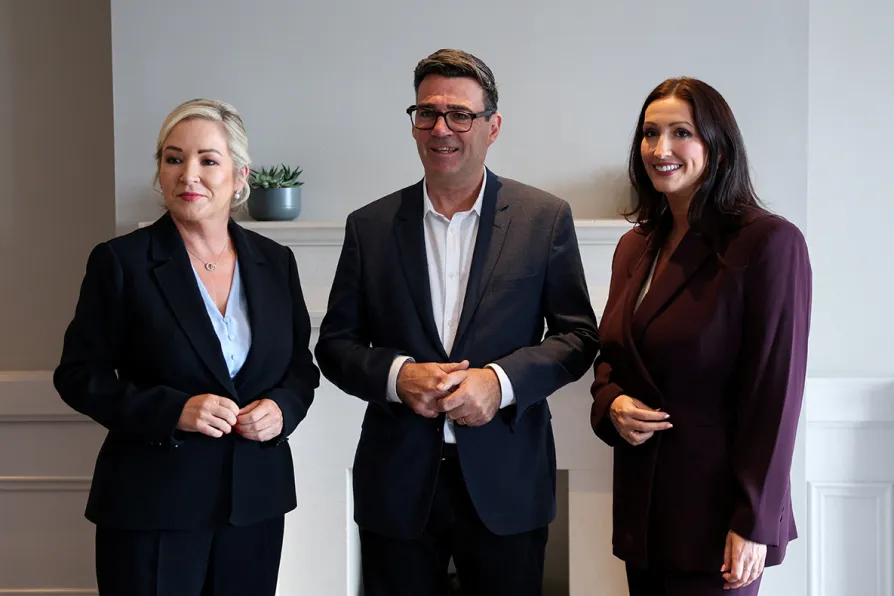 Prime Minister Andy Burnham meets with Northern Ireland First Minister Michelle O'Neill (left) and Deputy First Minister Emma Little-Pengelly in Belfast. Thursday August 27, 2026. Cathal McNaughton/PA Wire/PA Images

Welsh wanderings showcase fiery destruction, alternative water ways and revive memories of a local mining legend, writes MARK SEDDON
As thousands die in the eastern DRC, a global health emergency is being starved of funds, says S KRISHNASWAMY
MAT COWARD explains how in the 17th century a row over whether to kneel at communion became a battle over religion, class and royal power
Renewed illusions in social democratic reformism are sprouting as a result of Andy Burnham’s rhetoric, but material conditions are already intruding into the debate, argues NICK WRIGHT
Andy Burnham could learn a few lessons from a previous Labour government in the pre-privatisation era on how to tackle water shortages, writes KEITH FLETT





ANDY BURNHAM’S attempt to punt Irish unity “off the table” exposes a lingering imperial reflex towards a democratic reckoning that Britain can no longer postpone.
When a British prime minister arrives in Belfast to announce that an Irish unity referendum is “off the table,” the language comes dressed in the soft corporate cliches of modern Westminster politics.
Yet beneath the “professional” veneer lies something older and far more malignant. It is the paternal reflex of a state that still imagines it has the authority to decide the democratic future of a nation it once persecuted, partitioned, and governed by force.
Whitehall whims
Here’s the constitutional reality. The pathway to Irish unity is not a matter of British discretion. It is an obligation bound in an international treaty and rooted in the fundamental right of the Irish people to national self‑determination.
It is not an imperial favour to be granted, delayed or withheld according to the anxieties of ministers who continue to behave as though sovereignty flows outward from Whitehall.
This truth cuts through the fog of Westminster posturing.
For more than a century, successive British governments have treated Ireland’s constitutional future not as a question of democratic decolonisation, but as an internal administrative inconvenience — something to be managed, deferred or indefinitely postponed. To declare a reunification referendum “off the table” is to betray an archaic mindset: the assumption that London remains the arbiter of Irish nationhood and that democracy on this island exists only through British benevolence.
The justification offered — that referendums create “rifts,” that Brexit has made constitutional questions too “divisive,” that “stability” requires shelving democratic choice — is as disingenuous as it is insulting. Partition itself is the deepest rift on this island, engineered by British imperial statecraft to manufacture an artificial sectarian majority and entrench division.
Invoking the chaos of Britain’s own Brexit misadventure as a reason to block Irish democracy is a breathtaking display of colonial arrogance.
The Good Friday Agreement is not a domestic guideline to be suspended when politically inconvenient. It is an internationally recognised peace accord lodged with the United Nations. Under its terms, the sovereign decision on Irish unity belongs exclusively to the people of this island, North and South. It was designed precisely to dismantle the unilateral British veto that sustained decades of discrimination, conflict, and state violence.
What London refuses to acknowledge is that its own Union is not merely under strain — it is fracturing at its foundations. Across these islands, the demand for self‑determination has become the political mainstream.
Pro‑independence leaders now simultaneously hold the office of first minister in the north of Ireland, Scotland and Wales. This is not a fringe sentiment. It is the democratic consequence of a constitutional order that has concentrated power in London, while imposing austerity, degrading public services and ignoring the democratic will of entire nations.
In the north of Ireland, the ground has shifted irreversibly. The demographic architecture upon which the six‑county state was constructed has dissolved, and the electorate now returns a majority of nationalist MPs to Westminster.
Civic behaviour mirrors this transformation. In the North, approximately 7,000 Irish passports were issued annually before the Good Friday Agreement, some 85,000 are now issued each year. Tens of thousands of people are quietly dismantling partition in practice, asserting their European citizenship, and traversing the orbit of the British state.
The conversation on reunification is not theoretical. It is unfolding organically in town halls, community centres, trade union branches and universities across Ireland. It is a democratic movement rooted in lived experience, social justice and the desire for a society free from the distortions of partition.
Britain’s progressive left must take heed.
The struggle for Irish self‑determination is not a distant debate. It is part of the same democratic reckoning confronting Britain itself — the same crisis of legitimacy that fuels demand for Scottish independence, Welsh autonomy and radical constitutional reform. It is the same rejection of a political order built on hierarchy, centralisation, and the residues of empire.
James Connolly understood this clearly when he outlined: “Two currents of revolutionary thought in Ireland, the socialist and the national, are not antagonistic but complementary.”
For him, the fight for Irish freedom was inseparable from the fight for working‑class liberation across these islands.
Today, the lesson endures: democracy cannot flourish where imperial habits persist. No government committed to equality, solidarity, and social justice can claim the right to deny another nation its democratic future.
Charles Stewart Parnell put it simply: “No man has a right to fix the boundary of the march of a nation.” No British prime minister has the moral authority, legal mandate or political power to lock the door against Irish democracy.
The era of London deciding the limits of Irish nationhood is over.
The future will be shaped not by imperial reflexes, but by the democratic will of the people of Ireland alone. As we say in Irish, “Sin é” — that’s it.
Chris Hazzard is Sinn Fein MP for South Down.

Similar stories
TOM GALLAHUE argues that asking what role Irish diaspora educators can play in shaping Irish unity is to ask a deeper question about democracy itself
1943-2025: How one man’s unfinished work reveals the lethal lie of ‘colour-blind’ medicine
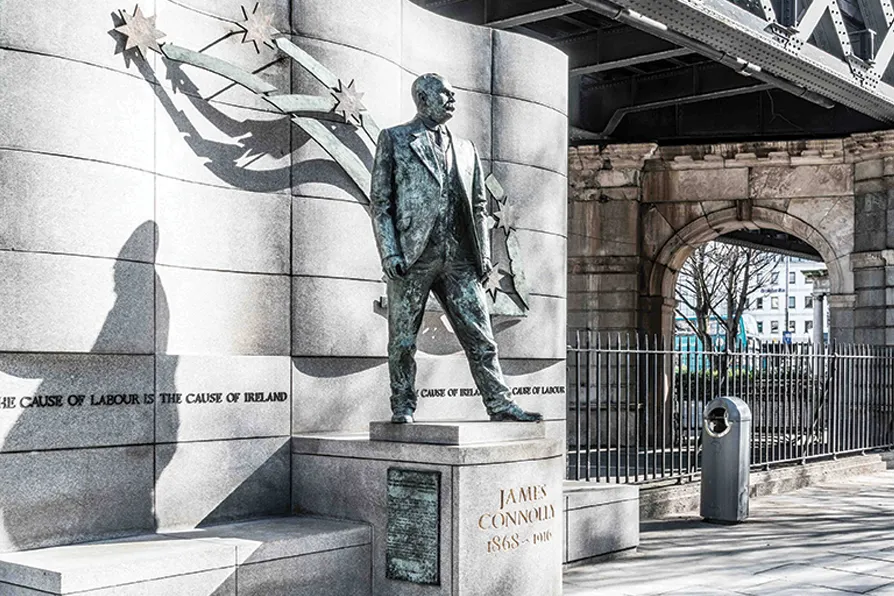
A new group within the NEU is preparing the labour movement for a conversation on Irish unity by arguing that true liberation must be rooted in working-class solidarity and anti-sectarianism, writes ROBERT POOLE
The independent TD’s campaign has put important issues like Irish reunification and military neutrality at the heart of the political conversation, argues SEAN MacBRADAIGH