
The UK Prime Minister may have the regal touch in northern England, but he’s been wrong-footed on the constitutional challenges posed by the Celtic Alliance of first ministers from Scotland, Wales and Northern Ireland, argues KENNY MacASKILL

Smoke on the water
Welsh wanderings showcase fiery destruction, alternative water ways and revive memories of a local mining legend, writes MARK SEDDON
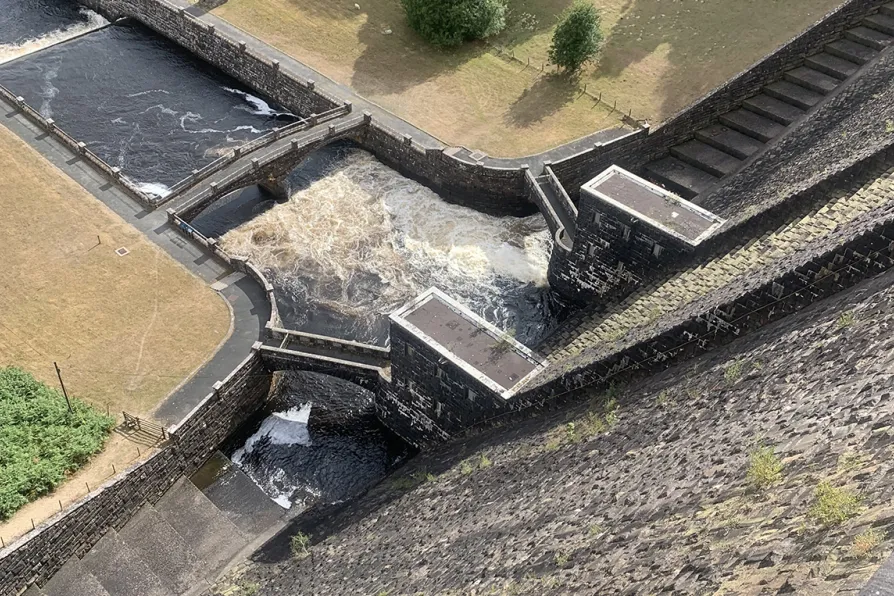
 One of the dams at the Elan Valley [Pic: Author supplied]
NEIRLAY ANDRADE, a member of the Communist Party of Venezuela’s political committee, outlines her party’s position on the crisis facing the country
A look at Taylor Wimpey’s accounts shows why Labour’s market-led housing strategy won’t deliver more, cheaper homes, as promised, says SOLOMON HUGHES
DAVID HORSLEY remembers the remarkable life and death of US black revolutionary George Jackson, whose politically passionate prison letters were published as Soledad Brother
Cuban trade union federation CTC leader OSNAY MIGUEL COLINA speaks to Ben Chacko about life and work under a crippling US siege
A part of the British empire’s network of slavery, today the Caribbean island of Nevis faces a new form of exploitation in the form of crypto-colonialism, CLAUDIA WEBBE writes
Challenges from the unscrupulous misuse of AI to steal actors’ voice and physical likenesses is being met with a firm union response, writes LYNDA ROOKE





AT long last, sporadic rain has come across from the west in swiftly moving bands, dampening down some of the many areas here in the Welsh Marches that have been blasted by extensive fires. One of our local retained firefighters, whose main job is at a building-supplies company, told me that for most of August he had spent his time careering around the borders battling to put out fires.
Heading with friends into Wales towards Rhayader and the glorious Elan Valley, we passed a blackened mountain in New Radnor. As we arrived at the town, the smell of smoke permeated the blackened mountain-scape. How do you put out a giant fire when you can’t get the fire tenders up to where they are needed, I wondered?
It was open day at one of the giant Elan Valley reservoirs. This is a chain of artificial lakes which were created, for the most part, at the turn of the 19th century by damming the Elan and Claerwen rivers. All the reservoirs are powered by gravity, and we were able to walk down narrow steps into the dam itself. Inside, every few yards, glass-less vantage points were cut into the dam, with only a small amount of water coming from over the top, allowing panoramic views down the valleys.
The original construction of the Elan Valley reservoirs saw over 100 local residents displaced, almost 50 homes flooded, a local school under water, along with a famous country house, Cwm Elan mansion, associated with Percy Bysshe Shelley, disappearing under the rising water levels. A local church was dismantled and rebuilt by the Birmingham Corporation.
These provide the clues as to the great row which developed and that helped boost the nascent Welsh nationalist movement. All of these mighty dams and reservoirs were built with one purpose in mind — to supply the great industrial city of Birmingham.
Today, some of the water is also sent to south Wales but the destination for most of the water remains the same. There is also a great deal of it, despite this long, hot, drought-stricken summer.
In fact, two of the upper reservoirs were full to the brim. I dared not mention to anyone that although there were hosepipe bans in parts of Wales, there were still none to speak of back in Herefordshire.
As we drove down narrow, winding roads passing seemingly fearless grazing sheep, we passed another small, partially destroyed dam from one of the feeder tributaries. This was the Nant-y-Gro dam, originally built to provide water for the army of navvies working the site.
Barnes Wallace, the inventor of the bouncing bomb, decided that this was the ideal place to test out his theory that enough hydrostatic pressure could be created to collapse a dam wall. He proved his point with his bomb, and the rest as they say, is history.
The Elan Valley reservoirs and a 70-mile hinterland of heathlands and ancient mainly oak woodlands that hug the valleys are the responsibility of Welsh Water/Glas Gymru, a non-profit company.
Although Welsh Water is facing a mass legal action accusing it of polluting the Wye, the ownership model does prove that it is quite possible to organise our water industry in a very different way and should certainly include outright public ownership.
In fact, public ownership cannot come soon enough for the water industry. Watching Andy Burnham’s about turn on Thames Water in recent days will make many people think that he is just “bottling it.”
Driving through the Welsh Valleys to Cardiff the other day, I couldn’t help but think about the massive changes that have taken place in this part of the world over the past 40 years or so. Today Richard Llewelyn might have to retitle his powerful homage to pre-industrial Wales, How Green Is my Valley. Most of the old spoil-heaps have long gone in the aftermath of the Aberfan tragedy and the ribbons of terraced houses that line the valleys have often had their chimneys removed.
Tales of a Welsh underground hero
NEW jobs have been slow to arrive and have sometimes been virtually non-existent in some of the Welsh valleys. Some years after the ending of the great miners’ strike in 1985, when the industry had been all but decimated, I went to visit the Rhondda Heritage Park, which features the old Lewis Merthyr Colliery.
There I bumped into the legendary — and he truly was a legend — Ivor England. I had first met him in 1984, when he was the NUM lodge secretary of Maerdy Colliery, which became the “last pit in the Rhondda.”
Ivor was now a museum guide, dressed in the underground gear of a Victorian-era miner. I asked him how he felt going from being a miner and militant union official to guide. He was as phlegmatic and thoughtful as ever. “This is my chance to tell our story,” he said.
Ivor never won any official recognition for the battles he had fought, whether won or lost. There was no OBE or KBE for him. Not that he would have wanted any of these baubles, of course. I mention Ivor because, just by chance the other day, I came across a local newspaper which reported that he had died aged 90 in June. John Evans chronicled Ivor’s experiences in A Miner’s Life, which I confess I have not yet read, but which I am looking forward to doing.
Great British Elms (Kew Publishing) by Mark Seddon and David Shreeve is available at tinyurl.com/GreatBritishElms. This column appears fortnightly.

Similar stories

In June 1402 Owain Glyndwr defeats the English in a battle of Bryn Glas, a fact not introduced to the school curriculum in Wales until 2022. MARK SEDDON revisits the battlefield
MARK SEDDON tries to cool off in the countryside to avoid the heatwaves but the greed and incompetence of the privatised water industry is now at boiling point
Millions of elms were wiped out by Dutch elm disease in the 20th century, transforming the landscape forever – yet pockets of hope are keeping this beloved tree alive. MARK SEDDON explains
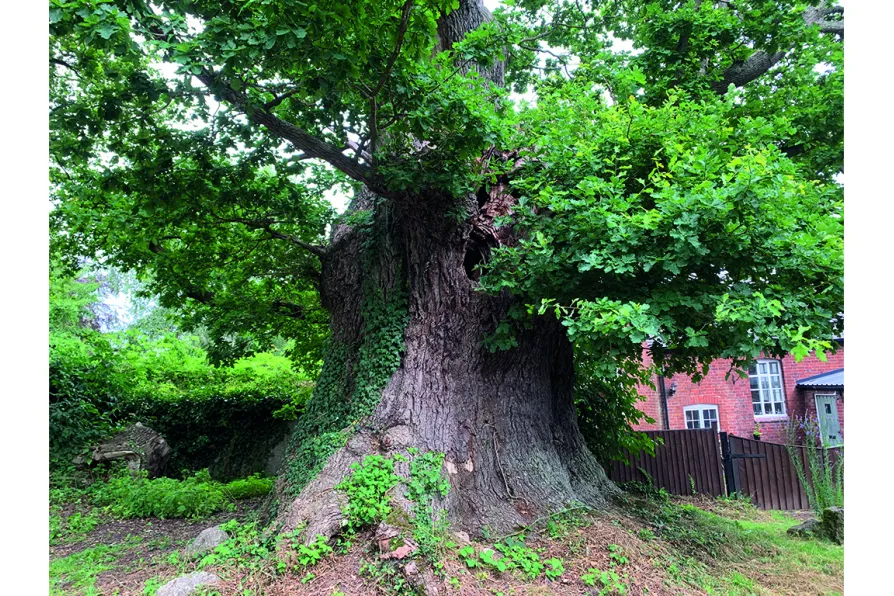
In his fortnightly column MARK SEDDON reflects on the death of Major Oak and why such ancient trees matter to us