Even the oligarchs of the artificial intelligence industries are warning that their creations have the capacity for the ultimate destruction of the planet and its population. ANDREW MURRAY suggests that there might just be other solutions


 Latest editorial
Nevis is not for sale – the crypto-billionaires must go
A part of the British empire’s network of slavery, today the Caribbean island of Nevis faces a new form of exploitation in the form of crypto-colonialism, CLAUDIA WEBBE writes
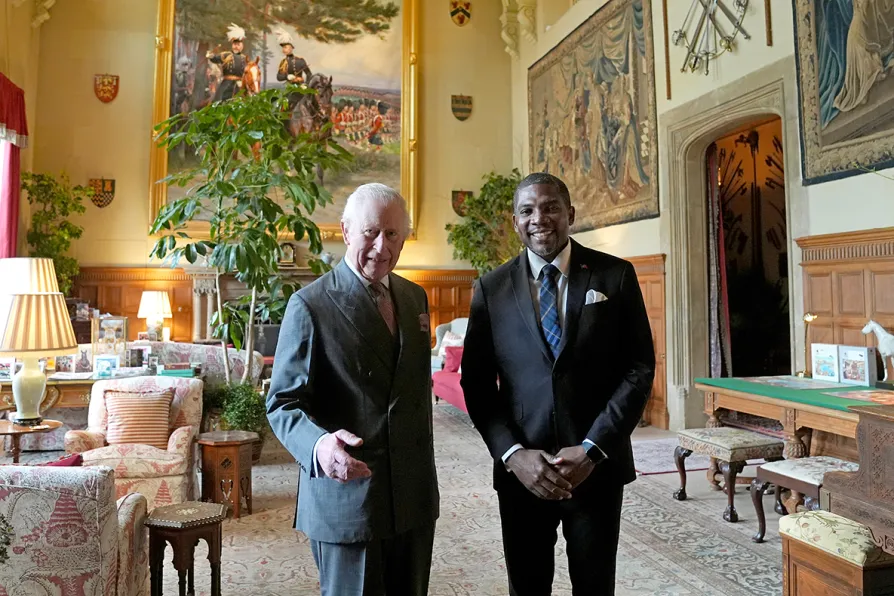 COLONIAL RELIC: King Charles III holds an audience with the Prime Minister of St Kitts and Nevis, Terrance Drew, at the Sandringham Estate in Norfolk [Pic: Joe Giddens/PA Archive/PA Images, January 24, 2025]
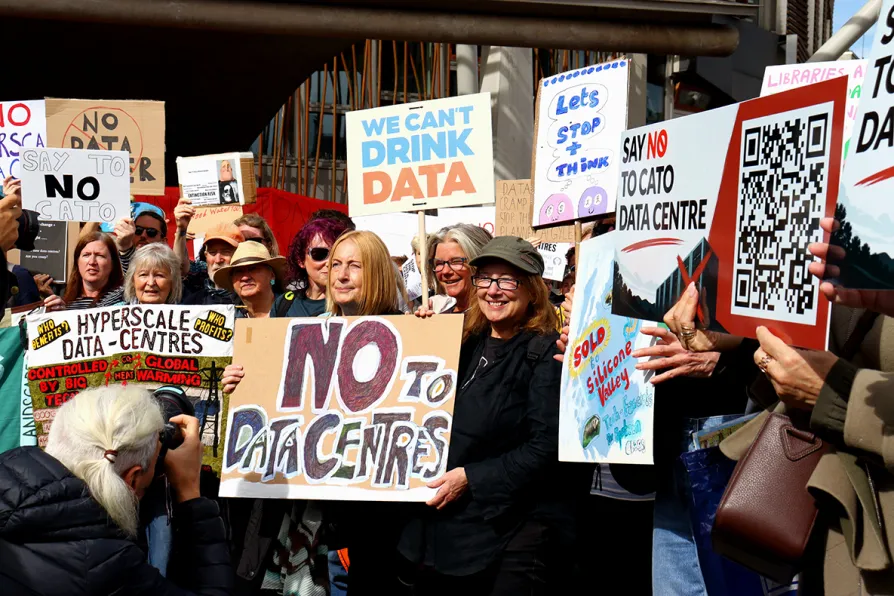
The Labour government must deliver on its commitment to bring back privatised services into the public sector. This not only saves money but also creates accountability and generates wider social benefits, argues ANDY MCDONALD MP
PCS is demanding the long-overdue return of essential services to public ownership, explains FRAN HEATHCOTE
Despite promises of a new era of insourcing, billions of pounds of public contracts continue to flow to private firms. Unions are now calling for urgent action to bring services back in-house, says EDDIE DEMPSEY
Public ownership of Great British Railways has enormous potential to improve our railway network, but that can’t happen unless jobs, employee rights and union recognition is at the heart of the transition, argues MARYAM ESLAMDOUST
If Labour is genuinely committed to supporting working-class students it must act urgently to reverse the funding crisis affecting universities and colleges, JO GRADY tells Christophe Domec
Challenges from the unscrupulous misuse of AI to steal actors’ voice and physical likenesses is being met with a firm union response, writes LYNDA ROOKE





AS A proud daughter of Nevis, whose Nevis-born parents came to Britain as part of the Windrush generation, I look toward September 19, when St Kitts and Nevis marks 43 years of independence from Britain. Yet I watch that anniversary approach with something other than celebration.
Independence Day has an additional meaning for Nevisians. Section 102 of the 1983 constitution created the Nevis Island Administration and Assembly, restoring home rule after roughly a century.
Fifteen years later, 61.8 per cent of Nevisian voters backed secession from St Kitts, falling short only because the referendum required two thirds. Nevisians are not casual about who governs Nevis.
Last November, addressing islanders by video, Belgian-born Bitcoin investor Olivier Janssens, who obtained St Kitts and Nevis citizenship through its investment programme, called Nevis a “host nation.”
His company, South Nevis Ltd, is buying land for Destiny, a proposed private, crypto-based community with what he calls “efficient court systems.” Reported plans include its own currency, dispute resolution and 10,000 new residents on an island of around 13,000.
The development would cover about 2,400 acres, more than one tenth of Nevis. Janssens calls it a Monaco-Dubai hybrid for the Americas.
The proposition is stark: more than one tenth of a sovereign Caribbean island under the control of a single private developer, operating a private token and dispute system within a federation of about 51,000 people.
What makes it possible is not money. It is law. In the summer of 2025, the parliament of Saint Christopher and Nevis passed Act Number 21, the Special Sustainability Zones Authorisation Act, empowering the prime minister, with cabinet approval, to enter development agreements creating specially governed zones on national territory.
The Act permits developers to establish their own “dispute resolution services and mechanisms.” The Financial Times reported that the investor’s own side was largely responsible for drafting it.
That detail is quite alarming. A private party did not lobby the legislature. A private party, on this reporting, supplied it.
Before Destiny there was Free Society, co-founded by Janssens with the early Bitcoin figure Roger Ver. Free Society published the criteria it applied when choosing a country. It wanted stability, water access, proximity to economic centres, and two things that should alarm us all.
It wanted “nations with a significant national debt” and “a flexible constitution that allows granting sovereignty.”
Ver told a conference stage in 2017 that “governments love money.” Isle of Man filings from June 2025 connect Free Society Limited to Destiny International Limited as its secretary.
The institutional response has been unusually blunt for the region. In December the St Kitts and Nevis Bar Association passed a resolution expressing deep concerns, warning that while foreign policy and the military are explicitly retained by the state, policing, labour protections and immigration are left ambiguous.
Bar president Kurlyn Merchant called for the law to be fundamentally restructured to eliminate adverse consequences to democracy and the rule of law.
Civil society went further. The Nevis Civil Society Coalition, alongside the Nevis Historical and Conservation Society, the St Kitts and Nevis Chamber of Industry and Commerce and the Nevis Evangelical Association, wrote to St Kitts and Nevis Prime Minister Terrance Drew and Nevis Premier Mark Brantley demanding outright repeal, stating that the law could permit developers to establish their own state within a state, and that the Act appears written to enable developers rather than protect citizens.
A December 2025 poll of 450 Nevisians found awareness above 92 per cent. Opposition ranged from 55 to 69 per cent across the three federal constituencies, while distrust of Janssens ranged from 56 to 83 per cent. Majorities in every constituency wanted the Act cancelled, rising to 75 per cent in one.
Premier Brantley’s position, stated in January, was that Nevis was comfortable with what had been proposed and stood behind the project because it is good for Nevis.
The Financial Times also reported that the estate agent facilitating land purchases for Destiny is Sharon Brantley, the premier’s wife.
On July 23 2026, the federal government confirmed that no final decision had been made after a high-level meeting raised four major cabinet concerns. It later announced, “fundamental changes,” an independent oversight committee and publication of any agreement before it reaches the Nevis Island Assembly.
Brantley says the outstanding issues were resolved. Janssens denies that Destiny would become a state within a state, saying it will follow national law and remain open to locals.
Those denials would be more reassuring if we had not already watched this film in Honduras. Prospera is a charter city on the island of Roatan, operated by a Delaware-incorporated company backed largely by United States venture capital.
In 2022 the Honduran congress voted unanimously to repeal the zone legislation. In September 2024, the Honduran Supreme Court ruled the framework unconstitutional, precisely because it granted private entities authorities that should belong to the state.
Prospera did not accept the verdict of a sovereign parliament and a sovereign court. It filed for up to US$10.7 billion in arbitration, with its own valuation experts putting the intrinsic value of its business plan as high as US$26.4bn.
Honduras withdrew from the World Bank’s arbitration centre in 2024 and, under a new president, rejoined on August 16 2026.
That is the product being sold to Nevis. Not investment, but an option on its sovereignty, exercisable against it in a foreign tribunal. Sign today and you host a private jurisdiction.
Change your mind tomorrow and you are billed for imagined future profits. Private power demands freedom from the state, then demands that the state guarantee its profits.
The Destiny investor has offered US$50 million toward Nevisian infrastructure. Set that beside Prospera’s claim and you have the exchange rate of this century: US$50m in, US$11bn in potential liability out.
Why was the door open at all?
Nevis is economically exposed. The IMF estimated that growth in St Kitts and Nevis slowed to 1.5 per cent in 2025 amid weak construction. Citizenship by investment revenue fell from 25.8 per cent of GDP in 2022 to 5.3 per cent in 2025, while the fiscal deficit reached 11.7 per cent.
Public debt stood at 58.4 per cent of GDP at the end of 2025 and is projected to reach 78.2 per cent by 2031.
Government deposits have collapsed from 31 per cent of GDP in 2021 to 7.2 per cent in 2025. In June 2026, the European Commission asked five Caribbean governments, including St Kitts and Nevis, to phase out citizenship by investment by June 2028.
Meanwhile, in June this year, the Caricom reparations commission brought its revised 10-point plan to London, a 56-page manifesto demanding apology, compensation, debt cancellation and the completion of decolonisation, with a strengthened focus on the harm done to women and girls.
Britain’s answer, as with every answer since 2014, was to change the subject.
Consider what this means for an island whose history is not abstract. Britain built Bristol from Nevisian sugar. University of Bristol research has named more than 900 enslaved people held on the Mountravers plantation, owned by Bristol’s Pinney family.
When John Pretor Pinney sold the estate in 1808, its 183 enslaved people were valued at £65 each. After emancipation, Bristol’s planters received compensation worth hundreds of thousands of pounds. The people they enslaved received nothing.
So, Nevis was drained, then denied redress, then saw a major source of public revenue condemned as internationally unacceptable. It is now being offered a private zone by a developer who calls the island a host nation.
In November 2025, Destiny offered Nevisians 30 east Caribbean dollars (EC$) a month, (about US$11 or £8.25). By March 2026, it had raised the offer to US$100 (£74.30) for every resident, including children, payable if the government signed, alongside a share of Destiny’s future profits. That was a ninefold increase in four months, worth US$4,800 (£3,566) annually to a family of four. Opposition politicians called it influence buying. In July, Destiny funded a new dialysis centre and its first two years of operation.
Nevisians both need and deserve a dialysis unit. But care that arrives as a negotiating position can be withdrawn as a negotiating position, and a health service should rest on public revenue and reparative justice rather than on the goodwill of a man who wants his own courts. A dialysis unit on Nevis ought to be paid for by Bristol, not bargained for by a billionaire.
Destiny belongs to a wider network-state movement whose projects have been financed by tech billionaires Peter Thiel, Marc Andreessen, Sam Altman and Brian Armstrong. In the 19th century, Western powers arrived off Shanghai demanding their own courts on sovereign soil, backed by gunboats.
In 2026, the investors arrive with a draftsman, an architectural practice and a monthly stipend. Janssens and his companies sought an indebted nation with a flexible constitution.
Governments reshape the law, tech and crypto billionaires supply the money, and the people of Nevis risk losing control of their land, democracy and sovereignty.
Destiny may also show where Britain’s freeports could lead: designated areas where private capital receives exceptional privileges, democratic control is weakened and public power passes into private hands, all in the name of investment.
Nevisians have done the difficult part. Lawyers, conservationists, churches, the chamber of commerce and, by every available measure, voters have identified the danger and said No. More than 900 people have signed a petition to halt the project.
The remedy is not complicated. Repeal Act Number 21. Publish every agreement, assessment and land transfer in full. Write into Caricom law a prohibition on delegating policing, immigration, labour standards or adjudication to any private company.
Leave investor-state arbitration as a region rather than one country at a time. Treat the Caricom 10-point plan as fiscal policy, reparative finance in place of billionaire charity, because a nation with its debts cancelled does not need to sell its statute book.
Olivier Janssens wants to be left alone to do his things. He is entitled to that on land he actually owns. He does not own Nevis. Mark Brantley’s administration supported a proposal that up to 83 per cent of his constituents did not trust.
Britain took the sugar, compensated the enslavers and denied reparations to the descendants of the enslaved. It has forfeited any right to call what is happening on Nevis a free market.
Turning one-tenth of Nevis into a privileged jurisdiction for mobile wealth is the arrogance of capital. It is crypto-colonialism. Nevis was once sold by the head. Our international solidarity should ensure it will not be sold again by the acre.
Claudia Webbe was the member of Parliament for Leicester East (2019-24). You can follow her at www.facebook.com/claudiaforLE and x.com/claudiawebbe

Similar stories
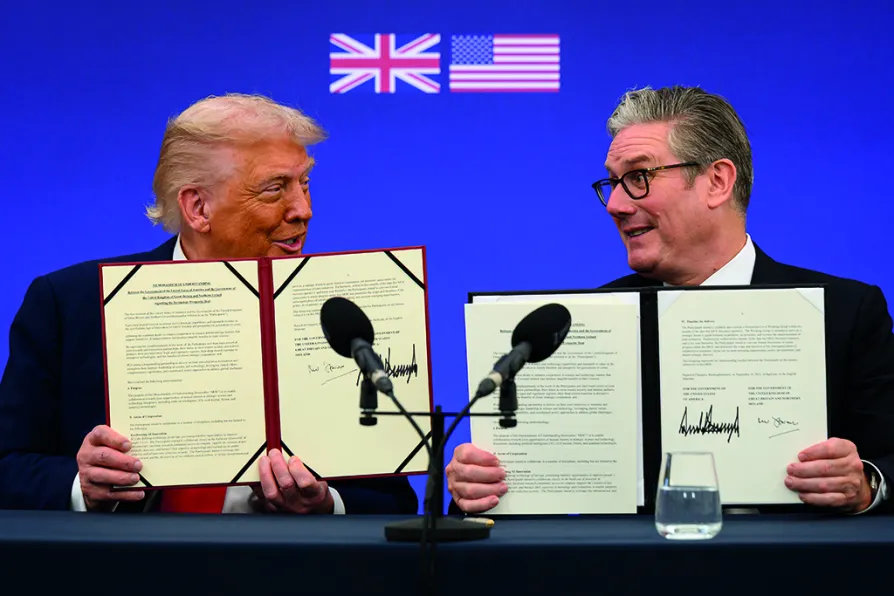
CLAUDIA WEBBE says the horrific price British patients will pay for this NHS deal is now clear — and there’s time to get out of it, if MPs will only force the issue
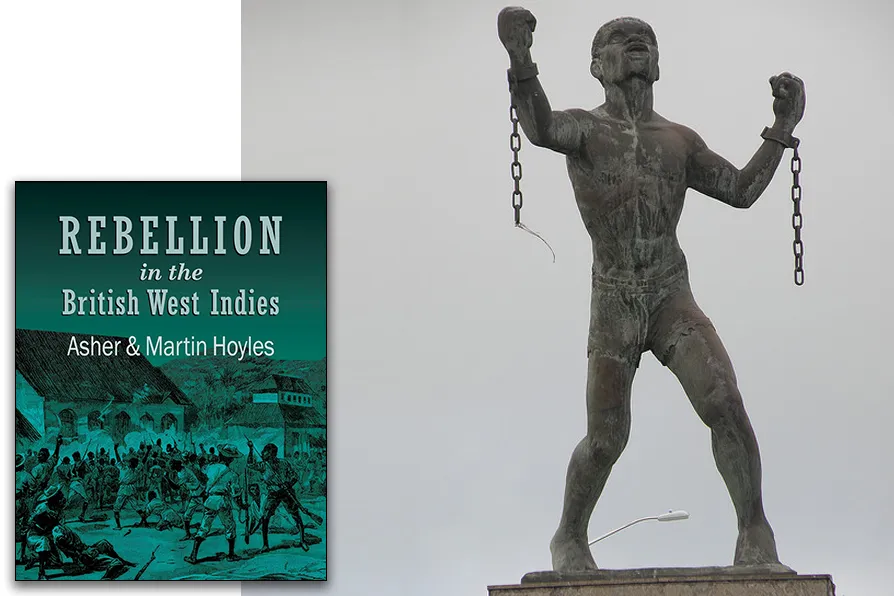
BOB NEWLAND appreciates an important contribution to the debate about how slavery helped to build the wealth of Western companies and states

The Met Police's refusal to act against British nationals accused of war crimes in Gaza is a green light for Israel's genocide, writes CLAUDIA WEBBE
CLAUDIA WEBBE says the US is tightening the noose to destroy Cuban socialism — the need for immediate, international solidarity is urgent