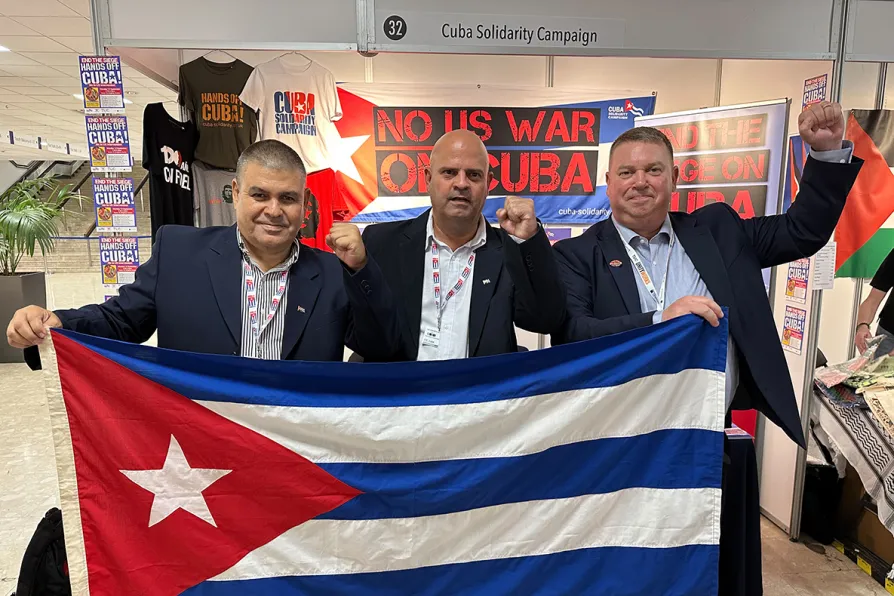
Cuban trade union federation CTC leader OSNAY MIGUEL COLINA speaks to Ben Chacko about life and work under a crippling US siege


 Latest editorial
A flame of rebellion that still burns brightly
DAVID HORSLEY remembers the remarkable life and death of US black revolutionary George Jackson, whose politically passionate prison letters were published as Soledad Brother
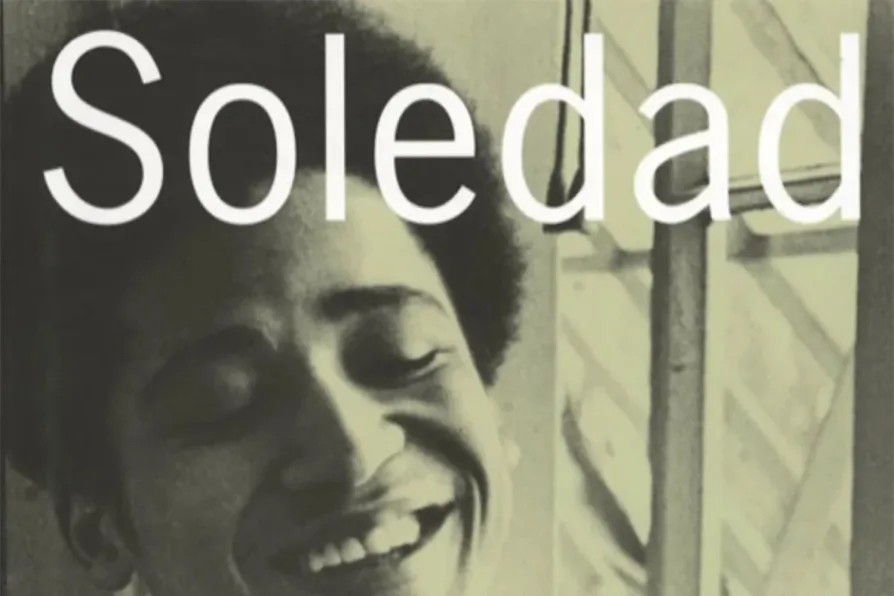 Soledad Brother reflected the radicalisation of a generation of imprisoned black revolutionaries. Published by Chicago Review Press.
A part of the British empire’s network of slavery, today the Caribbean island of Nevis faces a new form of exploitation in the form of crypto-colonialism, CLAUDIA WEBBE writes
A new book by Victoria Holmes illuminates the many hidden histories of the oppression experienced by Gypsy/Roma/Traveller community, writes ROGER McKENZIE
Even the oligarchs of the artificial intelligence industries are warning that their creations have the capacity for the ultimate destruction of the planet and its population. ANDREW MURRAY suggests that there might just be other solutions
The Labour government must deliver on its commitment to bring back privatised services into the public sector. This not only saves money but also creates accountability and generates wider social benefits, argues ANDY MCDONALD MP
Public ownership of Great British Railways has enormous potential to improve our railway network, but that can’t happen unless jobs, employee rights and union recognition is at the heart of the transition, argues MARYAM ESLAMDOUST
Challenges from the unscrupulous misuse of AI to steal actors’ voice and physical likenesses is being met with a firm union response, writes LYNDA ROOKE





“THE major obstacle to a united left in this country is white racism. Racism is still alive,” wrote George Jackson in 1971.
September 23 marks the birth date of George Jackson the great African-American radical activist shot dead by prison authorities in August 1971, aged just 29.
That same year, I was teaching in a quite unique primary school in Brixton, south London that had a huge impact on my life.
Ninety per cent of the children were from the Caribbean or were of Caribbean origin, mainly Jamaican.
They, their parents and a brilliant Jamaican colleague, Beverley Bryan, brought black liberation to the forefront of my politics and brought to my attention a particular book by George Jackson, Soledad Brother, a classic of black writing.
In 1971, Jackson had been incarcerated in the US prison system for ten years, many of them in solitary confinement. In 1960, aged 18, along with a companion he had robbed a petrol station, and both were quickly arrested.
They had stolen $70 and were found guilty of second-degree robbery. On the advice of a lawyer, Jackson accepted a prison term of “one year to life.” This prison sentence meant that for the crime of stealing $70, he never knew freedom again.
Jackson, as with all black Americans, experienced racism on a regular basis outside jail.
In prison, with white guards, it was far worse. White prisoners, some of whom were confirmed racists who openly worshipped Hitler and were totally antagonistic to black and Chicano inmates, were egged on by racist guards to fight each other.
This became a sport for those particularly racist prison guards, who watched over these episodes from on high with guns in their hands.
The prison sentence of “one year to life” meant that every year, Jackson appeared before a parole board to see if he was “fit” to be released.
A most independent person, he stated that if he attempted to play the compliant and contrite prisoner, the truth would be seen on his face and result in him being denied parole year after year.
A proud black man, completely aware of racism he began to educate himself politically. With the aid of Black Panther and Marxist inmates, he read and studied voraciously, later stating: “I met Marx, Lenin, Trotsky, Engels and Mao when I entered prison and they redeemed me.” He labelled himself “A Marxist-Leninist Maoist Fanonist.”
Jackson began writing many letters to family, friends and supporters on the social and political system.
The supporters were the many thousands of black and white people who were aware of his imprisonment and led by the Black Panthers, had formed support groups calling for his freedom.
As the years passed, the letters were published as Soledad Brother and support went international and there were rallies and meetings worldwide campaigning for him and other inmates of US prisons. Soledad was one of the prisons where he had been incarcerated.
A white gang, calling themselves the Aryan Brotherhood, found themselves in the prison yard with several black prisoners and a battle ensued.
One of the marksman guards looking down from the walls shot four times, killing three black inmates and wounding one white inmate.
This caused outrage among the prisoners, one of the victims had been a mentor in prison to Jackson. The guard responsible for the shooting, after being exonerated by the authorities, was then found dead, having been thrown from the top of a staircase.
Immediately, Jackson and two others, Fleeta Drumgo and John Cluchette, were accused of the death of the guard and were set for trial for murder.
This incident and the fame from his book made the prison authorities more antagonistic to him and visitors occasionally had their visiting time curtailed.
After being allowed an interview with journalists, he had his typewriter, papers and photos removed from his cell.
Then came the news that his younger brother Jonathan had, with some armed black activists, stormed a local court where Cluchette was being tried.
The group took several hostages, freed John Cluchette and demanded freedom for George Jackson, Drumgo and Cluchette, now known as the Soledad Brothers.
The police opened fire, killing all but one of the black activists and two of the hostages.
Jonathan Jackson had used a gun belonging to Angela Davis, who with other communists were campaigning for the release of the Soledad Three.
She was accused of being party to the hostage-taking. Although completely innocent but knowing how cheap the lives of black activists were, she fled and was sheltered by members of the Communist Party and their allies.
This ended later with her arrest and trial with an all-white jury that resulted in her being found not guilty of all charges.
But while Davis was still on the run, George Jackson’s days were numbered. The facts on his last day are still contested, but after a visit from his lawyer, he was said to have produced a gun and after freeing several prisoners gained entry to the prison yard.
There, guards on the walls shot and killed him. His mother Georgia Jackson said immediately after her son’s death: “I can tell you what happened. They set him up to kill him and they killed him. They’d been trying for 10 and one-half years to do it.”
James Baldwin, the famous black writer, said: “No black person will ever believe that George Jackson died the way they tell us he did.”
George Jackson was a remarkable person, a real autodidact who politicised himself in the brutal prison system and produced an absolute masterpiece, Soledad Brother.

Similar stories
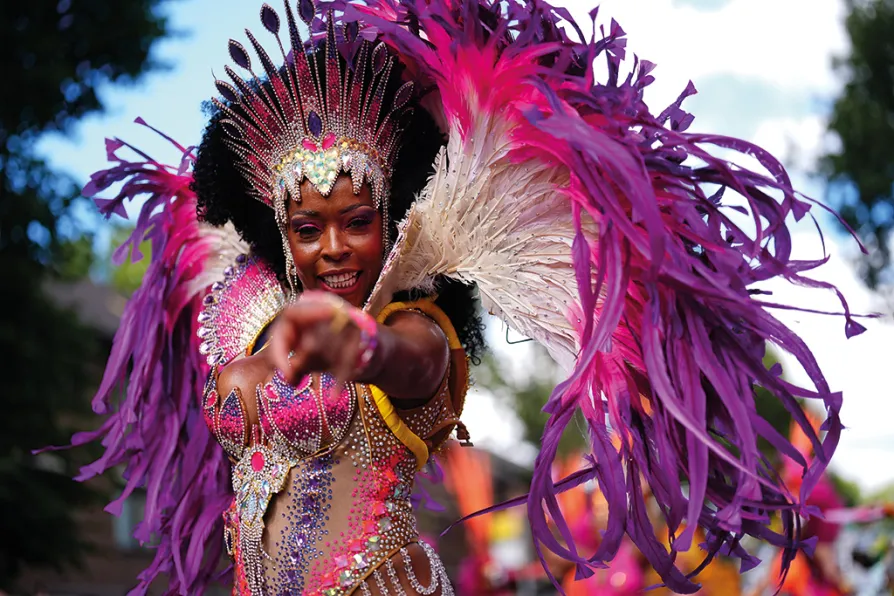
Britain funds the policing of black culture 16 times better than the culture itself. The Diamond Jubilee is the moment to end that, argues CLAUDIA WEBBE
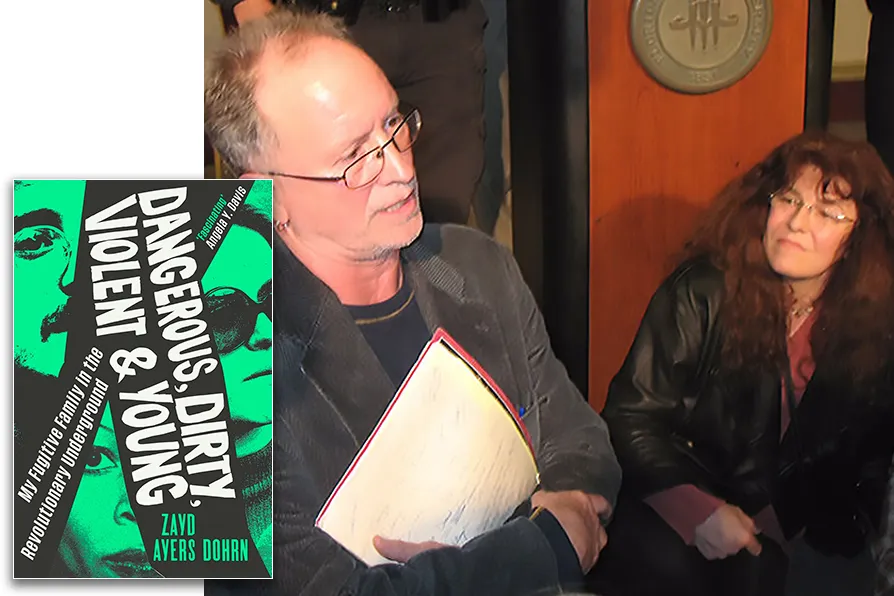
STEVE ANDREW appreciates the unusual story of a family childhood spent on the run from the state and its police
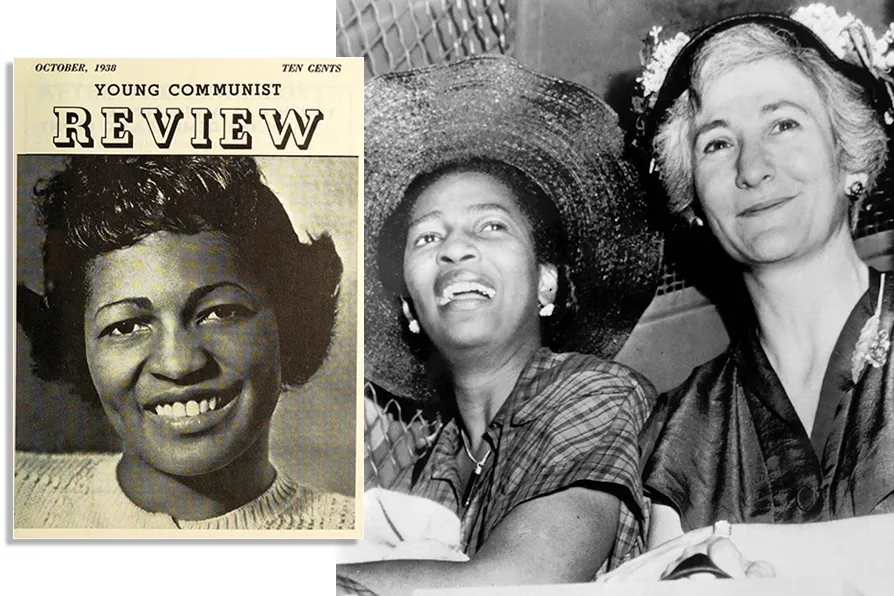
On the 121st anniversary of communist Claudia Jones’s birth ROGER McKENZIE looks at political events that shaped her, and those she helped shape
Groups are urging the US government to secure the 16-year old’s release as his mental and physical health decline dramatically after nine months inside Ofer prison, writes LINDA PENTZ GUNTER