
Working people across Britain are fighting back against austerity, war, repression and exploitation. The challenge now is to unite those struggles, says Communist Party of Britain assistant general secretary JOHNNIE HUNTER

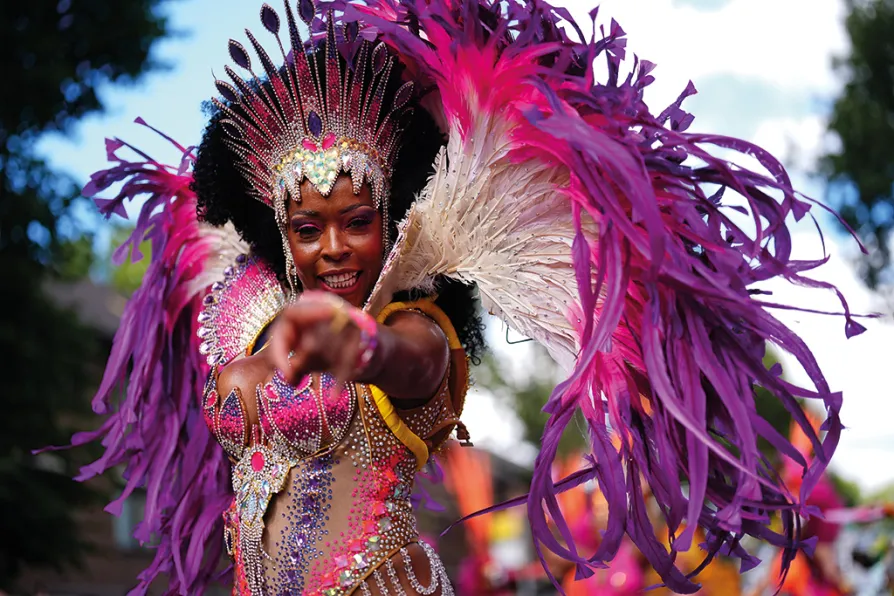
Notting Hill Carnival at 60: Britain has spent six decades refusing to call this art
Britain funds the policing of black culture 16 times better than the culture itself. The Diamond Jubilee is the moment to end that, argues CLAUDIA WEBBE

Train drivers’ union Aslef general secretary DAVE CALFE speaks to Ben Chacko about his hopes that Burnham’s devolution agenda will include the importance of the railway
DIANE ABBOTT provides an analysis of the reasons for EU and British voters’ dramatic swing to the right
Some of the review’s proposals could make the benefits system less cruel and dehumanising. But its vague plans for services and non-cash support revive the threat that disabled people will lose control over the money we need to survive, writes DYLAN MURPHY
Believe it or not, there was a time when the US government built beautiful homes for working‑class Americans to deal with a housing shortage, writes ERAN BEN-JOSEPH
MAT COWARD has heaps of good advice on recycling garden and household waste over the winter





SIXTY years ago, a steel band walked. That is the whole origin story, and it is worth remembering how small it was. Rhaune Laslett had organised a children’s street fayre in Notting Hill and invited Russell Henderson’s three-piece steel band to play. Henderson, finding the pans already strapped round his players’ necks, suggested they make a round of the block. Roughly a thousand people followed.
This past bank holiday weekend, on the Diamond Jubilee of that walk, around two million people were on the streets of west London, at what is now Europe’s largest cultural event and the world’s second-largest carnival.
Britain has spent six decades refusing to file Carnival under the correct heading.
Carnival is art. The steel pan is widely regarded as one of the few genuinely new acoustic instruments of the 20th century, and the UK National Panorama competition that opens the weekend is a ticketed contest of composition and arrangement judged at orchestral standard.
Mas is textile design, engineering and portraiture worn on the body. Calypso and soca are lyric traditions built on satire and social commentary, which is to say they are political forms. Around one million working hours go into producing the event each year. By 1973, Leslie Palmer had scaled Carnival into its modern form with sound systems, generators and static sites. Matthew Phillip, chief executive of Notting Hill Carnival, describes the anniversary as six decades of a community that turned exclusion into expression and struggle into celebration, and reminds anyone listening that Carnival began not as a spectacle but as a need for the community.
Carnival was never conceived as entertainment. Its Caribbean lineage runs directly to emancipation, and the London event carries the celebration of freedom from slavery inside it. Notting Hill sits in a family of carnivals, Port of Spain, Brooklyn, Toronto, Rio, Bahia, Cologne, all descended from the same act of emancipation, taken not granted.
Its British beginning is equally specific. After white mobs attacked black households in Notting Hill in 1958, and after Kelso Cochrane, an Antiguan carpenter, was stabbed to death in 1959 with no-one ever charged, the Trinidadian communist, journalist and feminist Claudia Jones organised an indoor Caribbean Carnival at St Pancras Town Hall in January 1959, televised by the BBC. In the souvenir programme she wrote: “A people’s art is the genesis of their freedom.”
She did not describe art as consolation. She described it as the point at which liberation begins. Jones had been deported from the United States, in her own account, for being a black woman communist of West Indian descent who demanded the prosecution of lynchers rather than the prosecution of communists.
Two women built the origin. A third figure, Leslie Palmer, built the scale. None of the three was commissioned, funded or thanked by the British state.
What has changed in 60 years is not the crowd’s behaviour. It is the ratio between what Britain takes from Carnival and what Britain gives it.
Start with what Carnival produces. Research commissioned by The Voice and conducted by JN Bank economist James Williams put the total net economic impact at over £396 million a year, drawing around 160,000 tourists and supporting the equivalent of 3,000 full-time jobs. City Hall itself now uses the figure of almost £400m.
Now look at what Carnival receives. Freedom of Information data published by the Greater London Authority this month shows core funding of £410,000 in 2020, rising to £946,300 in 2025, with £594,000 in additional funding on top.
Then look at what Carnival costs the state in policing. The Metropolitan Police’s Carnival operation cost £11.7m in 2023 and £15.7m in 2025.
Set those figures beside each other and a political choice becomes visible. Britain spends roughly 16 times more on policing this celebration than on producing it: an event that generates near four hundred million pounds is handed under a million, and surrounded by nearly sixteen million pounds of officers.
This year the Mayor added £4.66m after an independent review warned about crowd safety, funding at least a thousand extra security staff, more than three thousand stewards in total, barriers, wi-fi and CCTV. The safety of two million working-class people became fundable only once the crowd had been reclassified as a risk. Susan Hall, whose 2025 London Assembly report first warned of a possible mass crush, said her report was clear that structural reform is necessary to prevent a mass crushing event, and this money is not that.
Seven thousand officers were deployed this weekend. More than 330 people have been banned in advance as a bail condition. Live facial recognition is in use on the approaches.
Eleven civil liberties and racial justice organisations, including Liberty and Big Brother Watch, wrote to Commissioner Sir Mark Rowley describing live facial recognition as a mass surveillance tool that treats every Carnival goer as a potential suspect, and noting that it targets the very community Carnival exists to celebrate.
The Equality and Human Rights Commission warned the technology risks a chilling effect on rights, and pointed out that alerts against black men exceed what London’s demographics would predict.
The National Physical Laboratory’s evaluation recorded false positives falling entirely on “ethnic minorities” at certain sensitivity settings, and one of the field’s leading academics has stated that the Met’s bias-free claims are not supported by that report. In April 2026 the High Court dismissed Shaun Thompson and Silkie Carlo’s judicial review of the Met’s live facial recognition policy, a judgment now being appealed, which settles the law and settles nothing else.
The force deploying this technology at a Caribbean cultural event is the same force that Baroness Casey’s review found to be institutionally racist.
As of February 2026, black Londoners were 3.4 times more likely to be stopped and searched than white Londoners, rising to 5.3 times for weapons, points and blades. King’s College London research covering 152,000 Met stop records found disparities of 48 times in East Sheen, 40 times in Dulwich Village and 38 times in Hampstead Town, with the recorded grounds for searching black Londoners consistently vaguer than those for white Londoners. Roughly two thirds of stops end with no action. Across England and Wales in the year to March 2025, government data records 22.4 stop and searches per thousand black people against 5.9 per thousand white people, a rate 3.8 times higher.
Against that background, the annual claim that Carnival is uniquely dangerous does not survive contact with arithmetic.
In 2025 there were around 423 arrests among an estimated two million attendees, an arrest rate of roughly 21 per 100,000, while Glastonbury recorded 31 arrests among about 210,000 people. The Met’s own figures for the two main days record 528 arrests, including 167 for drugs, and note four stabbing or slashing incidents, none of them life threatening. What no honest reading supports is the idea that Carnival is an outlier in British public life.
Cher Maximen was murdered at Carnival in 2024. Her family have said publicly that cancelling the event would do nothing to stop knife crime, and that Carnival did not kill Cher.
The recognition question and the funding question turn out to be the same question. An institution a country understands as a national art form is funded, curated and protected. One it understands as a crowd is costed, policed and offered a park.
Matthew Phillip has answered the critics precisely: those calls come from people who do not understand Carnival and only see Carnival as a problem, and the statistics support the case that it is something to be cherished.
Susan Hall now leads the Conservative group at City Hall’s proposal to relocate Carnival to Hyde Park, cap numbers and transfer official organiser status to the GLA. Nigel Farage has said on GB News that the Carnival “simply can’t continue” in its current form. The Labour MP Jonathan Hinder, a former police inspector, wants it ticketed and moved, and asserted that would mean no stabbings.
Call the economics of that proposal what they are. In the borough Carnival passes through, median black household property wealth is zero, against roughly £115,000 for White British households nationally. Rent in Kensington and Chelsea consumes around two-thirds of median pay. Nearly three in 10 children in this borough live in poverty.
This is racial capitalism in one postcode: the community made the land valuable, was priced out of it, and is now asked to move the celebration off it too. The Hyde Park pitch is not a logistics conversation. It is a settler-colonial argument in modern clothes, in which the people who created the value are asked to leave so the value can be enjoyed without them.
Moving Carnival off the streets of Notting Hill would remove a working-class Caribbean institution from land whose extraordinary value it helped create. Writing in The Independent this weekend, Aaliyah Harry noted that for her community the Hyde Park pitch lands like an eviction.
In Kensington and Chelsea, men in Queen’s Gate live 17 years longer than men in Notting Dale, a gap among the largest in the country. Carnival passes through both. Grenfell Tower stood in the same borough. Demolition began in September 2025; final charging decisions are not expected until June 2027, a full decade after the fire.
And the people who built Carnival are still owed. As of January 2026, the Windrush Compensation Scheme had offered around £130m to roughly 3,900 claimants; at least 60 have died before their claims were resolved. Windrush Commissioner Clive Foster has warned that people are still dying without redress and called for a hurry for justice.
Six decades after Jones, Laslett, Henderson and Palmer built it, the British state supplies under £1m of culture funding and nearly £16m of policing, and a section of the political class proposes moving the result somewhere more convenient.
A serious country would do the opposite. It would place Carnival on a multi year statutory funding settlement proportionate to the £396m it generates, and recognise it as a national art form, funding the mas camps, pan yards, sound systems and calypso tents as the year-round Caribbean cultural institutions they are.
It would vest ownership in a democratic trust of mas bands, pan yards, sound systems and residents, so that no mayor and no assembly group could hold its survival as leverage.
It would fund stewarding, medical cover, sanitation and accessible routing as public infrastructure rather than as emergency grants. It would remove facial recognition from public space and end the stop-and-search regime its own data shows to be racially discriminatory.
It would stop letting a hostile press describe a Caribbean art form as a public order problem, and it would tax the property interests that Carnival made rich rather than sending them the bill for the policing of the people who made them rich. And it would conclude the Windrush payments and the Grenfell prosecutions at the speed it demolishes buildings.
Sixty years ago, a thousand people followed a steel band because nobody had given them permission to. That remains the point. Carnival was never a gift from the British state. It was built in the face of it, and it remains the finest art this country did not intend to produce.
As the saying goes, “Carnival a we ting.”
Claudia Webbe was the Member of Parliament for Leicester East (2019-2024). You can follow her at https://www.facebook.com/claudiaforLE/ and https://x.com/claudiawebbe

Similar stories
CLAUDIA WEBBE says the horrific price British patients will pay for this NHS deal is now clear — and there’s time to get out of it, if MPs will only force the issue

CLAUDIA WEBBE looks at how Britain’s Nato ally has upped the stakes in its effort to silence domestic dissenting voices
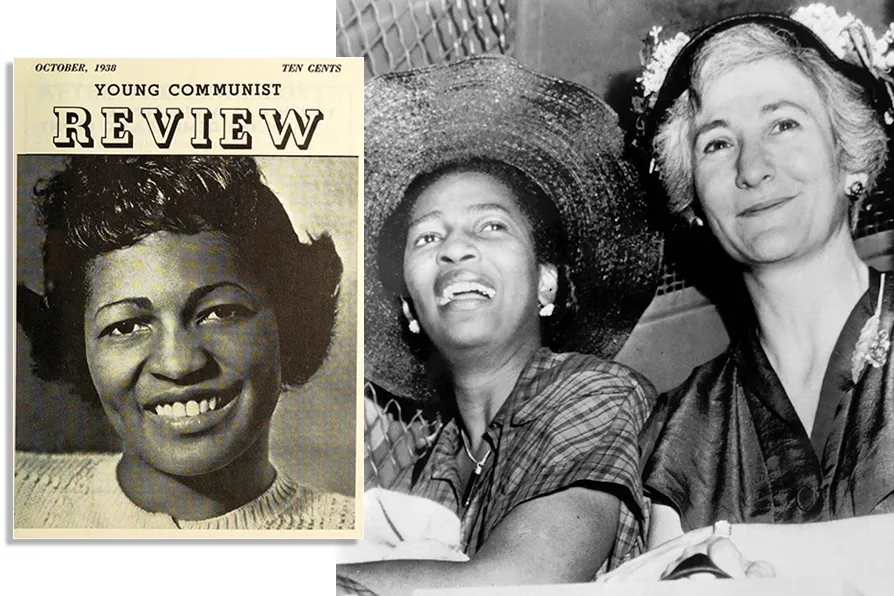
On the 121st anniversary of communist Claudia Jones’s birth ROGER McKENZIE looks at political events that shaped her, and those she helped shape
1943-2025: How one man’s unfinished work reveals the lethal lie of ‘colour-blind’ medicine