RITA DI SANTO assesses the winners of the most politically charged festival to date


 Latest editorial
What happens when your parents are revolutionaries
STEVE ANDREW appreciates the unusual story of a family childhood spent on the run from the state and its police
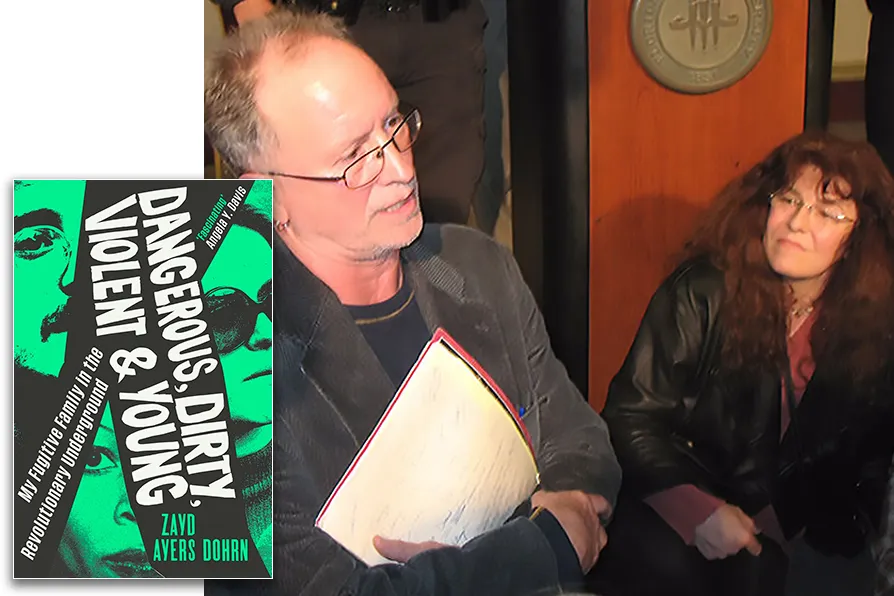 MODEL PARENTS: Bill Ayers and Bernadine Dohrn address a forum on education reform at Florida State University, January 2009 [Pic: Supercomputer12/CC]
KATARZYNA KOSMALA introduces a retrospective by one of the most significant figures in contemporary US photography
MAYER WAKEFIELD is entertained but let down by an audacious production that, sadly, doesn't ring true
MARY CONWAY is disappointed by drama that, despite accomplished performances, cannot overcome an unfocused script
New releases from Sam Carter, Spell Songs and Les Thomas





Dangerous, Dirty, Violent and Young: My Fugitive Family in the Revolutionary Underground
Zayd Ayers Dohrn, Chatto & Windus, £22
THIS is a well written, dramatic and detailed text that sheds historical light on the US-based movements for civil rights and against the war on Vietnam, and on the later development of those organisations, and particularly the groups who eventually decided to launch an armed struggle against racism and imperialism as part of what they saw as being the worldwide communist project.
Most interestingly, though, Dangerous, Dirty, Violent and Young is an intensely personal and unusual story recounting as it does a childhood spent in a family on the run from the state and its police.
After all, growing up was never going to be easy when your parents were Bernardine Dohrn and Bill Ayers. Both were movement veterans with experience in Students for a Democratic Society, and both had been active in the Revolutionary Youth Movement. After the decline and collapse of these bodies, both were also instrumental in the formation of the Weatherman Organisation which transitioned from the more street confrontational tactics of the Flint War Council and its “Days of Rage” to complete involvement in multiple shootings and bombings against the state and big business.
The tragic deaths of militants in the New Townhouse accident of 1970 saw Weatherman move away from armed actions other than the most symbolic, and a greater emphasis placed on putting together texts such as “Prairie Fire” that had an incredible influence on the emergent anti-revisionist New Communist Movement of the period.
However, organic links formed with other allies did mean that they continued to be actively involved in the struggles of offshoots of the Black Panther Party, such as the Panther 21 and the Black Liberation Army, the latter of which continued to organise into the early 1980s. Kathy Boudin, a close family friend and comrade to the Dohrns, eventually went on to serve 23 years in prison for felony murder after her role in the 1981 Brinks Robbery came to light.
It’s noticeable that at no point does the author come out with any kind of blanket condemnation of his parents’ actions and the fact that he too had to grow up as a fugitive child. He celebrates the fact that he was loved, wanted and respected, and remarkably seems to have enjoyed a lot about his upbringing and generally appears to have sympathy for his parents’ politics, only disagreeing with their methods.
Readers interested in why Dohrn’s parents rejected more established Marxist-Leninist formations like the Communist Party of the USA will need to look elsewhere as Dorhn doesn’t explore this, or indeed their disagreements with other Maoist organisations such as the Progressive Labour Party.
It’s fair to note as well that some of the organisations discussed lacked internal democracy and could become quite bizarre and cult-like. No-one ever forgot Bernardine Dohrns’s apparent advocacy of Charles Manson during a heated conference and later alliances, albeit short-term ones, with the ridiculous and actually dangerous figure Timothy Leary are still hard to understand at any level, all the more because of much of the left’s logical disinterest, if not active hostility towards so-called “drug” culture.
After years on the run, Zayd’s parents eventually turned themselves in during a comparatively liberal period in US politics, in which state-led repression and murder of the Counterintelligence Programme (COINTELPRO) would have been seen as an unnecessary embarrassment more than an asset. As a result of this, both Dohrn and Ayers recommenced professional careers after serving surprisingly light sentences, their son going on to become an acclaimed playwright and screen writer.
Most of us on the left would agree with Zayd Dohrn that the strategy adopted by his parents was wrong on many counts. Looking at the state of US politics today, however, surely indicates that the goal that they shared with thousands of others during these tumultuous years remains more valid than ever.

Similar stories
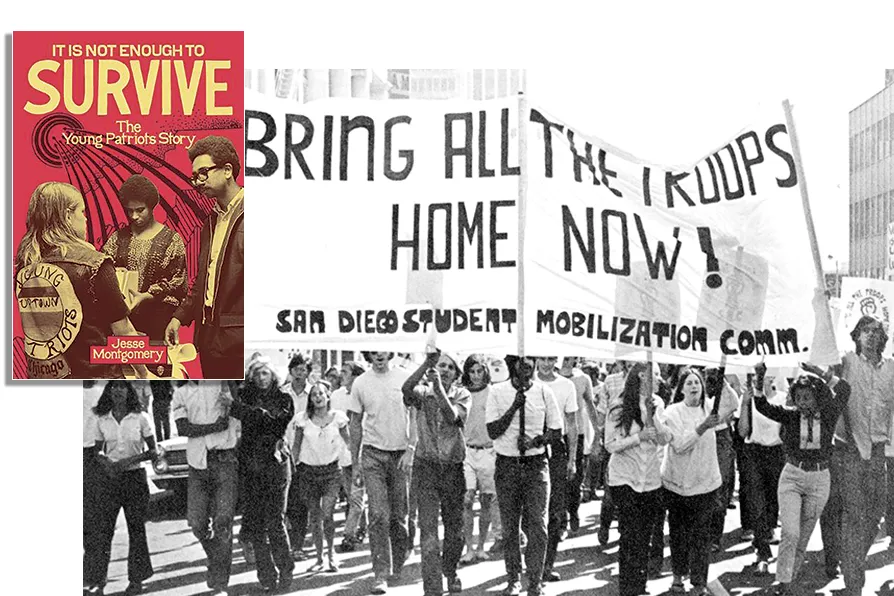
RON JACOBS welcomes a history of the Young Patriots Organisation that is also an organising manual with applications and implications for today
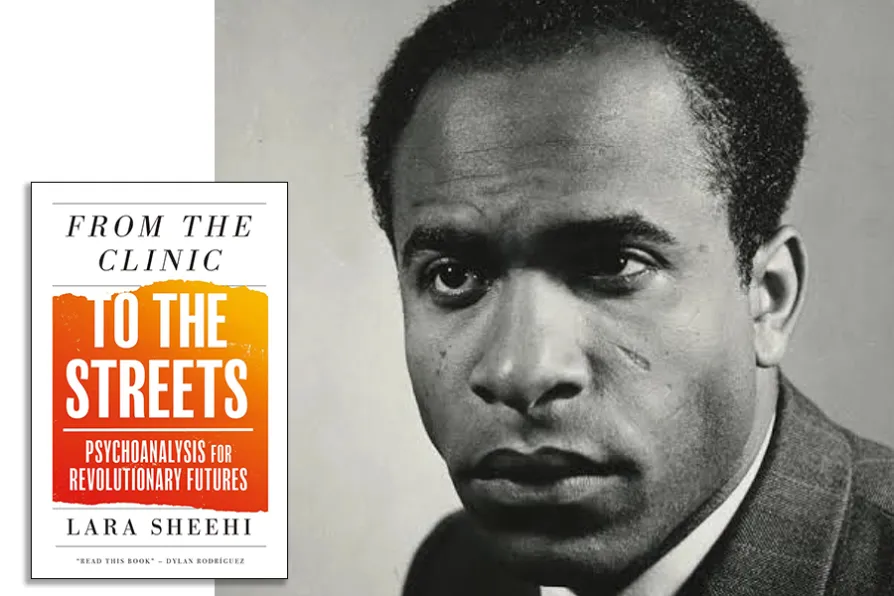
RON JACOBS recommends an important book that enhances the oppositional theories put forth by Fanon and, in doing so, remakes psychology itself
ROGER MCKENZIE recalls the one-in-a-generation communist leader murdered at the dawn of a new South Africa 33 years ago last April 10
JOHN REES replies to Claudia Webbe