
The US administration is endangering lives by reversing environmental protection laws, CHAUNCEY K ROBINSON argues

Ending the war on Iran is every progressive’s priority
Committee for the Defence of the Iranian People’s Rights general secretary GAWAIN LITTLE discusses the impact of the US-Israeli war on the Iranian people and economy
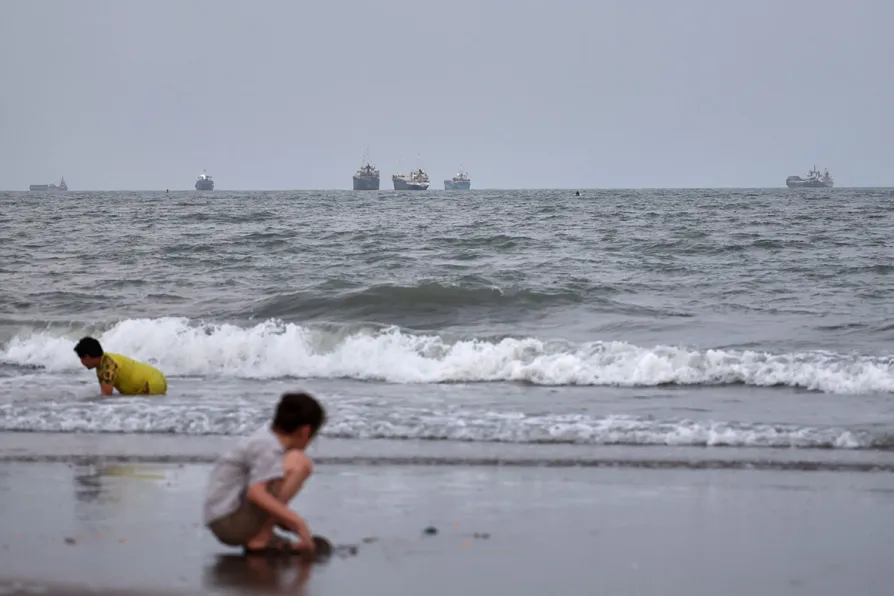
 Children play at a beach as commercial vessels are anchored in the Strait of Hormuz off Bandar Abbas, Iran, August 26, 2026
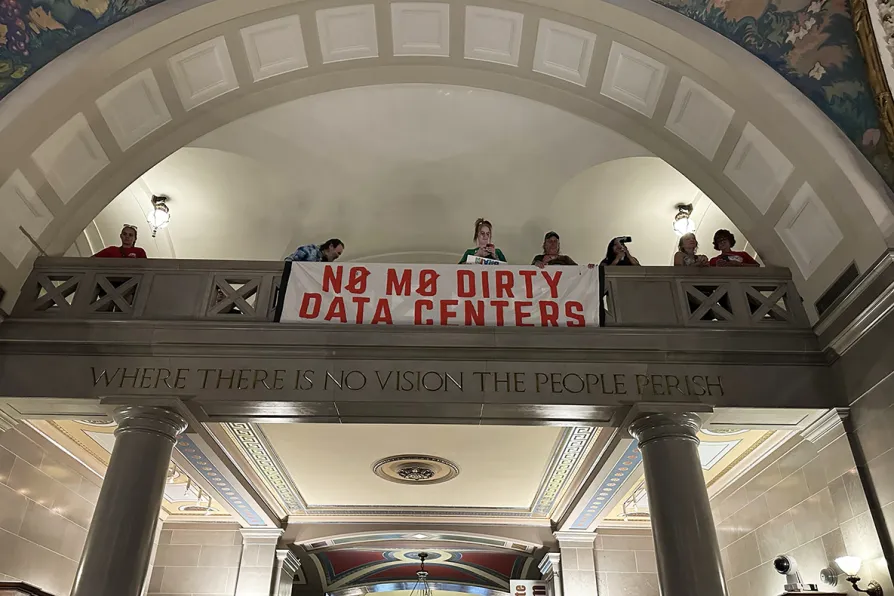
It’s time to stop retreating and go on the offensive to promote working-class interests, argues DOUG NICHOLLS
Marco Rubio wants to defeat socialism in Nicaragua, not restore ‘democracy,’ writes JOHN PERRY
Believe it or not, there was a time when the US government built beautiful homes for working‑class Americans to deal with a housing shortage, writes ERAN BEN-JOSEPH
DIANE ABBOTT provides an analysis of the reasons for EU and British voters’ dramatic swing to the right
Train drivers’ union Aslef general secretary DAVE CALFE speaks to Ben Chacko about his hopes that Burnham’s devolution agenda will include the importance of the railway





THE PEOPLE of Iran are suffering from a situation not of their making — the economic burden of the war, longstanding economic sanctions, high inflation and corruption.
International pressure on US President Donald Trump should force him to respect international law and the role of the UN. Trump knows that he can’t win the war militarily but is more interested in winning what he can from negotiations — even when it means wilful misinterpretation of what’s been said.
Against this backdrop, we talk to Codir general secretary Gawain Little about the ongoing situation in Iran and what progressives outside of Iran can do to support the people of Iran.
IRAN TODAY: How have the recent brutal US-Israeli attacks on Iran and the continued oppression of the Iranian people by the ruling dictatorship in Iran impacted upon Codir’s campaigning?
Gawain Little: The illegal unilateral assaults launched on Iran by the United States and Israel, first in June 2025 and then from February 28 2026 onwards, not only resulted in the mass killing of civilians but have also set back domestic opposition currents and the Iranian protest movement hugely.
We unequivocally condemn the illegal war launched against Iran and hold that the main victims of this criminal folly are the blameless and long-suffering Iranian people themselves. It is the role of Codir to work alongside the wider peace movement to oppose war and imperialist intervention waged against Iran.
At the same time, we maintain our consistent opposition to the Islamic Republic dictatorship and its serial abuses against the Iranian people over decades
The horrific events of January 2026, which saw the massacring by the Islamic Republic regime of thousands of Iranian protesters in the streets, was undoubtedly a “game-changer” in terms of any discussion as to the struggle inside Iran and the scale of killing places this chapter among the very worst in the country’s bloody recent history.
A heavy blow was tragically dealt to a popular protest movement that had been gathering steam and gaining traction within Iranian civil society up to the point of the bloody crackdown.
We have always been conscious as an organisation operating from outside Iran that our responsibility is to raise the voices of the Iranian people and act as an effective conduit for relevant information on currents and issues inside Iran that otherwise might not receive much attention or coverage elsewhere — particularly the ongoing struggle for human and democratic rights, including labour and trade union rights, in Iran — and thereby help to raise awareness of them for an international audience and build solidarity accordingly, not least among British trade unionists.
IT: What is your assessment of the stated basis of the US-Israeli strikes on Iran, and its main outcomes?
GL: We consider the US-Israeli attacks and launching of war on Iran, both times while Tehran was sat at the negotiating table, to have constituted grave and flagrant violations of the United Nations Charter and international law.
The initial stated objective of this war was “regime change,” though this has subsequently veered to the “de-nuclearisation” of Iran, despite the US claims to have “obliterated” Iran’s nuclear programme during the June 2025 war; the disbandment of Iran’s proxy network; and now control of the Strait of Hormuz trade route, an issue that only arose with the US decision to go to war against Iran in the first place.
The war’s primary impact has been upon the Iranian people with thousands of innocent civilians killed (not least the 120 primary schoolchildren martyred in Minab) and the wanton destruction of schools, universities, hospitals, residential neighbourhoods, factories and industrial complexes, roads and bridges, as well as other critical civilian infrastructure. It cannot be understated… the toll exacted upon Iran and its population has been huge!
Beyond Iran, the war has served to further underline an already established pattern of unilaterally taken military action and the undermining of international law in a manner that does not bode well for the future. Instability and volatility across the Middle East region is spiralling and an already faltering global economy is further imperilled, with significant knock-on effects for the lives of working people here in Britain and around the globe, the longer the war on Iran continues.
IT: How is the war affecting the livelihoods and day-to-day survival of ordinary Iranian working people?
GL: Regime officials have openly stated that over one million jobs were directly and immediately wiped out by US-Israeli strikes and the subsequent closures of the workplaces affected.
Air strikes have damaged at least 20 per cent of the country’s production units, with major steel complexes, petrochemical plants and manufacturing units hit heavily. Mass-scale redundancies have ensued throughout the country’s retail, transport, import-export, and digital sector owing to sharp downturns in business, power outages, the US-enforced blockade in the Gulf of Oman, as well as regime-imposed internet blackouts.
At least two million people are estimated to have been thrown out of work as a direct result of industrial and infrastructural damage as well as major trade disruptions, exacerbating Iran’s already huge unemployment crisis.
Meanwhile, the regime itself estimates that at least 40 per cent of the Iranian population lives below the official poverty line.
The inhumane US sanctions regime has also added enormous pressure to the Iranian economy as well as inviting ominous comparisons with the horrific situation faced by Iraq and its people during the dark days of the 1990s.
Yet Iran’s economic crisis long predates the war and sanctions and is also down to decades of economic mismanagement by the regime, the imposition of neoliberal economic policies since the early 1990s, and eye-watering levels of corruption. The result is a hollowed-out economy that has been rendered acutely vulnerable to sanctions and war conditions, to the detriment first and foremost of the Iranian people.
IT: How has the war impacted the activity of progressive currents in Iran, such as the trade unions, civil society and the like?
GL: As I mentioned before, the situation inside Iran has been particularly fraught since the massacre in January.
With the advent just a few weeks later of the US-Israeli war on Iran, the public space in the country was essentially rendered a “ground zero” in terms of protest and indeed any sign of dissent.
Codir fully supports those democratic, progressive, and patriotic forces that explicitly and simultaneously reject both foreign interference in Iran as well as the attempts of those regime factions that seek to exploit the continuation of the current situation of “no war, no peace” in order to shore up the dictatorship and head off the calls for democratic change.
IT: How can global progressive forces effectively support the Iranian people’s democratic struggles while opposing foreign imperialism and war?
GL: It is important to stress at the outset that thede two positions are not only not
mutually exclusive, they are in fact symbiotic… They are two sides of the same coin!
The starting point for any principled campaign of solidarity with the Iranian people is the clear demand for an immediate end to the war on Iran, all aggression towards the country, and the swift resumption of proper diplomacy and negotiations.
Campaigners should impress upon their own governments that the war on Iran is as unconscionable and unpopular as it is illegal and that they should firmly resist becoming complicit in it, whether directly or indirectly, including in the granting of permission to the US to use military and air bases on their territory or their airspace en route to attacking Iran.
Co-ordinated campaigns should be urgently pursued between left and progressive forces, trade unions, civil society, and anti-war movements internationally to oppose the continuation of war, military aggression, and the crippling inhumane sanctions regime against Iran, and defend the Iranian people’s inalienable prerogative regarding the course of future developments in their own country.
Such a campaign mounted in tandem with one of principled solidarity with the beleaguered Iranian people and their progressive representative forces, while steadfastly rejecting the self-serving narrative and rhetoric of the Islamic Republic dictatorship is eminently possible.

Similar stories
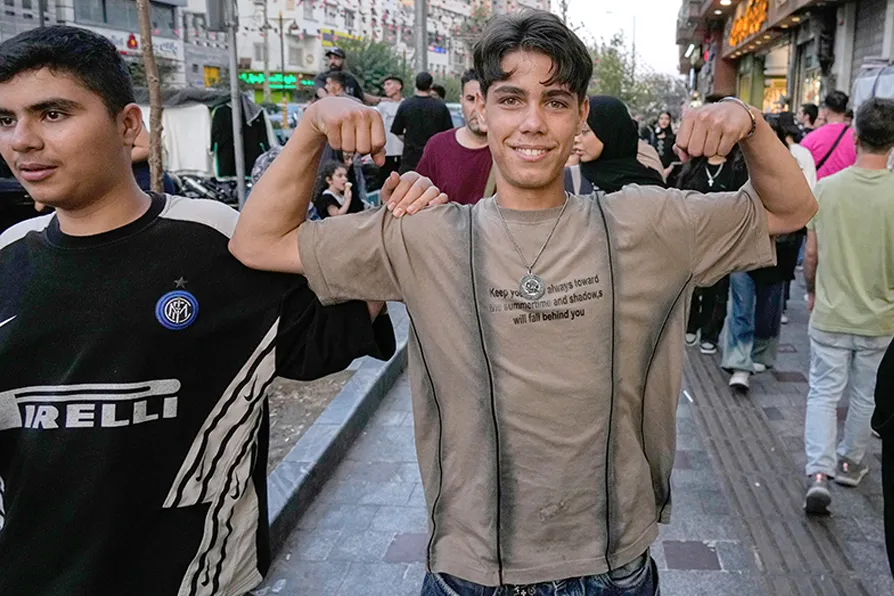
The US aim to reshape the existing order in the Middle East needs to be resolutely resisted, argues PAYAM SOLHTALAB
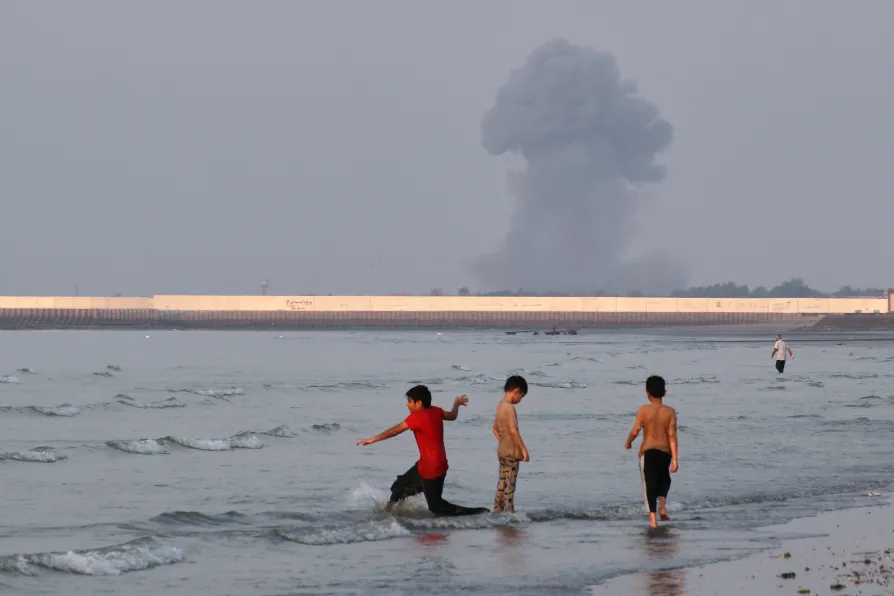
Behind the language of military strategy is a confrontation that risks drawing the wider Middle East into war, says STEVE BISHOP
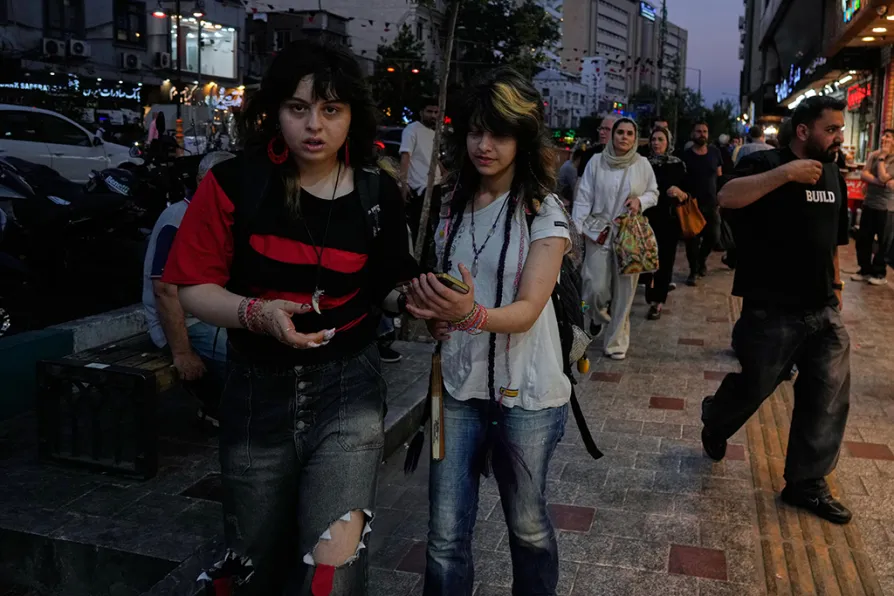
The ceasefire may have halted the fighting for now, but years of economic warfare and recent military attacks have left millions of Iranians facing hardship and uncertainty, says Codir’s RUBEN BRETT
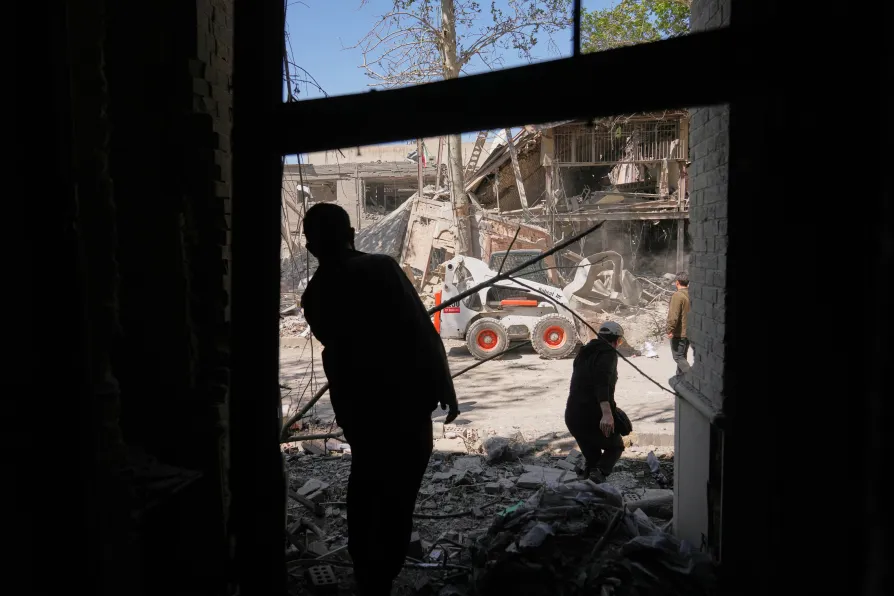
The Committee for the Defence of the Iranian People’s Rights (Codir) cautiously welcomes the ceasefire, but remains suspicious of US and Israeli intentions