
ROB WARZYNIAK wades knee deep through a pile of ‘dead canaries’ of Trumpist policies which exacerbated the horrors of US capitalism domestically


Is the Climate Change Committee still fit for purpose?
Established as a landmark victory for the climate movement, the CCC promised to hold governments to account. Today, it is understating the danger of climate chaos and impeding the radical action needed, says IAN SINCLAIR
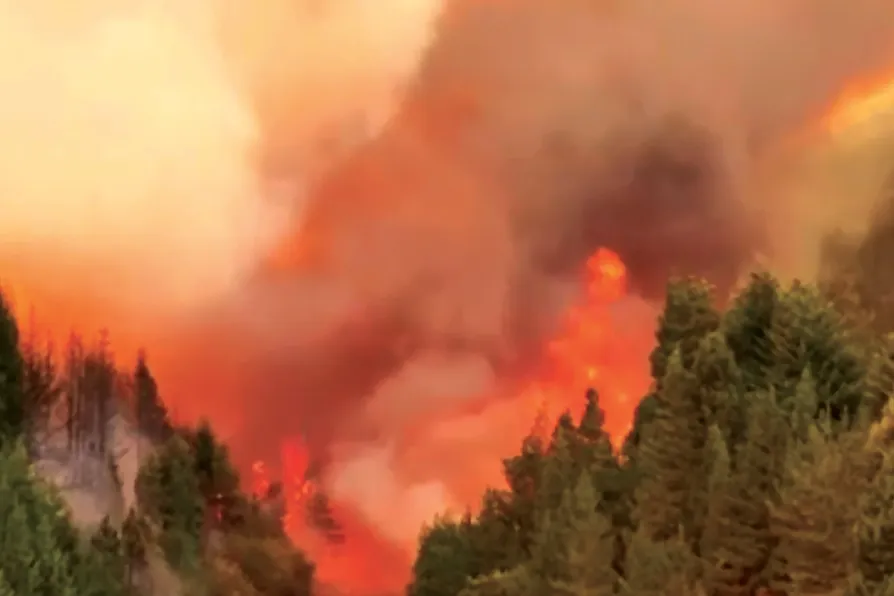
 BITTER HARVEST: Fires in Argentine Patagonia in February 2026 / Pic: tfnoticias/CC
Without evidence or Nato consultations Berlin’s answer to the Leipzig incident is a rupture of relations. SEVIM DAGDELEN examines why
FRANCISCO DOMINGUEZ introduces the background to a conference on defending Latin America’s sovereignty
The glacier collapse in Nepal is yet another warning that a warming planet is making Himalayan disasters more frequent and destructive – but the countries facing the greatest risks are often those least responsible, says LI YANG
Nick Blair is set to benefit from a hugely lucrative contract to ‘virtually’ train the British army for its next war. Like father, like son, writes SOLOMON HUGHES
Even when tragedy strikes, Western media cannot resist the opportunity to turn it into a sordid propaganda opportunity, as the Nepal-China border tragedy shows, writes CARLOS MARTINEZ
Trade unions should be at the heart of the anti-racist push for reparations for the historic legacy and continuing impact of slavery, writes ROGER McKENZIE





THOUGH it feels largely forgotten today, the creation of the Climate Change Committee (CCC) in 2008 was a huge victory for the climate movement.
It was one of the key parts of the Climate Change Act (CCA), won by the Big Ask campaign led by Friends of the Earth.
The CCA originally mandated British governments to reduce greenhouse gas emissions by at least 80 per cent by 2050 compared to 1990 levels, with the committee set up “to advise the UK and devolved governments on emissions targets and to report to Parliament on progress made in reducing greenhouse gas emissions and preparing for and adapting to the impacts of climate change.”
The passing of the CCA made Britain the first country in the world to establish a long-term, legally binding framework to cut carbon emissions.
Given its centrality in national climate policymaking and how it’s held on a pedestal by the mainstream media, it’s worth asking if the CCC is still fit for purpose.
The BBC, for example, repeatedly refers to the “independent climate change committee.”
Kevin Anderson, Professor of Energy and Climate Change at the University of Manchester, challenged the BBC Today Programme about this in February 2024, posting on X: “It was set up by government, to give advice to government and is paid by government. It can push hard within dominant political norms, but it cannot push beyond these.”
Members of the CCC are appointed by the Department for Energy Security and Net Zero, with members of the CCC’s Adaptation Committee appointed by the Department for Environment, Food and Rural Affairs (Defra).
The first chair of the committee was Adair Turner, the former director of the Confederation of British Industry. He was succeeded by Lord Deben, aka John Gummer, the former Tory cabinet minister. The current chair is Nigel Topping CMG (Companion of the Order of St Michael and St George).
The committee includes many eminent climate scientists, though one current member is Dr Steven Fries, who was Group Chief Economist at Shell from 2006 to 2011, and 2016 to 2021. Paul Johnson, the then director of the Institute for Fiscal Studies, served on the committee from 2012 to 2023.
In a hugely important article published by The Conversation website in August, Anderson, along with his colleagues Chris Jones and Gaurav Gharde at the University of Manchester, lists some of the environmental U-turns made by the Starmer government – airport expansion, the shelving of the phaseout of gas-fired boilers and the slashing of green levies on industrial energy bills that support renewables.
In the face of these disastrous climate policy announcements, the three academics argue the CCC “are failing to hold the government accountable for backsliding on climate action.”
Emeritus Professor Rupert Read, the co-founder of the Climate Majority Project (CMP), has also been critical of the CCC. “We need to remember that the CCC is a government-appointed body,” he tells me. “This has its advantages, but it also has disadvantages: chiefly, that the CCC is responsible for ensuring that government policy on climate is being followed, but is NOT responsible for asking questions about the validity of that policy itself.”
He continues: “Very sadly, the world climatic situation and Britain’s own climate prospects (including crucially those for climatic impacts and vulnerability) have declined signally during the 2020s. But the CCC’s targets have not been ramped up, because the law has not been ramped up.”
In their article for The Conversation, Anderson et al note that “major societal transformations, such as moving from private car to public transport, are largely absent from the CCC’s recommendations,” with the committee taking a “highly cautious approach to behavioural change.”
They contrast this with what they call the CCC’s “dangerously optimistic” assumptions about the future deployment of carbon removal technologies.
The committee unwittingly corroborated this analysis in its 2019 report recommending the British government reduce greenhouse gas emissions to net zero by 2050, by admitting the target date was informed by what is “feasible,” “politically acceptable” and by what could be “credibly deliverable alongside other government objectives.”
Launching the 2019 report, Chris Stark, then the CCC’s chief executive, stated 2050 “is technically possible with known technologies and without major changes to consumer behaviours.”
This is precisely the kind of language that Anderson et al are referring to when they write of “the allure of the CCC’s net zero advice,” claiming “to offer a pathway to avoid both major social transformation and a rapid phaseout of fossil fuels.”
The Guardian was certainly taken in last year, publishing an article about the CCC’s latest report, with these opening words: “giving up two doner kebab’s worth of meat a week would be enough to keep the UK within the safe climate limit by the end of the next decade” if the government takes action on greenhouse gases.
Dr Chris Shaw, a freelance climate communications consultant and author of Liberalism and the Challenge of Climate Change, is interested in the political ideology that underpins the committee.
It’s “an institutional expression of the liberal belief that climate change is a problem that sits apart from politics and ideology,” he tells me. “What the existence of the Committee on Climate Change represents is the idea that we do not need to consider or fight for any other social formations as part of the move to living in a carbon constrained future.
“Provide the state with independent science and it will act rationally, balancing the implications of the science with the needs of the people, and it will do so by managing a painless and just transition to a low carbon liberal utopia.”
As Read, Shaw and Anderson et al all highlight, many experts have stated that addressing the climate crisis requires nothing less than immediate and rapid transformational change – a WWII-level of mobilisation, according to Professor Tim Berners-Lee at November’s expert-led People’s Emergency Briefing in London.
We have, then, a massive and incredibly dangerous problem on our hands: the body that is legally mandated to hold the British government to account on its climate policies is failing in its mission, and is likely acting as a conservative drag on the national climate conversation.
In short, the CCC “understates our peril, and what would need to be radically shifted, to reduce it,” as Read and his CMP colleague Ed Jarvis write about the new CCC report on adaptation.
Think I’m exaggerating? Consider three essential data points about the climate emergency. First, the expected temperature rise. The earth is currently heading for a 3.1°C rise by 2100, according to the UN secretary-general.
Second, what this means for humanity. “I think a 3°C world is an existential threat to human civilisation,” Professor Stefan Rahmstorf from the Potsdam Institute for Climate Impact Research stated in 2022.
Or, as Anderson argued at the People’s Emergency Briefing: “The prospects of three or four degrees warming are absolutely dire. It’s an extreme and unstable climate, far beyond any safe zone that has nurtured our civilisation. And we are going to be seeing unprecedented societal and ecological collapse at these sorts of levels… there will be no real economy to talk about… we will be looking at systemic collapse.”
Recent news reports have confirmed these dire warnings very much apply to the UK. “We have learnt in the last few months that internal government assessments of our climate and nature situation are now quite candidly countenancing collapse within a decade,” Read tells me, referring to a classified UK national security assessment about the climate crisis and a leaked Defra report.
“Ecological collapse, and infrastructural collapse, and so potentially societal collapse. These assessments have now outstripped the limited remit of the CCC. It is these assessments, rather than the CCC reports, which are now making the running.”
And third, the level of global emissions reductions required to avert catastrophe. Anderson’s PowerPoint presentation at the People’s Emergency Briefing noted that keeping the global temperature increase to less than two degrees requires global emissions cuts of 8 per cent every year.
For comparison, he notes there was only a 5 per cent annual reduction in global emissions during the pandemic.
I’m not sure what the solution is. Should the CCC be scrapped? Replaced? Democratised? Made more responsive to public opinion and social movements? An equivalent of Independent SAGE set up as a rival?
One thing I do know is the universal relevance of the old saying: the first step to solving a problem is recognising there is one.
Follow Ian on X @IanJSinclair.

Similar stories
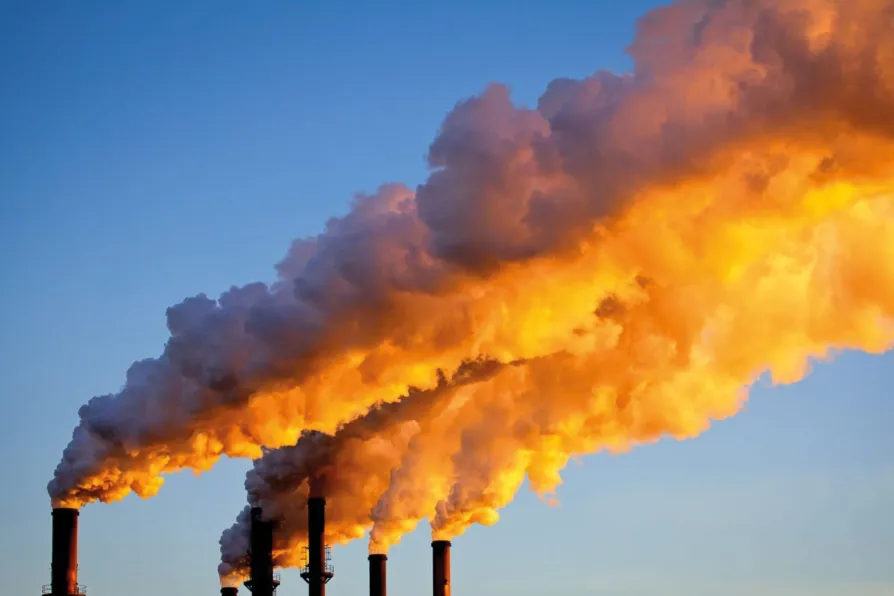
Climate extremes are becoming our new normal, says CHLOE BRIMICOMBE
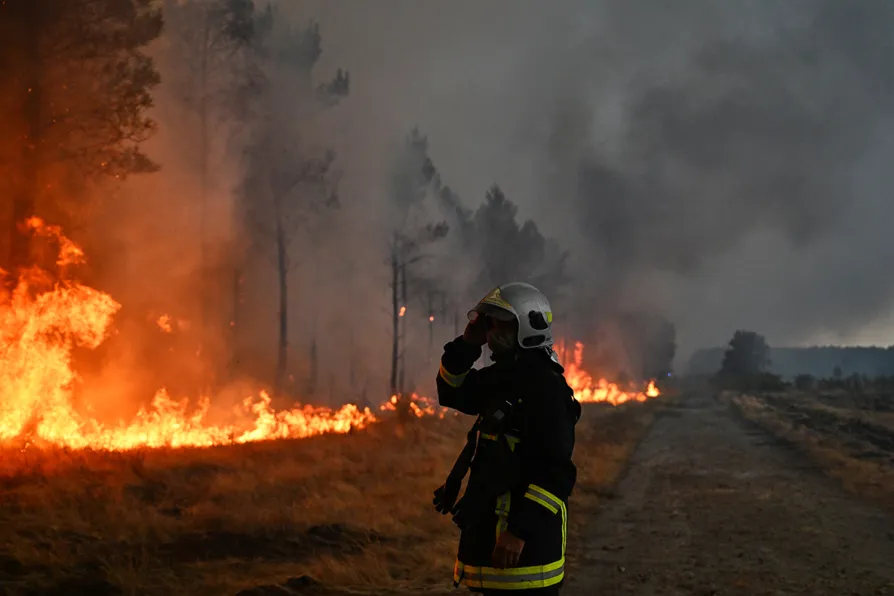
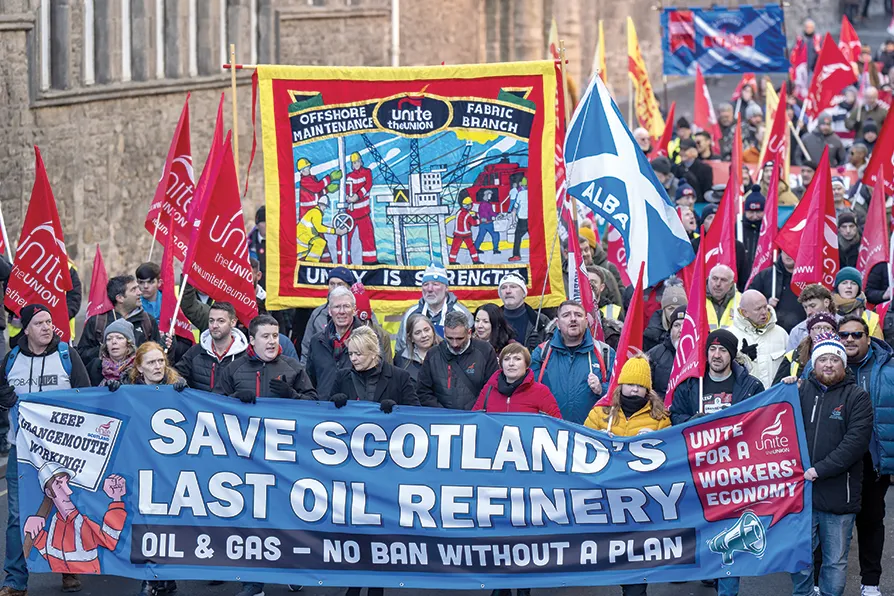
As fossil fuels have had their day, JOSIE MIZEN makes it clear that it is now the government’s responsibility to initiate the transition to alternative employment in a manner that is organised, efficient and effective
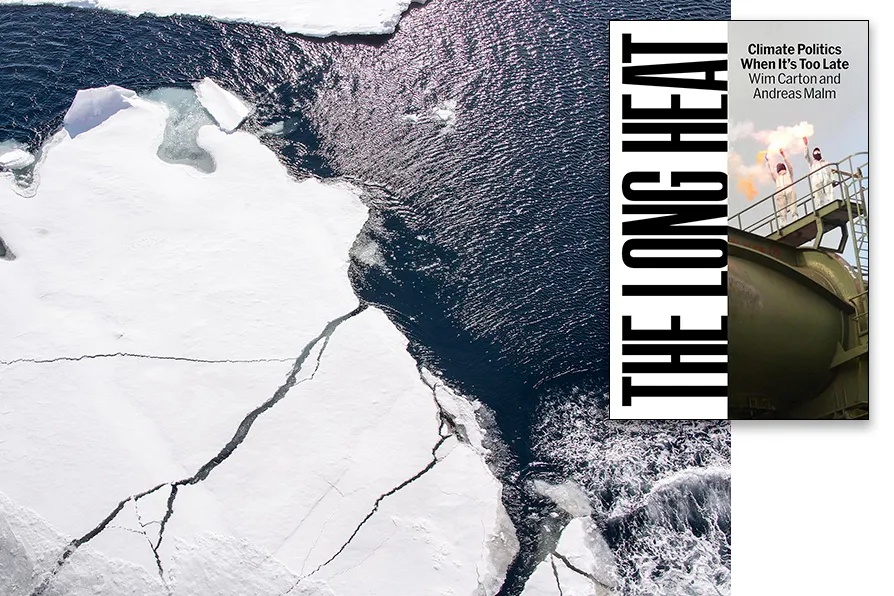
IAN SINCLAIR recommends an important and timely book for climate politics right now and in the future