TUC president and POA leader STEVE GILLAN speaks to Ben Chacko on the eve of Congress 2026


 Latest editorial
Media power hasn’t disappeared; it’s just changed its appearance
Claims that digital media has rendered press power obsolete are a dangerous myth, argues DES FREEDMAN
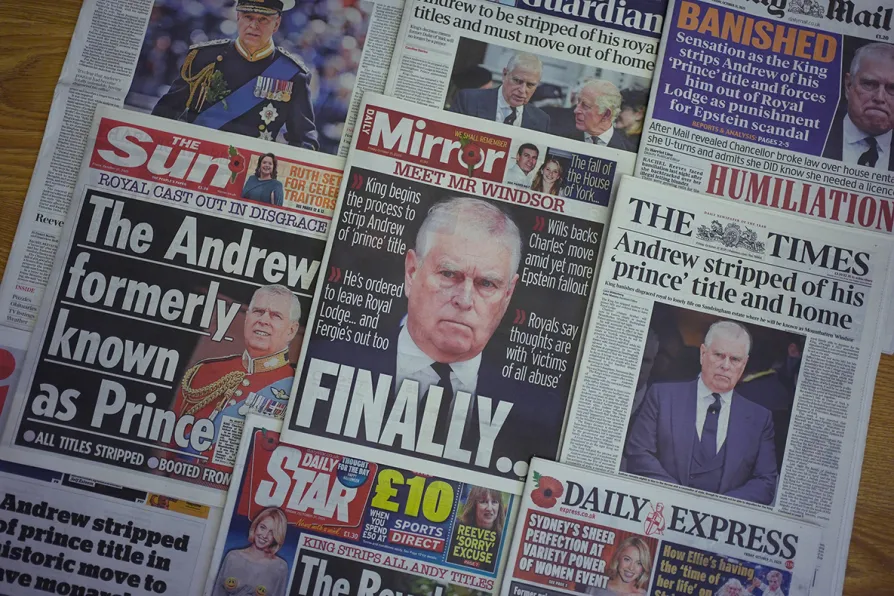 The front pages of national newspapers on display in London showing Andrew Mountbatten Windsor, October 31, 2025

DOUG NICHOLLS welcomes a turning point at this year’s Congress, where many motions call for a co-ordinated plan to revive British industry, a perspective outlined in his new book
HOPE VIRGO of campaign Dump the Scales warns MPs voting today they should be alert to the threat legalised assisted death poses to people with eating disorders
The Together Alliance is hosting two summits, North and South, to build power and plan action against the scourge of racism peddled by the right. DANIEL KEBEDE urges mass participation
The drift toward militarisation in Europe is not inevitable, left-wing and peace movements can preserve sovereignty and prevent war, says DÁIRE HUGHES MP
Whatever differences exist among international sympathisers of the Bolivarian revolution about its current trajectory, they should unite against the imperialist power that is the source of an enforced retreat, argues ROGER D HARRIS
Trade unions need to step up and force a turn in the policies of the labour movement to effectively confront the far-right threat, argues NICK WRIGHT





MOST politicians, commentators and media bosses would like us to think us that the issues at the heart of the great Wapping strike — press power and workers’ rights — are no longer relevant in the digital environment of the 21st century.
As the great union-buster himself, Rupert Murdoch, tweeted in 2012: “Haven’t you heard of the internet? No one controls the media or will ever again.” Fast forward to 2025 and Keir Starmer’s Culture Secretary, Lisa Nandy, justified the government’s refusal to sanction Leveson 2, an inquiry into the relationship between journalists and the police, on the basis that the media landscape has changed beyond recognition: “People now are more likely to get their news online from a whole variety of sources which has thrown up new and different challenges.”
These claims are false and disingenuous given that a handful of powerful news sources and tech giants continue to dominate public attention and and to amplify Establishment agendas, not least in relation to defence and national security.
Of course it’s true that print newspaper circulation and the audience share of linear broadcast news are both in decline but this doesn’t mean that traditional news organisations are no longer influential actors. Just saying that audiences increasingly get their news “online” may be correct but fails to capture the fact that most people still stumble across — or are directed by recommendation algorithms to — mainstream news content.
For example, Ofcom’s latest 2025 survey of News Consumption in the UK finds shows that for 68 per cent of audiences, TV is almost as popular as online (70 per cent) in terms of being the main platform for accessing news. Social media, at 51 per cent, are a fair way back.
The single most popular way to access news remains the BBC with 67 per cent of UK audiences exposed to the corporation’s many outlets. Facebook runs a distant second on 30 per cent with Instagram and YouTube both on 18 per cent, X on 14 per cent and TikTok on 11 per cent.
Second, it is not the case that audiences who rely on social media for their news are somehow immune to legacy media content. The most popular way of accessing news on social media is via trending stories but who do you think provides this content? Given that none of the platforms are news providers themselves, they obviously rely on other people’s content.
Once again, in the UK, the BBC is the dominant source of news across all main social media platforms. On Facebook, BBC content accounts for 26 per cent of consumption with other traditional news providers — including newspapers — on 18 per cent; on Instagram, it’s 23 per cent for the BBC and 15 per cent for traditional providers; on X, it’s 33 per cent for the BBC and 21 per cent for traditional news providers; even on TikTok, so popular with younger audiences, the BBC is the most popular source at 24 per cent, with traditional providers on 15 per cent.
Furthermore, it’s not even true that newspapers have lost all their audiences. 34 per cent of the UK population turn directly to either print or online newspapers, with the Mail titles the most popular, followed by the Guardian, Sun, Times and Telegraph.
It is, therefore, both lazy and complacent to claim that we don’t need independent and rigorous oversight of traditional news providers because they’ve been replaced by something called “the internet.” These newspapers have found millions of new readers and viewers on “the internet” and still influence the agendas of the broadcasters who remain another highly significant source of news.
Media power may be transforming but it is not diminishing. A cartel of largely US-owned big tech companies now preside over the circulation of Establishment sources and perspectives generated by a media that has, for example, largely been complicit with Israeli genocide in Gaza and uncritical of major policy positions over Nato membership and increased defence spending.
The Labour government is running scared of alienating newspaper owners — not because the latter are relics from the 19th and 20th centuries but precisely because they remain powerful figures in the 21st century. Just as in 1986 — and indeed in 1926 during the General Strike — we need an organised workers’ movement to stand up to corporate power and to organise a just and peaceful future.
Des Freedman is a professor of media and communications at Goldsmiths, University of London, and a founding member of the Media Reform Coalition.

Similar stories
![[Pic: Andrew Wiard]](https://msd11.gn.apc.org/sites/default/files/styles/desktop/public/2026-01/19860503_a_wiard_0003.jpg.webp?itok=mR5zV0nE)
The once beating heart of British journalism was undone by technological change, union battles and Murdoch’s 1986 Wapping coup – leaving London the only major capital without a press club, says TIM GOPSILL
![[Pic: Andrew Wiard]](https://msd11.gn.apc.org/sites/default/files/styles/desktop/public/2026-01/19860330_a_wiard_0001JPG.jpg.webp?itok=nkzZbinE)
As advertising drains away, newsrooms shrink and local papers disappear, MIKE WAYNE argues that the market model for news is broken – and that public-interest alternatives, rooted in democratic accountability, are more necessary than ever
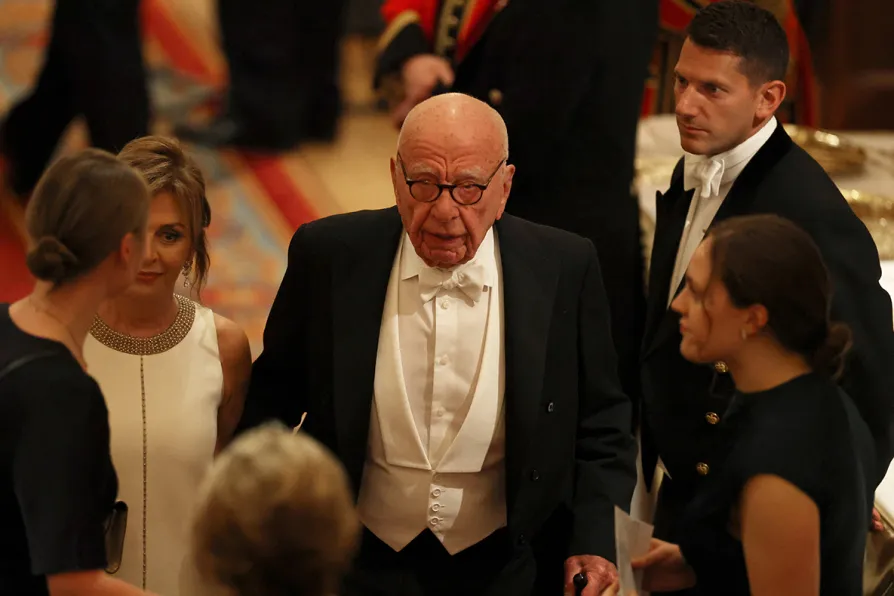
LOUISA BULL traces how derecognition, outsourcing and digitalisation reshaped the industry, weakened collective bargaining and created today’s precarious media workforce
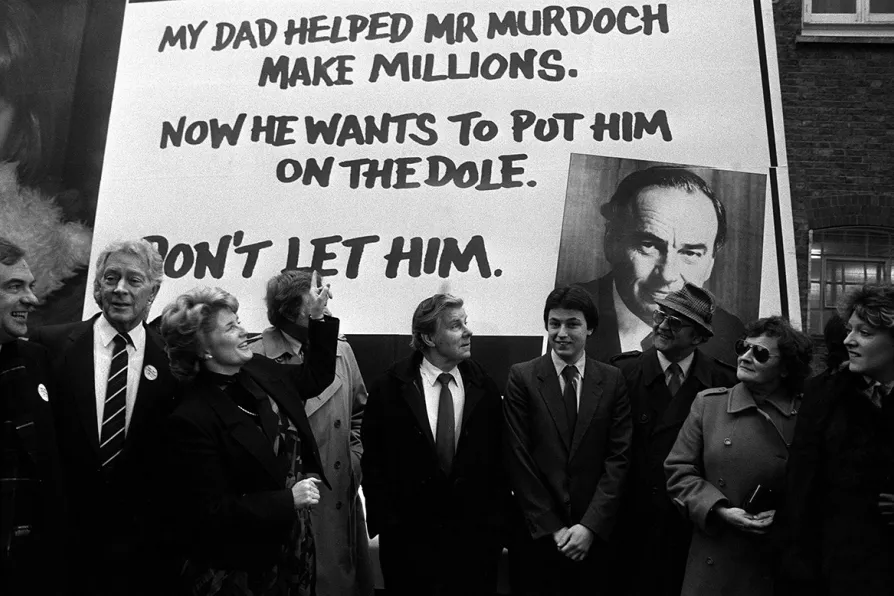
Enduring myths blame print unions for their own destruction – but TONY BURKE argues that the Wapping dispute was a calculated assault by Murdoch on organised labour, which reshaped Britain’s media landscape and casts a long shadow over trade union rights today