Green Party deputy leader MOTHIN ALI, who will speak at the International Anti-War Conference in London on June 20, says Britain needs to rethink its priorities – and its allies


 Latest editorial
Refounding the BBC as a genuinely public institution
As the government quietly begins reviewing the BBC’s Royal Charter, the moment should be seized to refound the corporation as a truly democratic, regionally rooted public service, writes PAUL W FLEMING
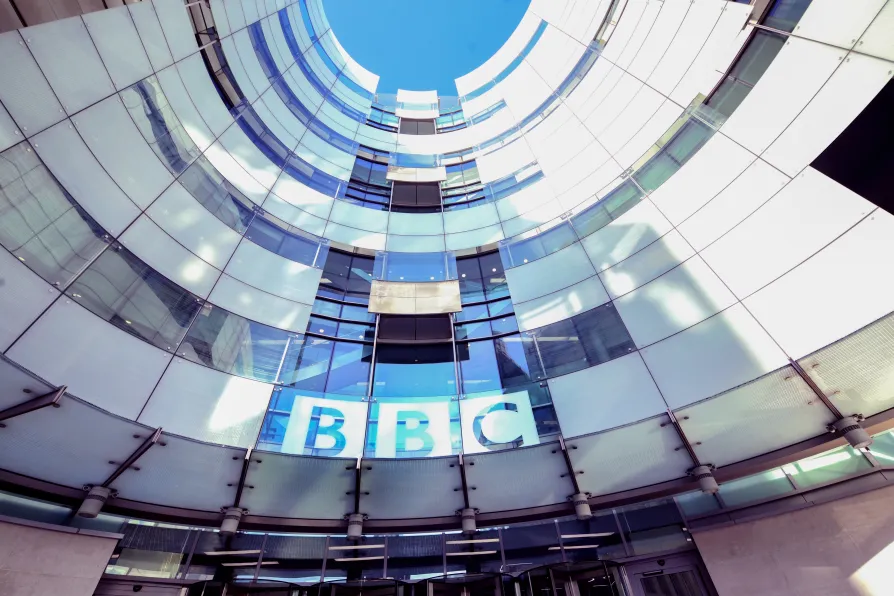 BBC Broadcasting House in London
From Global Counsel to Arden, SOLOMON HUGHES finds firms linked to discredited politicians are still calling the shots in Britain
KEVIN COURTNEY explains why Reform UK is no friend to workers or trade unions, but just another party of the super-rich
EMMA DENT COAD explains why she is stepping down from the council after 20 years and how the legacy of the fire still haunts the area
While international attention focuses on ceasefire frameworks, Israel is openly advancing plans for a permanent expansion of its control over Gaza, writes RAMZY BAROUD
Researchers PAUL HOLDEN and JESSICA MURRAY are calling for whistleblowers and documentary records to uncover how Labour Together helped build the parliamentary majority that now dominates the Labour Party





IN DECEMBER last year, a supposedly public consultation began with a curious lack of publicity. This was government’s launch of the review of the BBC’s Royal Charter. The Charter is renewed on a periodic basis — approximately once every 10 years. It sets out the constitutional basis for the BBC, including its objectives and purposes, as well as how it will be governed and regulated after the current Charter ends on December 31 2027.
The consultation process began with no fanfare — indeed, almost no publicity at all, even on BBC channels and platforms. The so-called public consultation consists of 32 limited and leading questions, with virtually no space for free comments. It appears that the government does not want to hear from the British public on the institution that they fund, to the tune of £3.84 billion in 2024-25.
This strange furtiveness about the Charter review has gone hand-in-hand with something equally baffling: the lack of confidence in the BBC displayed by the government and the corporation itself. The usual underlying message — sometimes explicit, sometimes unspoken — is that the BBC has failed.
This is demonstrably untrue. As a trainer and employer of talent and a purveyor of uniquely British storytelling, the BBC is an unparalleled success. The corporation contributes almost £5 billion to the UK economy annually, supporting over 50,000 workers. And although efforts to move BBC investment out of London have been deplorably slow and piecemeal, particularly in the Midlands, some regions and nations have seen improvements. For instance, after many BBC functions were transferred to Salford, the number of digital and creative businesses grew by 70 per cent. And the BBC’s decision to make Doctor Who in Cardiff produced over £134 million in gross value added in Wales between 2004 and 2021 and created jobs for Welsh crew.
I do not wish to minimise the ways in which the BBC needs improvement, one of which is the disastrous privatisation that has undermined the terms and conditions of the workforce and created an inefficient internal market. Fundamentally, however, the only real failures here are the government’s timidity in the face of seismic political and technological change, and the corporation’s inability to reimagine itself as a genuinely public institution.
For our part, we at Equity see the ongoing Charter review as an exceptional opportunity to refound the BBC as an arm of the welfare state, in which arts and culture are enshrined as an essential public service — alongside health, education, housing and social security. Under the principle of universality, everyone has access to the same BBC services, regardless of their wealth or status. And like the NHS, the BBC must serve the public interest, rather than commercial imperatives. Consider the chilling implication of Netflix’s CEO identifying the company’s main competitor as “sleep.” The values underlying this worldview contrast sharply with those of a broadcaster mandated to serve the public interest. The BBC must also serve the public across the nations and regions of the UK — not only by reflecting people’s lives and concerns, but also by generating local training and employment opportunities.
Although Equity and our 50,000 members are boycotting the flawed government survey, we are engaging with the government’s consultation — but on our own terms. To safeguard a public institution empowered to thrive for the next 100 years, Equity is proposing a refounding of the BBC by three means: democratisation (workforce representation in governance and operations), regionalisation (a fair distribution of investment across the UK) and co-operatisation (a reconfiguration of the corporation under a new structure in which it is owned and run by licence fee-payers and its workforce — both those permanently employed and the thousands of freelancers that it relies on).
In Equity’s vision of a revitalised BBC, the corporation would support the arts and culture industries to flourish in every part of the UK, fuelling the expansion of the independent sector as well as others. The BBC would be the gold standard on employment rights, driving up terms and conditions for workers across the creative industries. With decent salaries, workers would be able to build lifelong careers in the performing arts and entertainment sector, whatever their background and wherever they live in England, Northern Ireland, Scotland or Wales.
Now is not the time for secrecy, doubt and timorous half-measures; what we need is bold, decisive action to strengthen the BBC’s unique mandate as a genuinely public service broadcaster. The British public — as its funders, audience and workforce — deserves nothing less.
Paul W Fleming is general secretary of Equity.
