Growing instability in the US economy and financial markets could have serious consequences worldwide because of the central role of the US dollar and financial system, argues MICHAEL BURKE


 Latest editorial

The King’s Speech fails the test of real change
Starmer promised a reset after Labour’s dire electoral performance, but the government’s programme still falls far short of the bold action needed, says ANDY McDONALD MP
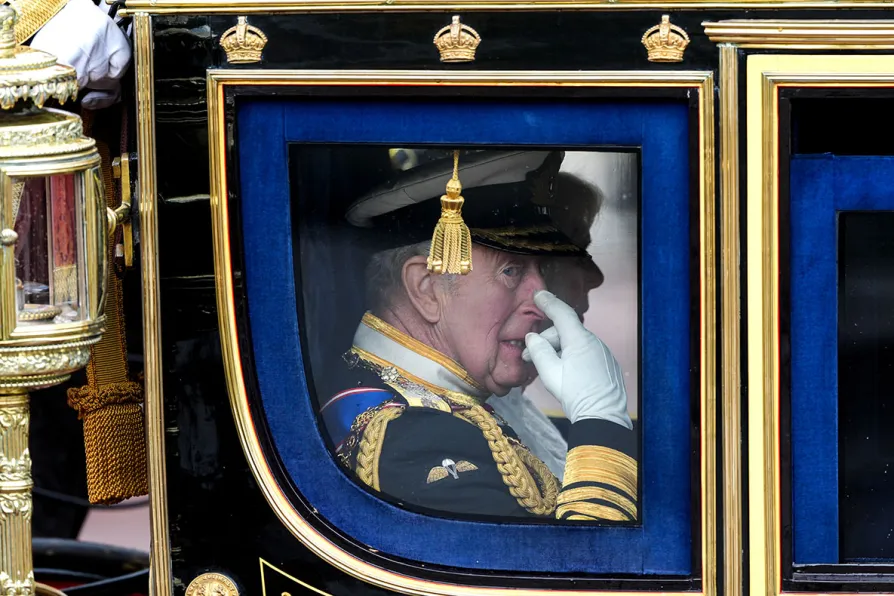 Charles and Camilla Windsor return to Buckingham Palace, London, in the Irish State Coach after the State Opening of Parliament in the House of Lords at the Palace of Westminster, May 13, 2026

Despite Andy Burnham’s declaration defending the continued partition of the island, all major international and internal trends are converging to make Irish reunification inevitable
The left needs a bold energy vision – because if it fails to provide one, others will shape the future in their own interests, argues ALAN SIMPSON
From Margate to Deal, mining memories are being kept alive. National co-ordinator for General Strike 100, HENRY FOWLER continued his nationwide tour of partner organisations in the Garden of England
Humans are part of the ‘animal kingdom’ – and of nature in general – but also distinct from it and labour (work) is part of what makes us unique, declared Engels. His insights 150 years ago into how our species came to be and how we differ from the rest of nature, are as important today as they were then, says the MARX MEMORIAL LIBRARY
Boxes of books, family photos and heirlooms, labour movement anniversaries, along with nostalgic memories of glorious childhood days on the Ayrshire coast still leave room for a wistful MATT KERR to hope for a better future





THE King’s Speech was Keir Starmer’s reset opportunity after last Thursday’s disastrous election results. Instead, despite some positive proposals, it demonstrated the cautious, incrementalist approach that has driven Labour’s falling popularity among voters desperate for change.
Last week, I said those results were a dire warning to Labour, and they need to be treated with the seriousness they deserve. The Prime Minister’s own reset speech on Monday recognised that “incremental change won’t cut it” in meeting the challenges facing the country.
Yet the King’s Speech reflected precisely the kind of limited, managerial politics that people increasingly feel has failed to improve their lives.
The political test facing Labour is now simple: can it deliver materially better living standards through higher pay, lower bills and greater democratic public ownership of essential services? Too many people do not yet believe it can.
To be fair, the speech did contain some welcome measures. I welcome the Steel Industry (Nationalisation) Bill, the commitment to modernised public rail through the Railways and Passenger Benefits Bill, and the announcement of the Northern Powerhouse Rail Bill.
I also welcome proposals in the Social Housing Renewal Bill to protect existing social housing stock and encourage the building of more social homes, alongside commitments to improve home insulation and reduce energy bills through the Warm Homes Plan.
But too often these measures stop short of the scale of intervention required. We should be ending the right to buy, directly funding a new generation of council housing, and moving beyond reliance on failed regulators to control privatised utilities.
The continued refusal to confront the failures of privatisation in energy and water reflects the same incremental approach that voters are increasingly rejecting.
Meanwhile, the pursuit of measures in the Courts and Tribunals Bill and Immigration and Asylum Bill will inevitably generate political conflict while doing little to address the material pressures facing working people.
For a party elected in 2024 on the slogan of “Change,” it is increasingly clear that many people have not seen the transformation they were promised.
The government’s first two years saw some positive reforms, but too often they were diluted, caveated or watered down until they appeared little different from the status quo.
The Prime Minister has repeatedly said in recent months that people are deeply worried about the cost of living. That should have shaped the government’s priorities from the outset.
Instead, Labour pursued damaging cuts to the winter fuel allowance, proposed disability benefit cuts, and continued to refuse compensation for Waspi women.
Each decision reinforced the perception that ordinary people are once again being asked to bear the burden of economic pressure.
Labour will not rebuild support through caution, managerialism or triangulation. It will only recover if people can see their lives materially improving through higher pay, lower bills and the extension of democratic public ownership.
That means serious council housebuilding, stronger public provision, action against insecure work and low pay, and decisive intervention to reduce household costs.
The cost-of-living crisis is what this King’s Speech should have confronted far more directly. Warnings over food and energy prices — already unaffordable for too many families and now at further risk from growing instability in the Middle East — underline the need for mechanisms to curb inflation and protect living standards.
Following experiments elsewhere in Europe, the government should have prepared the ground for temporary powers to protect the affordability of essential foodstuffs and basic goods.
Elsewhere, the government should have been clear it was committed to tackling the long-term private profit drain on resources in vital public goods like energy and water.
It could have introduced a Bill to to convert the recently established GB Energy into a public energy generation company rather than a finance vehicle, and another to restore the National Grid to public ownership and take profit extraction from energy transmission.
Similarly, a Water (Public Ownership) Bill could have returned privatised water companies to the public sector. In both areas, these steps could help end the extraction of value at the cost of under investment and ever increasing bills.
The King’s Speech too should have included a commitment made to restore public-sector pay to the real levels last seen in 2010 over a medium-term period.
On employment rights, we should not have stopped short with our initial Act in the first session and should have proposed follow-up measures this week — such as a Status of Workers Bill to deal with bogus self-employment, and an Employment Tribunal (Personal Liability) Bill to deliver a transparent enforcement regime to prevent non-payment by employers.
And the government should have taken steps to meet its housebuilding targets recognising that dependence on the market has failed to deliver. To increase supply of council-owned and social rent housing and reduce unaffordable private renting costs, it could have introduced a Bill to deliver direct public funding and to restructure authorities’ housing debt.
The same principle should apply to taxation. A fairer economy requires tax reform that shifts the burden away from working people, including equalising capital gains tax with income tax rates and a commission to produce proposals for a fairer taxation system and replacing the grossly inequitable council tax system with something genuinely progressive.
The public have now lived through more than a decade of falling living standards, insecure work, rising housing costs and collapsing confidence in essential services. They voted for change in 2024 because they wanted to see that decline reversed. Too many people now believe that change has either not arrived, or is not coming.
That is the central political fact Labour has to confront.
Andy McDonald is the Labour MP for Middlesbrough and Thornaby East.
