TUC president and POA leader STEVE GILLAN speaks to Ben Chacko on the eve of Congress 2026


 Latest editorial
‘We're here to make politics bolder’
In the second of a series of interviews with leaders of progressive parties in Wales ahead of the May 7 Senedd election David Nicholson talks to Welsh Green Party leader ANTHONY SLAUGHTER
 Anthony Slaughter at the Senedd / Pic: D Nicholson

DOUG NICHOLLS welcomes a turning point at this year’s Congress, where many motions call for a co-ordinated plan to revive British industry, a perspective outlined in his new book
HOPE VIRGO of campaign Dump the Scales warns MPs voting today they should be alert to the threat legalised assisted death poses to people with eating disorders
The Together Alliance is hosting two summits, North and South, to build power and plan action against the scourge of racism peddled by the right. DANIEL KEBEDE urges mass participation
The drift toward militarisation in Europe is not inevitable, left-wing and peace movements can preserve sovereignty and prevent war, says DÁIRE HUGHES MP
Whatever differences exist among international sympathisers of the Bolivarian revolution about its current trajectory, they should unite against the imperialist power that is the source of an enforced retreat, argues ROGER D HARRIS
Trade unions need to step up and force a turn in the policies of the labour movement to effectively confront the far-right threat, argues NICK WRIGHT





WELSH GREEN leader Anthony Slaughter is an unusual politician because he has not studied a politics degree, been a political researcher, nor is he a lawyer.
Slaughter used to work as a gardener until recently, was a squatter in Hackney, London, and before that was an anarchist member of a punk band.
Slaughter was born in Yorkshire and was just four-years-old when his parents became economic migrants using the £10 Pom scheme (the Assisted Passage Migration Scheme, 1945–1972, was an Australian government programme encouraging British citizens to migrate for just £10 — £545 at today’s rates) and moved to Australia where his father worked on the railways for three years before becoming homesick and returning to Hull.
His father was a union man but, again, for economic reasons benefited from a scheme where you went to South Africa with the flight paid for and with a job and tied house working in a mine.
The young Slaughter joined the punk scene in apartheid-era South Africa where his band, Riot Squad, made a record called Total Onslaught which was promptly banned.
Slaughter said his experience in South Africa has formed the basis of his politics
“You’d go on demonstrations, these were just beginning to start and there were the Soweto riots in 1976.
“I went on a couple of marches in Cape Town, where the police broke them up.
“I decided I didn’t want to enrol at Cape Town University because I was going to be the next Joe Strummer.
“That automatically opened me up to being drafted into the army because as soon as you finish education, you did two years in the apartheid army.”
He fled to London where he worked with War Resisters’ International helping South Africans dodge conscription.
While Slaughter was in London he said the 1980s miners strike “influenced my politics and was another lesson in solidarity, quite clear class solidarity.”
He describes himself as a socialist who read Robert Tressell’s Ragged Trousered Philanthropists in his Hackney squat and was heavily influenced by the book.
“Thatcher versus working communities was quite clearly black and white as well. It was very simple for someone young to understand.
“Despite living my anarchist dream I still thought voting was incredibly important, and I felt very lucky because Diane Abbott was my MP so despite being deeply cynical about the Labour Party, I had a lot of respect for her.
“It was only when I moved to Cardiff in 2004 that I got very heavily involved in community organising.”
Slaughter was encouraged to stand for a council election in 2012 and since then has stood in general elections and Senedd elections.
The Welsh Greens support independence for Wales and Slaughter said: “It’s just clear that Westminster isn’t working for Wales.
“We’re an internationalist party that believes in localism and we believe in subsidiarity, devolving power to the lowest possible level.”
If the polls are right the next Senedd will have a majority of politicians for the first time who support independence and I ask Slaughter what his party’s approach will be.
“I agree with Rhun ap Iorwerth (Plaid Cymru’s leader) that now is not the time for an independence referendum, that people are really hurting, people are suffering.
“We’ve got to fix people’s lives in Wales, and that’s got to be the priority in the next four years to show people, even with the limited devolved powers we’ve got, that things can be better.”
The Green leader also said he was worried that pushing for independence too soon might hand the 2030 Senedd election to Reform UK.
I asked about the potential for the Welsh Greens to be propping up a Plaid minority government and asked what his red lines were.
“We’ve got a transition team outside the campaign team, which is looking at the practicalities of what our Senedd members do, but also how do we make an impact in the first 100 days.
“We will have two or three things that will have to happen because we asked for them. We’re not here to support a change of management, we’re here to make politics bolder.”
Slaughter said the manifesto was still being written but he thought the key issues would be rent controls, protecting tenants and bank controls.
“And meaningful action on climate and nature targets has to be up there as well.”
We talked about the Greens’ putative partners in Plaid recently dropping their pledge of Net Zero in Wales by 2035.
Surprisingly, Slaughter was pragmatic about this and said it was important for politicians to be honest with the public because issues around climate change were going to be used as part of the culture wars at the election.
“What got lost in that announcement about the 2035 target, was the admission from Plaid that there will have to be some electricity pylons built in Wales.
“You can’t bury cables everywhere, it’s impossible and is much more environmentally damaging, but we do need more community engagement and with communities having a bigger stake in what’s affecting them.”
Slaughter also said the Greens would want more devolution of tax powers, with control over the banding as the Scottish government has.
Finally, I ask what Slaughter’s ambition is after the Senedd election if the Greens get a handful of seats.
“By 2030 I want us to have a significant presence on councils across Wales, so people are seeing a very real difference in the community.”
David Nicholson is Morning Star Wales reporter.

Similar stories
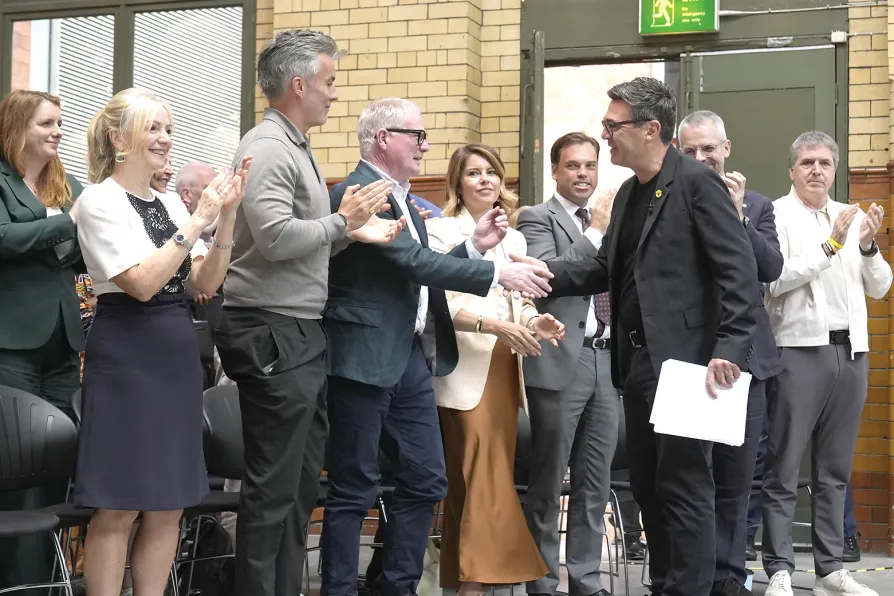
Wales reporter DAVID NICHOLSON looks at the political scene as budget rows take centre-stage and Welsh Labour gains a new leader
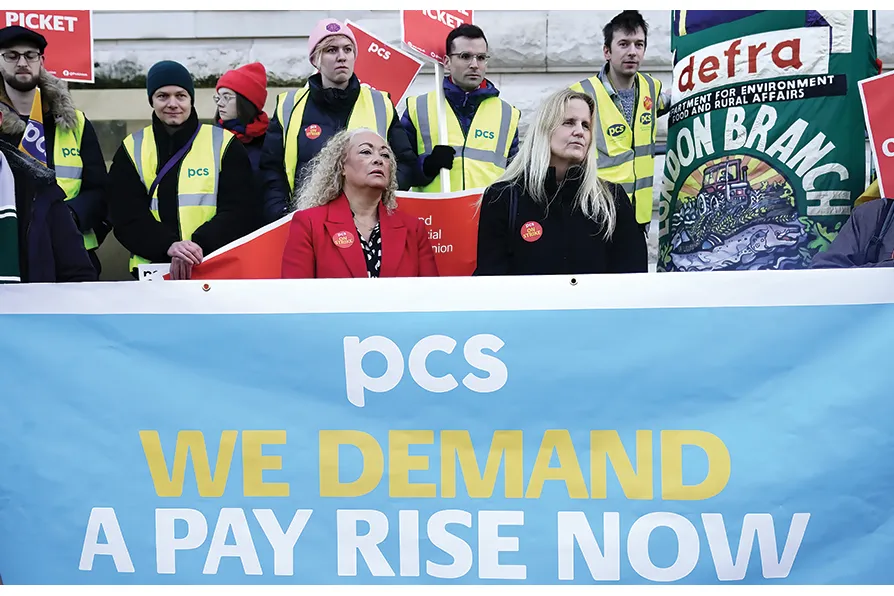
David Nicholson spoke to BETH WINTER about her bid to become a Senedd member as an independent running on a community grassroots campaign
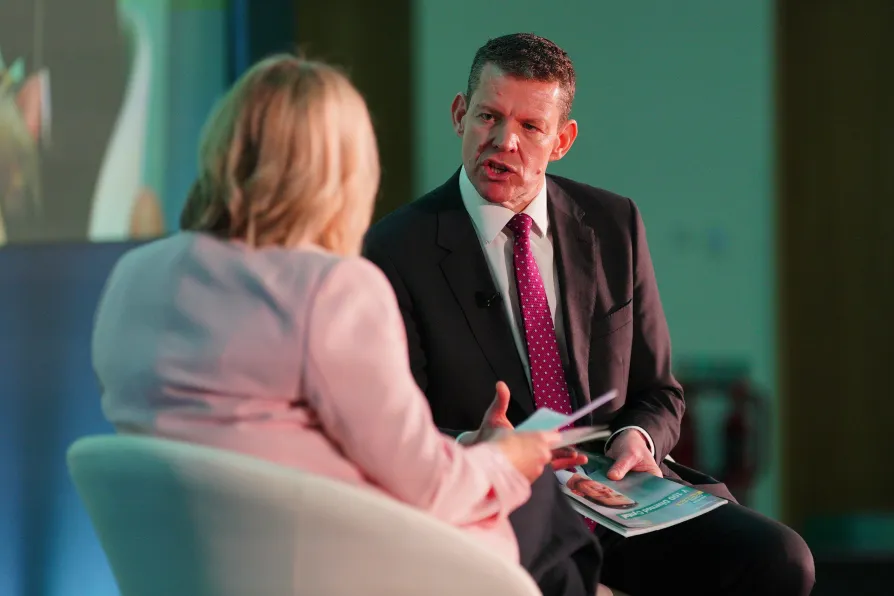
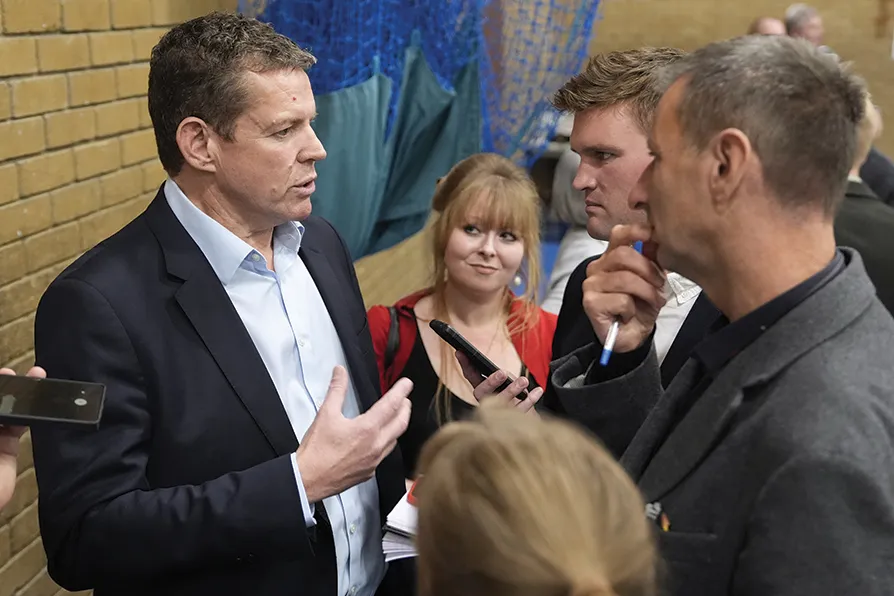
In the first of a series of interviews with leaders of progressive parties in Wales ahead of the May 7 Senedd election DAVID NICHOLSON talks to Plaid Cymru leader Rhun ap Iorwerth