ROB WARZYNIAK wades knee deep through a pile of ‘dead canaries’ of Trumpist policies which exacerbated the horrors of US capitalism domestically


 Latest editorial

Rhun ap Iorwerth: why Plaid’s time has come in Wales
In the first of a series of interviews with leaders of progressive parties in Wales ahead of the May 7 Senedd election DAVID NICHOLSON talks to Plaid Cymru leader Rhun ap Iorwerth
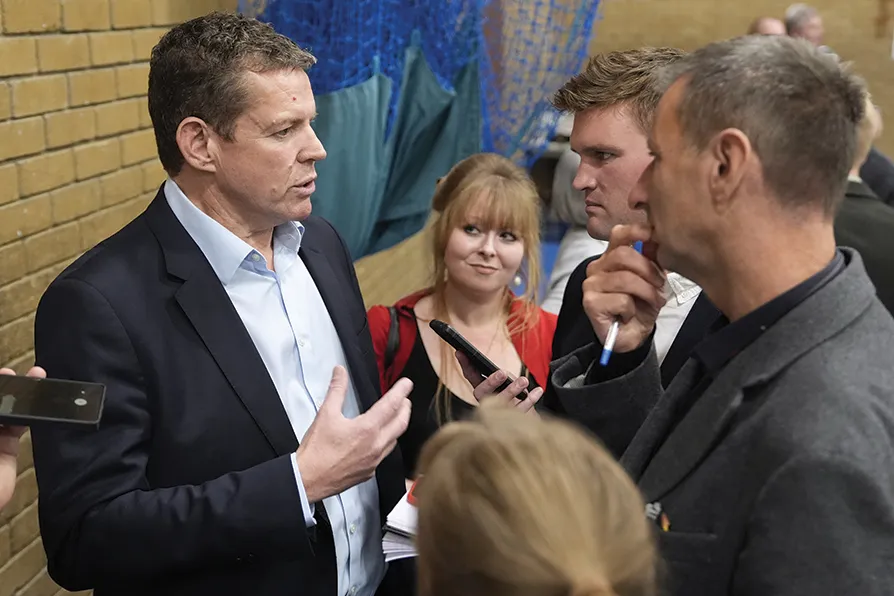 WALES TO THE FORE: Rhun ap Iorwerth speaks to the media in Caerphilly in October 2025
Without evidence or Nato consultations Berlin’s answer to the Leipzig incident is a rupture of relations. SEVIM DAGDELEN examines why
FRANCISCO DOMINGUEZ introduces the background to a conference on defending Latin America’s sovereignty
The glacier collapse in Nepal is yet another warning that a warming planet is making Himalayan disasters more frequent and destructive – but the countries facing the greatest risks are often those least responsible, says LI YANG
Nick Blair is set to benefit from a hugely lucrative contract to ‘virtually’ train the British army for its next war. Like father, like son, writes SOLOMON HUGHES
Even when tragedy strikes, Western media cannot resist the opportunity to turn it into a sordid propaganda opportunity, as the Nepal-China border tragedy shows, writes CARLOS MARTINEZ
Trade unions should be at the heart of the anti-racist push for reparations for the historic legacy and continuing impact of slavery, writes ROGER McKENZIE





THE nationalist party are ahead in many opinion polls for the race of the Senedd, but only narrowly with some showing them neck and neck with Reform UK.
I ask the former BBC broadcaster whether his party has enough activists to campaign across all of the 16 super constituencies.
“We are having to take the fight to all parts of Wales and it’s empowering and it’s positive for us as a party.
”We’re getting people out to campaign who’ve never been out campaigning before, people who go out four times in a week rather than once becomes that much easier.”
We talk about how Plaid have managed to build a consistent lead in the polls and convince the people of Wales that they are the main party to defeat Reform UK.
Rhun ap Iorwerth said he thought a number of different factors have come together in this election. He told me that the 2024 general election was a vision-light campaign, where Sir Keir Starmer had not made enough commitment to Wales.
“There was disillusionment with that government before it had even been been formed. And I think we helped shape people’s understanding in Wales, of how underwhelming Labour’s attitude was towards the country.”
The Plaid leader also talked about the global phenomenon of the rise of the far right and the “necessity in the minds of people to make sure that they had a party that was able to, and willing to do what was necessary to withstand that.”
We talk about the polling which shows that his party will be in a minority and whether there will be a coalition to keep Reform out.
The answer was that ap Iorwerth thought it was vital that a progressive party was bigger than Reform after the election.
“We need one party to be bigger than Reform, and everything at this point in time suggests that it’s only Plaid Cymru that can be in that position.”
He is also clear that he wants to govern without a formal coalition and work with other parties for support in passing legislation and the budget.
“I want to form a minority government that is explicit in recognising that that means we have to co-operate. I think people in general believe co-operation is a good thing.
“I want that government led by Plaid to speak very openly about not just preparedness, but the fact that we see it as a necessity, that you do build agreements.
“And clearly across the progressive side of politics, we are eager to build that new kind of politics.”
The Plaid leader was scathing about Welsh Labour’s sense of entitlement to rule in Wales. “We hear it almost daily with Eluned Morgan making the case that people have to somehow continue to vote for Labour because they’re the only ones that are used to governing.”
He claimed that was a undemocratic position to take, and took aim at the line that you have to have two Labour governments working together because that’s how you get things done.
“To my mind, it is clear that relationship is the pulling of punches, the plastering over of any potential disagreements in order to save face, is what is holding Wales back.
“We’re not even able to have a transparent discussion on taking the fight to Westminster on things that are important to us.”
Ap Iorwerth said it wasn’t normal for one political party to be in power and lead government for 27 years.
“Finally, Wales is becoming a normal democracy, it seems, where the ebb and flow of political parties is just how it is.”
We discuss independence and how if Plaid and the Welsh Green Party form the largest bloc of Senedd members it will be the first time in devolution that there are more MSs who believe in independence for Wales.
I ask if that will change his approach of not seeking a referendum in the life of the next Senedd.
“I’m not going to pretend that if we have a majority that somehow means that we now have a majority of the Welsh public. We have to take people on that journey.”
We discuss the talks he has been having with the Civil Service in advance of the election and how they have only known a Labour-led government.
“What I hope is that civil servants themselves can get excited about what we want to do and I want to bring out the best in the Civil Service in Wales.
“I want to work with the really excellent people that we have within the Civil Service to try to raise the level of intensity around what we can achieve as a nation.”
I ask what the first 100 days of a Plaid Cymru government would look like and he said that it’s about enacting policy in order to put the party’s vision into practice.
“We’ve talked extensively about the core of that vision, making sure that we not only bring down NHS waiting times, but also build a more sustainable health and care system.
“We will bring forward a new development agency as part of a drive to energise our economy in Wales, that we introduce the most generous childcare offer that we can to give children the best start in life, help parents get back to work, help tackle poverty, that we do target education and focus on numeracy and literacy to bring up standards.
“It’s all got to be about building our ability as a nation to deal with our problems, and building the confidence that comes from being an independent nation is a really important part of what can spur us onto to the next stage.”
David Nicholson is Wales reporter for the Morning Star.

Similar stories
Wales reporter DAVID NICHOLSON looks at the political scene as budget rows take centre-stage and Welsh Labour gains a new leader
In the second of a series of interviews with leaders of progressive parties in Wales ahead of the May 7 Senedd election David Nicholson talks to Welsh Green Party leader ANTHONY SLAUGHTER