ROB WARZYNIAK wades knee deep through a pile of ‘dead canaries’ of Trumpist policies which exacerbated the horrors of US capitalism domestically


 Latest editorial

Opposition leader kidnapped: Kenya slides further toward authoritarianism
Anyone who criticises those in power in Kenya risks their freedom or worse. The brutal abduction of Booker Omole marks a new escalation in a country sliding toward authoritarian rule, says MARC VANDEPITTE
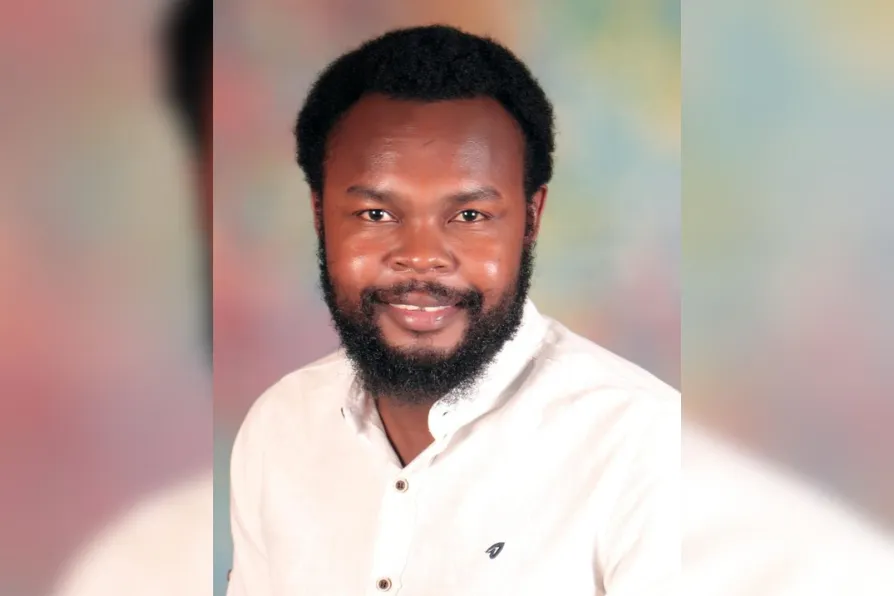 Booker Omole. Credit: Gracemutheum
Without evidence or Nato consultations Berlin’s answer to the Leipzig incident is a rupture of relations. SEVIM DAGDELEN examines why
FRANCISCO DOMINGUEZ introduces the background to a conference on defending Latin America’s sovereignty
The glacier collapse in Nepal is yet another warning that a warming planet is making Himalayan disasters more frequent and destructive – but the countries facing the greatest risks are often those least responsible, says LI YANG
Nick Blair is set to benefit from a hugely lucrative contract to ‘virtually’ train the British army for its next war. Like father, like son, writes SOLOMON HUGHES
Even when tragedy strikes, Western media cannot resist the opportunity to turn it into a sordid propaganda opportunity, as the Nepal-China border tragedy shows, writes CARLOS MARTINEZ
Trade unions should be at the heart of the anti-racist push for reparations for the historic legacy and continuing impact of slavery, writes ROGER McKENZIE





OVER the past two years, Kenya has experienced a wave of political unrest and repression in which opposition leaders and demonstrators have faced abduction, disappearance, or murder. On Tuesday February 24, repression struck again.
Kenyan opposition leader Booker Ngesa Omole, secretary-general of the Communist Party of Kenya (CPK), was abducted with brutal violence by the police. Omole is a fierce critic of President William Ruto and his neoliberal reforms. According to his party, he was not arrested but kidnapped, severely beaten and tortured by security services before being dumped in a notorious police cell.
Omole is currently being held at the Mlolongo police station, a site known for extrajudicial executions and systematic terror against the poor. He has been denied access to lawyers and his family. The abuse — during which even a finger was mutilated with a pocketknife — reveals the true face of state terror against the organised working class in Kenya.
This is not the first time Omole has been targeted by repression. About a year ago, he escaped an assassination attempt when armed attackers forced their way into his home. In the ensuing shootout, one attacker was killed while seven others fled.
Omole narrowly escaped death at that time. That assassination attempt was followed by the brutal arrest of the national chairman, Mwaivu Kaluka, along with other party cadres in the city of Mombasa.
Kenya has 55 million inhabitants and is situated on the equator on the east coast of Africa. The country maintains strong relations with the West; the European Union provides development aid, and the International Monetary Fund is heavily involved in Kenya’s financial policy.
There are also close ties with the United States. Washington provides support in the areas of security, healthcare and economic development. Among other things, the US assists in the training of Kenyan security forces.
This support has proven convenient for the administration, as recent years have seen significant political unrest and repressive government violence. In June 2024, large-scale protests broke out, primarily led by young people opposing planned tax increases and other government measures.
These demonstrations were met with brutal police violence, resulting in dozens of deaths and hundreds of arrests.
Despite the withdrawal of the controversial tax law and the dismissal of the government, the protests continued.
Since then, there has been a wave of disappearances involving human rights activists and journalists critical of the government. In roughly six months, at least 82 people — mostly young people — have been abducted, often in connection with anti-government protests.
In the summer of 2025, citizens once again took to the streets en masse. On June 25, police action resulted in 19 deaths and hundreds of injuries. Around July 7 (Saba Saba Day) — historically a date of protest in Kenya — new demonstrations occurred, triggering another harsh response from the government.
These are examples of brutal state repression intended to nip any opposition in the bud. Amnesty International has long warned of a “worrying trend of transnational repression.”
In the past, President Ruto has acknowledged that members of the security services were involved in excessive violence and abductions. In his new year’s speech, he stated that “appropriate procedures are taking place to ensure accountability.”
However, this is largely window dressing. Usually, no-one appears in court, and the families of the missing grow more desperate by the day.
At the beginning of 2025, a senator and 25 members of parliament called for an independent commission of inquiry to investigate the abductions of critics, the politicisation of the police, and the resurgence of criminal gangs. That commission never materialised.
The abduction of Booker Ngesa Omole may be the harbinger of even more violence. Kenya is heading into a critical year. With the 2027 presidential elections on the horizon, experts warn of a high risk of conflict. Historically, violence flares up when elections are seen as lacking credibility and an unpopular incumbent runs for re-election, as is currently the case with Ruto.
Several factors make increasing violence plausible: trust in the electoral commission is weak, the media are cautious and provide little critical reporting, and AI-driven disinformation is on the rise.
Furthermore, the president need not worry about criticism from Western capitals. For Washington and Brussels, Kenya is the “stable anchor point” in a turbulent region — a crucial partner in the fight against terrorism and an obedient pupil of the IMF. This geopolitical status functions as a free pass for President Ruto; as long as he serves Western interests, his allies turn a blind eye to the systematic trampling of human rights.
Yet violence is not inevitable. Just as in the 1990s and during the recent gen-Z protests, citizens — supported by civil society and churches — can build a barrier against the abuse of power and repression.
To secure the immediate release of Omole, the CPK calls for international solidarity.

Similar stories
CLAUDIA WEBBE looks at how Britain’s Nato ally has upped the stakes in its effort to silence domestic dissenting voices
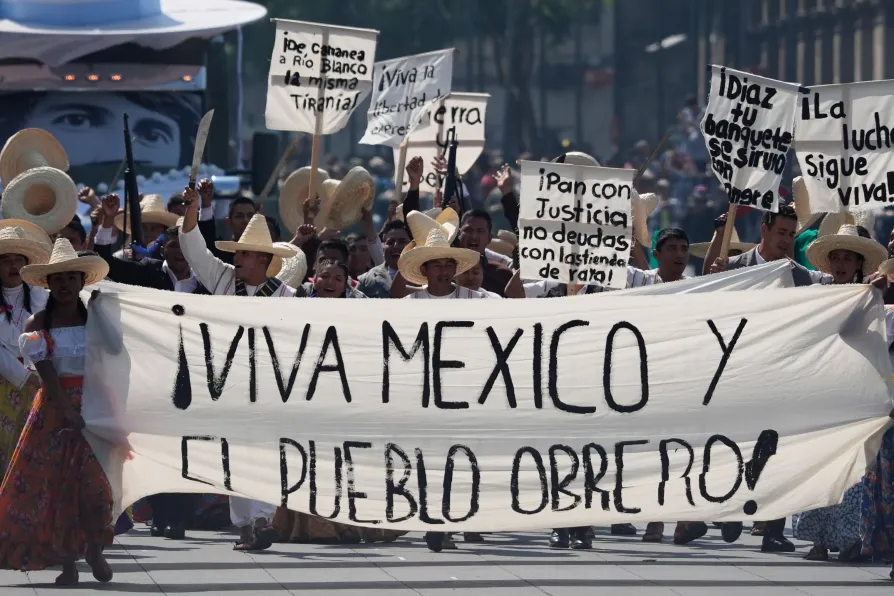
A November 15 protest in Mexico – driven by a right-wing social-media operation – has been miscast as a mass uprising against President Sheinbaum. In reality, the march was small, elite-backed and part of a wider attempt to sow unrest, argues DAVID RABY