A California union’s decision to host a meeting about US policy towards Cuba has prompted a congressional probe and renewed attacks on international solidarity, writes CAMERON HARRISON



Why Murdoch still fears an independent NUJ
LAURA DAVISON traces how Murdoch’s mass sackings, political deals and legal loopholes shattered collective bargaining 40 years ago – and how persistent NUJ organising, landmark court victories and new employment rights legislation are finally challenging that legacy
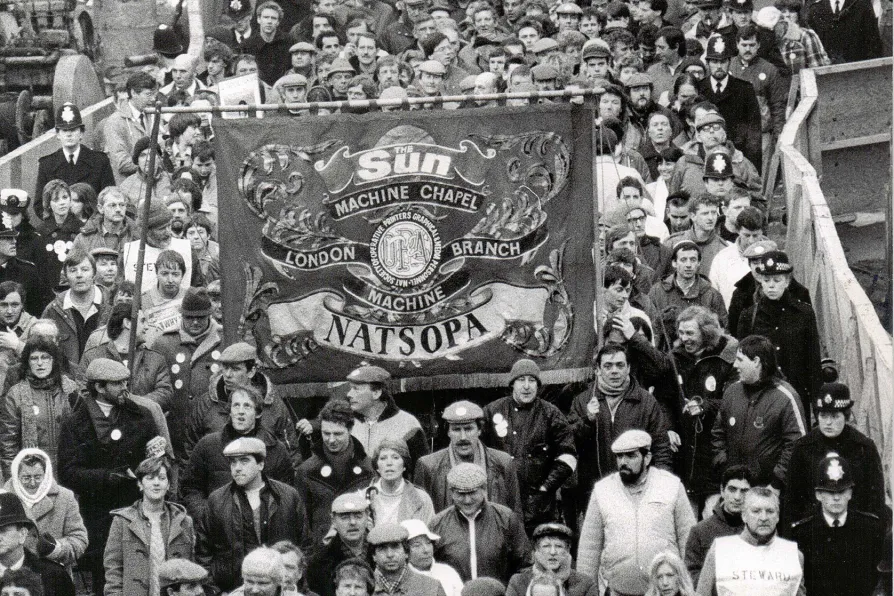
 [Pic: Andrew Wiard]
The Baltic state is set to reverse its constitutional prohibition on nuclear weapons and foreign bases as part of accelerated Nato war preparations, warns TOM UNTERRAINER
Long-term underfunding and state neglect, while simultaneously probation services have been undermined, have intensified the prison crises, argues SOLOMON HUGHES
Holyrood incompetence has cost jobs and put the future of Clydeside’s Ferguson Marine shipyard into jeopardy. Its future should have been assured, argues KENNY MACASKILL
With the agitated debate now raging in the media about the early release schemes, Prison Officers Association general secretary STEVE GILLAN gives the view of those who work in the sector
The hounding of the late Jason Arday is an all too familiar experience for many black people. ROGER McKENZIE calls for collective action to combat what can feel like personal isolation





ON A RAINY evening earlier this month a 20-something journalist raised his arm at an NUJ branch meeting.
“I work at News UK, is the NUJ able to represent me?” he asked. To answer him properly requires a twisting story that stretches all the way back to 1986’s Wapping dispute.
Back then, vast crowds of strikers facing charging police horses gave the dispute its defining images. But that is only half the story. There have also been secret deals with governments of both stripes, an industry reshaped to the designs of a megalomaniac, and the slow, brave struggle of unionised journalists to repair damage wrought to our news media.
Before Wapping, throughout the news industry, collective agreements and union membership predominated. Employed journalists’ pay was determined by national agreements; freelances were protected by negotiated “rate cards.”
Murdoch’s assault on his own printers and compositors, allied with the Thatcherite anti-union backlash, changed that landscape utterly. Within five years, scores of “house agreements” were shredded. Individual contracts were imposed. Some employers even tried to penalise those who would not give up union membership.
None of this would have been possible without Murdoch’s craven dismissal of News International’s 6,000 printers and compositors.
But that was just the beginning. The Australian’s gamble was possible because Tory government ministers assured him of police support to quell the pickets. And soon after the National Graphical Association and the Society of Graphical and Allied Trades’s brave stand resulted in defeat, News International derecognised the NUJ, as we had expected. Almost at once provincial publishers and magazines followed suit.
Demoralised as NUJ journalists were, they never gave up, and from their rearguard was born an astonishing renaissance. When the Daily Mail tried to introduce new contracts for journalists, removing collective protection and requiring employees to give up union membership, David Wilson, a subeditor and NUJ member stood firm.
His case went to court, the appeal court and finally the European Court of Human Rights. Victory at its conclusion established every worker’s right to be a member of a union and to not suffer discrimination as a result. Dave is no longer with us but his brave actions have stood the test of time.
That principle would be enshrined at the heart of New Labour’s “Fairness At Work” legislation of 1999 — the campaign’s next staging post.
That Act created a statutory right to union recognition where it was supported by the majority of workers. It enabled the NUJ to return to scores of workplaces, among them: Express Group Newspapers, the Yorkshire Post, the Scotsman, the Eastern Daily Press, the Newcastle Journal. New NUJ chapels sprang up, and recognition agreements followed.
But not everywhere. The 1999 legislation — initially steered by Peter Mandelson — contained a troubling loophole. Once an employer had recognised one union, other unions were locked out, even if the excluded union represented the majority at a workplace.
At just this moment, Murdoch set up his own “union,” the News International Staff Association (NISA). His company’s employed journalists were all deemed to be members, although they paid no subs, and a “general secretary” was appointed, on a salary paid by Murdoch.
NISA, and its successor “News Union” have been several times refused accreditation as a “real” trades union. “News Union” receives almost all its funding from News UK, sharing the same office in London Bridge. Despite this, no matter how many News UK journalists are members of a real union, the NUJ cannot apply for recognition.
In private those close to Murdoch claim that Mandelson offered the mogul a secret deal to lock out the unions. We’ll probably never know if that is true, but the upshot is the same. And deployment of this sneaky, undemocratic, loophole has not gone away.
In April last year, journalists at the Murdoch-owned Wall Street Journal’s (WSJ) London newsroom believed that their majority were NUJ members. Just as they planned to apply for recognition, however, WSJ management pre-emptively recognised the News Union. The dark shadow of the long-abandoned Wapping plant hangs over us yet!
Persistence is the defining quality of most successful trade union campaigning. We see that defending media freedom in the courts. We see that demanding an end to legal devices by which the rich and thin-skinned harass journalists. And we see that rebuilding union organisation where it has been unfairly undermined.
I’m confident that in time News UK journalists will enjoy effective, independent union representation. The boost to their confidence and security when they do will strengthen an already formidable news platform.
Until then, the answer to our neophyte member is this.
The NUJ has many times represented individuals at News UK: when they have faced disciplinary proceedings, when they have not been paid, and when their confidential internal documents were handed over to the police.
Important changes in the new Employment Rights Act include preventing recognition of a non-independent union in response to a request for voluntary recognition from an independent union. Historic injustices should be set right alongside that change.
Our debt to those who gave up so much at Wapping will be repaid by our continuing to work to that end. My pledge to them all, as well as to those young members who would benefit from independent representation at News UK, is that we won’t give up, and eventually, NUJ members will prevail.
Laura Davison is general secretary of the National Union of Journalists.

Similar stories
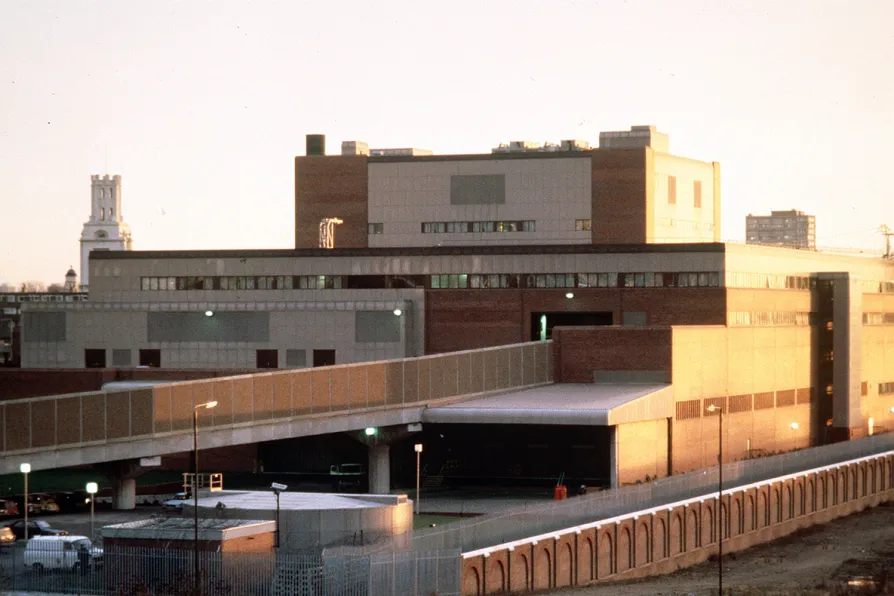
Forty years on, TONY DUBBINS revisits the Wapping dispute to argue that Murdoch’s real aim was union-busting – enabled by Thatcherite laws, police violence, compliant unions and a complicit media
![[Pic: Andrew Wiard]](https://msd11.gn.apc.org/sites/default/files/styles/desktop/public/2026-01/19860503_a_wiard_0002.jpg.webp?itok=w0tEojMk)
A handful of journalists at The Times faced a stark personal and political choice in 1986 – cross the picket lines for cash and career, or stand with organised labour at great personal risk. BARRIE CLEMENT recalls why refusing to scab at Wapping was not just an act of union loyalty, but a stand for the future of journalism
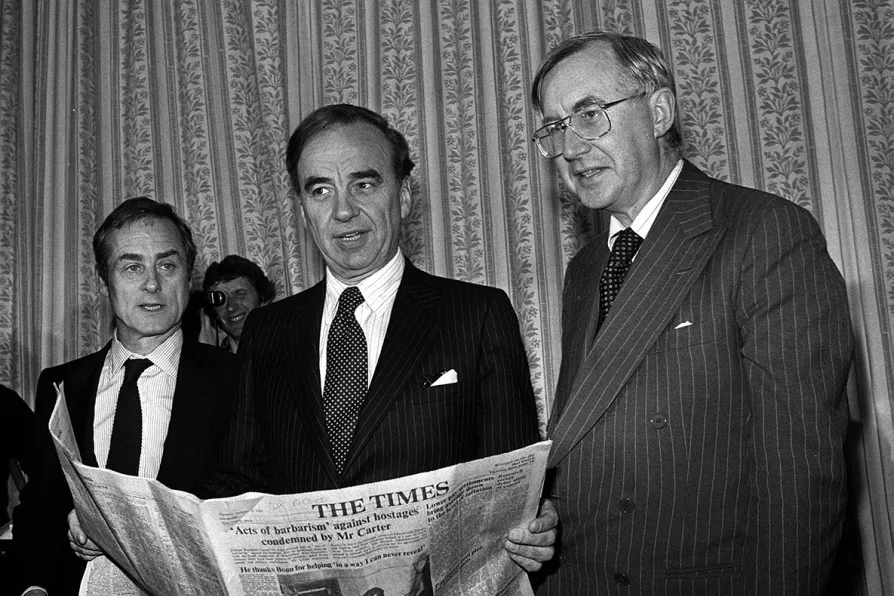
Four decades on, the Wapping dispute stands as both a heroic act of resistance and a decisive moment in the long campaign to break trade union power. Lord JOHN HENDY KC looks back on the events of 1986
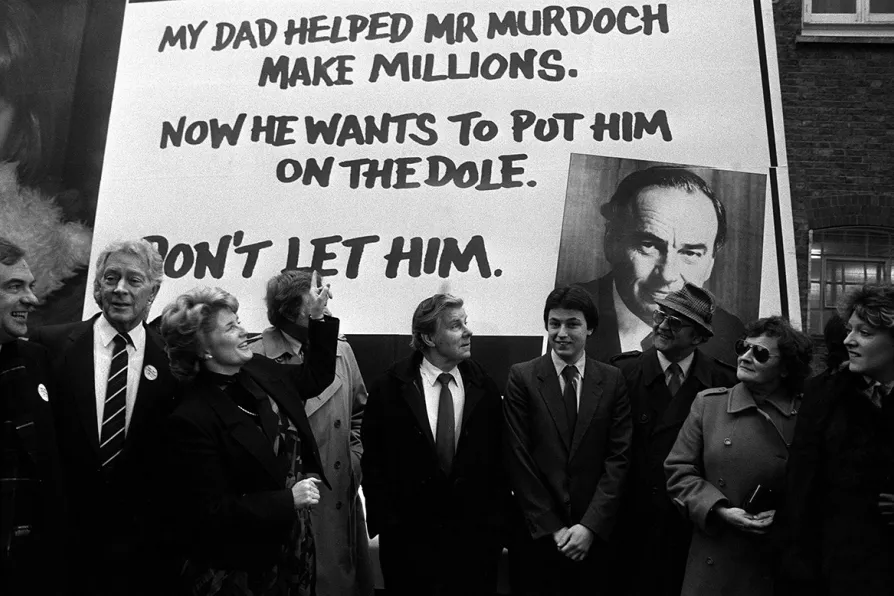
Enduring myths blame print unions for their own destruction – but TONY BURKE argues that the Wapping dispute was a calculated assault by Murdoch on organised labour, which reshaped Britain’s media landscape and casts a long shadow over trade union rights today