A California union’s decision to host a meeting about US policy towards Cuba has prompted a congressional probe and renewed attacks on international solidarity, writes CAMERON HARRISON



‘Which side are you on?’ – A Times journalist’s stand against Murdoch at Wapping
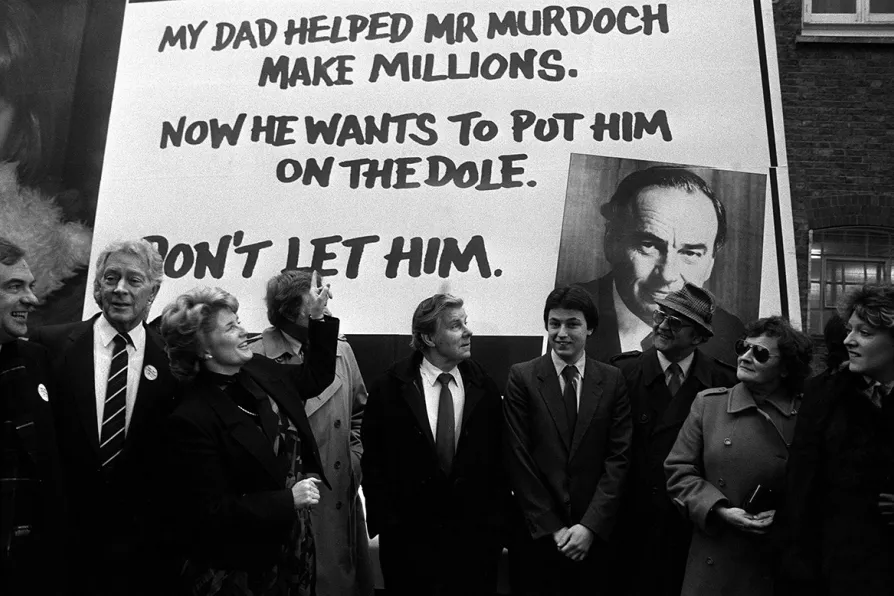
A handful of journalists at The Times faced a stark personal and political choice in 1986 – cross the picket lines for cash and career, or stand with organised labour at great personal risk. BARRIE CLEMENT recalls why refusing to scab at Wapping was not just an act of union loyalty, but a stand for the future of journalism
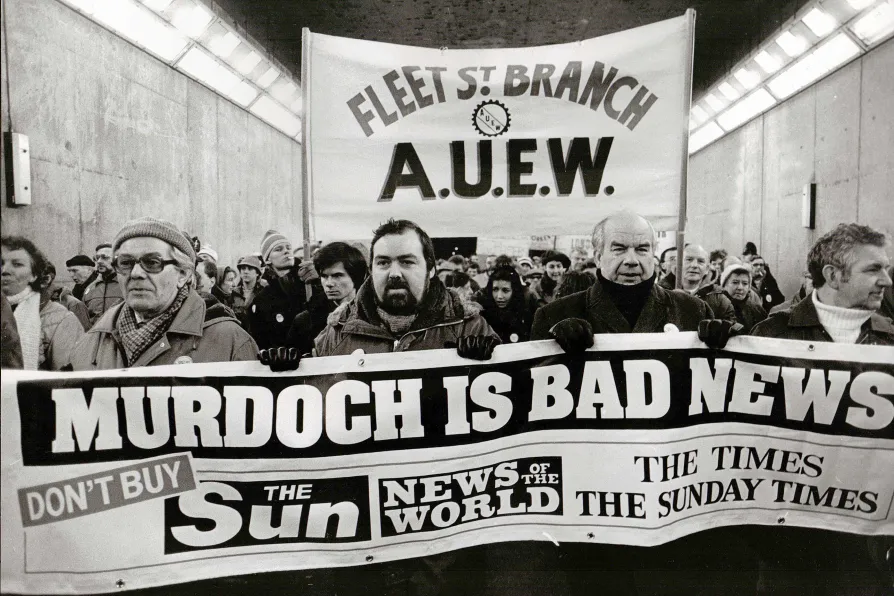
 [Pic: Andrew Wiard]
The Baltic state is set to reverse its constitutional prohibition on nuclear weapons and foreign bases as part of accelerated Nato war preparations, warns TOM UNTERRAINER
Long-term underfunding and state neglect, while simultaneously probation services have been undermined, have intensified the prison crises, argues SOLOMON HUGHES
Holyrood incompetence has cost jobs and put the future of Clydeside’s Ferguson Marine shipyard into jeopardy. Its future should have been assured, argues KENNY MACASKILL
With the agitated debate now raging in the media about the early release schemes, Prison Officers Association general secretary STEVE GILLAN gives the view of those who work in the sector
The hounding of the late Jason Arday is an all too familiar experience for many black people. ROGER McKENZIE calls for collective action to combat what can feel like personal isolation





I WAS the lowly number three on The Times labour staff when the dispute began.
At that time, upmarket newspapers normally employed three journalists to cover trade union affairs, while the Financial Times had five. The tabloids normally had two. These days there are no such specialist reporters.
The 1984-85 miners’ strike and the defeat of the NUM, not only heralded a period of powerlessness for working people generally, but signalled the death knell of labour correspondents.
The Wapping dispute was the next major blow to media coverage of union affairs.
The Times labour staff — Donald Macintyre, David Felton and I — were faced with a particular problem when deciding whether to accept Murdoch’s kind invitation to cross picket lines. Obviously it was anything but kind — it was a question of “get your arses over to our new printing plant — and here’s £2,000 for your trouble.”
It was pretty obvious that the union leaders with whom we dealt on a day-to-day basis would not give us the time of day if we became scabs. Moreover Harry Conroy, the general secretary of the NUJ at the time, was clear that he wanted all NUJ members at The Times to ignore the decision of our chapel to cross picket lines and follow the instructions of the union nationally which forbade such a course of action.
Print workers had no such decision to make. Six thousand of them were fired for resisting Murdoch’s plans to introduce new technology.
I have to confess that professional considerations were not uppermost in my mind when I was weighing up the pros and cons.
Far more important to me was that my wife Sue and I had three young sons and a foster daughter — as well as a new mega-mortgage. I shall be ever grateful to Sue for declaring her support for whatever decision I made.
The basic question for me was: should I back Murdoch or the union movement? After countless hours boring people with my support for unions, there was only one choice to be made.
Greg Neale, who was then NUJ father of chapel at The Times, points out that initially, just half a dozen journalists from our paper told Murdoch what to do with his bribe. Having gone into Wapping initially, other colleagues subsequently joined us. In the end there were about 20 or so Times “refuseniks.”
There was a range of reasons adduced by refuseniks, from the ideological to the simple dislike of bullies. The latter was mentioned by a Tory who refused to go in.
Clearly today journalism is not the trade it was. There are fewer jobs at far lower wages. That’s mainly to do with the internet — and now AI. But it is also because the union movement has never really recovered from the hammering it sustained in the 1990s.
So have I ever regretted my decision? Not for a minute. And with megalomaniacs like Donald Trump and Elon Musk, the world needs strong countervailing forces, whose aim is to represent people, not exploit them.

Similar stories
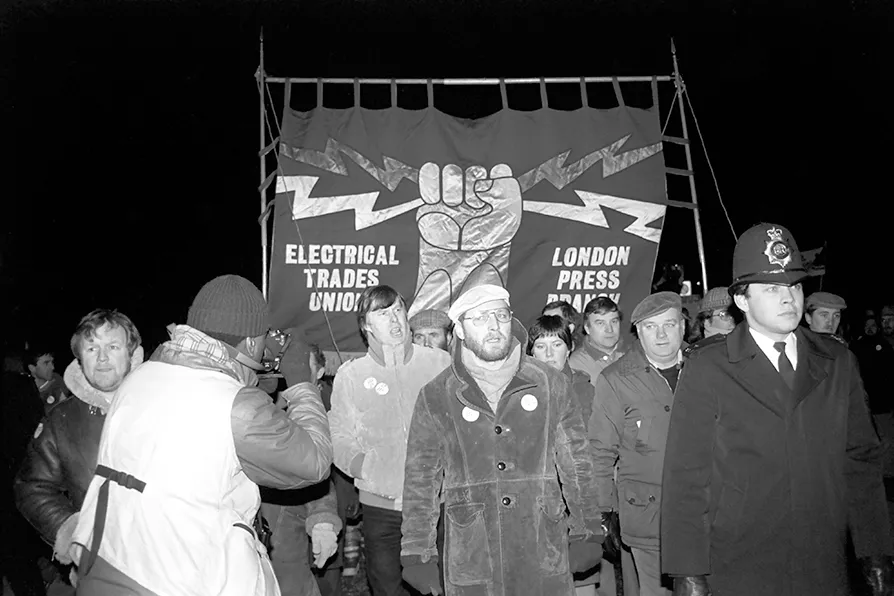
A past confrontation permanently shaped the methods the state will use to protect employers against any claims by their employees, writes MATT WRACK, but unions are readying to face the challenge
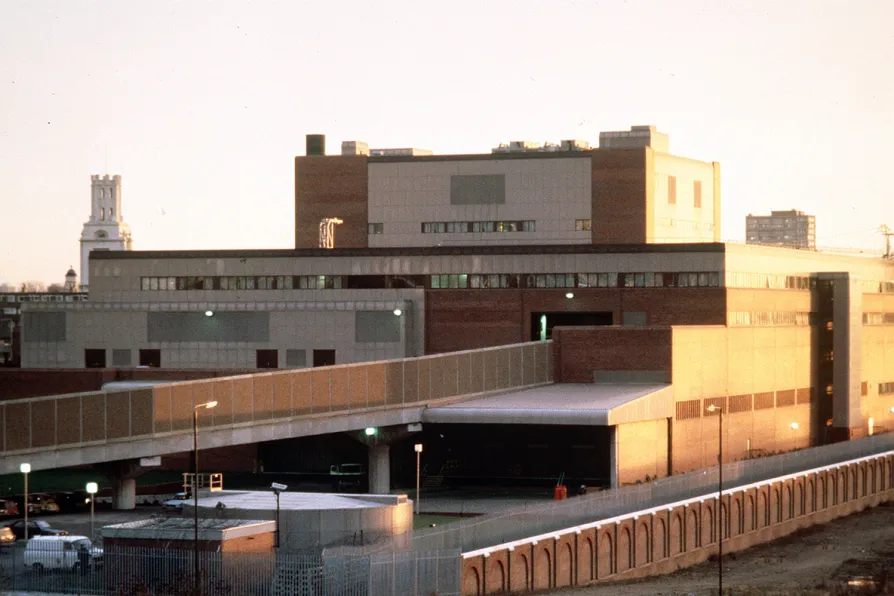
Forty years on, TONY DUBBINS revisits the Wapping dispute to argue that Murdoch’s real aim was union-busting – enabled by Thatcherite laws, police violence, compliant unions and a complicit media
![[Pic: Andrew Wiard]](https://msd11.gn.apc.org/sites/default/files/styles/desktop/public/2026-01/19860406_a_wiard_0001.jpg.webp?itok=d2RMNwWw)
LAURA DAVISON traces how Murdoch’s mass sackings, political deals and legal loopholes shattered collective bargaining 40 years ago – and how persistent NUJ organising, landmark court victories and new employment rights legislation are finally challenging that legacy
Enduring myths blame print unions for their own destruction – but TONY BURKE argues that the Wapping dispute was a calculated assault by Murdoch on organised labour, which reshaped Britain’s media landscape and casts a long shadow over trade union rights today