


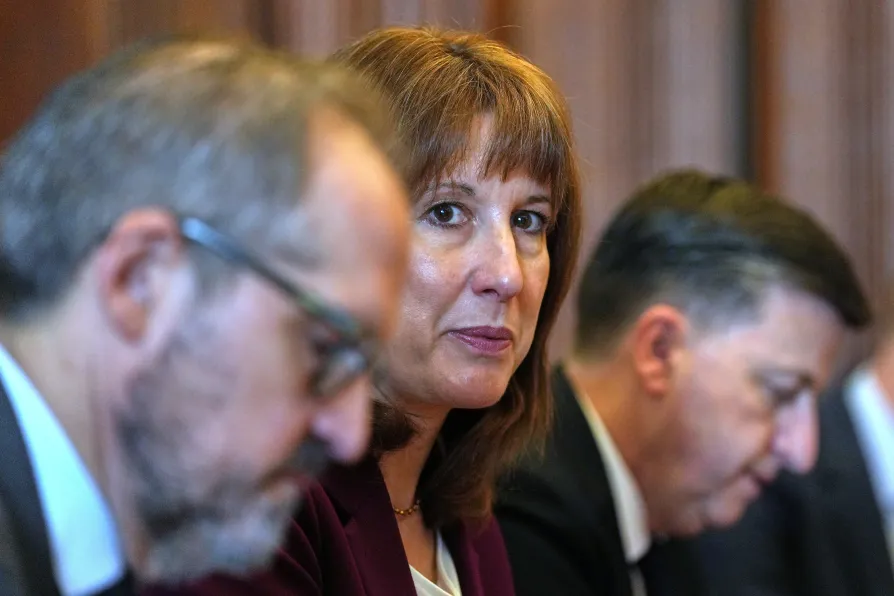
 Chancellor of the Exchequer Rachel Reeves with Second Permanent Secretary of the Treasury Jim O'Neil (left), and Scottish Secretary Douglas Alexander as she hosts a roundtable with gas and oil bosses at 11 Downing Street, central London, March 4, 2026






SELDOM, if ever, before has a chancellor been as comprehensively captured as Rachel Reeves.
The Spring Statement she delivered this week was the latest evidence that she is entirely in the grip of the big banks and their agenda.
Since she first crossed the threshold of the Treasury in July 2024, Reeves has tailored her policy to oblige high finance and the City of London in every respect.
The winter fuel benefit cut was a long-cherished Treasury objective. So too the assault on benefits for the disabled. Both were defeated by popular pressure, channelled through Labour back-bench MPs.
These political calamities, which did so much to undermine public support for the Labour government, have been echoed in other blunders like the farmers’ inheritance tax changes.
All this has been in the service of her self-imposed fiscal straitjacket which mandates balancing the books and securing falling debt by the end of the parliament, regardless of the prevailing economic circumstances at home or abroad, and of the miseries that may ensue.
The Spring Statement was the opportunity to chart a different course. It was not taken. The government’s subservience to the City is the reason.
Reeves has, for example, long been urged to introduce a windfall tax on the phenomenal profits made by the banks, which would of course have eased the Chancellor’s worries about the state of the public finances.
But she did not move against the bankers, preferring in last year’s Budget to scatter around other taxes which place the burden on smaller businesses and working people.
Nor has she moved towards a wealth tax. And she has resisted demands to raise the tax rate on profit-sharing payments made to City traders and financiers to the same rate as for income tax, a failure which saves the speculators millions at the expense of the Treasury.
Reeves is not the first Labour chancellor to be besotted by the City, and to buy their self-interested arguments for preferential treatment wholesale. Gordon Brown was for far too long an advocate of letting the banks do as they pleased.
But he did not slash benefits and public service funding while doing so.
Reeves lacks even the strength of Alistair Darling, no-one’s idea of a radical, but who did resist Mandelson-inspired threats from bankers over taxation of bonus payments.
Nor is there the slightest sign she is looking to change course. She has promised the giant energy monopolies that she will find ways to end the North Sea windfall tax too.
The crisis in the Middle East caused by Donald Trump’s aggression will surely impact on household fuel bills. It will have a marginal effect on the profit margins of the huge oil and gas corporations.
Reeves is also understood to be the main voice in Cabinet trying to challenge the proposed leasehold reforms, something which might compromise the profits sucked out of homeowners by the major financial institutions.
Small wonder the Chancellor was the toast of Davos this year, even as the government’s popularity tumbles to unprecedented lows. Representatives of the banks are in and out of her office on a near-daily basis, at the expense of consumers and more humble taxpayers.
With every succeeding Budget and spending statement, Reeves reveals herself as a worthy heir to the disgraced Mandelson, who served the interests of the “filthy rich” in government and out of it.
If Labour makes the anticipated and long-overdue change at 10 Downing Street later this year, the first thing the new prime minister should do is change the next-door neighbour. Protests from the City will prove it is the right thing to do.
