
The UK Prime Minister may have the regal touch in northern England, but he’s been wrong-footed on the constitutional challenges posed by the Celtic Alliance of first ministers from Scotland, Wales and Northern Ireland, argues KENNY MacASKILL

How a printworkers’ struggle helped forge Britain’s neoliberal age
Four decades on, the Wapping dispute stands as both a heroic act of resistance and a decisive moment in the long campaign to break trade union power. Lord JOHN HENDY KC looks back on the events of 1986
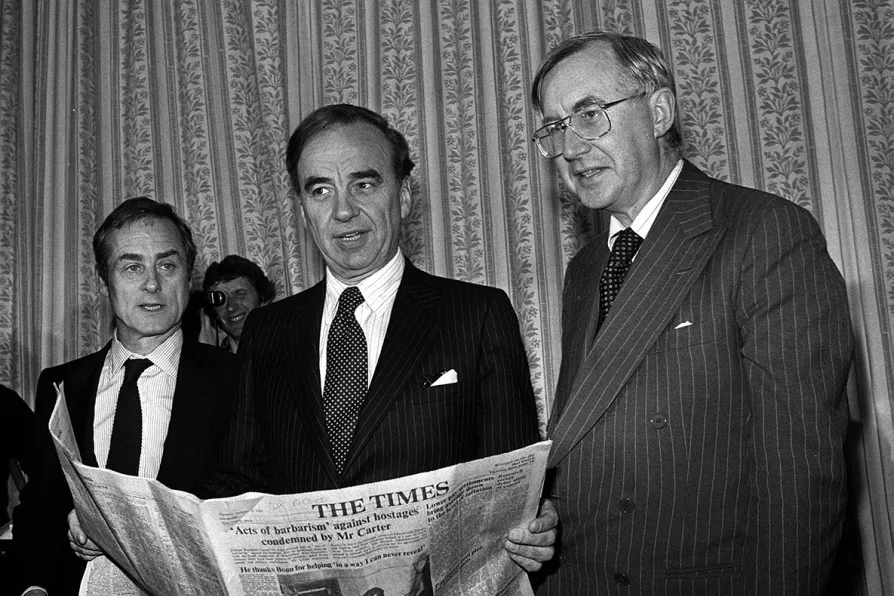
 Sunday Times Editor Harold Evans (left), Australian press magnate Rupert Murdoch (centre) and William Rees-Mogg, The Times Editor, January 1981
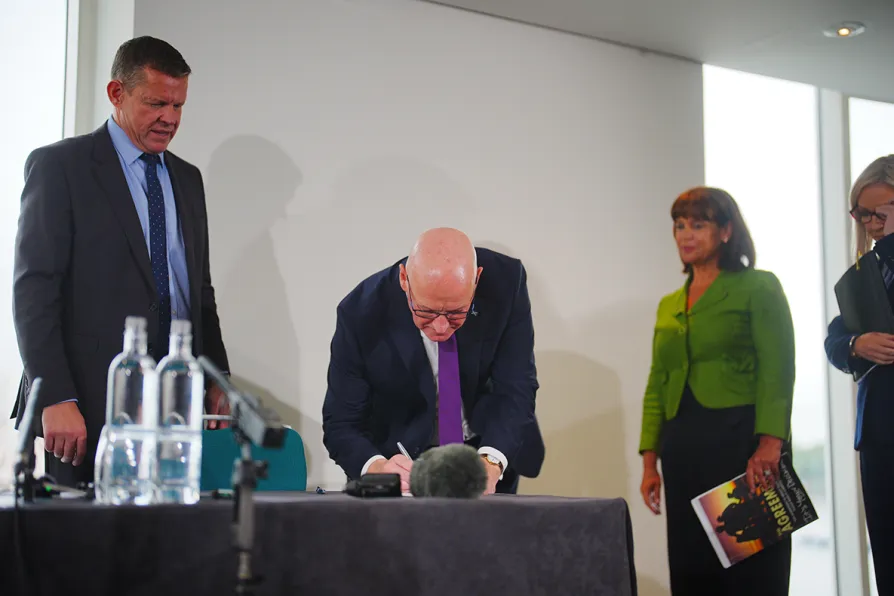
NEIRLAY ANDRADE, a member of the Communist Party of Venezuela’s political committee, outlines her party’s position on the crisis facing the country
A look at Taylor Wimpey’s accounts shows why Labour’s market-led housing strategy won’t deliver more, cheaper homes, as promised, says SOLOMON HUGHES
DAVID HORSLEY remembers the remarkable life and death of US black revolutionary George Jackson, whose politically passionate prison letters were published as Soledad Brother
Cuban trade union federation CTC leader OSNAY MIGUEL COLINA speaks to Ben Chacko about life and work under a crippling US siege
A part of the British empire’s network of slavery, today the Caribbean island of Nevis faces a new form of exploitation in the form of crypto-colonialism, CLAUDIA WEBBE writes
Challenges from the unscrupulous misuse of AI to steal actors’ voice and physical likenesses is being met with a firm union response, writes LYNDA ROOKE





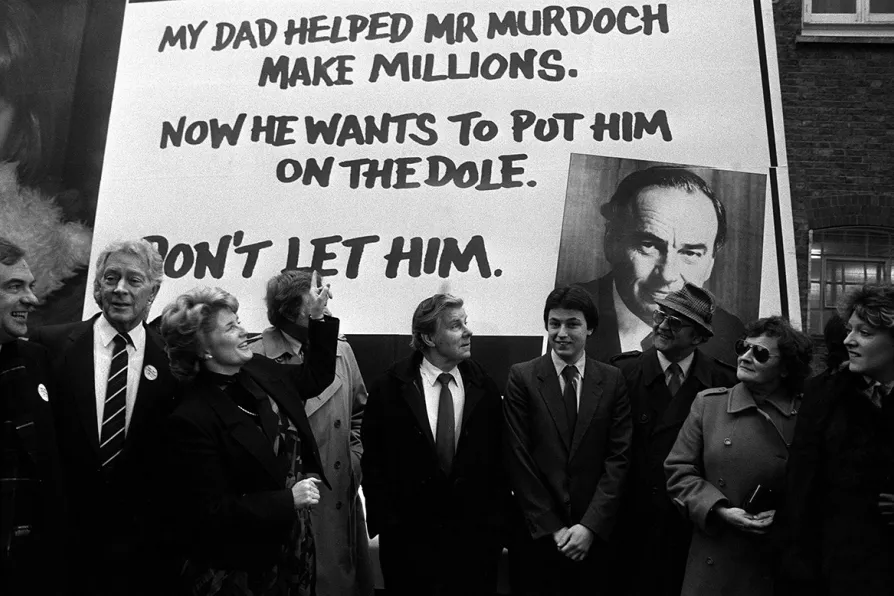
REFLECT on the Wapping dispute four decades later and many things come to mind. The heroic attempt to defend their livelihoods and way of life by thousands of printers, journalists, drivers, electricians and others.
The police brutality and subservience to a neoliberal government at the service of corporations. The spirit of solidarity of the thousands-strong slow marches on Saturday nights from Tower Hill to the News International depot in Wapping, inspired by the East End wit of our MCs, Bill Freeman and Mike Hicks.
The treachery of the Electrical, Electronic, Telecommunications, and Plumbing Union and Eric Hammond in secretly supplying and training, months in advance, a strike-breaking workforce to substitute for those who were to be dismissed.
The use of the law to sack the workforce in a way which avoided claims for unfair dismissal. The use of the law, introduced in 1980, to exclude the right to picket from a place at which the striker had not worked.
Rupert Murdoch’s influence on trade union law was apparent then and since. Who can forget Blair’s one-day visit to Hayman Island, Australia, in July 1995 to do a deal with Murdoch?
And who can doubt that Blair’s leading article in The Times newspaper of March 31 1997 making the commitment (prior to his election victory) that “the changes that we do propose would [still] leave British law the most restrictive on trade unions in the Western world” was one consequence of that deal?
And remember too, the insertion of the “Murdoch clause” into the recognition legislation to allow an employer to recognise a union under its domination (even one without members) as a legitimate means to block an application for recognition by an independent union. Though we don’t know who advised the government on what leave out or water down in the transformation of Labour’s New Deal for Working People into its Employment Rights Act, we can be sure that the voice of News International was heard loud and clear.
Important though it is to remember the struggle at Wapping, it is equally important to reflect on its place in history. It came seven years into a Conservative government committed to neoliberalism.
Its plans for the trade unions were set out in the Stepping Stones Report and the Ridley Report, both in 1977. The former set out the communications strategy (“A Tory landslide is not enough … it must represent an explicit rejection of socialism and the labour-trades unions axis … There is one major obstacle — the negative role of the trades unions…”).
The latter set out the plan for dealing with the unions — the ground was to be prepared for decisive industrial action in which the unions would be beaten: it is “likely that the challenge will come over a wage claim or redundancies,” “we might try and provoke a battle in a non-vulnerable industry, where we can win… A victory on ground of our choosing… ” “The most likely area is coal.” Though “the chosen battle ground could be the docks.”
Tactics were set out (keep stocks high, keep some ports open, cut social security to strikers’ families, establish a “large, mobile squad of police” equipped to deal with picketing, use non-union lorry drivers, and so on).
The set-piece with the miners ended, of course, the year before the Wapping dispute. The dispute with the dockers (over the abolition of the National Dock Labour Scheme) was two years after Wapping.
But the importance of the print dispute was crucial to the overall strategy of smashing the power of trade unions. At a time when newspaper readership was a significant factor in the formation of public opinion, it was important to demonstrate the new neoliberal relationship with unions: that they illegitimately “distorted” what ought to be a free market in labour where each worker should compete with her co-workers for the lowest wages.
Wapping was followed across the printing industry by a wave of derecognition and ending collective agreements (though there had been some advanced skirmishes as at the Stockport Messenger in 1983).
The policy papers were silent on the motivation for the attack on trade unions. But we can have no doubt, looking back, what it was.
Wages had increased at a faster rate than prices in the 1960s and 1970s reflecting increasing bargaining power on the part of workers.
It gave workers the upper hand in “wage share,” ie the proportion of GDP going to wages rather than profits. Wage share in the UK had averaged 59 per cent of GDP in the 1960s (higher than previous decades), reaching a peak of 65.5 per cent in 1975.
The object of the attack on trade unions was to destroy collective bargaining coverage, drive down the real value of wages, and extract more GDP in the form of profit. This was achieved by anti-union legislation, outsourcing, derecognition and the export of work to cheap labour countries. The effect was to reduce bargaining coverage from more than 80 per cent of workers in the 1950s-70s to less than 30 per cent by the 1990s.
Consequently, between 1975 and 2019 wage share fell to only 48.7 per cent, “a rate of decline unmatched by any other European country,” according to Lord Sikka.
The Wapping dispute played, therefore, a historically important part in the establishment of the neoliberal economy which, as we now see, has reduced Britain to penury.
Lord Hendy KC is chair of the Institute of Employment Rights, a vice-president of the Campaign for Trade Union Freedom, and a trustee of the Marx Memorial Library.

Similar stories
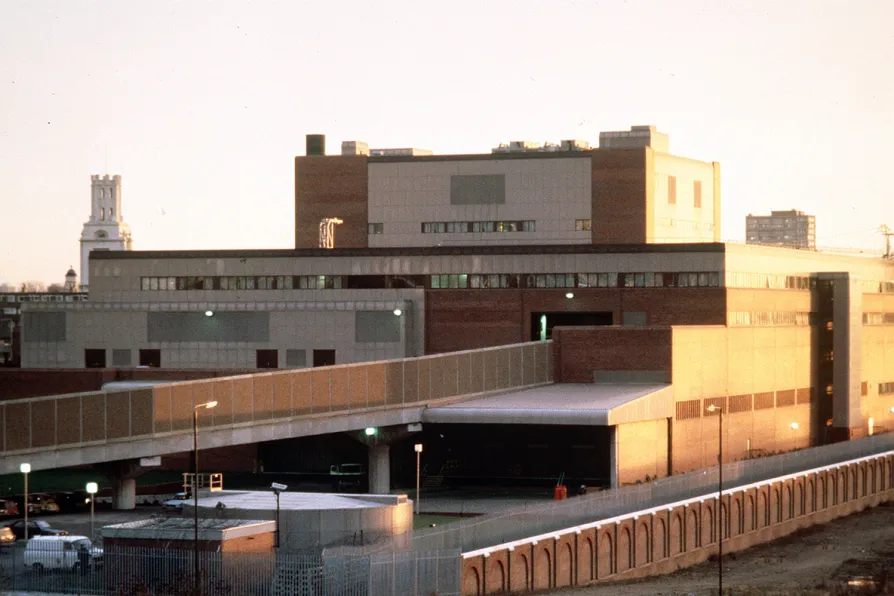
Forty years on, TONY DUBBINS revisits the Wapping dispute to argue that Murdoch’s real aim was union-busting – enabled by Thatcherite laws, police violence, compliant unions and a complicit media
![[Pic: Andrew Wiard]](https://msd11.gn.apc.org/sites/default/files/styles/desktop/public/2026-01/19860406_a_wiard_0001.jpg.webp?itok=d2RMNwWw)
LAURA DAVISON traces how Murdoch’s mass sackings, political deals and legal loopholes shattered collective bargaining 40 years ago – and how persistent NUJ organising, landmark court victories and new employment rights legislation are finally challenging that legacy
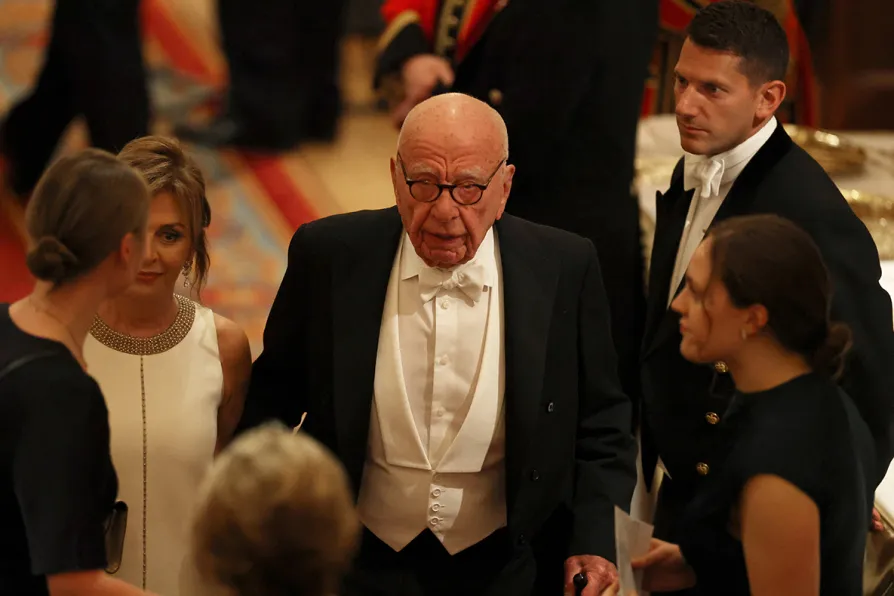
LOUISA BULL traces how derecognition, outsourcing and digitalisation reshaped the industry, weakened collective bargaining and created today’s precarious media workforce
Enduring myths blame print unions for their own destruction – but TONY BURKE argues that the Wapping dispute was a calculated assault by Murdoch on organised labour, which reshaped Britain’s media landscape and casts a long shadow over trade union rights today