Trade unions need to step up and force a turn in the policies of the labour movement to effectively confront the far-right threat, argues NICK WRIGHT


 Latest editorial

Bold cost-of-living action is needed – and can stop the far right
RICHARD BURGON MP argues the left must build on recent victories and urgently unite around a bold cost-of-living programme
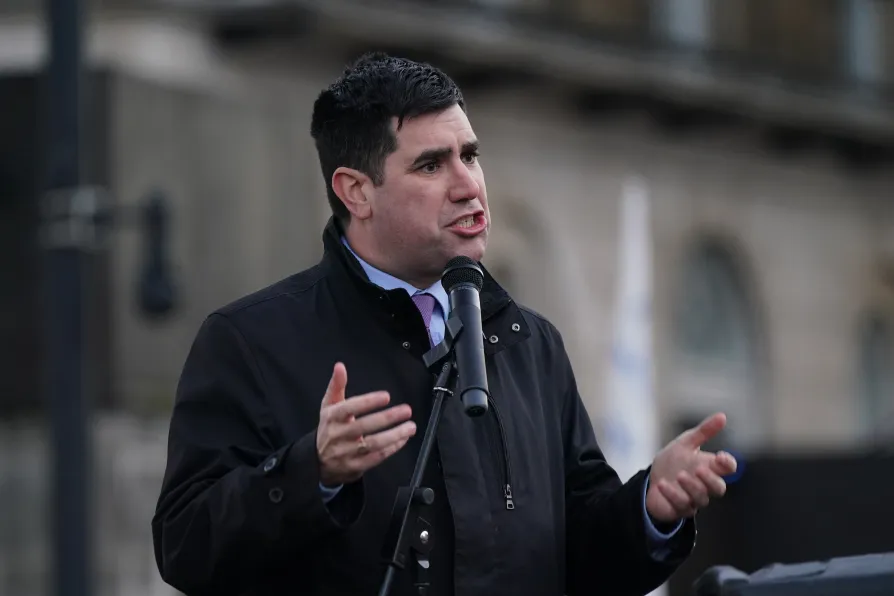 INTERVENTION: Richard Burgon is pushing a package of tax reforms that could raise £50 billion annually

As the 90th anniversary of the outbreak of the Spanish civil war is marked, Teesside campaigners will gather to remember the local men and women who stood against fascism, explains TONY FOX
Whatever differences exist among international sympathisers of the Bolivarian revolution about its current trajectory, they should unite against the imperialist power that is the source of an enforced retreat, argues ROGER D HARRIS
Washington’s inability to subjugate Iran is an example of how it is trying to preserve a regional order that no longer exists, argues RAMZY BAROUD
US financial instability is exposing the limits of a dollar-dominated global economy — and giving the Global South a historic chance to build an alternative, says MURAD QURESHI
Deprivation is a fundamental factor in criminal behaviour that must be addressed but, KENNY MacASKILL argues, there needs to a major rethink in sentencing to tackle overcrowding





EVERYONE who fought to scrap the two-child cap, and everyone who pushed for measures to make the wealthiest pay more, can take real credit for the steps made in the Budget on those areas.
There are times when we need to celebrate our victories. By standing firm and forcing the Labour leadership to scrap the two-child cap, we’ve helped lift over 400,000 children out of poverty and boosted the incomes of hundreds of thousands more families.
Of course, it should have been done on day one of a Labour government — but it has been done now because of our determined campaigning.
The same goes for the mansion tax and the higher taxes on income from wealth in the Budget. These measures aren’t enough — and are accompanied by a regressive stealth tax on wages which we must oppose. But they’re a direct result of the case the left has made for taxing wealth.
I stress these points because we need far more of the campaigning that won these changes if we’re to force the government to act at the scale needed to tackle the cost-of-living emergency.
The cost of living is still the number one concern for people. The left must put this at the centre of everything we do: offering both ideas for immediate relief and setting out the more fundamental changes to rebalance the economy in the interests of working people.
If we don’t, the far right will fill the vacuum — with Nigel Farage and his allies scapegoating migrants, Muslims or anyone else they can blame while letting their wealthy friends off the hook.
In the Budget, there were some welcome cost-of-living measures — the £150 off energy bills, the rail fare freeze, the rise in the minimum wage, to name a few. All of these will help.
But let’s be clear: the scale of the crisis demands much bolder action. We are on track for this parliament to be the second-worst for living standards in more than 70 years — with the worst being the last one. Misery is piling on misery, and people can’t take much more.
Living standards have already been stagnant for a decade-and-a-half, ever since the bankers crashed the economy and austerity was imposed.
Since then, wages have barely risen, growth has been weak, and the price of life’s essentials has soared.
As a result, Britain is facing a social emergency. Millions are struggling to get from month to month under the pressure of sky-high rents, energy bills and food costs.
That’s why, in the run-up to the Budget, I launched a campaign — backed by tens of thousands of people — for a package of emergency measures to give people the immediate relief they need, funded by taxes on the wealthy.
There is plenty we can do right now: from cost-of-living grants to cover energy costs still hundreds of pounds higher than just a few years ago to raising Local Housing Allowance to offset spiralling rents, from wiping billions in student debts as the Australian government has done to delivering universal free school meals to protect families against soaring food prices.
Alongside these immediate measures, we need to push the structural changes needed to end the corporate rip-off and stop life’s essentials being run for profit.
Bringing energy and water into public ownership, launching a mass council housebuilding programme and introducing rent caps — these are the kinds of policies needed to do that.
Some, though, have been doing very well out of our rigged economy. British billionaires’ wealth has more than doubled since 2010. It’s clear that ordinary people are left with less and less because the super-rich have been taking more and more.
Taxing extreme wealth would help provide the resources to tackle the cost-of-living crisis, boost our public services and fund the public investment needed to get us out of this economic doom loop.
I’ve been pushing a package of tax reforms that could raise £50 billion annually. A 2 per cent wealth tax on assets over £10 million would raise £24bn a year.
Equalising capital gains tax with income tax would raise £12bn more. A windfall tax on the big four banks — set at the same rate as the one on oil and gas — would raise a further £14bn.
More still could be raised through fairer taxation of corporate profits, which have far lower rates than income from work. As the Office for Budget Responsibility makes clear: income from labour has an effective tax rate of around 40 per cent, but for corporate profits its around 17 per cent
Worryingly, instead of going down that progressive path, the government has chosen a stealth tax on ordinary people with the extension of the income tax threshold freeze from 2028. Millions of working people face a tax hike — including 780,000 people paying income tax for the first time.
There is a debate in the media on whether this breaks Labour’s manifesto promise, but the real issue is simple: it squeezes ordinary people even further at a moment they can least afford it. We should be taxing extreme wealth — not loading stealth taxes onto working people in the middle of a cost-of-living emergency.
As this extension doesn’t take effect for two years, there is still time to pressure the government to scrap it. And we know our campaigning works. As well as the two-child cap, the government has already been forced to U-turn on winter fuel payments and much of the disability cuts. Our campaigns have prevented billions in cuts on the backs of working-class people.
In 2026, our entire movement must build on that and come together — just as we did against austerity — to develop a set of cost-of-living demands that we can unite all our campaigning behind.
A movement like this can shape the national debate and play a key role in preventing the first far-right government in our history.
Richard Burgon is member of Parliament for Leeds East.
