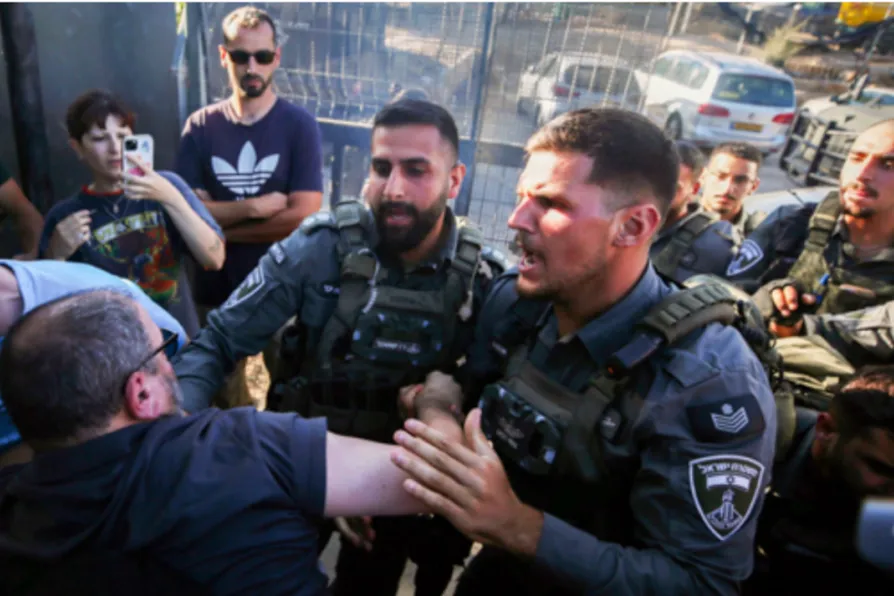
Police crackdowns on Israeli peace demonstrators combined with court rulings and settler organisations are designed to strip Palestinian families of their homes and land. The Israeli state has tried to silence both Israelis and Palestinians who resist, according to Zo HaDerekh (This Is The Way) the Communist Party of Israel’s Hebrew-language weekly


 Latest editorial

Four Years of the Ukraine War and the Isolation of Jacques Baud
SEVIM DAGDELEN asks why the European Union is targeting the Swiss academic Jacques Baud, cutting off his access to banking services
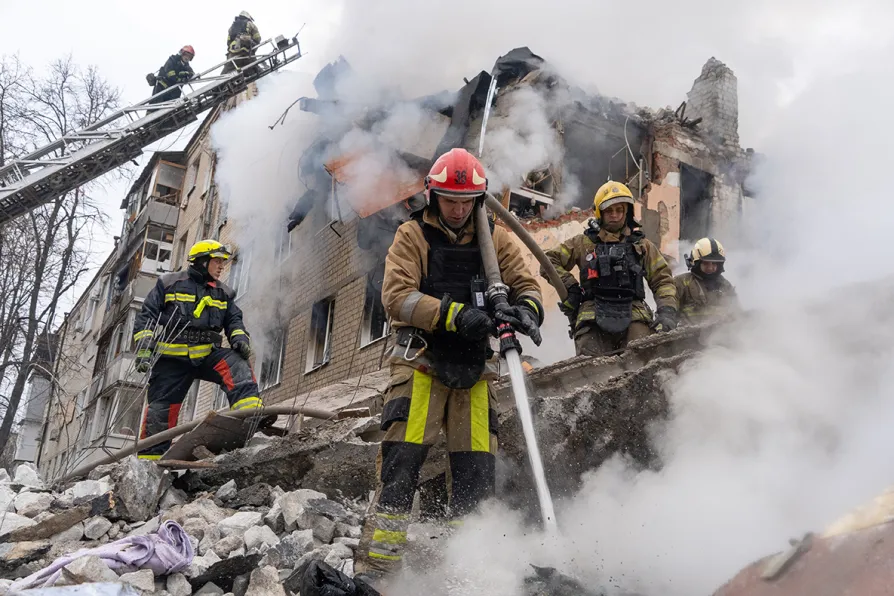 Firefighters put out the fire in the ruins of an apartment building following Russia's missile attack in Kharkiv, Ukraine, March 7, 2026
The attacks on black academics are well-funded and relentless, writes DIANE ABBOTT, and they need to be fearlessly resisted by all concerned
Communists in Australia, Britain and the US outlined a joint state agreement against their governments’ militarist provocations.
Extreme hot weather resulting from environmental change needs to be tackled through greater firefighting investment instead of fewer jobs and less resources, writes COLIN BROWN
Faced with crises in every direction, Volodymr Zelensky is rewriting his country’s complex history by paying homage to the founding fathers of Ukrainian ultra-nationalism and courting their modern heirs, writes KENNY COYLE
There are many intricate details about the new Saudi, Turkish and Pakistani alliance we do not yet know, suggests ROGER McKENZIE, but its impact could be considerable





ESCALATION abroad — repression at home. Four years into the Ukraine war, one thing has become abundantly clear: neither Ukraine nor the European Nato allies want peace in Ukraine.
In Brussels, Berlin, London and Paris, ever louder calls are being made for more weapons and more financial aid for Ukraine. Russia is warning of a possible nuclear arming of Kiev by France and Britain, as well as of planned attacks on the TurkStream pipeline. In light of investigations by the German Federal Prosecutor into the involvement of Ukrainian state actors in the attacks on the Nord Stream pipeline, such warnings cannot simply be dismissed as implausible.
It is clear that the European elites — with the exception of Hungary and Slovakia — intend to continue escalating the war in Ukraine. This strategy of escalation apparently also includes action against critics at home. A prominent target of the EU has been the Swiss publicist Jacques Baud. Through sanctions, EU member states are seeking to silence Baud, whose analysis of the background to the Ukraine war in particular casts a very different light on its causes than the official narrative of the European Nato states. Any further measures against the publicist must therefore be understood as part of a broader mobilisation.
How far the reach of EU bureaucrats extends became evident only a few days ago, when the Swiss bank UBS froze the account and cards of the former intelligence officer. Baud, who lives in Brussels, has thereby lost yet another means of sustaining himself financially.
Historical Parallels: Isolation as an Instrument of Rule
To understand what the EU is doing here, one must look far back into history; merely describing these measures as authoritarian does not go far enough. The steps taken to isolate Baud — who, incidentally, has committed no crime — are reminiscent, despite all differences, of the system of internal exile and the policy of isolating political opponents in Italian fascism between 1922 and 1943.
The confino under Italian fascism was also a bureaucratic measure aimed not at punishing specific offences but at prevention and general deterrence. Baud has not, of course, been deported to a remote island like the Italian exiles. Yet the withdrawal of financial means and the imposition of poverty as an unspoken punishment invite comparison. Exile to remote islands — where there were no bank branches — served to ruin the exiled economically and isolate them socially.
Five Theses Against the Official War Myth
On the fourth anniversary of the Ukraine war, it is also necessary to ask substantively why Baud has become the focus of the EU’s policy of general deterrence. Evidently, he has been deemed a dangerous figure by the sanctions bureaucracy. But what exactly makes him so dangerous that everything is now being done not to send him to a lonely island, but to isolate him in the heart of Brussels and deprive him of essential means of livelihood?
In essence, the EU measures are aimed at forcing a recantation — and, if this does not occur, at destroying the individual. Contrary to claims by the German Foreign Office, the sanctions decision does not accuse Baud of appearing in Russian media — which he demonstrably does not. It must therefore be about something else. All indications suggest that it is his arguments that make him a dangerous figure.
In five key points, Baud contradicts the Nato and EU war narrative:
- Baud argues that the war was provoked by Nato’s eastward expansion and broken Western promises, and that Russian security interests — particularly regarding possible Ukrainian Nato membership — were ignored. The conflict, he contends, was a reaction to years of perceived threat to Russia, not an unprovoked act of aggression by Putin.
- He maintains that Ukraine actively escalated the conflict in the Donbass and planned an offensive. He refers to attacks on civilians in the Donbass as well as preparations for an offensive with Western support. He also cites statements made in 2019 by Oleksiy Arestovych, then an adviser to the Ukrainian president, who described war as a possible price for Ukraine’s Nato accession.
- Particularly uncomfortable for the West is Baud’s assertion that the Western objective is not primarily the protection of Ukraine but a long-term struggle against Russia. Europe, he argues, is sacrificing Ukraine to geopolitical interests, while the United States is using the conflict to bind Europe more closely to itself and strengthen its arms industry through Ukrainian orders financed by Europeans.
- Militarily, he assesses Russia as superior. The West, he argues, deliberately misinterprets the Russian approach, which aims primarily at destroying Ukrainian forces rather than territorial conquest. Because of this miscalculation, Ukrainian counter-offensives were doomed to fail. The war, in his view, is costly and unwinnable for Ukraine.
- Baud has long advocated negotiations, such as those currently taking place in Geneva between Ukraine, Russia and the United States. He is convinced that the war can only be ended through diplomacy and neutrality guarantees, not through military victory. He criticises the West’s strategy of escalation and stresses that any solution will require compromise, lest the conflict turn into a prolonged and costly war of attrition.
It is these analyses that render Baud a dangerous figure in the eyes of European elites. The EU seeks to punish him without trial — not only to silence him, but to deter others. Anyone publishing similar analyses is meant to understand that their civic existence, too, can be destroyed.
This resort to measures of general deterrence, with echoes of Italian fascism, can only be interpreted as preparation for a larger war. Solidarity with Jacques Baud is therefore not merely a defence of freedom; it is also a necessary act of resistance against the war mobilisation of Europe’s Nato elites, who appear intent on leading Europe into a war with Russia.

Similar stories
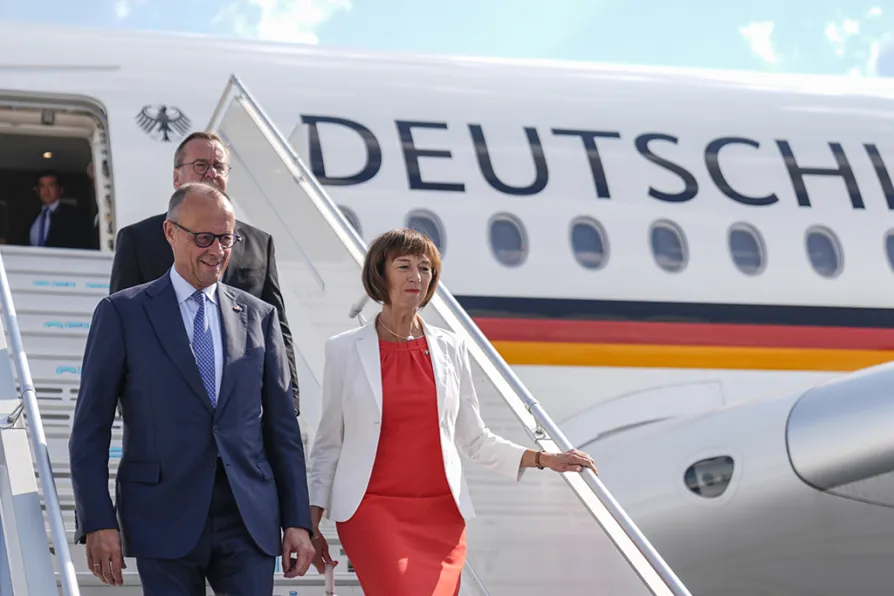
SEVIM DAGDELEN says European Nato states are escalating ever closer to direct conflict with a nuclear power, and sacrificing welfare states built up over a century to finance it
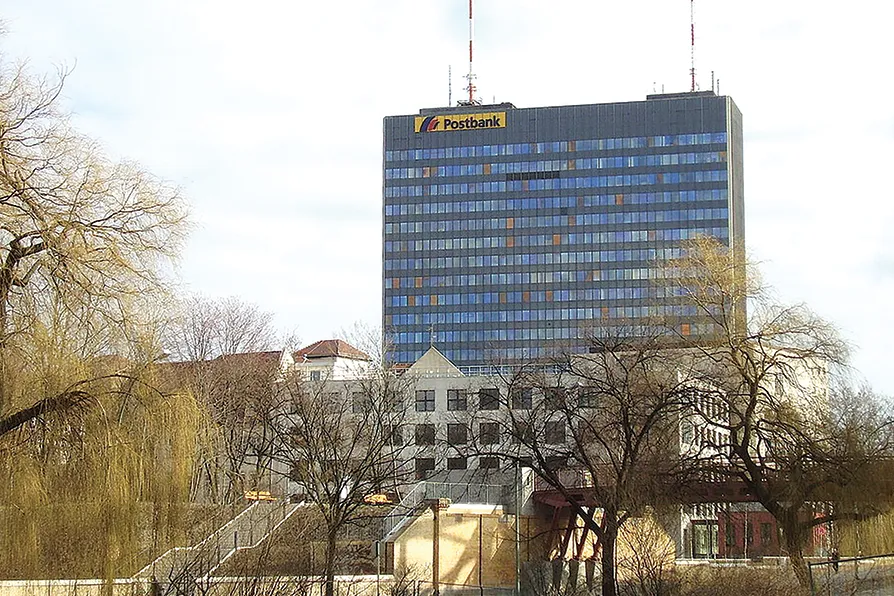
JOHN GREEN argues that the spreading practice of closing bank account without proof of criminality is an infringement of an elementary human right

The federal government’s plans to finance the war in Ukraine with Russian assets, and a possible deployment of German troops, put the population in Germany in the highest danger, argues SEVIM DAGDELEN
In Washington, the willingness to accept an open war with Russia is growing — at Europe’s expense. While Nato states are being drawn into confrontation, Europe risks becoming the battlefield of a potential world war, warns SEVIM DAGDELEN