Committee for the Defence of the Iranian People’s Rights general secretary GAWAIN LITTLE discusses the impact of the US-Israeli war on the Iranian people and economy


 Latest editorial

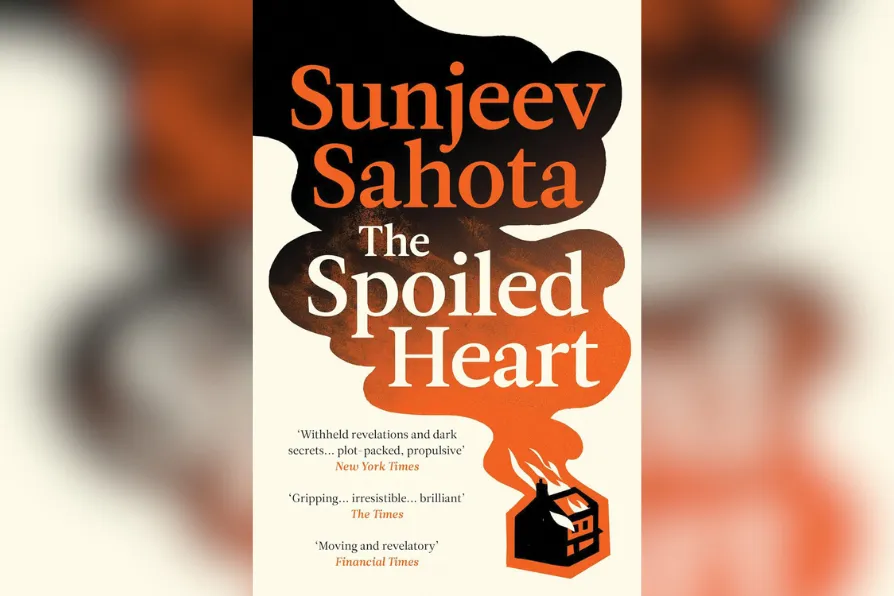
The Spoiled Heart tackles class, race and sex debates well. But it’s understanding of trade unionism is weak
SOLOMON HUGHES recommends Sunjeev Sahota’s recent novel set in a trade union election campaign for its fresh approach to what unites and divides workers, but wishes the union backdrop was truer to life

Capitalism has extracted itself from crisis before, argues PRABHAT PATNAIK – but through methods no longer available. So it is turning to authoritarianism, militarism and neocolonialism
The five young men killed in the A66 crash were responsible for a devastating tragedy — but the crash should force us to ask difficult questions about wider society, argues RENATA MEDEIROS MIRRA
Britain funds the policing of black culture 16 times better than the culture itself. The Diamond Jubilee is the moment to end that, argues CLAUDIA WEBBE
Despite Andy Burnham’s declaration defending the continued partition of the island, all major international and internal trends are converging to make Irish reunification inevitable
Humans are part of the ‘animal kingdom’ – and of nature in general – but also distinct from it and labour (work) is part of what makes us unique, declared Engels. His insights 150 years ago into how our species came to be and how we differ from the rest of nature, are as important today as they were then, says the MARX MEMORIAL LIBRARY





SUNJEEV SAHOTA’S recent novel The Spoiled Heart is set around a highly political contest to become a trade union general secretary, so it’s fiction drawn from a world Morning Star readers know well.
Sahota’s book came out in paperback at the end of last year and has been getting very positive reviews in Britain and US: it’s a well written story that deserves the reviews, although there are some flaws that made me worry about just how committed Sahota is to his subject.
In the novel Nayan, a factory hand who has worked his way up to become a union official for “Unify” — a Unite-like general union — runs for general secretary.
His surprise opponent, Megha, is a middle-class, university-educated Asian woman who is the union’s “head of diversity:” Sahota has made a “novel of ideas” where the relative strengths and injuries from class, race and sex are fought out in this union leadership campaign.
This is one of the novel’s strengths: these debates are typically fictionalised in campus novels, with male/female white/minority young/old academics and students pulling and pushing about who bears privilege and who carries truth. But Sahota rightly knows that factory hands, union officials, train drivers, care workers and corner shop owners can and do debate these ideas as — if not more — fiercely and deeply.
Moreover, Sahota has two non-white characters debate race and class, because he doesn’t fall in the trap of making “Asian” and “working class” opposites: people can and very often are both.
Nayan has the argument for class solidarity across race lines in his blood. He remembers his mum in a Grunwick-like dispute “picketing in her salwar kameez” chanting “the Workers United” backed by (white) miners and railwaymen.
By contrast Megha wants to push hard on positive discrimination for minorities and focus on fragmented “identitites.” Sahota is clearly sympathetic to the “solidarity” argument — more sympathetic, I feel, than a lot of liberal reviewers understand.
In the final union hustings in the book, Sahota gives Nayan convincing, passionate arguments: “I’m against diversity schemes… against race-based corporatism. Why? Because representation is not the answer.
“A politics of aspiration devised by elites is not the answer. The better world does not consist of the richest among us being in the correct racial, gender, class proportions. And the poorest being made up of the right number of whites, blacks, browns, women, gays….That’s not better. That’s the same old conservative world, but with a colour chart. The better world is one in which the rich do not exist. Where no-one is poor.”
Strong stuff, but Sahota does also give us room to think Nayan may be too reductive: Nayan worries he’s trying too hard to please white friends, not enough to challenge them, and when things turn sour is pulled towards a much angrier focus on anti-racism.
There’s a question over whether Nayan’s strong commitment to his class doesn’t tip over into sexist bullying. Meanwhile Megha may seem like a middle-class woman focusing too much on identity, but we see her class “privilege“ means little for her home life, when she has to live next door to a nasty, bitter racist.
Other characters — Nayan’s principled mum still puts up with a philandering dad, his white girlfriend and her son wrestle with race, sex and class in a sometimes gut-wrenching subplot.
It’s a novel of ideas where the ideas are debated through people’s lives as well as their speeches, where the characters are rounded and real, not just cyphers for theoretical points of view. It’s a work of fiction, not a pamphlet with a final answer.
The one drawback for me was the union feels OK-ish, but a bit off. Not quite properly realised.
There are little niggles that made me think Sahota hasn’t immersed himself enough in this world: Nayan spends time working on “employee tribunals” — a term no union rep would use: they are either employment tribunals or, in old money, industrial tribunals.
The union has a national “Comrade of the Year” award: I’d love it if unions did announce a top Comrade, but sadly they don’t. British unions are not, in my experience, as “red” at the top as to be announcing national “comrades.”
A few other union speeches and newsletters don’t ring true. Nayan’s adviser regularly updates him on the general secretary contest with a weekly “polling report of the members’ voting intentions” when in the real world there is little if any regular polling of members of individual unions.
It feels like Sahota has drawn from knowledge of a Labour Party election campaign, not a union campaign. They are related, but very different beasts: a union leadership election is about branch meetings, conferences, nominations, rallies and factions, not polling and advertising.
There also sometimes seems to be a confusion about the basic working functions of a union: trade unions squeeze money and resources out of employers, where “Unify” in the novel seems more often to be promising money to members from its own funds (like a Universal Basic Income pilot) .
There is no discussion of fighting wage campaigns. Again, this feels like Sahota has borrowed the structures from a Westminster election for a union election.
Sahota’s novel still deserves the praise it is getting for writing a novel that wrestles with intellectual themes, where the intellectuals include well-realised working class characters.
He is a radical novelist both in the sense of clearly being on the left, and of writing about life at the roots.
But I felt that it was a shame that the union life — the life of some of the most important, self-made working class institutions — was not a bit better expressed.
