
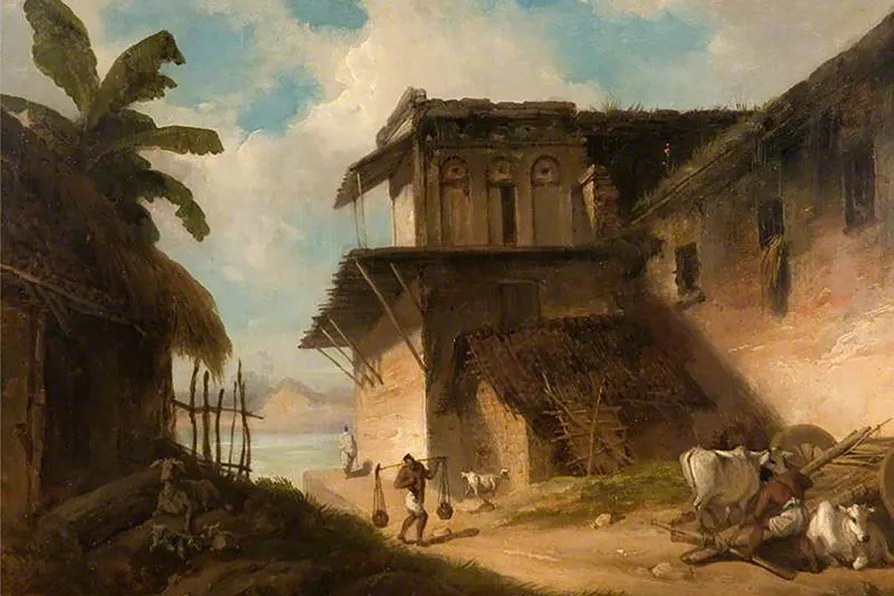
APURBA CHATTERJEE explains how British artists in India used the “picturesque” to reshape colonial landscapes and celebrate imperial power


Autism: the confident impulse to have a go at communication
MATTHEW HAWKINS relishes the literary output of autistic writers, and recommends its insight to readers both including and beyond the community themselves

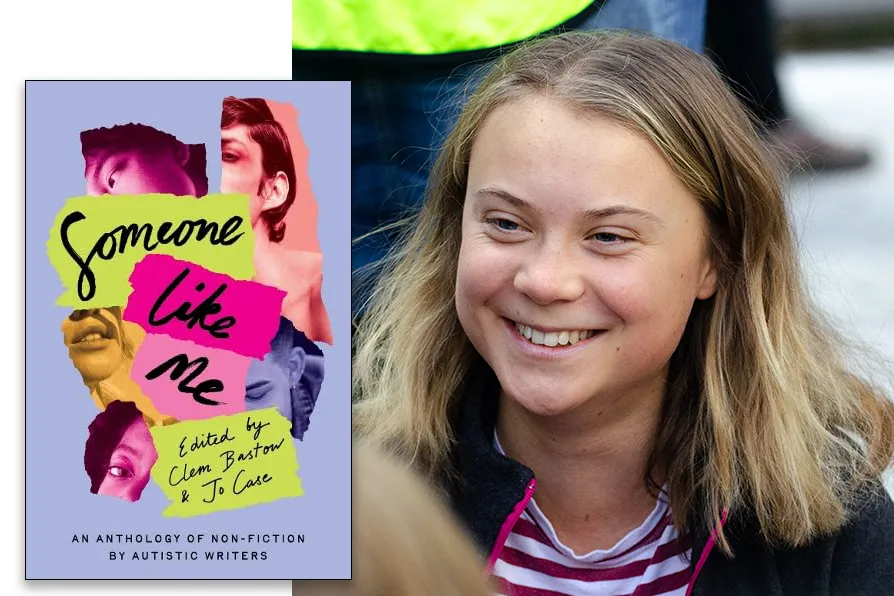
 CONFIDENT IMPULSE TO COMMUNICATE: Greta Thunberg, who cites autism as her “superpower”, speaking at the annual climate conference, Austrian World Summit, 2019 [Pic: Eugénie Berger/CC]
PAUL DONOVAN welcomes a revival of Reginald Rose’s classic play that reminds us of the fundamental need for trials with juries
SIMON PARSONS applauds an exceptional performance of Wesker’s little-known play, by the same actor for whom it was written 45 years ago
ANDY HEDGECOCK and MARIA DUARTE review Late Fame, The Death of Robin Hood, Leviticus, and Gail Daughtry and the Celebrity Sex Pass
ANGUS REID recommends a uniquely accomplished documentary collage that contemplates our relation to the natural world
GORDON PARSONS enjoys Kant’s ‘mind-boggling’ theory of human reality: that we create the reality we experience





Someone Like Me: An Anthology of Non-Fiction by Autistic Writers
Edited by Clem Bastow and Jo Case, Verve Books, £13.65
WHAT do you call a group of autistic people? asks the standup comedian Anisa Anduala of her Australian audience. At the leftfield heckle “Engineers!” Anduala approves the droll insight whilst identifying its culturally specific “I’ll have a go” quality. I refer here to a bit of tiktok ephemera that scrolled simultaneously to my reading of Someone Like Me, an anthology of non-fiction by autistic writers produced by Australia’s University of Queensland Press.
Had I the temerity to identify characteristics of Australian writing emergent in this publication, these might be thoroughness, a confident impulse to have a go at communication, and a refreshing non-assumption of a readership’s common knowledge. Meanwhile, the “Engineers!” heckle invokes awareness of autistic tunnel-vision and hyperfocus. The eye of the sensory storm makes for an intense zone of self-affirmation. Digital tech finds its optimum uses in a hard-won scenario where the collective noun for people with autism could equally be “Engineers” or “Non-fiction writers”!
An interest in this anthology could be bound up with a curiosity about how autistic thought-patterns impact on literary outcomes. I can’t say I’ve found standardised energies in the beat and cadence of the vibrant and various writing assembled here. Instead, Someone Like Me reveals commonality of process. Essays repeatedly reveal circumstances whereby somebody with a positive autism diagnosis gets to a place where they can write; where aspects of their writing eventually manifest, against the grain. A reader can identify with the forces behind the manifestation or notice how they might be part of the grain.
Our libraries may contain anthologies by gay writers who can’t not talk about coming-out. Similarly, collections exist where refugee writers must each frame the moment of their papers’ arriving. In Someone Like Me, the moment of autistic diagnosis is salient. This amounts to variations on a theme, with Australian citizens having to fund their consultations – confirming mixed news at a fixed price, as a portal to subsequent rights – or other nationals on the spectrum, reading the runes in an empathetic family setting.
Most of this book’s essayists have had to be savvy enough to cite scientific and academic studies. This book in turn makes its contribution to literature on the subject, via its numerous auto case studies. This is how action within the frame of academia grafts stability and establishes better ground.
Higher ground? I clocked Dr Clem Barstow’s editorial citation (quoted from the late autistic artist and writer Mel Baggs) that suggests an autistic person’s viewpoints are ever likely to be shoved into the twin oblivions of “but we are not all like that” and “thank you for showing me the autistic experience.” This hint about the likelihood of falling short put me on my mettle.
In similar vein, the editorial trailer for a great piece by Caitlin McGregor states it is bitingly funny then adds “for an autistic person at least.” Perhaps alienating clauses sit naturally in the bracing reality of progressive research. Perhaps editorial gratuity speaks of passion for a topic and its significance. Implied exclusions notwithstanding, I found a back-and-forth between editorial and essay content shed light on both contingents – completing a various picture with provocation, affirmation and bite.
I now know about stimming, monotropism, masking, and autistic burnout, but this is more than just a facile handbook. Readers are likely to find out more about themselves. Synapses might get pulled wider. Positively destabilised, we emerge newly porous to what’s really happening.
There again, the back-cover pean that invites “Autistic people of all kinds to find company in these pages” (whilst mentioning nobody else) chimes as a best-case scenario. All kinds would surely include those with perceptions settled quite otherwise in their physiognomy. These might not be readers of this book — or of anything in print.
Alternatively, the remit can be several. Core values sing out but such a book might also impinge on the lives of a hard-to-reach autistic community through the creatively enhanced insight – and subsequent behaviour — of the motivated proxy reader.

Similar stories
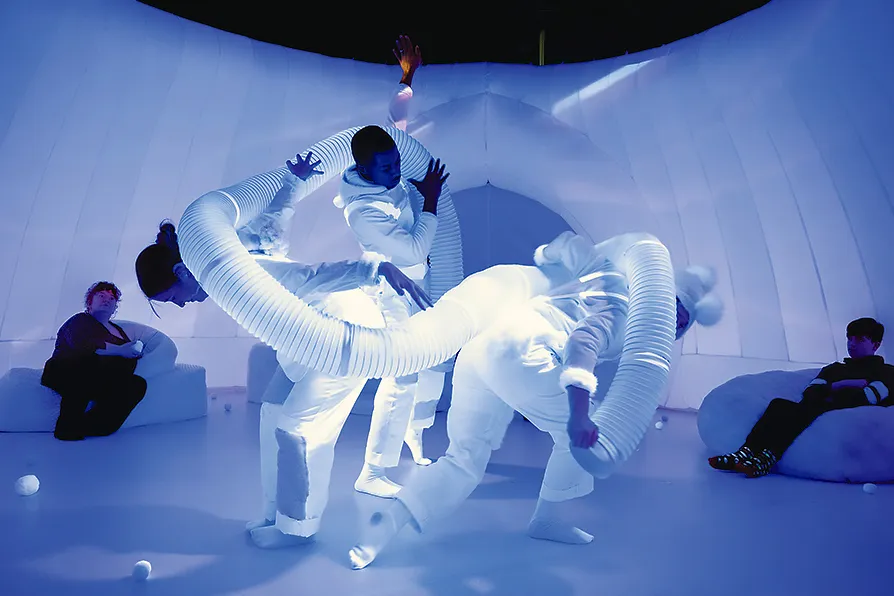
MATTHEW HAWKINS looks at some of the Edinburgh Festival dance offerings
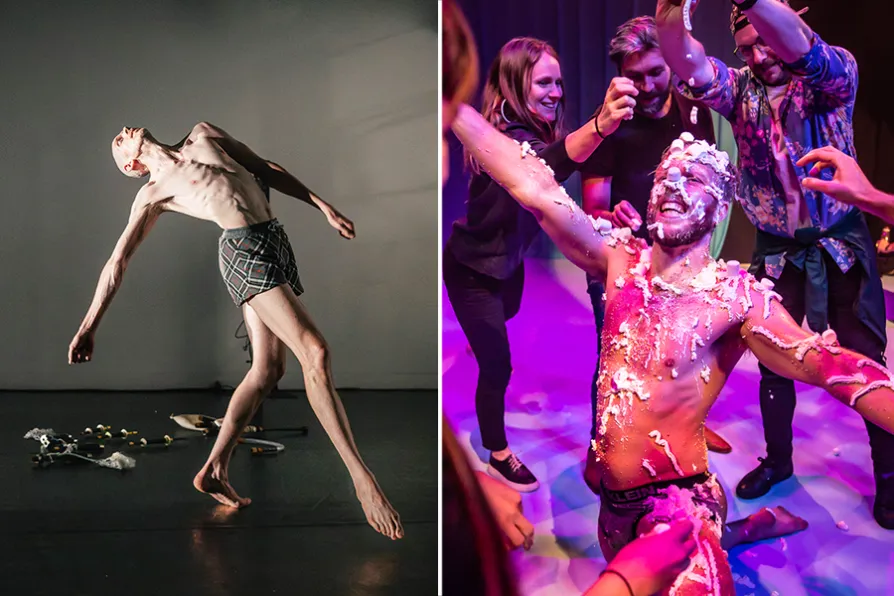
An immersive, participatory display by a queer Australian Aboriginal performer, and a rebellious unravelling of traditional Scottish dance
JOSEPHINE BARBARO welcomes a diverse anthology of experiences by autistic women that amounts to a resounding chorus, demanding to be heard

In search of political understanding, MATTHEW HAWKINS welcomes a critique of anti-semitism as codified by the Israeli state