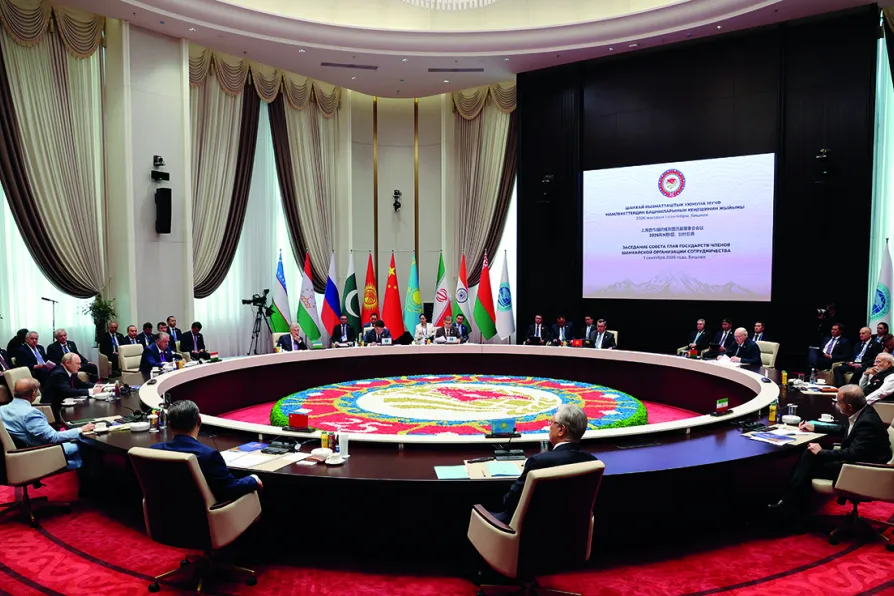
The 25th anniversary meeting of the Shanghai Co-operation Organisation in the Kyrgyz capital may offer a glimmer of hope that international relations do not need to be defined by endless confrontation, writes KENNY COYLE


 Latest editorial

Cuba and Ireland united in a defence of dignity and resistance
Although separated by an ocean, the two islands share deep historical bonds of anti-imperialist solidarity, writes Chris Hazzard MP
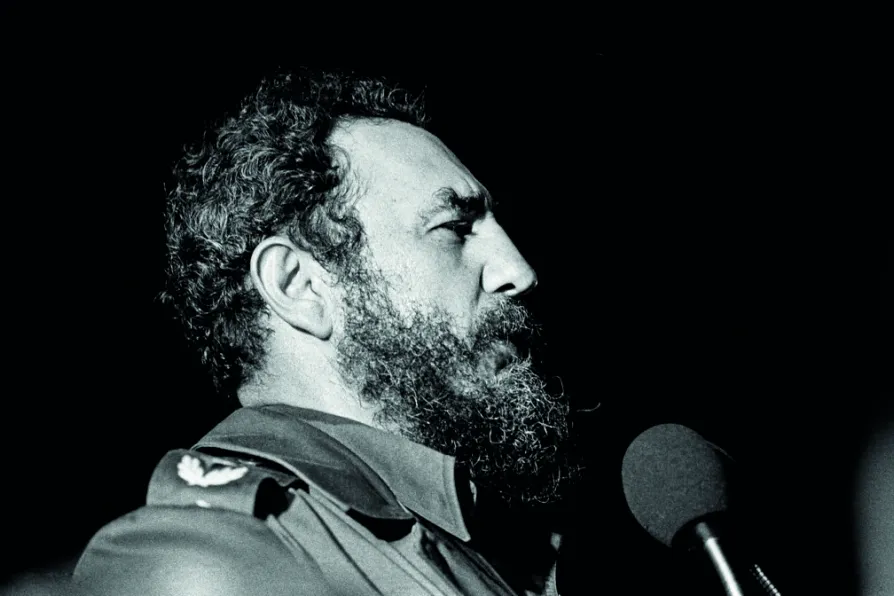 Fidel Castro pictured in 1978 [Pic: Marcelo Montecino/Creative Commons]
The artist, who has just died, is embedded in the subconscious of the Palestinian people
The five young men killed in the A66 crash were responsible for a devastating tragedy — but the crash should force us to ask difficult questions about wider society, argues RENATA MEDEIROS MIRRA
The unwillingness of the British political elite to acknowledge that we are on the edge of a direct conflict with Russia leaves the peace movement with an urgent and onerous task
Committee for the Defence of the Iranian People’s Rights general secretary GAWAIN LITTLE discusses the impact of the US-Israeli war on the Iranian people and economy
Capitalism has extracted itself from crisis before, argues PRABHAT PATNAIK – but through methods no longer available. So it is turning to authoritarianism, militarism and neocolonialism





FOR anti-imperialists, Fidel Castro’s legacy stands as one of the clearest demonstrations that empire can be resisted – and defeated.
Fidel was not merely a leader of the Cuban revolution; but an exemplar of anti-colonialism – living proof that a small nation could stand up to the most powerful empire on Earth and refuse to bend.
He demonstrated that sovereignty, human dignity, and social justice are not gifts from above, but achievements won through struggle.
He showed that the people themselves must be the protagonists of their own liberation.
And Fidel rooted the Cuban revolution in a deep historical consciousness.
He saw it as the continuation of the mambi wars of independence – the 10-year struggle against Spain that he described as “the Vietnam of the last century.”
For Fidel, that lineage of unbroken struggle mattered greatly.
It meant Cuba would never accept the “inevitability” of imperial rule, whether from Madrid or Washington.
It meant that the revolution was not simply a political rupture – it was a restoration of human dignity.
And it meant Cuba’s revolution was never inward-looking.
Rather, as our comrade Vijay Prashad has written: “Cuba became a lighthouse for the global South” – a beacon of what was possible when a people refused to accept their assigned place in the world order.
That internationalism is one of Fidel’s most enduring legacies.
Cuba under his leadership sent tens of thousands of doctors, teachers, and soldiers to support liberation movements across the global South.
It built a medical internationalist programme that trained students from over a hundred countries – a practical expression of solidarity that no other nation has matched.
This was not charity.
It was principle.
It was the belief that no nation is truly free while others remain dominated.
And it is precisely that anti-imperialist instinct that explains Fidel’s profound connection with Ireland.
He recognised in the Irish struggle a familiar experience: a small nation resisting a powerful neighbour, refusing to surrender its identity or its dignity.
His 1981 speech on the Irish hunger strikers remains one of the most powerful interventions made by any world leader at that time.
Fidel called their stand “one of the most heroic chapters in the history of mankind,” and he condemned British policy with a moral clarity that resonated deeply across Ireland.
That solidarity was not symbolic. It was personal.
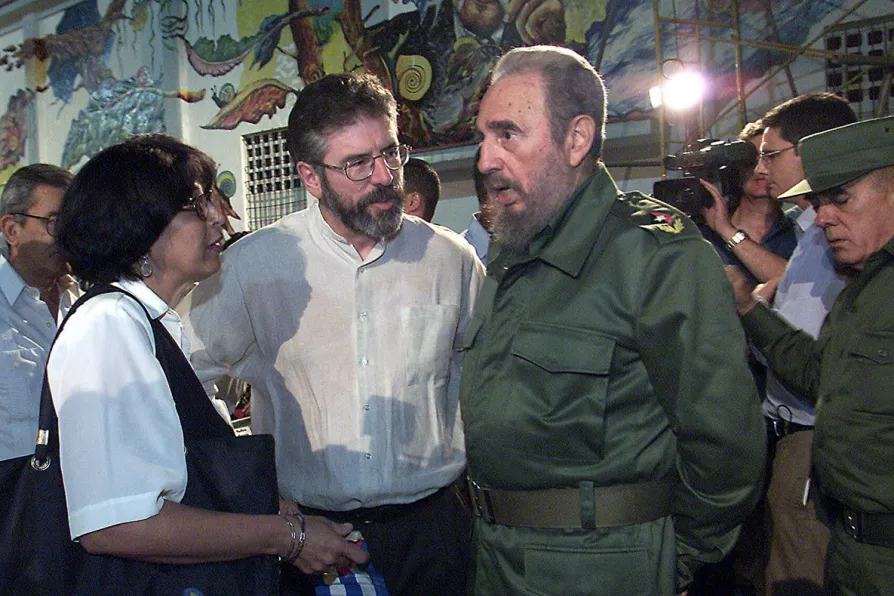
Twenty years later, when Irish delegations visited Havana in 2001, Fidel recalled the hunger strike in vivid detail; where he was, what he said, and why it mattered.
He spoke for hours about Ireland, about the peace process, about the Irish language, about agriculture, and about fishing.
He even asked to hear the Hail Mary prayer recited in Irish, responding with the Spanish version of Ave Maria.
And for years afterwards, he sent a Christmas card to the Irish Republican leader Gerry Adams – a small but unmistakable sign of genuine respect, affection, and fraternal solidarity.
Cuba has continued to honour the Irish struggle in its own landscape.
In 2001, a memorial to the 10 hunger strikers was unveiled in Parque Victor Hugo in central Havana, with full state honours.
It stands there still – testament to the bond between two peoples who know what it means to resist empire.
Fidel’s legacy is also etched into the streets of Old Havana.
On Calle O’Reilly, named after a Spanish-Irish governor, a plaque reads:
“Two island peoples in the same sea of struggle and hope.”
That inscription captures the essence of Fidel’s worldview:
- that the fight against imperialism is shared,
- that the oppressed recognise one another,
- and that solidarity is not an abstract slogan but a lived practice.
For anti-imperialists, Fidel Castro remains a towering figure – he proved that resistance is possible, that sovereignty can be defended, and that a different model of society can be built, even while under siege.
His legacy belongs not only to Cuba but to every people who have resisted domination – in our shared sea of struggle and hope!
Chris Hazzard is Sinn Fein MP for South Down.

Similar stories
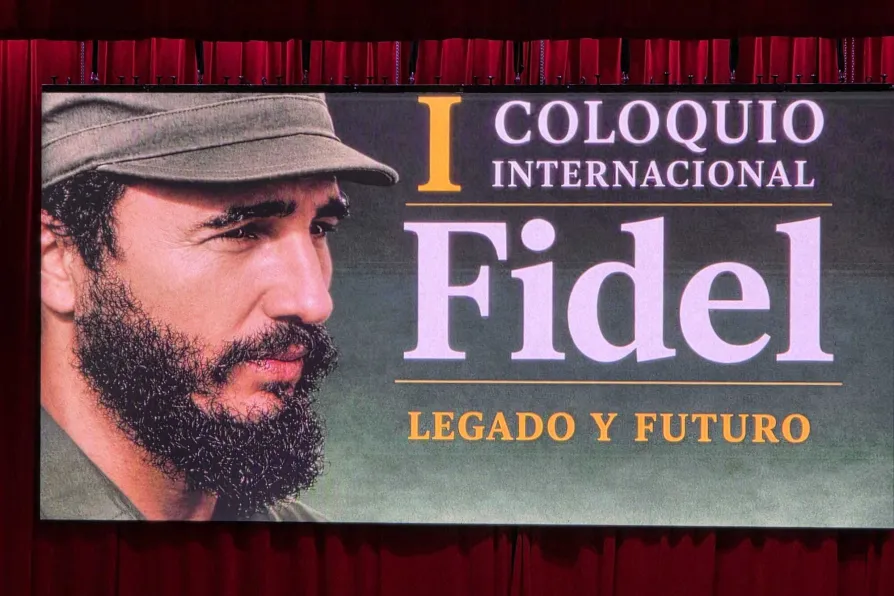
On its revolutionary founder’s 100th birthday, Cuba remains the revolution that ‘does not give up’ and socialism humanity’s only hope of avoiding the abyss
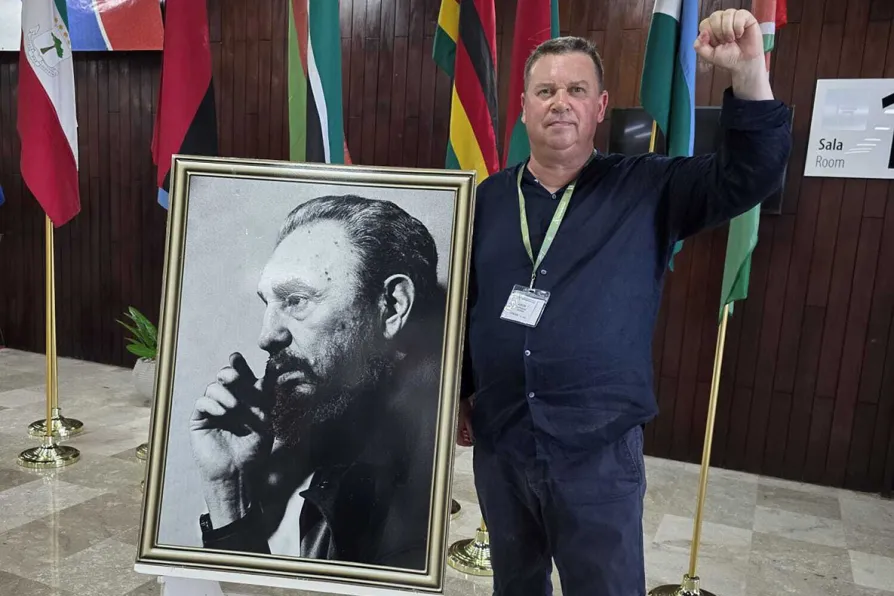
ALEX GORDON and LORRAINE DOUGLAS report from Havana, Cuba, where they represented the Communist Party of Britain at the 24th International Meeting of Communist and Workers’ Parties on August 7-8
JOE DWYER of Sinn Fein reflects on the links between the Irish and Cuban struggles for independence and on Castro’s personal engagement with the cause of Irish freedom
DR STEPHEN WILKINSON assesses the life and legacy of a revolutionary giant