

 Latest editorial

On its revolutionary founder’s 100th birthday, Cuba remains the revolution that ‘does not give up’ and socialism humanity’s only hope of avoiding the abyss





DIPLOMATS, activists and trade unionists will rally in London and around the world on Thursday in honour of Fidel Castro’s 100th birthday.
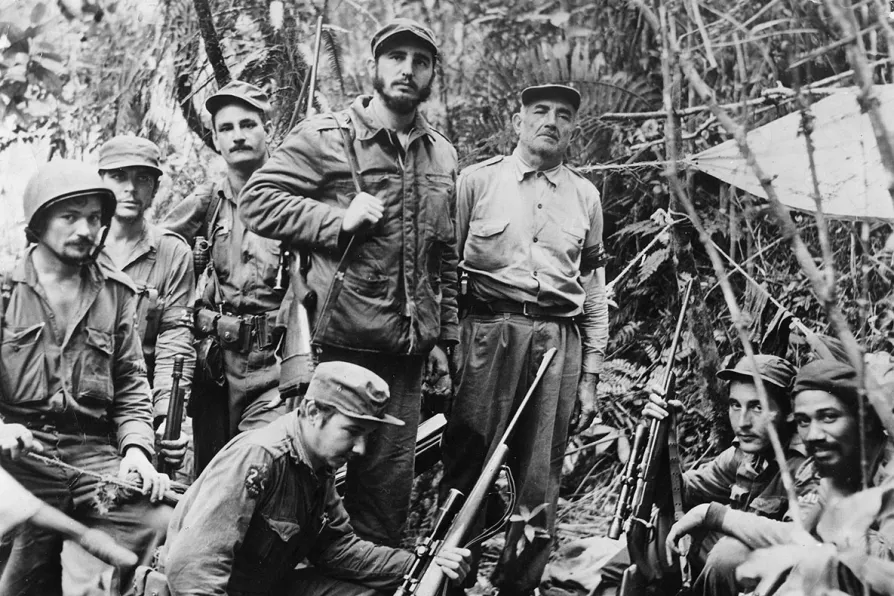
Tributes have flooded in for the Cuban revolutionary leader, who liberated his country from the Batista dictatorship and turned the Caribbean island into a beacon of internationalism and was a commanding figure on the world stage for over five decades, dying in 2016 aged 90.
Defending Castro’s legacy means defending a Cuban Revolution now under siege by the Donald Trump administration in the United States, which has imposed a total energy blockade with horrific human consequences following decades of illegal economic warfare, sweeping extraterritorial sanctions and terrorist attacks against Cuba, campaigners said.
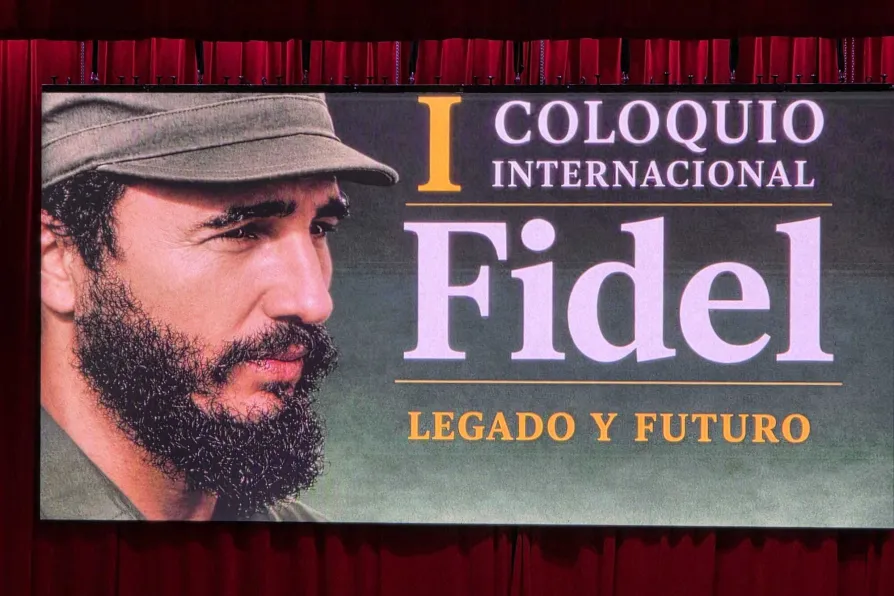
Supporters will gather at a Cuban embassy-arranged event at the National Education Union’s Hamilton House headquarters Thursday, while in Havana a four-day international conference, Fidel: Legacy and Future, enters its final day.
Former Labour leader Jeremy Corbyn, who will be addressing the London event, said Castro’s life “encompasses the movement from desperation to hope and from hope to achievement.”
He told the Morning Star he remembered the excitement of being told by his mother that “Fidel was in Havana” in 1959.
“I’ve got the utmost admiration for the Cubans, a people who despite everything the US has done to them achieved universal free education, universal free healthcare — no other country in the whole of the Americas has achieved that,” he said.
“They’re under the most disgraceful attack at the moment by the Trump administration — with the connivance of Britain and the European Union who aren’t sending the aid they could be. My message to [Foreign Secretary] Ed Miliband is — do something! Get aid to Cuba, because they need it.”
Cuban ambassador Ismara Vargas Walter noted that “the Cuba [Castro] helped to build is still standing strong” despite attempts to starve it into submission.
“It is a country that eradicated illiteracy within a year and has provided free healthcare and education for six decades despite facing hostility. It has also sent tens of thousands of doctors abroad in the internationalist spirit he championed.
“Cuba is under severe strain once again this year, particularly after the US administration tightened the blockade to an unprecedented level. Families are enduring rolling daily blackouts. Hospitals lack medicine. Tens of thousands of operations have been postponed as a direct result of the blockade, costing Cuba over $170 billion since 1960.”
The UN had consistently condemned the blockade, with the British government also voting to condemn it, she said.
“Fidel taught us that being an internationalist and showing solidarity means repaying our debt to humanity.”
Cymru Cuba chair Robert Griffiths told the Morning Star that “Fidel Castro survived countless US assassination attempts to make a super-human contribution to the worldwide struggle against exploitation and oppression. Hasta la victoria siempre!”
Welsh solidarity events on Thursday include a special screening of Moments with Fidel, a documentary about the Cuban leader, at Aradgoch in Aberystwyth.
In Havana, the Fidel: Legacy and Future conference attracted a large international audience, following on from the 24th International Meeting of Communist and Workers Parties held in the Cuban capital last week.
Cuban President Miguel Diaz-Canel, addressing over 1,500 academics, artists, social and political leaders and students from five continents in the opening session, thanked them for “coming to Cuba today, in the midst of the intensification of the blockade and imperial hostility — it’s a gesture of militant solidarity that honours Fidel.”
Since January, when the US bombed Venezuela and kidnapped its President Nicolas Maduro, killing 32 Cuban soldiers in the process, Washington has imposed sanctions on any country supplying oil to Cuba. Just a single tanker has reached its shores since that time, crippling the country’s electricity supply and severely affecting transport, healthcare and essential services and even food storage.
US President Donald Trump has also threatened military action against Cuba and claimed repeatedly its government is about to fall.
But President Diaz-Canel called on international guests to become “ambassadors of truth, witnesses that Cuba does not give up, fellow travellers of a revolution that transcends borders.”
He said the conference was held not from nostalgia but because “the thinking of Fidel Castro is still the most accurate compass we have to navigate the storm that the Cuban people are experiencing.”
He saluted “the brilliant lawyer who turned his self-defence into a political programme. The tenacious prisoner who defeated his jailers by turning prison into a school of combatants. The founder of an army of the people who defeated in two years a professional army several times its size — and the commander-in-chief who put Cuba on the map of the world and already had a place in history when, aged only 34 [in 1960], he shook the United Nations general assembly with the most important speech ever given there.”
Fidel had held firm to socialism through the era of neoliberal globalisation, which he early recognised as “the empire of death,” Mr Diaz-Canel said, and the Cubans would never forget the lesson that “socialism is the only way to save humanity from the abyss.”
He called for courage and confidence that the imperialist onslaught would be defeated: “The international order is in dispute. Imperial unilateralism seeks to impose its law by force, but the multipolar world is here to stay. However, the empire is stepping up its attacks.
“Cuba remains one of the favourite targets of imperial fury. It is no coincidence that in the year of Fidel’s centennial, Washington has intensified its offensive.
“Solidarity must be translated into concrete actions,” he urged, including campaigns to lift the blockade and to increase scientific, cultural and trade links with Cuba.
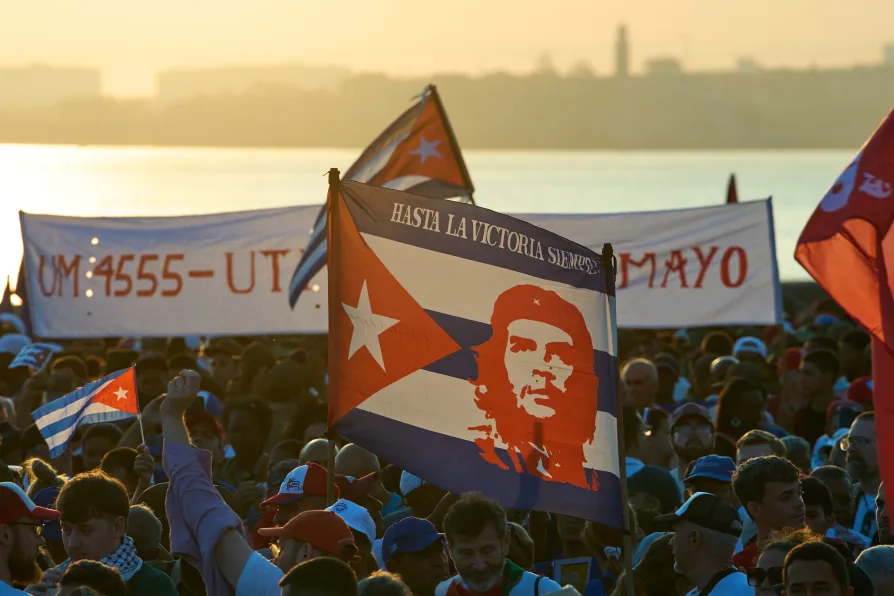
Mr Diaz-Canel ended with words from Castro himself: “If others compromise, if others allow themselves to be bribed, if others betray, Cuba will know how to remain an example of a revolution that does not give up, that does not give up, that does not give up — that does not get on its knees.”

ALEX GORDON and LORRAINE DOUGLAS report from Havana, Cuba, where they represented the Communist Party of Britain at the 24th International Meeting of Communist and Workers’ Parties on August 7-8
by Her Excellency Ismara Mercedes Vargas Walter, Ambassador of the Republic of Cuba to the United Kingdom
On the centenary of Fidel Castro’s birth, Communist Party international secretary KEVAN NELSON salutes the ongoing example of a revolutionary people facing a brutal US siege