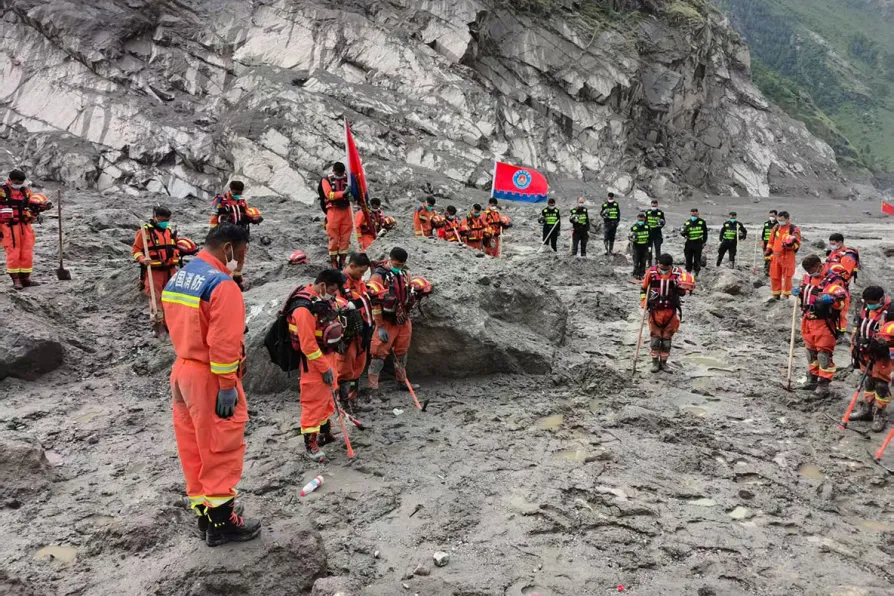
 Rescuers observe a moment of silence for the victims of the August 26 mudslide near the Gyirong Port in Gyirong County, southwestern China's Tibet Autonomous Region, September 1, 2026






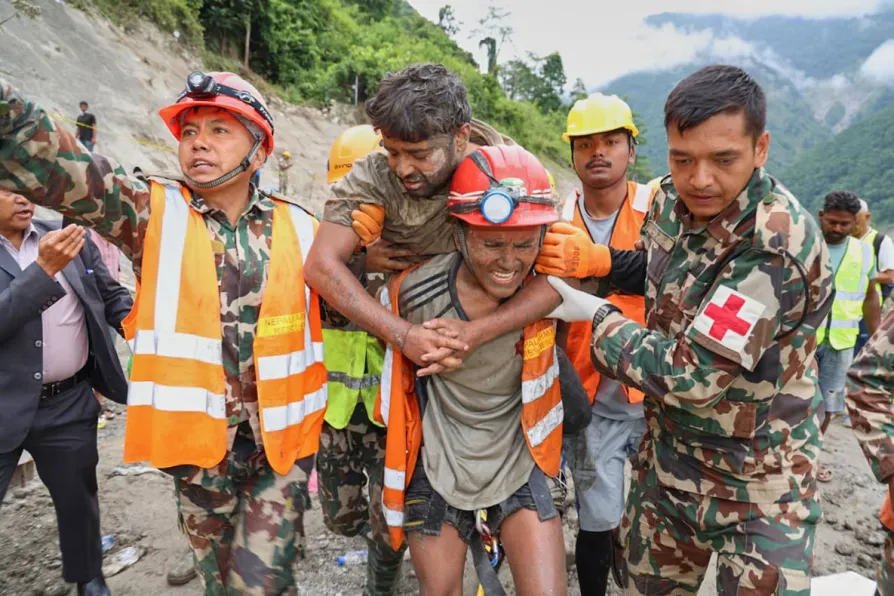
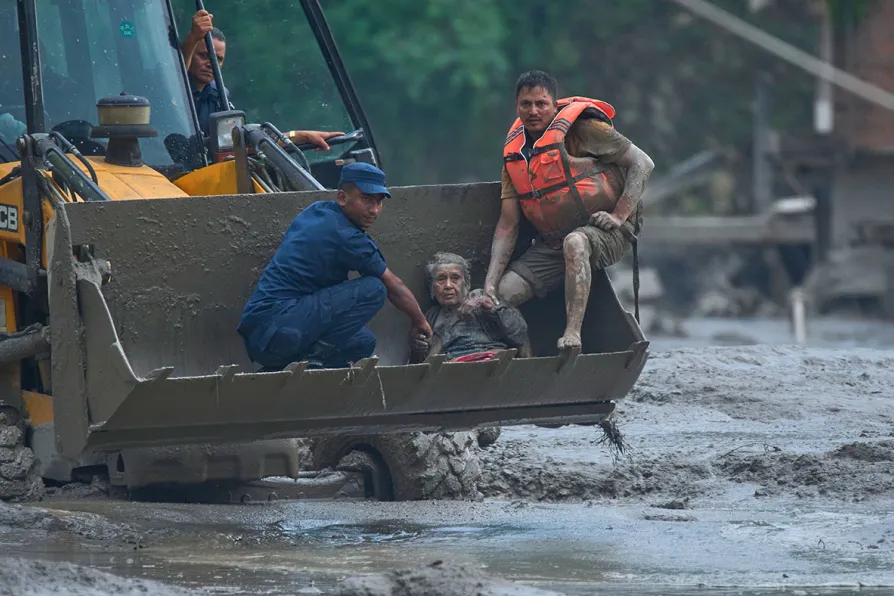
RESCUE teams with search dogs combed through mud, rocks and debris in Nepal and China today looking for thousands of people still missing after catastrophic flooding tore through communities across the Himalayas, leaving more than 1,000 dead.
Nepal’s disaster agency said today that 987 deaths had been counted there, with 3,916 people missing, including 583 foreigners.
In their latest update on Sunday, Chinese authorities reported 16 deaths and 546 people still missing, including 261 foreigners.
The scale of last week’s disaster was hampering rescue efforts in both regions, with landslides, destroyed roads and widespread damage cutting off remote areas.
Crews faced challenging conditions as they searched unstable terrain and piles of debris, raising fears the death toll could rise as rescuers reach isolated communities.
In Nepal, rescuers were racing to reach hundreds of workers believed to be trapped inside tunnels at hydropower projects damaged by the floods.
About 900 workers are missing from 12 projects, with roughly 500 believed to be trapped in tunnels, according to Nepalese authorities.
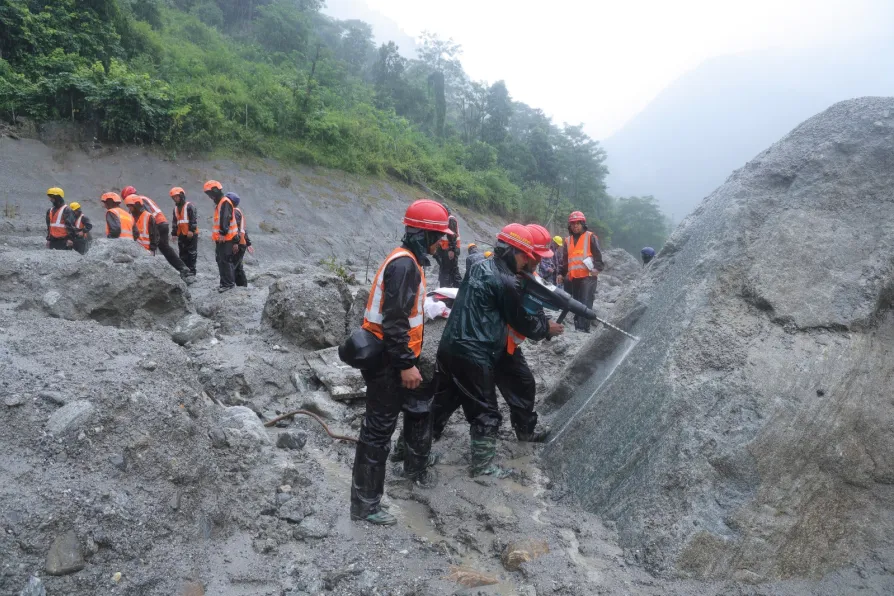
On the Chinese side, rescue crews scoured areas hit by mudslides, particularly around the Gyirong Port border crossing, which was destroyed.
Some rescuers, aided by search dogs, searched gaps among rocks and debris for signs of life. Other teams used heavy machinery to clear a major highway leading to Gyirong Port, hoping to clear the way for equipment, personnel and supplies to reach the disaster zone, according to China’s Global Times newspaper.
Chinese Foreign Ministry spokesperson Guo Jiakun said China’s second batch of relief supplies for Nepal was expected to ship today, including drones, DNA testing and water purification equipment.
Chinese DNA testing experts will also help Nepal identity bodies, he said.
Bimal Sharma, a helicopter pilot who has been flying rescue and relief missions since the disaster began, said: “It felt like I was flying over an entirely different landscape.”
Mr Sharma said he has had little opportunity to speak with the people he rescued, but “I can see the pain in their eyes. It’s heartbreaking,” he said.
The August 26 disaster began with a chain of events high in the Himalayas.
A glacial collapse sent large amounts of rock, ice and meltwater into valleys below, triggering powerful floods downstream.
The rockfall was powerful enough to register as a magnitude 5.2 seismic event.
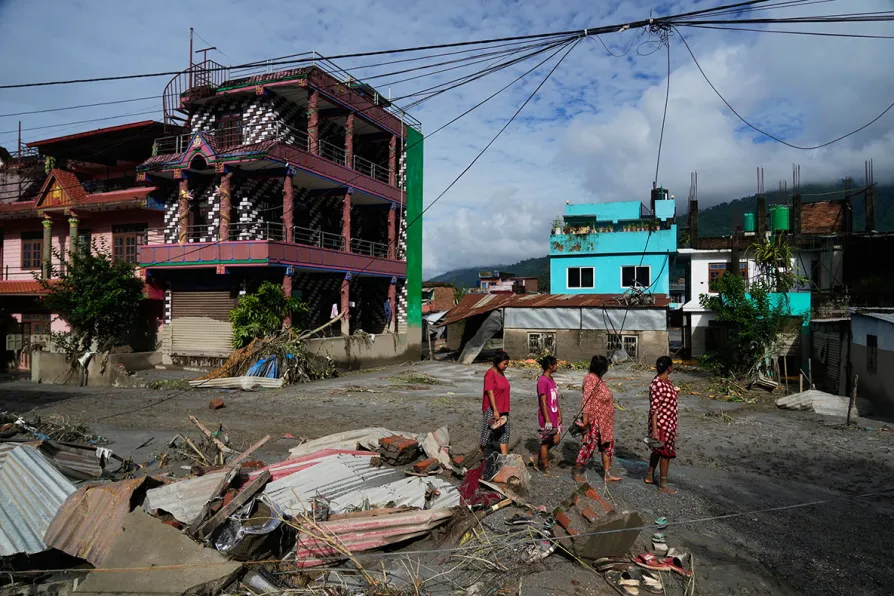
The resulting surge of water and debris swept away people, homes, buildings, roads and bridges.