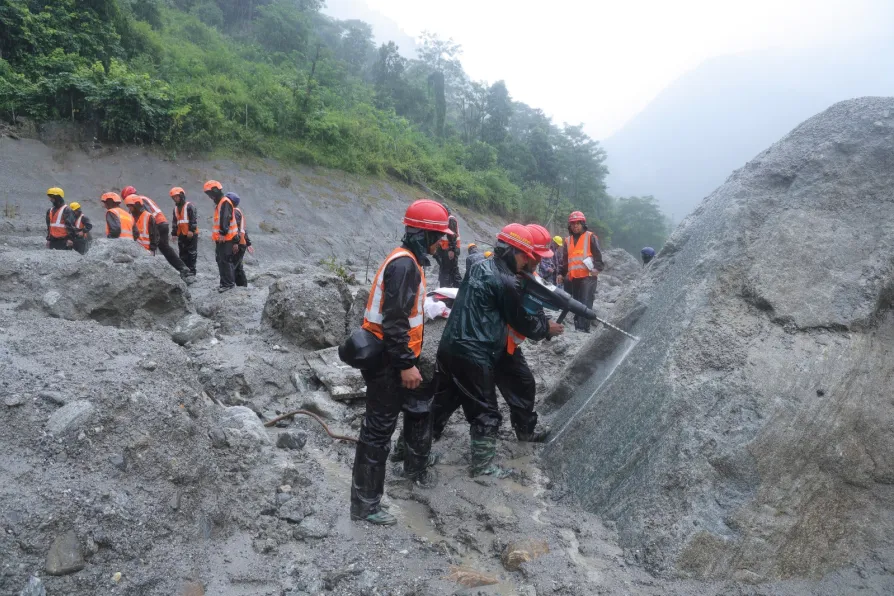
 Nepal army soldiers using a drilling machine during a rescue operation at the site of a hydropower project in Upper Trishuli, Nepal, August 30, 2026






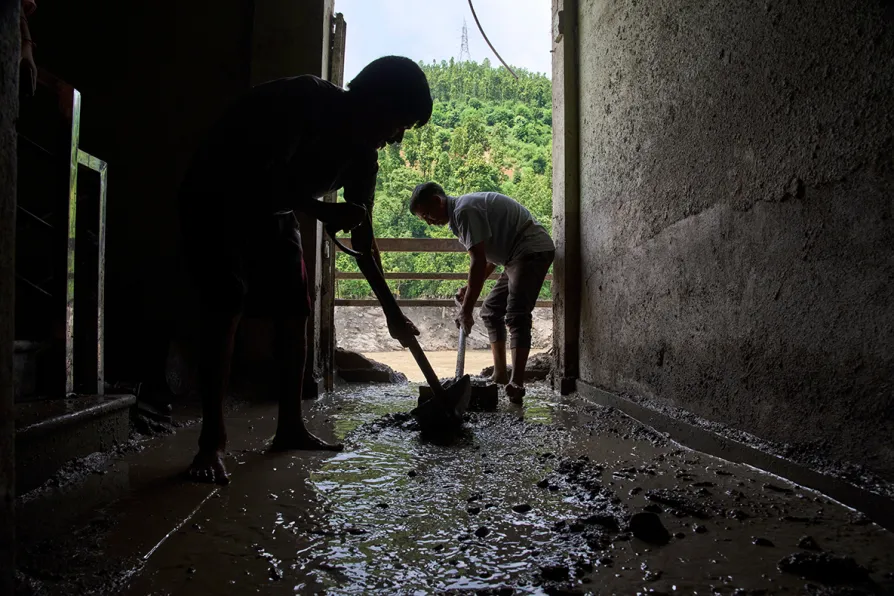
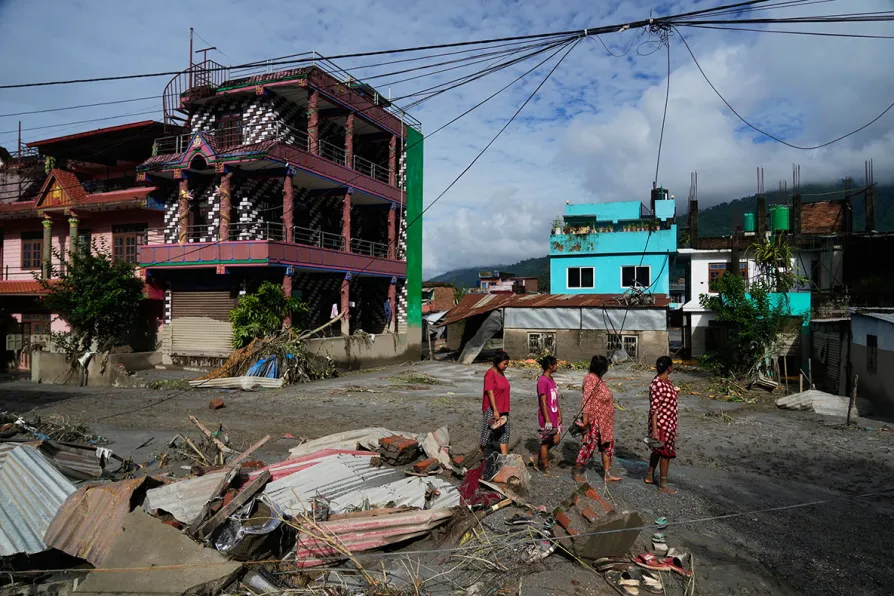
RESCUERS were trying to find trapped workers in at least a dozen hydroelectric plant sites today as the death toll from Nepal and Tibet’s catastrophic flooding continue to climb to over 900 people, with more than 4,700 missing.
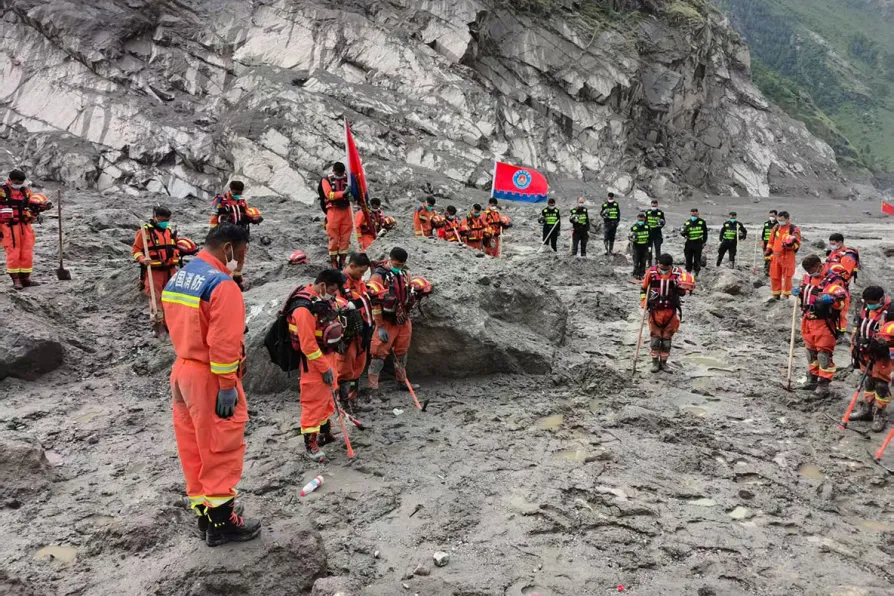
Multiple foreign teams joined local rescuers to search for workers in multiple tunnels at Nepal’s power plants on the rivers that flooded last Wednesday.
Mohan Kumar Dangi, president of the Independent Power Producers Association of Nepal, or IPPAN, said the floods damaged at least 12 hydropower projects across Rasuwa and Nuwakot districts and about 900 people were missing from the project sites.
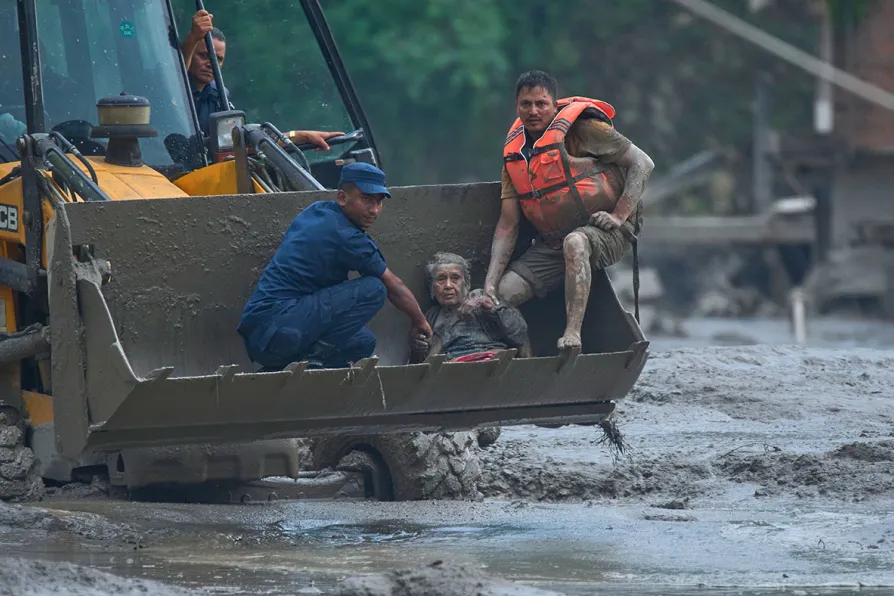
“We are working in search and rescue of the stranded people from hills, settlements and river areas,” said Brigadier General Raja Ram Basnet, Nepal’s army spokesman.
Nepal’s disaster agency said today that 903 deaths had been counted in that country, with 4,247 people, including 592 foreigners, missing.
As of Sunday, Chinese authorities reported 16 deaths and 546 missing, and Chinese media said 261 of the missing were foreigners, including over 100 Nepalis.
Rescue efforts are focused on people trapped in the gigantic tunnels built for controlling the waterflow to produce hydropower.
The tunnels are built to access hydropower infrastructure and to divert water — an essential step to generate energy.
No survivors have been found on the Tibetan side of the border since the end of last week and the chances of finding anyone else alive are reducing.
But emergency teams are still working using ropes, rapelling down the sides of collapsed mountains, crawling through mud, calling out people’s names, even though they’re not finding anyone, according to officials on the spot.
On the Chinese side, rescue and recovery efforts included rebuilding the road leading to Gyirong Port at the border between China and Nepal.
Trucks carried giant rocks as workers worked on repaving a portion of the road, broadcaster CCTV showed today, next to rapidly rushing waters, which have been made more powerful by rains in the past couple of days.
Wednesday’s flash floods started after a glacial collapse high in the Himalayan region.
Scientists who studied satellite images said bedrock underneath a glacier high in the Himalayan region had collapsed, taking part of the glacier with it. The rockfall was so extreme that it registered as a magnitude 5.2 seismic event.
The rocks and melted water then swelled the rivers in the valleys below, causing a torrent of water that swept buildings, bridges and earth downstream in Tibet and Nepal.