Committee for the Defence of the Iranian People’s Rights general secretary GAWAIN LITTLE discusses the impact of the US-Israeli war on the Iranian people and economy


 Latest editorial

Fidel Castro and Ireland: an anti-imperialist friendship
JOE DWYER of Sinn Fein reflects on the links between the Irish and Cuban struggles for independence and on Castro’s personal engagement with the cause of Irish freedom
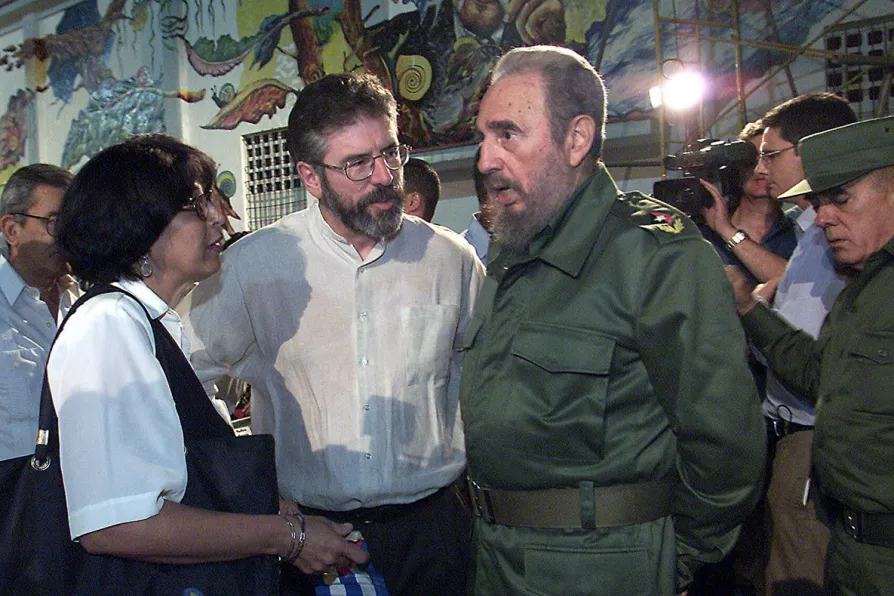 Then Sinn Fein President Gerry Adams (centre) with Cuban Leader President Fidel Castro (right) at the opening of a school in Havana, December 2001
Capitalism has extracted itself from crisis before, argues PRABHAT PATNAIK – but through methods no longer available. So it is turning to authoritarianism, militarism and neocolonialism
The five young men killed in the A66 crash were responsible for a devastating tragedy — but the crash should force us to ask difficult questions about wider society, argues RENATA MEDEIROS MIRRA
Britain funds the policing of black culture 16 times better than the culture itself. The Diamond Jubilee is the moment to end that, argues CLAUDIA WEBBE
Despite Andy Burnham’s declaration defending the continued partition of the island, all major international and internal trends are converging to make Irish reunification inevitable
Humans are part of the ‘animal kingdom’ – and of nature in general – but also distinct from it and labour (work) is part of what makes us unique, declared Engels. His insights 150 years ago into how our species came to be and how we differ from the rest of nature, are as important today as they were then, says the MARX MEMORIAL LIBRARY





TODAY marks the centenary of the birth of Fidel Castro, the Cuban revolutionary who led the Cuban people for nearly half a century. Condemned in life by the Western establishment, he was equally celebrated by liberation struggles and anti-colonial movements the world over. None more so than the freedom struggle in Ireland.
Just as he famously predicted, in death, Castro has been absolved by history and is widely remembered today as the anti-imperialist liberator who toppled the brutal, US-backed Batista dictatorship and forever transformed Cuban society through the introduction of universal healthcare and free education. All while he simultaneously defended Cuban sovereignty against US intervention and championed revolutionary struggles across the globe.
During his 1991 visit to Havana, the recently freed Nelson Mandela praised Cuba’s military intervention in Angola for destroying “the myth of the invincibility of the white oppressor” and giving momentum to South Africa’s anti-apartheid struggle. When Western commentators subsequently criticised Mandela for this embrace of Castro’s Cuba, the South African leader pointedly replied that “one mistake some political analysts make is thinking their enemies should be our enemies.”
It is in this same spirit of international solidarity that Irish republicans today honour the legacy of El Comandante Fidel Castro.
A shared history of struggle
Ireland and Cuba share a long — almost parallel — history of struggle.
Two small island nations living in the shadow of major imperial powers. Two peoples that have had to battle for centuries, to assert their right to national sovereignty and cultural identity.
It is a historical mirror that even endures into the modern era, as both nations continue to see their colonial neighbour occupying a portion of their national territory, namely; the six northern counties of Ireland and Cuba’s Guantanamo Bay.
When Winston Churchill first visited Cuba in November 1895, as a young war correspondent, he immediately grasped the colonial comparison.
As he later wrote of his Spanish hosts: “The Chief of the Staff, Lieut Col Benzo, for instance, on one occasion referred to the war ‘which we are fighting to preserve the integrity of our country.’ I was struck by this. I had not, no doubt owing to my restricted education, quite realised that these other nations had the same sort of feeling about their possessions as we in England had always been brought up to have about ours. They felt about Cuba, it seemed, just as we felt about Ireland. […] Hitherto I had (secretly) sympathised with the rebels, or at least with the rebellion; but now I began to see how unhappy the Spanish were at the idea of having their beautiful ‘Pearl of the Antilles’ torn away from them, and I began to feel sorry for them.”
This connection had been identified decades previously by Irish republicans. Perhaps most notably by JJ O’Kelly and his 1874 work The Mambi-Land, or Adventures of a Herald Correspondent in Cuba — one of the era’s most celebrated accounts of Cuba’s Ten Years’ War.
O’Kelly, who had been a leading Fenian with military experience in the French Foreign Legion, was serving as a journalist when he successfully infiltrated a liberated zone governed by the renowned Cuban republican General Carlos de Cespedes, in 1873.
Unfortunately, upon re-entering Spanish-controlled territory, O’Kelly was promptly arrested and imprisoned by the Spanish authorities. His capture and threatened execution quickly escalated into an international cause celebre, prompting US and Cuban advocates to lobby the White House directly on his behalf.
A short-lived republican take-over in Spain spared his life and O’Kelly was shipped to a Madrid prison, where he was eventually released. He would ultimately return to Ireland where he would become a Parnellite Member of Parliament.
Fidel Castro did not forget this historic bond. In 1968, to mark the centenary of the Ten Years’ War, he ordered a fresh reprint of O’Kelly’s The Mambi-Land. This new edition included an extensive look at JJ O’Kelly’s life, written by Fernando Ortiz, seminal figure in Afro-Cuban scholarship.
The Ten Years’ War served as a massive inspiration to Fidel Castro and his generation of revolutionaries. As he once put it, “That’s where we say the Revolution began. For us, the great struggle began at that point, and it went on for 10 years!”
Irish-Cuban connections
In the history of Cuban revolutionary leaders, the immediate precursor to Castro was Antonio Guiteras, who was himself a spiritual descendant of Jose Marti. As a keen student of history, Castro would have undoubtedly known that Guiteras was born in Pennsylvania to an Irish-American mother, Marie Therese Holmes.
A woman of profound conviction who instilled in her young son a fierce commitment to national sovereignty, drawing inspiration from her reading of the history of her ancestral homeland.
Castro would have been equally aware that his close friend and comrade, Che Guevara, also boasted a proud Irish lineage. As Che’s father, Ernesto Guevara Lynch once put it, in conversation with his son’s biographer Iosif Lavretsky: “In order to understand how my son became Major Che, one of the leaders of the Cuban Revolution, and what led him into the Bolivarian mountains, we have to look into the past and find out something about our family ancestors.
“The first thing to note is that in my son’s veins flowed the blood of the Irish rebels, the Spanish conquistadores and the Argentinean patriots. Evidentially Che inherited some of the features of our restless ancestors.”
Having successfully overthrow the Cuban dictatorship of Batista, Che Guevara was executed in Bolivia on October 9 1967 as he attempted a similar insurrection there. His untimely death would coincide with the beginnings of a resurgence of revolutionary fervour in the land of his forebears, where the nationalist population of the six counties were beginning to mobilise for change.
Castro and the Irish Struggle
Following Castro’s death in late 2016, then Sinn Fein president Gerry Adams defended the Cuban revolutionary’s support for Irish republicanism, noting: “Those who criticise him from within the Irish establishment need to be mindful that he did more advocacy work for Irish unity than any Taoiseach.”
The historian Tim Pat Coogan corroborated this sentiment, writing in 2002 that Irish diplomats had privately confided to him that Castro was “known to display admiration for Ireland’s struggle for independence.”
This admiration was most keenly demonstrated during the height of the H-Block hunger-strike of 1981.
In his address to the 68th Inter-Parliamentary Conference in Havana, on September 15 1981 — just 26 days after the death of hunger striker Mickey Devine — Castro said: “In my opinion, Irish patriots are writing one of the most heroic chapters in the history of mankind. They have earned worldwide respect and admiration, and likewise deserve the fullest support.
“Ten of them have already died in the most moving gesture of sacrifice, selflessness and courage one could ever imagine. Mankind should feel ashamed that this terrible crime be committed before its very eyes. These young fighters do not ask for independence nor make impossible demands to put and end to their strike; they ask only for something as simple as the recognition of what they actually are: political prisoners.
“The stubbornness, intransigence, cruelty, and insensitivity of the British government before the international community concerning the problem of the Irish patriots and their hunger strike till death remind us of Torquemada and the atrocities committed by the Inquisition during the apogee of the Middle Ages.
“According to the legend, in its early days, Rome was once besieged. Two young Roman soldiers had been made prisoners. When, in an attempt at curbing them, the besiegers threatened to burn them alive they spontaneously put their hands in the flames to show their contempt. It is said that their gesture impressed the enemy so much that the siege of Rome was lifted.
“Let tyrants tremble before men capable of dying for their ideals after 60 days of hunger strike! What were Christ’s three days in the Calvary, an age-old symbol of human sacrifice, compared to that example?”
As Gerry Adams later remarked, Castro spoke “more eloquently and more often than any Irish government on the struggle of the men and women political prisoners in Armagh women’s prison and in the H-Blocks.”
It was certainly an event that Castro returned to. In his conversational autobiography, My Life, he reminds his Spanish interviewer, Ignacio Ramonet, how “you people over there in Europe have very strict, very harsh laws, much more severe than ours, against political crimes.
“In England, the jails are full of Irish prisoners who had political, and patriotic motives. I remember there was a hunger strike once in which the English let several Irish prisoners die.”
Castro himself only visited Ireland once, during a brief stopover at Shannon Airport, on November 17 1982, following the funeral of Leonid Brezhnev in Moscow. As his Aeroflot plane refuelled, the Cuban president disembarked from his plane to enjoy an Irish coffee and mingle with Irish passengers.
Speaking to waiting media, he addressed the sympathy that he had felt at for the hunger strikers the previous year, remarking: “Some people thought I did wrong when I called them patriots. As far as I am concerned, whoever fights for his ideals or for his or her homeland is a patriot and there is no doubt about it and it is with this I express my sympathy.”
During this brief — but historic — visit, he sparked some alarm for Irish officials behind the scenes.
Having tasted Irish products first hand, he suggested to Dublin’s junior finance minister Sylvester Barrett, that trade relations be developed between Ireland and Cuba.
An internal government memo would later advise that “the minister of state responded in a non-committal manner.” (A Fianna Fail minister being “non-committal?! Quelle surprise!)
Nineteen years later, in December 2001, a Sinn Fein delegation — led by Gerry Adams and Gerry Kelly — travelled to Havana to unveil a monument in Parque Victor Hugo commemorating the H-Block hunger-strikers.
On the first night of the visit, the delegation attended a 2,000-strong outdoor education rally, addressed by El Comandante. Following his address, Castro met the delegation and embraced Gerry Adams live on Cuban television.
The following day they met again in Fidel’s private office, where the delegation and the Cuban leader conversed for five-and-a-half hours.
As Gerry Kelly later reflected: he was very conversant with the Irish question and we talked about being ex-prisoners.
“I told him he was the only world leader who had stood up for the hunger strikers and spoke out in support of them and he suddenly became very animated.
“He told me in great detail about what he had said about Bobby Sands and where he was when he said it.
“He told us he thought of the hunger strikers as men of great sacrifice. […] Over a long period of time we covered everything from agriculture to trade and the issues of colonialism. He was very friendly and had a huge intellect.”
In a similar vein, Gerry Adams recalled: “In our conversations he was funny, relaxed, and knowledgeable of world affairs and of events in the Irish peace process.
“He was as committed to the principles of the Cuban revolution 60 years later as he had been in the 1950s. He was self-effacing in his humour, totally relaxed and very focused.
“He asked us many questions about Ireland. From the state of our fishing industry, our farming, as well as about unionism. He wanted to hear the sound of the Irish language so he asked that I recite the Hail Mary in Irish while he recited it in Spanish.
“He also said that following the September 11 attacks in the United States that no progressive struggle would be won by armed actions. They could only be won by the power of ideas and the mobilisation of people.”
A small measure of his continued solidarity with Ireland was that he sent Gerry Adams a Christmas Card for every year that followed that visit.
To this day Sinn Fein’s solidarity with Cuba continues. Sadly, since January 2026, an escalated US embargo again Cuba, specifically targeting oil imports, has pushed the country into a deep humanitarian crisis.
Essential services like water, health, and electricity have collapsed and left millions of ordinary Cubans in a state of emergency.
Just as Fidel once sent his solidarity to the Irish people at a time of hardship, now it is the Cuban people who urgently require Irish solidarity.
In the heart of Old Havana lies Calle O’Reilly, a commercial street named after the Irish-born Spanish Governor Alejandro O’Reilly, who assumed power over the island following the British withdrawal in 1763.
Despite these colonial origins, however, the street has also become a marker for the anti-colonial ties that unite Ireland and Cuba.
On the side of a wall, written in Spanish, English, and Irish, a simple plaque reads: “Cuba and Ireland: Two island peoples in the same seas of struggle and hope.”
It is with that sentiment that we celebrate the legacy of Fidel Casto. In struggle and hope.
Joe Dwyer is Sinn Fein London office manager and senior researcher for Sinn Fein MPs since 2016.

Similar stories
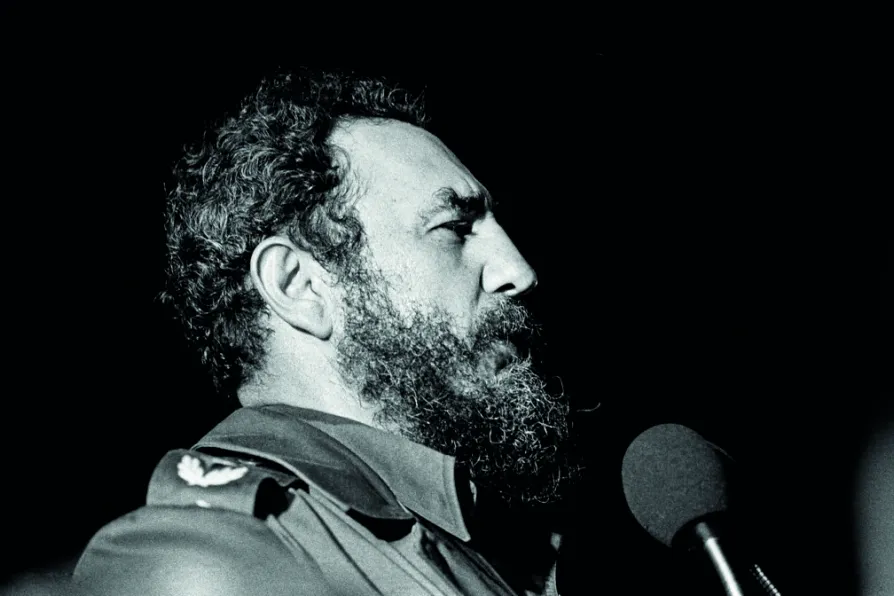
Although separated by an ocean, the two islands share deep historical bonds of anti-imperialist solidarity, writes Chris Hazzard MP
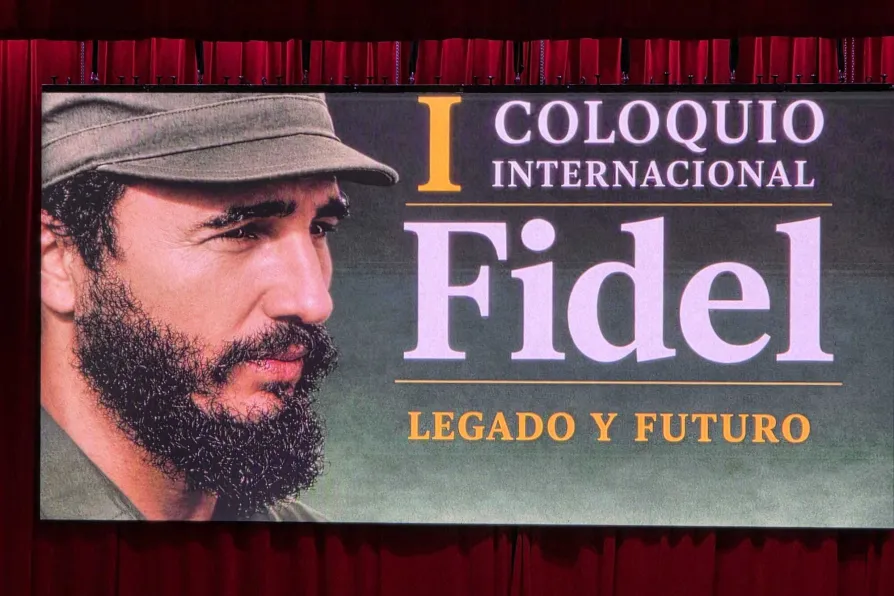
On its revolutionary founder’s 100th birthday, Cuba remains the revolution that ‘does not give up’ and socialism humanity’s only hope of avoiding the abyss
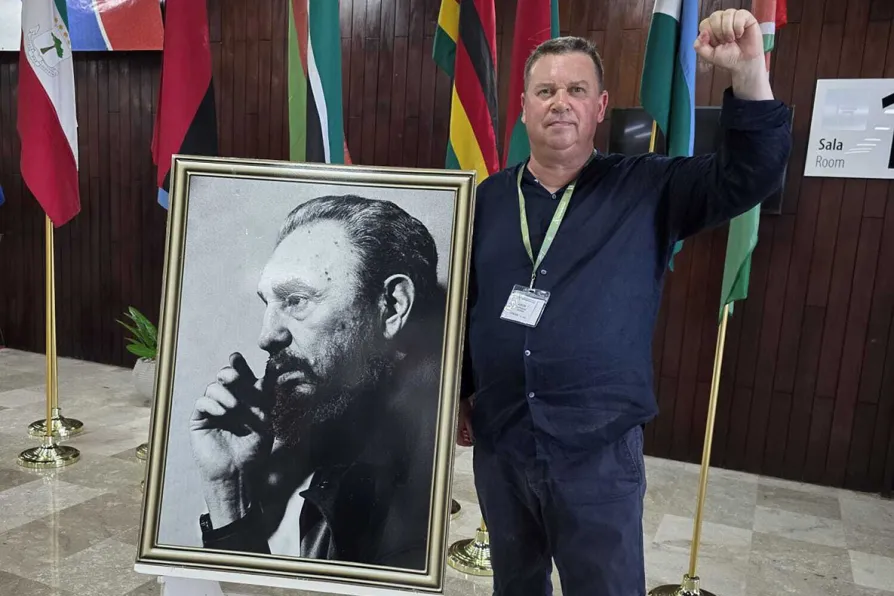
ALEX GORDON and LORRAINE DOUGLAS report from Havana, Cuba, where they represented the Communist Party of Britain at the 24th International Meeting of Communist and Workers’ Parties on August 7-8
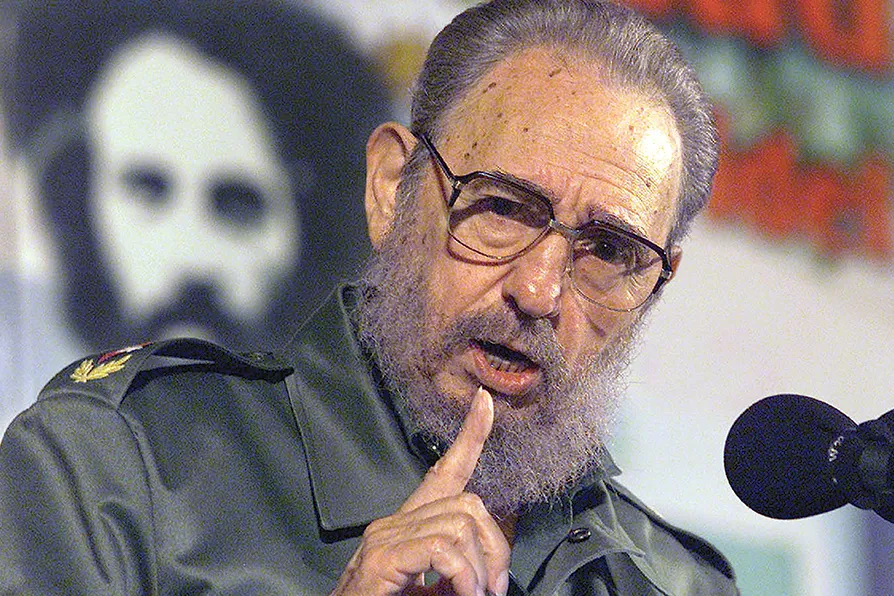
DR STEPHEN WILKINSON assesses the life and legacy of a revolutionary giant