MARIA DUARTE recommends a remarkable study of the friendship between a Palestinian and a Pakistani, broken by a hostile state


 Latest editorial

Film round-up: May 14, 2026
MARIA DUARTE and ANGUS REID review Northern Soul: Still Burning, The Christophers, Orphan, and My Father’s Diaries
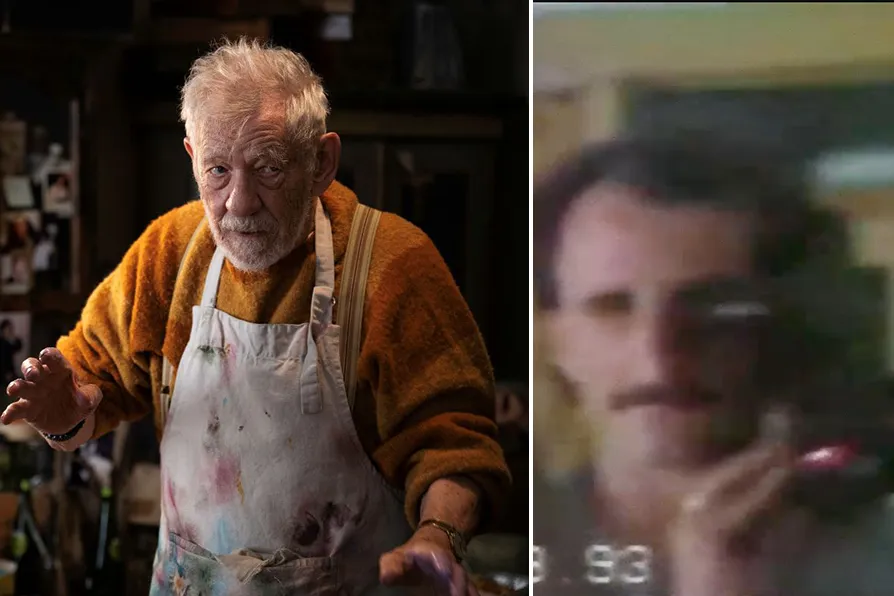 (L) Ian McKellen in The Christophers; (R) Bekir Hasanovic in My Father's Diaries [Pics: IMDb; Courtesy of Ado Hasanovic]
MATTHEW HAWKINS rakes through un-fancy words and flair-free summaries to find who and what might be flamboyant
PETER MASON is exhilarated by an exciting, well-considered and historically minded tribute to the great Trinidadian instrument
Reducing historical lives to ‘male’ and ‘female’ roles, we lose the nuance of those lives and a clearer understanding of past societies, suggests CLAIRE ISABELLA GILMOUR
CHRIS SEARLE relishes the genius of pianist Alexander Hawkins, his many ensembles, and his new album





Northern Soul: Still Burning (15)
Directed by Alan Byron
⭑⭑⭑⭑☆
“NORTHERN SOUL was a combination of four things — the music, the dancing, the fashion and the drugs. Take one of them away and it wouldn’t have been a subculture,” states broadcaster Paul Mason in Alan Byron’s joyous documentary celebrating this working-class music phenomenon.
It started in the late ’60s and really took off in the 1970s at Wigan Casino, which became the Mecca of this underground movement. Young people would travel from across Britain, from as far away as Scotland and Cornwall, to attend the amphetamine-fuelled all-nighters. It was the only way to stay awake and keep dancing through the night.
Byron’s film follows on from his 2012 documentary, and charts how this working-class musical and cultural movement has kept burning over six decades and is still thriving today.
It features interviews with former Wigan Casino regulars as well as some of the DJs who played there, plus the likes of Mason and Tony Blackburn. The revelation is that there were more men than women on the dance floor and they weren’t there to hook up but to enjoy the music. From the film footage you see the sweat pouring off them. They reveal how it felt a very inclusive and safe space.
Their love and passion for northern soul is infectious and uplifting.
MD
In cinemas May 15.
The Christophers (15)
Directed by Steven Soderbergh
⭑⭑⭑☆☆
SIR Ian McKellen and Michaela Coel play a stunning two-hander in this understated yet acerbic dark comedy directed by Steven Soderbergh.
The film follows an art restorer/painter (Coel) who is hired by the two estranged children (James Corden and Jessica Gunning) of a once famous artist (McKellen) in the ’60s/’70s to complete a series of his unfinished paintings called The Christophers so they can have a large inheritance when he dies.
This is Soderbergh’s fourth collaboration with writer Ed Solomon and proves a superlative showcase for McKellen’s extraordinary acting prowess, while Coel holds her own opposite her formidable co-star.
The film, which seems more like a stripped-down play, explores a conflicted relationship between the ageing recluse and the young painter/forger. McKellen’s Julian Sklar is facing death and struggling with a lifetime of regrets as he leads a lonely and forgotten existence.
This is worth seeing for McKellen alone.
MD
In cinemas May 15.
Orphan (15)
Directed by Laszlo Nemes
⭑⭑⭑☆☆
SET in 1957 Hungary, in the aftermath of the failed uprising against the Soviet regime, a young Jewish boy finds his world come crashing down when he discovers who his real father is in co-writer director Lazlo Nemes’ most personal film to date.
Based on his own father’s childhood in 1950s Budapest, it is seen through the eyes of 12-year-old Andor (newcomer Bojtorjan Barabas). He idolises his dead dad, but when a violent stranger rocks up claiming to be his biological father, Andor loses his mind as he realises his mother has been lying to him.
He also learns what she had to endure at this monster’s hands in order to survive the war and the Holocaust. Fuelled with rage, Andor either rebels and gives into this darkness or he accepts his new reality, mirroring the Hungarian people’s options at that time.
But the film lacks analysis and historical context, and isn’t one of Nemes’ most memorable works.
MD
In cinemas May 15.
My Father’s Diaries
Directed by Ado Hasanovic
⭑⭑⭑⭑☆
THE trauma of genocide underlies every second of Ado Hasanovic’s extraordinary film about his parents, who survived life in the Srebrenica enclave and the subsequent massacre.
Encircled, isolated and holding out for three years, from 1992-95, Ado’s father Bekir acquires a cheap video camera, and the population turn to it to transmit messages to family members that have fled. They do so with matter-of-fact clarity and, rewatching the footage, Bekir observes that 90 per cent of these men were killed.
The conditions in the enclave were desperate — overcrowded, short of food and fuelled by militaristic machismo, all captured by Bekir’s artless camerawork and gritty sense of humour. But when Ado tries to interview him 20 years later the cheerful determination has vanished and his father is effectively muted by survivor’s guilt, unwilling or unable to recall the events and, in the course of filming he dies, his secrets undisclosed.
But Ado persists and astonishingly, it is his mother who emerges from behind the many men as the earthy and grounded symbol of dignified continuity and hope.
Some 8,000 men and boys were murdered when the enclave was emptied in July 1995. This film is not just essential documentation of how Bosnians lived through the darkest chapter of the war, but an emotional and entirely convincing portrait of a particular people and the painfully strained, and yet positive family relationships that survive it. As such, it has an overwhelming contemporary relevance.
AR
Streaming on True Stories from May 15.
