
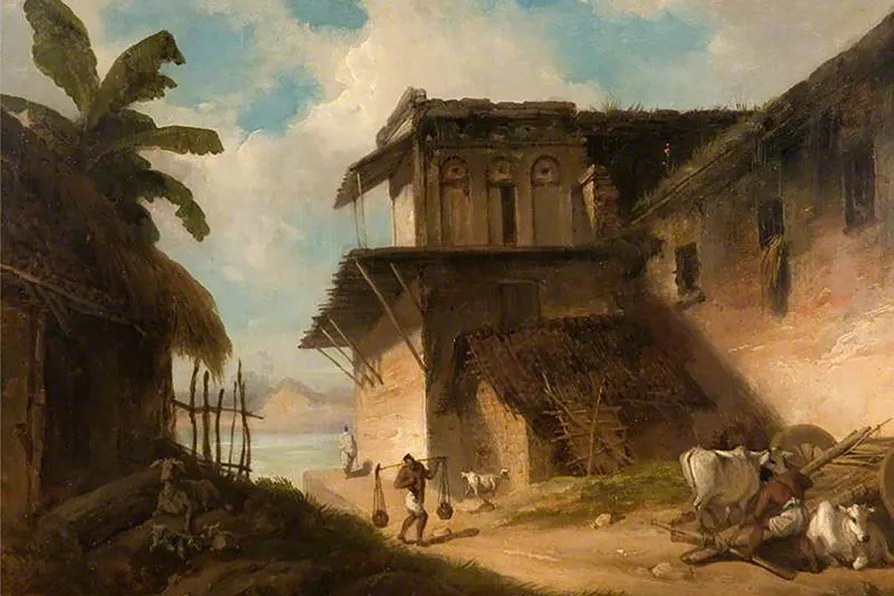
APURBA CHATTERJEE explains how British artists in India used the “picturesque” to reshape colonial landscapes and celebrate imperial power


The enigma of stillness
MATTHEW HAWKINS considers the opening offering at the National Festival of Korean Dance
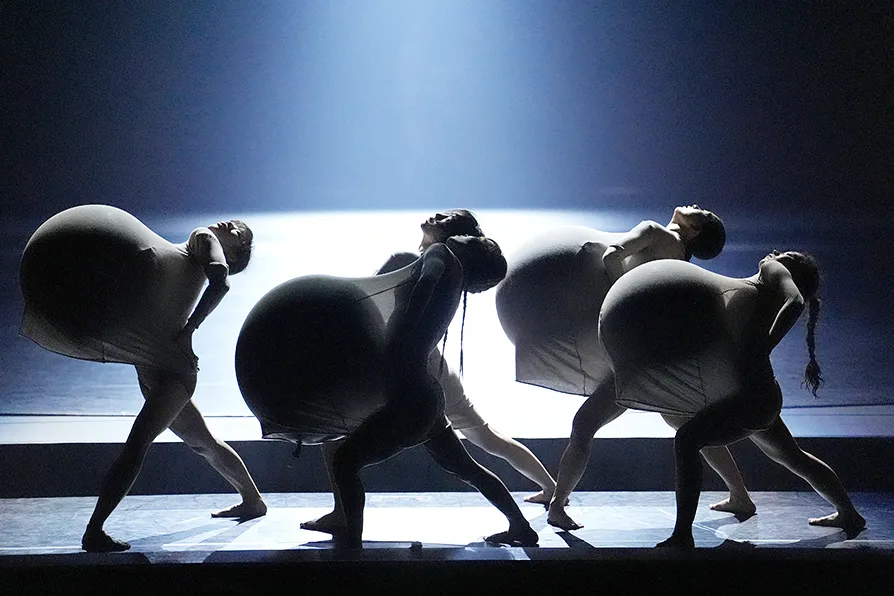
 Ryu and Friends, Gravity [Pic: Sang Hoon Ok]
PAUL DONOVAN welcomes a revival of Reginald Rose’s classic play that reminds us of the fundamental need for trials with juries
SIMON PARSONS applauds an exceptional performance of Wesker’s little-known play, by the same actor for whom it was written 45 years ago
ANDY HEDGECOCK and MARIA DUARTE review Late Fame, The Death of Robin Hood, Leviticus, and Gail Daughtry and the Celebrity Sex Pass
ANGUS REID recommends a uniquely accomplished documentary collage that contemplates our relation to the natural world
GORDON PARSONS enjoys Kant’s ‘mind-boggling’ theory of human reality: that we create the reality we experience





CONSIDERING Korean contemporary dance, I may well be late to the party. I felt this as I joined a large audience at Glasgow’s cavernous Tramway auditorium. Punter readiness to enjoy and celebrate was in the air. Perhaps they knew in advance about the genre’s combined attack and sensuality; those dancers with long narrow backs that flex like tempered steel; the collective sense of fluid energy generously spent.
The performance I saw is part of a festival of Korean dance, set to galvanise audiences in British venues in London, Newcastle, Bournemouth and Manchester, over a fifteen-day span. Meanwhile, it’s interesting to speculate on the shared values of the several works being offered.
This opening show, Gravity, performed by Ryu and Friends, aimed high, with a pull toward representation of “the awe and the grace of life in the universe.”
Amid a booming soundscape, the crew of dancers certainly appeared driven by some exterior agency. As likely as this motivation might be comprised in the programme’s nominated “experimental” or “extraterrestrial” contingent, we are equally in the hands of choreographer Jang-hyun Ryu and his production team. Their interests are clear, as is the dancers’ willingness to spend themselves at Ryu’s own behest.
The troupe’s rapid unison dancing is impressive in its extended scope and committed velocity. All is precisely timed, without being drilled into exact likeness. The effect is phenomenal but also social. There can be paired synchronisation. This convinces with its evidently measurable achievement and then cedes to prolonged scrambles. Like a tennis doubles’ tournament, the viewer’s experience would be quite different, whether witnessed from up high or at floor level (the director’s chair).
The choreographic choice to splurge, by sculpting numerous dancers somewhat variously and relentlessly, takes a viewer’s attention into realms of challenge. Would it be bad form for choreographic ideas and events to turn up without their gyrating entourage?
As if in answer to this question, sudden suspensions ensue. The space clears and darkens to allow diagonal passage of single fire-carriers. In a distinct episode of serene delivery, women with massively stuffed bellies tiptoe in a ritual way. At key moments this work presents the enigma of stillness; never quite static, sometimes within a proven aesthetic of smoke and light-beam, elsewhere arresting and magical.
The National Festival of Korean Dance runs until May 30 at venues throughout Britain. For venues, dates and tickets see: kccuk.org.uk
