APURBA CHATTERJEE explains how British artists in India used the “picturesque” to reshape colonial landscapes and celebrate imperial power


 Latest editorial

Lavish cross-dressing Japanese epic
LEO BOIX recommends a ravishing, full-bodied drama about the intensely demanding and emotional art of Kabuki theatre
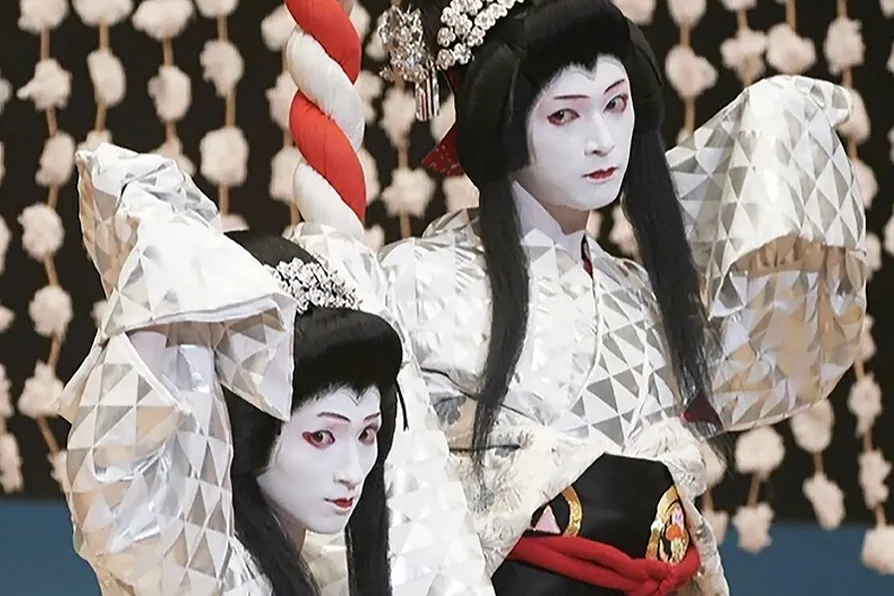 RAVISHING TRANSFORMATION: Ryo Yoshizawa as Kikuo and Ryusei Yokohama as Shunsuke in Kokuho [Pic: IMDb]

PAUL DONOVAN welcomes a revival of Reginald Rose’s classic play that reminds us of the fundamental need for trials with juries
SIMON PARSONS applauds an exceptional performance of Wesker’s little-known play, by the same actor for whom it was written 45 years ago
ANDY HEDGECOCK and MARIA DUARTE review Late Fame, The Death of Robin Hood, Leviticus, and Gail Daughtry and the Celebrity Sex Pass
ANGUS REID recommends a uniquely accomplished documentary collage that contemplates our relation to the natural world
GORDON PARSONS enjoys Kant’s ‘mind-boggling’ theory of human reality: that we create the reality we experience





Kokuho (15)
Dir. Lee Sang-il
★★★★★
TO enter the world of Kabuki is to step into a theatre of heightened sensation: stylised gesture, opulent costume, and emotion distilled into pure form. Emerging in the early 17th century and, after a series of moral clampdowns, evolving into an all-male performance tradition, Kabuki remains one of Japan’s most refined — and theatrical — art forms. It is a fitting subject, then, for Kokuho, Lee Sang-il’s ravishing, full-bodied drama about ambition, rivalry and the price of artistic devotion.
At its centre are two young men bound as much by love as by competition: Kikuo Tachibana, played with mesmerising control by Ryo Yoshizawa, and Shunsuke Ogaki, whose restless intensity is brought to life by Ryusei Yokohama. Their intertwined journeys through the rigid hierarchies of Kabuki theatre unfold as both a coming-of-age tale and a meditation on craftsmanship; on what it means to inhabit a role so completely that it consumes you.
Kabuki, famously, resists realism. Every movement is codified; every glance, deliberate. Kokuho mirrors this sensibility in cinema form. Scenes arrive like painted panels: composed, luminous, and charged with meaning. The camera lingers, the bodies speak, and dialogue becomes almost secondary to the choreography of emotion. It is, quite simply, a feast for the eyes.
Much of this is owed to the sensuous cinematography of Sofian El Fani and Marihiko Hara’s finely textured score, both of which elevate the film beyond period drama into something close to reverie. The supporting cast adds further richness, not least Shinobu Terajima as the formidable matriarch Sachiko Ogaki, a figure as commanding as the art form itself.
And then there is the ending: a magisterial performance of Heron Maiden, in which an older Kikuo dances a tale of love, transformation and death. It is here that Kokuho reveals its true subject, not simply Kabuki, but art itself as an act of becoming. By the final frame, one feels not just moved, but altered.
A rare, transporting achievement, a film that doesn’t merely depict art, but becomes it.
In cinemas May 8
