RITA DI SANTO contemplates two films about journalism that opened this year’s festival


 Latest editorial

Whose land? Our land!
BRENT CUTLER welcomes a timely reminder of the long history of protests and the outdoor spaces in which they takes place
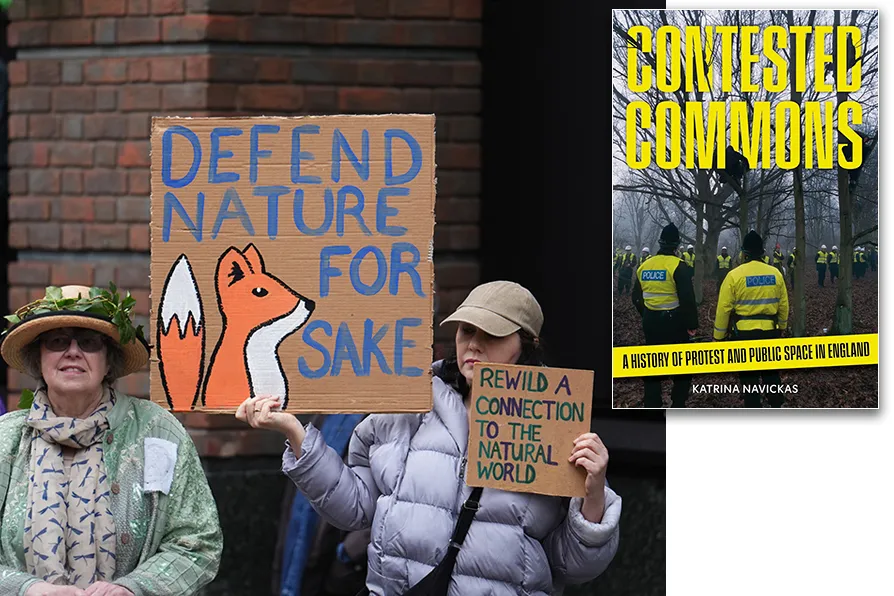 Protesters at St Paul's Cathedral, London, after a rally to challenge the Archbishop of Canterbury Justin Welby to support rewilding across the Church of England's vast estate, October 6, 2024

GEOFF BOTTOMS applauds a world-class production King Lear that pits late feudalism against a rising bourgeoisie
MARY CONWAY keeps up with the sheer pace of a drama about the terrible gap between sanitised reporting and real-life turmoil of race and gender
New releases from Brian Fallon, Antony Szmierek and Hollow Hand
APURBA CHATTERJEE explains how British artists in India used the “picturesque” to reshape colonial landscapes and celebrate imperial power
PAUL DONOVAN welcomes a revival of Reginald Rose’s classic play that reminds us of the fundamental need for trials with juries





Contested Commons – A History of Protest and Public Space in England
Katrina Navickas, Reaktion Books, £20
THE pages of this newspaper are full of articles and stories about protests; be they progressive, reactionary or anything in between. But what of the places, usually outdoors spaces, where protests take place? Sometimes these places are the subject of protest themselves.
In Contested Commons, Katrina Navickas provides the story of these places. Her book covers the history of public spaces and their role in popular protest; whilst a book like this should be welcomed at a time when the right to protest is under attack.
A theme of the book is the idea of The Myth of the Commons. The idea that at some point in history we all had access to common land; however at some point in the Early Modern Period (1500-1700) landowners stole the common land from the peasantry. The problem being that no such golden age existed. Although enclosure of common land did become a widespread practise from Tudor times onwards, there is little actual evidence of any such golden age. In the Middle Ages peasants could be severely punished for even taking firewood from forests.
Another theme is the concept of Enclosure Vs Commoning. For instance, in her section on covering the anti-roads protests of the 1990s, Navickas sees the road builders as enforcing Enclosure and the Anti-Road protesters as defending Ancient Commons.
The book is written in two halves. The first concentrates on the rural man-made landscape; with chapters including Commons, Waste and Verges. This section begins with examples of enclosure of common land in the 18th century as well the Kinder Scout Trespass in the 1930s and the Right to Roam.
The second part of the book covers urban protest; with chapters named after street furniture such as Railings, Pavements and Barricades. Railings is a reference to the protests around the Second Reform Act of 1867, (which enfranchised urban, male property owners) where protesters used the railings surrounding Hyde Park to defend themselves from attack by the police. Barricades is a reference to the Battle of Cable Street.
Later chapters cover events such as the Battle of the Bean Field in 1985; an event that took place during the Miners’ Strike, which the author makes no mention of. The book ends coverage of the New Age Travellers of the 1990s, which she refers to as New Travellers.
In a recent article in the Morning Star Ian Sinclair points out that “92 per cent of land and 97 per cent of rivers in England are not legally accessible.” Subsequently, a book that covers issues of land ownership and common land is to be recommended. With the legitimate right to protest under attack this is a timely reminder of the long history of protest in the country.
