After months of uncertainty over printing and distribution, the first Scottish-printed edition of the Morning Star is soon to roll off the presses


 Latest editorial

Why Reform is rising in the Valleys
Plaid Cymru’s Caerffili by-election win raised hopes on the left — but the complex realities of Wales suggest the Senedd election may be far less predictable, argues CATRIN ASHTON
 Reform leader Nigel Farage who is hoping to make inroads in Wales at polls this week

Some thinkers and authors on the right are openly discussing the possibility that the historically successful party of the British ruling class may be exhausted
Class struggle is the motor of history but the direction and detail of change at any time and place is the outcome of many factors, suggests the Marx Memorial Library and Workers’ School
Merseyside’s proud tradition of internationalism is being kept alive through events organised by trade unionists and allies in the region, writes ROBERT MACDONALD
JOHNNIE HUNTER reports from the German Communist Party’s (DKP) weekly Unsere Zeit (Our Newspaper)-organised Peace Days festival in Berlin last weekend
Les Preger was one of Manchester’s first volunteers to volunteer in support of republican Spain, writes his daughter JANEY PREGER
TONY BURKE surveys the shifting political landscape and the challenges Labour needs to address if it is to prevail in the 2028 federal elections





IN OCTOBER 2025 a by-election was held in Caerffili and, according to many, what happened would be a sign of things to come, following May 2026’s Senedd elections.
There was a consensus that Labour would lose its seat and that this by-election would be a battle between Reform and Plaid Cymru.
In the end, Plaid Cymru won. Hopes on the left were raised, and there is still a pervading feeling that what happened in Caerffili is a sign of likely voting intentions on May 7.
The Valleys are a big area and — maybe because their people, like the public transport, tend not to cross valleys — the nature of each one is different. Despite the similarities between them, there are distinct circumstances that led to Plaid Cymru’s victory in Caerffili and, as a result, reasons to be unsure of how things will play out for the Senedd in the former coalfields.
Plaid Cymru has a long history of activism and campaigning in Caerffili, and the increase in Welsh-medium schools in the area testifies to the hard work of local members and parents over decades. On top of this, Plaid Cymru held a majority in the council in 1999 and were equal with Labour in 2008, though it was Plaid who led the council during that period. The situation is different in Merthyr Tudful, for example.
But what attracts Reform voters in the Valleys to the party? I live in the area myself and many people here support Reform, intending to give them their vote this week. There has been much talk in the media about the effects of foreign money on Reform, and the influence and marketing that money and contacts can buy. But from conversations I’ve had, and overheard on the streets here, there are local and historical concerns that influence the support of many.
The demographic that I’m thinking about are the over-50s. In the Valleys, most of us have fathers or grandfathers who spent their working lives down the pit, and many of the Reform supporters that I know are ex-miners themselves, although they are too young to have had lifelong work as miners.
Most of these people saw a decline in their fathers’ health and physical abilities — which is an extremely difficult thing to witness.
The village where I live is typical of the valleys: one steep hill leading to the mountain and houses built in terraces into the hillside. In the past, on a Saturday night, the wives would bound up the hill to the club to hold seats and tables for the men, because the men, with lungs full of dust, would make their way up slowly, stopping at each lamppost to catch their breath.
The children of these men are now in their sixties — and they are angry. Seeing their fathers so weak was heartbreaking. During the 1990s there came an opportunity for compensation. Pop-up centres opened all over the valleys where miners and ex-miners could be tested to see whether or not there was any coal dust on their lungs.
The answer, almost unfailingly, was that there was no dust present: the breathing difficulties arose solely from the cigarettes they smoked.
When a miner dies, the family has the right to ask for a post mortem and most took the opportunity. When the coroner’s reports came back, families were told that the bodies of their fathers, their grandfathers, were completely black inside — despite everything they were told in the pop-up compensation centres.
The huge pile of compensation forms would be passed on to their grieving wives to complete.
Many people in this area vote for Reform because Nigel Farage spoke out about the disgrace of the miners’ pension scandal and the money they were owed. His promise to right this wrong was even published in a previous manifesto.
They also share Reform’s suspicion about green energy. Many people in this area understand a lot about Britain’s energy systems, how they work and how they are supplied.
If mining communities had been at the forefront of green energy, and if the Welsh coalfields along with the others in Britain had been able to show the world how a green future could be achieved and what that could look like, things could have been different. But as these communities are very aware of the way governments lie, they cannot trust in the idea of green energy as inherently good.
Once again, they feel that it is Reform who voices these uncertainties — worries that don’t seem to register with the ruling class and the middle class of the liberal left. And yet, after seeing the demise of their fathers, many don’t want to return to the physical hardship of coalmining either.
One question raised is: why don’t Reform voters vote for Plaid Cymru, if their main aim is to stick up two fingers to the status quo? A Plaid Cymru vote could be seen as a step towards dismantling the British state once and for all.
But this is problematic in the Valleys. Many families are involved, in one way or another, with the armed forces, and are proud of family members who have served in them. Some people even feel the need to protect Britain — at the moment from Muslims. And for many in Valleys, despite the strength of their Welsh identity, Britain is also their country.
Discussing the Senedd elections in May many have enthusiastically discussed their support for Reform. When I answer by mentioning my support for the Communist Party the response that comes back is always positive and sympathetic. Socialism and communism are familiar to them — people here are not against those concepts.
They are often proud of their fathers’ roles in the trade unions, proud of the hard battle fought during the miners’ strike and furious, still, about the way these communities were treated by Thatcher and her government. But they don’t see signs of socialist ideals in the policies of Labour nor Plaid Cymru. And with Reform they feel that Farage speaks openly about the things that irritate them, when nobody else does.
People are complex. Our hopes, fears and the things that make us proud are often tangled and contradictory. So why wouldn’t they vote Reform? Nothing ever changes, anyway.
This is an edited version of an article that first appeared at Undod.cymru blog.

Similar stories
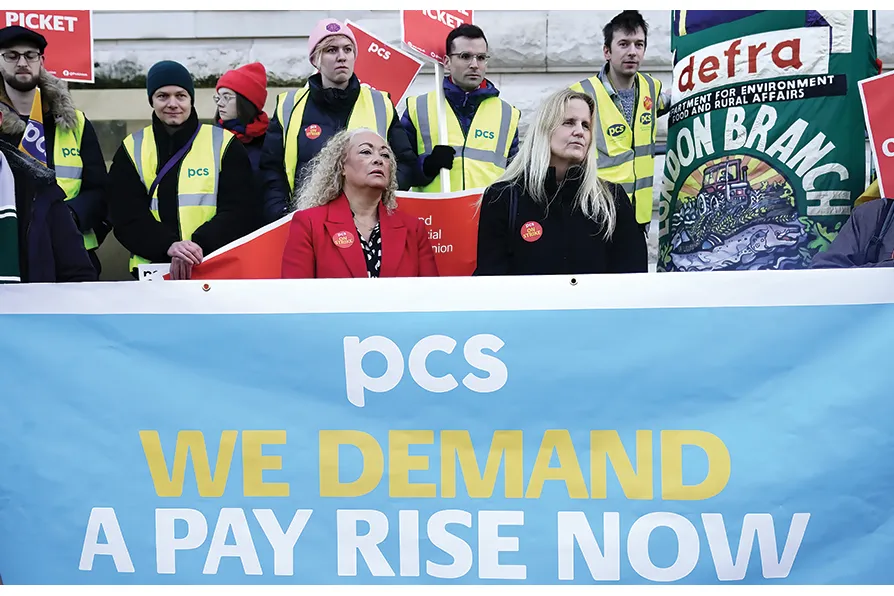
David Nicholson spoke to BETH WINTER about her bid to become a Senedd member as an independent running on a community grassroots campaign

In the second of a series of interviews with leaders of progressive parties in Wales ahead of the May 7 Senedd election David Nicholson talks to Welsh Green Party leader ANTHONY SLAUGHTER
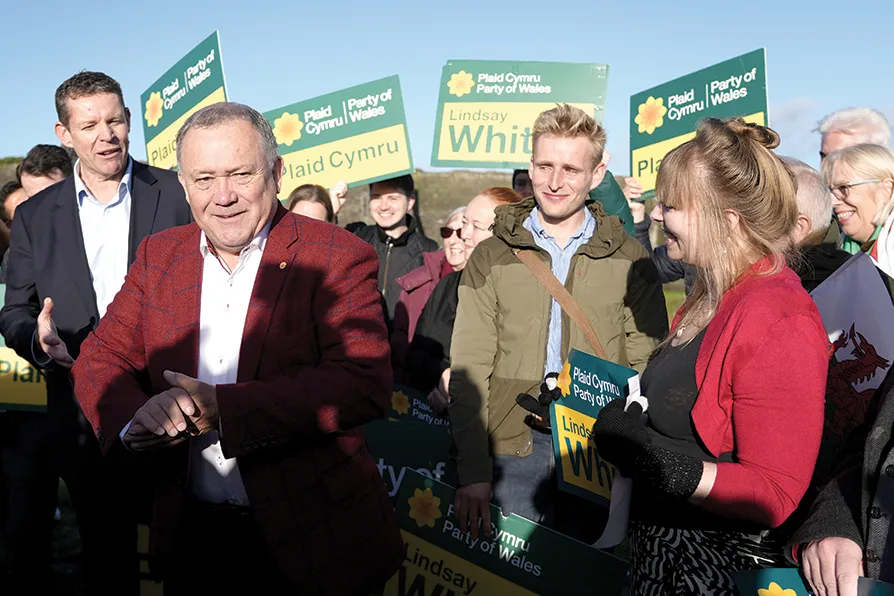
Morning Star Wales reporter DAVID NICHOLSON analyses polling for the Senedd election — and it’s bad news for Welsh Labour
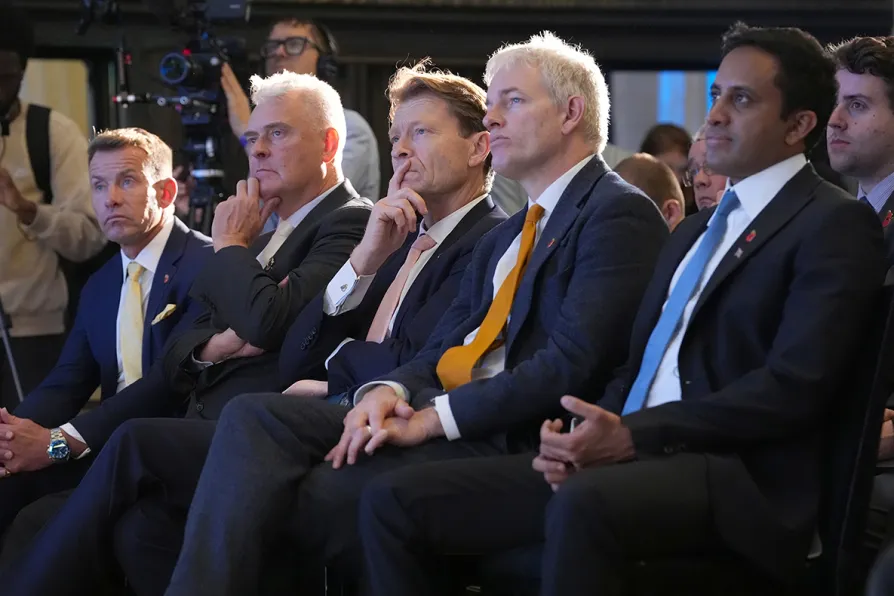
Plaid Cymru’s spokesman on health and social services MABON AP GWYNFOR, in the second article of a two-part series, argues that Labour’s contempt for voters and backward-facing approach have led to widespread mistrust in Wales